

Illustrative patient discussing a gum-health assessment with a clinician
Specialized Care

Gum Disease Assessment in Oakville

Told you need a deep cleaning and not sure why? From Oakville, a gum disease assessment at our Milton clinic lays out the measurements, bleeding, bone support, and risk factors behind a recommendation, so you can weigh treatment or monitoring with the evidence in view.

An Oakville second look

See the evidence before you agree to a deep cleaning.

A recommendation for scaling and root planing can arrive with very little explanation. You hear a few numbers, a quote, and a suggestion to book soon. A gum disease assessment slows that down. It draws on your history, a full examination of the gums, and images where indicated, to show whether there is inflammation, lost support, or a different issue altogether.

Some people come from Oakville wanting a second opinion on advice they have already received. Others have bleeding gums or a tooth that bites differently and want answers first. And some have no symptoms at all. In every case, comfort is not proof of health, and a picture of the gums is no substitute for measuring them.

Our aim is a recommendation you can follow from start to finish. Ask which sites need treatment, what that treatment involves, and how its effect will be checked. A good assessment leaves you with a diagnosis you understand and a reason for each step that follows.

Request an assessment
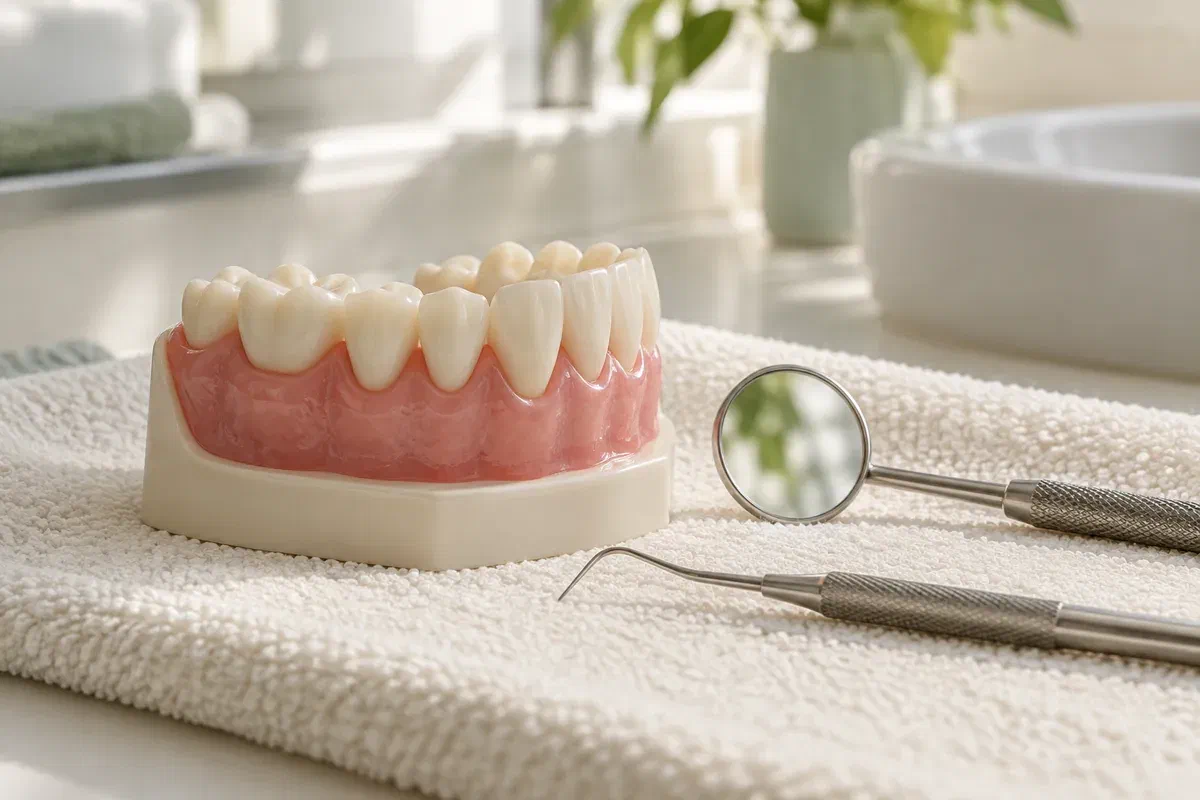
Illustrative tooth-and-gum model beside a periodontal probe and dental mirror
Bring these to the appointment

The advice you were given, and what made you question it

There is no need to work out a diagnosis in advance. Describe what you have noticed, and if a previous office suggested deep cleaning or a periodontist, bring the chart or treatment plan so the findings behind it can be looked at directly.

Gums that bleed, recede, or have changed shape

Point to the area and say whether the change is new, keeps returning, or has been there a long time. Mention soreness, food packing between teeth, or a spot you struggle to clean. Those details help focus the visit, while the examination shows how the surface change relates to the tissue beneath.

A tooth that shifts or feels odd when you bite

Explain when it happens and what it feels like. Resist checking the tooth by pushing on it. The clinician evaluates the tooth and its supporting structures together, and will tell you if more than one problem could explain what you are feeling.

Risk factors and records from elsewhere

Let the team know about any past periodontal treatment, smoking, diabetes, medicines, or recent health changes. Records from your previous dental office are especially helpful in a second-opinion visit. Risk factors guide planning, but they cannot establish the extent of disease without examining your mouth.

When booking, mention a painful swelling on the gum, pus, or symptoms that are changing quickly. An urgent infection visit may be needed before a full conversation about long-term gum care.

What you gain

Clarity on the diagnosis comes before any decision about treatment.

A treatment plan built on gum measurements is only as clear as the explanation behind it. Ask the clinician which readings drive the recommendation and how they relate. Pocket depth, bleeding, recession, and bone level each add to the picture, and no single number should decide the matter.

The assessment gives you a documented starting point too. Ask what can be concluded today and what depends on a later re-measurement or on older records. That baseline lets the team discuss your response to care honestly, without claiming one visit can predict how every tooth will do.

Patient information: American Academy of Periodontology — the components of a comprehensive periodontal evaluation

Diagnosis versus symptom

Bleeding is a sign. Gingivitis and periodontitis are diagnoses that come from the assessment as a whole. Ask which one fits and whether it is localized or generalized. That answer usually explains why deep cleaning was suggested instead of, or as well as, a routine cleaning.

A reason for each investigation

If X-rays or extra measurements are proposed, ask what question each will answer. Recent records from another office can sometimes be requested and used. Every investigation should connect to the assessment rather than be offered as a fixed package.

Treatment, re-evaluation, and maintenance laid out

Ask which steps treat current disease and which keep watch afterwards. Go over the expected number of visits, the fees, and any referral. A clear sequence makes it easier to see where active treatment ends and maintenance begins.

How the assessment runs

From your history to a plan you can explain to someone else

The scope varies with your reason for coming and the records available. If you are anxious or have a tender area, say so at the outset and ask how to signal for a pause during the examination.

  1. Start with what you have been told

    Share the earlier recommendation along with your own observations about bleeding, gum level, chewing, or tooth stability. Your past gum treatment, home routine, medical history, and medicines are reviewed. This lets the assessment respond directly to the question behind the advice you received.

  2. Measure the gums independently

    The clinician examines the gums and uses a periodontal probe to check the spaces around your teeth. Bleeding, recession, and other signs help interpret the readings. Mention sensitive spots beforehand, and ask for an explanation as you go if it helps.

  3. Assess support with images where needed

    Where indicated, images help show supporting bone and other concerns. They are interpreted alongside the clinical findings and your history. Ask which conclusions are firm and whether further records or a specialist assessment would make the treatment discussion more complete.

  4. Compare, explain, and set priorities

    You review which areas need care, what treatment would aim to do, and how progress will be measured. Ask how the findings compare with the earlier recommendation, what alternatives exist, and what delaying care could mean. Confirm the purpose of the next appointment before you leave.

Following through

Know what you are doing at home, and why.

An assessment may open a course of care rather than finish one. Keep to the agreed next steps, and ask for clarification before changing a recommended routine or concluding that another visit is unnecessary.

Target the sites that were identified

Ask which cleaning methods suit the areas found during the examination. If one is hard to reach, request a quick demonstration. Mention obstacles such as hand discomfort, crowded teeth, or dental work so the advice reflects the mouth you actually look after.

Treat each appointment as having its own job

Find out whether the next visit is for treatment, re-measurement, or maintenance, since those are different tasks. Coming from Oakville, you may want treatment visits grouped sensibly. Raise any scheduling or financial limits early, and ask how priorities can be explained.

Report changes as they happen

New swelling, growing discomfort, or a tooth that feels less stable is a reason to call, not to wait. Let the team know about new medicines or medical care as well. Fresh information can change how the original findings should be read.

Options after the findings

Deep cleaning is one possibility. It is not the only one.

Ask what supports the recommended option and how its success will be measured. The right choice depends on the diagnosis, which sites are affected, tooth support, risk factors, and any treatment already provided.

When the findings call for a lighter approach

Preventive cleaning and inflammation control

Professional cleaning and tailored home-care advice may be enough where appropriate. Ask which areas to watch and when the response will be reviewed. A preventive plan still needs a stated purpose and should not be a way of ignoring symptoms that seem mild.

When periodontitis needs treatment

Active periodontal therapy with re-evaluation

Treatment such as deep cleaning may be directed at the affected sites, followed by a review of healing. Ask what each stage includes and how your maintenance plan will be set. One appointment does not always complete the course.

When complexity or uncertainty calls for another view

A periodontist's assessment or coordinated care

A periodontist may evaluate advanced, complex, or persistent concerns. Ask what the referral should answer and what records will go with it. Clarify how your general dentist and the specialist will divide responsibilities, so follow-up stays easy to understand.

Second-opinion questions

Before you say yes to a gum treatment plan

The best questions link each measurement to a diagnosis and each diagnosis to a step in the plan. Bring earlier reports so the new advice can be compared fairly with the old.

(905) 876-4488
Is it reasonable to get a second opinion on a deep-cleaning recommendation?
Yes. Asking for a second assessment is a normal part of making an informed decision. Bring the earlier chart, X-rays if available, and the treatment plan. The clinician can examine your gums independently and explain where the findings agree or differ.
What is the difference between a regular cleaning and scaling and root planing?
A regular cleaning focuses on deposits above and just below the gumline. Scaling and root planing works deeper on root surfaces at sites affected by periodontitis. The assessment shows which sites, if any, need the deeper approach.
Why might my pocket readings differ from those taken at another office?
Small variations can occur between examiners and visits, and gum inflammation can change over time. The clinician looks at the overall pattern, bleeding, and images rather than one number. Ask which differences matter and which fall within normal variation.
Does one deep pocket mean I have advanced gum disease everywhere?
No. A single site has to be interpreted alongside the rest of your mouth. Ask whether the problem is localized or widespread and what findings support that view.
Will I need new X-rays if I bring records from my last dentist?
Possibly not. Imaging depends on the clinical question and what is already available. Share the details of recent images so they can be requested, and ask why any new views would add useful information.
How can I plan treatment visits if I am coming from Oakville?
Ask the team which appointments are needed, how far apart they should be, and whether any can be combined. Knowing the full sequence early makes it easier to fit visits around work and family commitments.
Book from Oakville

Get a clear answer about your gums.

Contact our Bronte Street practice to book an assessment of your gums and the support around your teeth. Bring the earlier treatment plan, periodontal chart, and any X-ray details, along with your questions.

Assessment scope, imaging, treatment, maintenance timing, and referral decisions are individual. They are guided by what the examination finds and how you respond to care.

Visit Milton Dental Clinic
Unit 1, 342 Bronte St. S, Milton, ON L9T 5B7
Get directions Clinic hours
Monday–Thursday
11am–7pm
Friday–Sunday
By appointment only

Areas we serve

  • Milton
  • Oakville
  • Mississauga
  • Georgetown
  • Halton Hills
  • Acton
  • Campbellville
  • Brampton
  • Burlington
  • Puslinch
  • Rockwood
  • Erin
  • Caledon
  • Etobicoke
  • Old Milton
  • Bronte Meadows
  • Timberlea
  • Dorset Park
  • Dempsey
  • Clarke
  • Beaty
  • Coates
  • Harrison
  • Scott
  • Willmott
  • Ford
  • Bowes
  • Cobden
  • Walker
  • Mountain View
  • Milton Heights
  • Hawthorne Village
  • Valley View
  • Fallingbrook
  • Nassagaweya
  • Trafalgar
  • Esquesing
  • Nelson
  • Brookville
  • Moffat
  • Glen Williams
  • Norval
  • Limehouse
  • Stewarttown
  • Ashgrove
  • Hornby
  • Silver Creek
  • Speyside
  • Scotch Block
  • North Oakville
  • River Oaks
  • Glen Abbey
  • West Oak Trails
  • Palermo
  • Bronte Creek
  • College Park
  • Joshua Creek
  • Uptown Core
  • Preserve
  • Iroquois Ridge
  • Lisgar
  • Meadowvale
  • Meadowvale Village
  • Churchill Meadows
  • Erin Mills
  • Central Erin Mills
  • Streetsville
  • East Credit
  • Creditview
  • Heartland
  • Sheridan
  • Mount Pleasant
  • Credit Valley
  • Huttonville
  • Churchville
  • Springbrook
  • Northwest Brampton
  • Bram West
  • Fletcher's Meadow
  • Fletcher's Creek South
  • Alton Village
  • Orchard
  • Millcroft
  • Headon Forest
  • Tansley
  • Brant Hills
  • Tyandaga
  • Kilbride
  • Lowville
  • Aberfoyle
  • Morriston
  • Arkell
  • Hillsburgh
  • Freelton
  • Carlisle
  • Waterdown
  • Flamborough
  • Mountsberg

How can we help?

Milton Dental Clinic

Have a question about your smile? Choose the option that works best for you.

For urgent dental concerns, please call.
Messages are reviewed during clinic hours.