

Illustrative patient discussing a gum-health assessment with a clinician
Specialized Care

Gum Disease Assessment in Rockwood

Had gum treatment with another dentist and now need someone new to take over? From Rockwood, a gum disease assessment at our Milton clinic re-measures your gums and tooth support, reviews earlier records and risk factors, and sets a maintenance or treatment plan going forward.

Continuing care from Rockwood

A new dental home should start with a fresh measurement.

Moving house, a retiring dentist, or a change in work can leave you mid-way through gum care with nobody quite in charge of it. Your old office may have had you on three-month cleanings, or mentioned a periodontist years ago. A gum disease assessment gives your new team its own starting point, combining your history, a full examination, and images where needed.

Not everyone arrives with a treatment history. Some people book because of bleeding, a gum that has changed shape, or a tooth that feels unsteady. Others feel nothing amiss. Either way, comfort tells you little about the gums, and an old chart or a photo cannot describe how things stand today.

If you are coming from Rockwood, bring whatever you have from the previous practice, or let us know its name so records can be requested. Ask how today's findings compare with the old ones, which sites need attention, and how often you should be seen. The aim is a plan you understand and a team that clearly owns it.

Start with an assessment
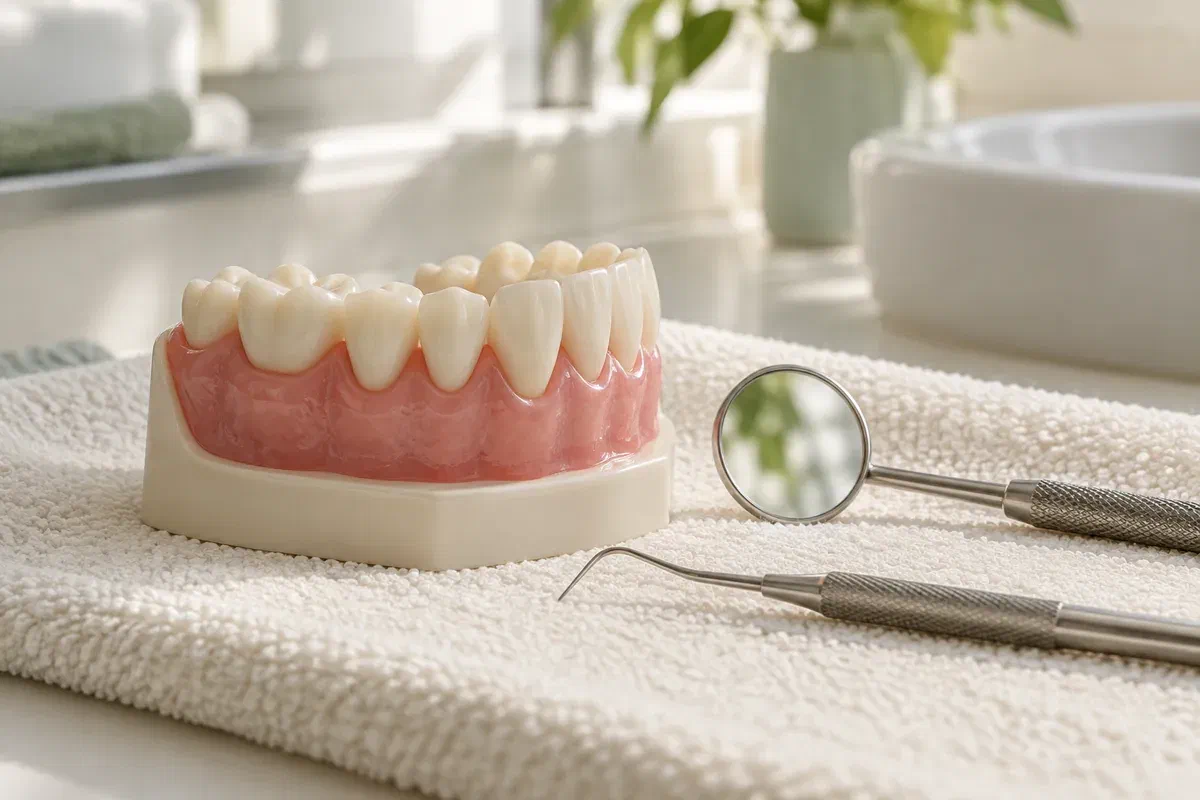
Illustrative tooth-and-gum model beside a periodontal probe and dental mirror
What to bring and mention

Your old records, your current symptoms, and anything in between

Explain what you have noticed in plain words. If you were told in the past that you need scaling and root planing, maintenance visits, or a periodontist, bring that information so it can be reviewed against what is found now.

Gums that bleed, recede, or feel tender

Show the areas and say whether the change is new or something your previous dentist was already watching. Food trapping, soreness, or a spot that has always been difficult to clean are helpful details. Examination then relates the visible change to the attachment and bone below.

Teeth that have shifted or feel loose

Describe what you notice and how long it has been happening. Rather than testing a tooth repeatedly, let it be checked at the chair. The clinician looks at the tooth, its support, and your bite together, and explains whether more than one factor is involved.

Earlier periodontal care and current health

Share what treatment you had, when, and how often you were having maintenance visits. Tobacco use, diabetes, medicines, and recent health changes also matter. These shape the plan, but your gums today can only be understood by examining them.

If a gum is swollen and sore, you notice pus, or symptoms are changing quickly, mention it when booking. An urgent infection visit may need to come before the longer handover conversation.

Why start fresh

Today's measurements, compared fairly with yesterday's

Old charts are valuable, but they describe the past. The clinician can show you which current readings matter and how they compare with your earlier records. Pocket depth, bleeding, recession, and bone level are read together, and a change in any one figure is interpreted in context rather than alone.

The assessment also becomes the reference for your ongoing care here. Ask what is clear today and what needs a second measurement or more of your older records. This avoids assuming that the previous schedule is automatically right, or that one new visit predicts exactly how every site will behave.

Patient information: American Academy of Periodontology — the components of a comprehensive periodontal evaluation

A current diagnosis

Past periodontitis does not always mean active disease today, and the reverse is also true. Ask whether your condition is stable, improving, or active, and whether it involves a few teeth or many. That determines what kind of visits make sense.

Records used, not repeated

If images or extra measurements are suggested, ask what they will add to what your previous dentist already recorded. Recent, suitable records can often be used. Any new test should answer a question the old ones cannot.

A maintenance plan that fits now

Ask which steps address any active disease and which keep things stable. Discuss how often you should be seen, the fees, and whether a referral is likely. Understanding this helps you see the difference between treatment and maintenance.

Your first gum visit with us

Picking up the thread of your gum care

How much the visit covers depends on your history and what records have arrived. If you are nervous, or one area is tender, mention it at the start and agree on how to ask for a break.

  1. Review the handover

    You and the clinician go over your previous gum treatment, maintenance schedule, home routine, health conditions, and medicines, plus any reports from your former office. Describe what has changed since your last visit there.

  2. Re-chart the gums

    A periodontal probe is used to measure the pockets around your teeth, and signs such as bleeding and recession are recorded. These readings form a new baseline for your care here. Mention any sensitive areas before they are examined.

  3. Compare bone support with earlier images

    Where images are indicated, they help assess the bone around your teeth and are compared with older ones if available. Together with the examination and history, they show whether things have changed. Ask which conclusions are firm.

  4. Set the plan and the interval

    The clinician explains whether your gums are stable or need active care, which teeth are involved, and how often you should return. Ask about alternatives and the effect of delay. Confirm what the next appointment is for.

Keeping things stable

Carry on what worked, and adjust what did not.

Your assessment may confirm an existing routine or change it. Keep to the agreed steps, and ask before stopping maintenance visits or changing how you clean, even if your gums feel fine.

Revisit your home routine

Ask whether the tools your former dentist recommended still suit the sites identified, and request a demonstration if anything has changed. Mention sore hands, tight spaces, or bridges and implants so the advice stays practical.

Understand what each visit is for

Maintenance, re-measurement, and any new treatment serve different purposes. For people coming from Rockwood, it helps to know the schedule well ahead. If timing or cost makes the plan difficult, raise it early so priorities can be explained.

Report changes promptly

Call if you notice swelling, increased discomfort, or a tooth that feels looser, rather than waiting for the next maintenance visit. Tell the team about new medicines or medical care too, since these can change how your findings are read.

Where your care goes next

Maintain, treat, or refer: based on today's findings

Ask what supports the recommendation and how you will both judge its success. The choice depends on the current diagnosis, affected sites, tooth support, risk factors, and the treatment you have already had.

When the gums are stable or only mildly inflamed

Ongoing prevention and maintenance

Regular professional cleaning and home-care guidance may continue, possibly at a new interval. Ask which areas to watch and when you will be re-measured. Maintenance should still have a clear purpose rather than become a habit nobody questions.

When some sites show active disease

Renewed periodontal treatment and review

If some pockets have become active again since your last office, they may need another round of care, with a review once they settle. Ask what each step involves and how your maintenance schedule will be adjusted afterwards. More than one appointment may be needed.

When problems are advanced or persistent

Specialist input or shared care

A periodontist may help assess advanced or complex concerns, or continue care you started with one before. Ask what the referral should clarify and which records go with it, and how both offices will share follow-up.

Switching dentists

Questions about transferring gum care

Good questions compare what was found before with what is found now, and connect both to a plan. Bring every record you can, even if it seems out of date.

(905) 876-4488
How do I get my gum records sent from my previous dentist?
Give our team the name and contact details of your former office, and you may be asked to sign a consent form. Records can then be requested directly. If you have copies yourself, bring them to the assessment.
My old dentist had me on three-month cleanings. Will that stay the same?
It may, but the interval is reviewed based on today’s findings, your history, and how your gums respond. Ask the clinician to explain the reasoning behind whatever schedule is recommended.
Why are my gums being measured again if I was charted last year?
A new measurement gives this team its own baseline and shows whether anything has changed. Earlier readings are still useful for comparison, so bring them if you can. Small differences between examiners are normal, and the clinician will focus on meaningful patterns rather than a single millimetre.
Is periodontal maintenance the same as a regular cleaning?
Not quite. Maintenance is tailored to people who have had periodontal disease and usually includes re-measuring and careful cleaning of affected areas. The clinician can explain what your visits will involve and how long each one is likely to take, which helps when planning time off.
If my mouth feels fine, do I still need maintenance visits?
Often, yes. Gum disease can return without obvious symptoms, and regular review is how changes are caught. Ask what your findings suggest and how often you should be seen. Skipping visits because nothing hurts can allow a problem to progress unnoticed.
I saw a periodontist before. Should I keep seeing them?
That depends on your current findings and what the specialist recommended. Ask the clinician whether continued specialist care makes sense, and how information will be shared between offices. Bring the specialist’s most recent letter if you have it, so their advice can be taken into account.
Welcome from Rockwood

Hand over your gum history. We will pick it up from here.

Call our Bronte Street practice to become a patient and start with a full periodontal check. Share the name of your previous dental office so records can be requested, and bring any charts, letters, or questions you have.

Your maintenance interval, any imaging, further treatment, and referral are set for you individually, based on today's findings, your earlier records, and how your gums respond over time.

Visit Milton Dental Clinic
Unit 1, 342 Bronte St. S, Milton, ON L9T 5B7
Get directions Clinic hours
Monday–Thursday
11am–7pm
Friday–Sunday
By appointment only

Areas we serve

  • Milton
  • Oakville
  • Mississauga
  • Georgetown
  • Halton Hills
  • Acton
  • Campbellville
  • Brampton
  • Burlington
  • Puslinch
  • Rockwood
  • Erin
  • Caledon
  • Etobicoke
  • Old Milton
  • Bronte Meadows
  • Timberlea
  • Dorset Park
  • Dempsey
  • Clarke
  • Beaty
  • Coates
  • Harrison
  • Scott
  • Willmott
  • Ford
  • Bowes
  • Cobden
  • Walker
  • Mountain View
  • Milton Heights
  • Hawthorne Village
  • Valley View
  • Fallingbrook
  • Nassagaweya
  • Trafalgar
  • Esquesing
  • Nelson
  • Brookville
  • Moffat
  • Glen Williams
  • Norval
  • Limehouse
  • Stewarttown
  • Ashgrove
  • Hornby
  • Silver Creek
  • Speyside
  • Scotch Block
  • North Oakville
  • River Oaks
  • Glen Abbey
  • West Oak Trails
  • Palermo
  • Bronte Creek
  • College Park
  • Joshua Creek
  • Uptown Core
  • Preserve
  • Iroquois Ridge
  • Lisgar
  • Meadowvale
  • Meadowvale Village
  • Churchill Meadows
  • Erin Mills
  • Central Erin Mills
  • Streetsville
  • East Credit
  • Creditview
  • Heartland
  • Sheridan
  • Mount Pleasant
  • Credit Valley
  • Huttonville
  • Churchville
  • Springbrook
  • Northwest Brampton
  • Bram West
  • Fletcher's Meadow
  • Fletcher's Creek South
  • Alton Village
  • Orchard
  • Millcroft
  • Headon Forest
  • Tansley
  • Brant Hills
  • Tyandaga
  • Kilbride
  • Lowville
  • Aberfoyle
  • Morriston
  • Arkell
  • Hillsburgh
  • Freelton
  • Carlisle
  • Waterdown
  • Flamborough
  • Mountsberg

How can we help?

Milton Dental Clinic

Have a question about your smile? Choose the option that works best for you.

For urgent dental concerns, please call.
Messages are reviewed during clinic hours.