

Illustrative patient discussing a daily gum-care routine with a dental clinician
Specialized Care

Gum Disease Prevention

Build a gum-care routine around the areas that need attention in your mouth. Discuss prevention in Milton with practical cleaning guidance, a review of relevant risk factors, and a follow-up plan that reflects your periodontal history.

A closer look at gum disease prevention

Make daily gum care specific enough to become a habit.

Gum disease prevention combines what happens at home with appropriate professional assessment and care. Cleaning the tooth surfaces and the spaces between teeth helps control plaque, while an examination can identify inflammation or changes in support that you may not notice yourself. The two parts work together rather than replacing one another.

A useful routine is built around your own mouth. Tight contacts, wider spaces, bridges, crowded teeth, and hand discomfort can make general advice difficult to apply. If an area is hard to reach, the next step is to discuss a suitable technique or tool rather than assume that more pressure or a stronger product will solve it.

At Milton Dental Clinic, bring the questions that arise during your everyday cleaning. We can review your gum health, demonstrate an approach for difficult sites, and discuss a follow-up schedule. Prevention is an ongoing plan that can change as your mouth, health, and practical needs change.

Discuss your gum-care routine
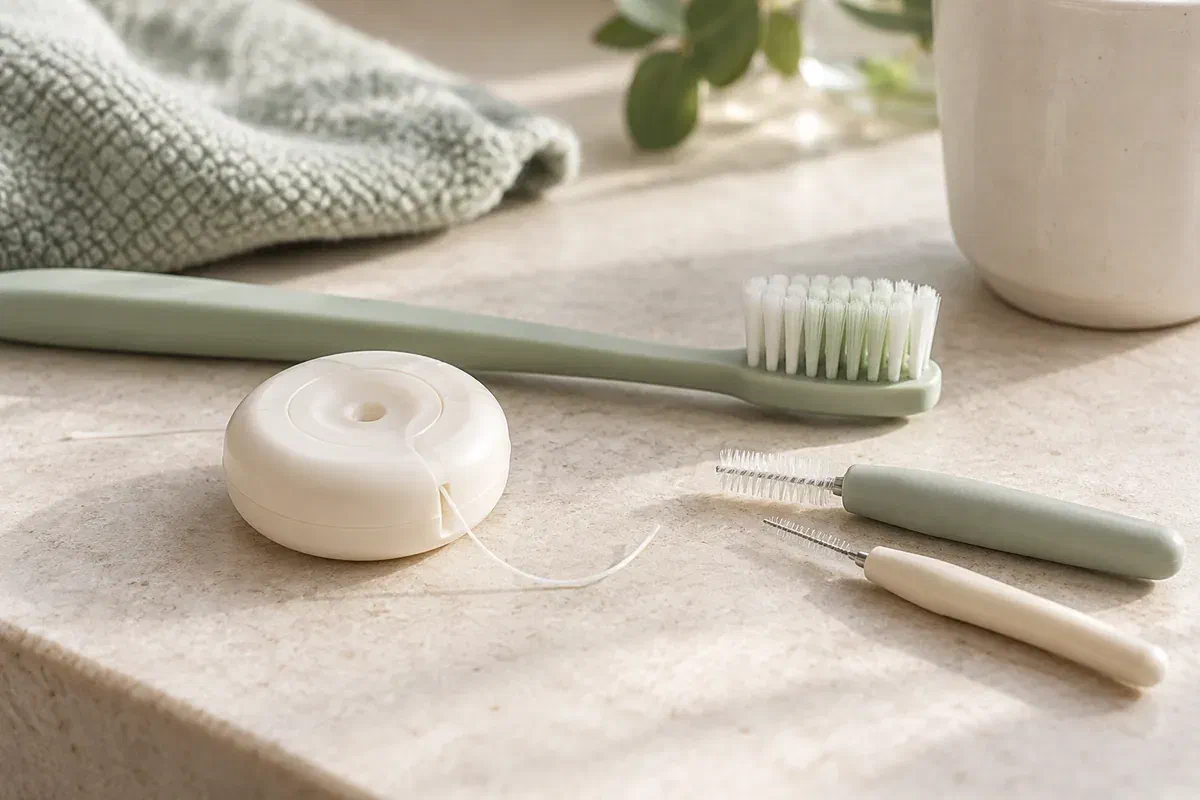
Illustrative soft toothbrush, floss, and interdental brushes arranged beside a ceramic cup
Where prevention needs a personal approach

Start with the areas and habits that are hardest to manage.

You do not need a perfect routine before asking for help. Tell us what you currently do, which steps are difficult, and what would make the advice easier to carry into an ordinary day.

Spaces that are awkward to clean consistently

Point out where floss catches, a brush feels too large, or food repeatedly collects. Mention crowns, bridges, or other dental work in the area. Ask for a demonstration at those particular sites so the recommendation is more useful than a general instruction to clean between your teeth.

Bleeding that has become part of the routine

Regular bleeding deserves assessment rather than acceptance as normal. Describe where it occurs and how long it has been happening. The clinician can review the tissues and your technique, explain the likely cause, and distinguish preventive advice from treatment that may already be needed.

A change in health, tobacco use, or previous gum care

Explain relevant medical changes and whether you have received periodontal treatment before. Tobacco use and diabetes are examples of factors that can influence gum health and planning. Discuss them openly so advice and review intervals reflect your situation instead of a standard schedule applied to everyone.

Prevention does not mean blaming someone for a diagnosis. Gum health involves several factors, and the purpose of the conversation is to identify useful actions and appropriate care from this point forward.

What a preventive plan should provide

Know what to do, where to focus, and when to return.

A short list of specific actions is often easier to use than a collection of product recommendations. Ask which part of your routine deserves attention first and how to tell whether you are using the tool correctly. If a suggestion is uncomfortable or impractical, say so; that information helps refine the plan.

Professional review adds information that home observation cannot provide. Gum disease can develop with little pain, so feeling comfortable is not the only reason to decide whether a check is useful. Ask how your current findings and previous history influence the recommended examination and cleaning schedule.

Patient information: Canadian Dental Association — plaque control, professional cleaning, and gum-disease review

Guidance for daily plaque control

Discuss gentle brushing with fluoride toothpaste and a suitable way to clean between teeth. Ask for help with pressure, angle, and access at the sites that are difficult for you. A tool only becomes useful when you can comfortably apply it to the areas it is intended to clean.

Professional attention to deposits and tissue changes

Hardened deposits cannot be removed by ordinary brushing. The team can explain where cleaning is needed and whether the gum findings require more than routine prevention. Ask what the professional visit adds to your home routine and which observations will be compared at later reviews.

A review plan informed by your history

Someone with previously treated periodontitis may need a different maintenance approach from someone without that history. Ask why the proposed interval suits you and what could change it. Regularity should have a clinical purpose rather than being chosen solely because it is a familiar date on the calendar.

Building your prevention plan

Review the findings, practise the method, and make it manageable.

A prevention visit can include assessment, advice, and appropriate professional care. Ask what your appointment includes and whether another visit is needed for treatment identified during the examination.

  1. Talk through the routine you use now

    Describe your brushing and between-teeth cleaning, including how often you manage each step and any difficulties. Bring the products or tools you want checked. Mention bleeding, food trapping, dryness, earlier gum treatment, and relevant changes in your health or medicines.

  2. Assess gum health and identify priority areas

    The clinician reviews the tissues and supporting structures as appropriate, then explains which sites deserve attention. Ask whether the findings fit prevention alone or indicate active disease requiring treatment. Understanding that distinction prevents a home-care discussion from obscuring a problem that needs professional intervention.

  3. Demonstrate suitable cleaning and discuss risk factors

    Ask to see the recommended technique on the areas you find difficult. Discuss practical alternatives if a tool is hard to hold or use. Where relevant, talk about tobacco support or coordination with medical care without changing prescribed treatment independently.

  4. Agree on a review and a realistic next action

    Choose the specific change you will begin with and confirm the next visit's purpose. Ask which symptoms should prompt earlier contact. At review, explain what worked and what did not so the plan can be adjusted instead of simply repeated.

Keeping the routine going

Make the next cleaning session easier, not more complicated.

A useful habit needs suitable tools, an understandable method, and a place in your day. Discuss obstacles as they arise rather than waiting until frustration has caused you to abandon the routine entirely.

Keep the recommended tools accessible

Choose a consistent time and location for the steps you have agreed on. If you travel or your schedule changes, think about how to keep the essentials available. Ask the team which items are necessary so the routine does not become dependent on an unnecessarily long list of products.

Review technique when a method hurts or does not fit

Do not force an interdental brush through a tight space or scrub a tender gumline harder. Explain where the difficulty occurs and ask for a suitable adjustment. If bleeding or soreness persists, arrange assessment rather than assuming it is simply the price of cleaning thoroughly.

Use changes as a reason to update the plan

New dental work, changes in dexterity, or a return of gum symptoms can make an old routine less suitable. Mention these changes at your next visit or sooner when symptoms warrant it. A prevention plan should remain practical as well as clinically appropriate.

Choosing the right level of care

Prevention, active treatment, and maintenance have different jobs.

Ask which description fits your current findings. A good home routine remains useful across these situations, but it does not make every professional visit interchangeable or remove the need for diagnosis.

When the aim is maintaining health and addressing early concerns

Preventive care for gums without established periodontal disease

Discuss appropriate cleaning, practical coaching, and examination intervals based on your findings. Ask which areas need attention and how changes will be monitored. The plan should support ongoing health without promising that any routine can eliminate every future risk.

When the assessment identifies a current problem

Treatment when inflammation or periodontal disease is present

Professional treatment may be needed alongside improved daily cleaning. Ask what the diagnosis is and how it changes the recommendation. Advice about prevention should complement that care rather than become a reason to postpone an identified problem indefinitely.

When a previous periodontal diagnosis remains relevant

Supportive periodontal maintenance after treatment

After active care, ongoing assessment and maintenance help monitor the tissues and address remaining needs. Ask how this differs from an ordinary preventive cleaning and why the recommended interval suits your history. Feeling better does not erase the need to review previously affected sites.

Gum disease prevention questions

Small practical questions can make the routine easier to sustain.

Bring the tool, describe the difficult area, and ask for a demonstration. Advice is most useful when it fits the way your teeth, dental work, and daily life actually come together.

(905) 876-4488
Can brushing twice a day fully replace cleaning between teeth for gum prevention?
No. A toothbrush does not reach every between-tooth surface effectively. Ask which interdental method suits your spaces and dental work, and how to use it comfortably. The recommendation may involve different tools in different areas rather than one method forced everywhere.
How do I make gum prevention practical if my hands struggle with floss?
Describe what is difficult, such as grip, reach, or coordinating the movement. Ask about a suitable aid and have its use demonstrated in your mouth. The goal is a workable cleaning method, not insisting that you continue with a technique you cannot manage.
Does a history of periodontitis change a gum-disease prevention schedule?
It can. Previously affected tissues may need supportive periodontal maintenance and closer monitoring. Ask how your history and current response influence the interval and what each visit includes. The schedule should be explained in relation to your findings rather than assumed from a generic recommendation.
Should I buy a stronger mouthwash to prevent every future gum problem?
No product can make that promise. Ask whether a rinse has a particular role in your plan and how it should be used. Suitable brushing, cleaning between teeth, and professional assessment remain important; a product should not replace those parts of care.
Can I wait for gum pain before arranging another preventive review?
Pain is not a reliable indicator of every gum problem. Follow the review plan based on your examination and report changes such as persistent bleeding or swelling sooner. Ask the clinician what they are monitoring so the reason for returning is clear.
What should I bring to a visit focused on preventing gum disease?
Bring your current medicine list, relevant dental history, and the cleaning tools you would like help using. Note the sites that bleed or trap food. A few specific examples can make the discussion more practical than trying to remember every concern during the appointment.
Gum disease prevention in Milton

Build a routine that fits your mouth and a review plan that makes sense.

Contact our Bronte Street practice to discuss preventive gum care, difficult cleaning areas, or your periodontal history. We can begin with your current routine and the questions you would like the assessment to answer.

Prevention advice, professional cleaning, treatment needs, and review intervals depend on individual findings. No routine guarantees freedom from future gum disease.

Visit Milton Dental Clinic
Unit 1, 342 Bronte St. S, Milton, ON L9T 5B7
Get directions Clinic hours
Monday–Thursday
11am–7pm
Friday–Sunday
By appointment only

How can we help?

Milton Dental Clinic

Have a question about your smile? Choose the option that works best for you.

For urgent dental concerns, please call.
Messages are reviewed during clinic hours.