

Illustrative patient discussing a daily gum-care routine with a dental clinician
Specialized Care

Gum Disease Prevention in Brampton

A few years can slip by between cleanings without anyone meaning it to. Travelling from Brampton, you can return without judgement for a gum assessment, honest guidance on where to focus at home, and a review plan that reflects your history.

Coming back to gum care from Brampton

Been a while? That is exactly when a gum check helps.

Work, family, a move, or simple worry about what the dentist might say can stretch the time between visits. Returning after a gap is a sensible first step toward protecting your gums. An examination shows where things stand today, and from there home cleaning and professional care can be planned together instead of guessed at.

Over a long gap, tartar can build up in places a brush cannot shift, and gums may have changed without causing pain. That is why the first visit focuses on finding out, not on lecturing. Once the picture is clear, the home routine can be built around your own spaces, dental work, and any difficulty with grip or reach.

Since you are coming from Brampton, tell us when booking that it has been some time, so the appointment can be planned with that in mind. Bring the toothbrush and any floss you use now. We will examine your gums, explain the findings plainly, and outline what comes next, whether that is prevention alone or treatment first.

Restart your gum care
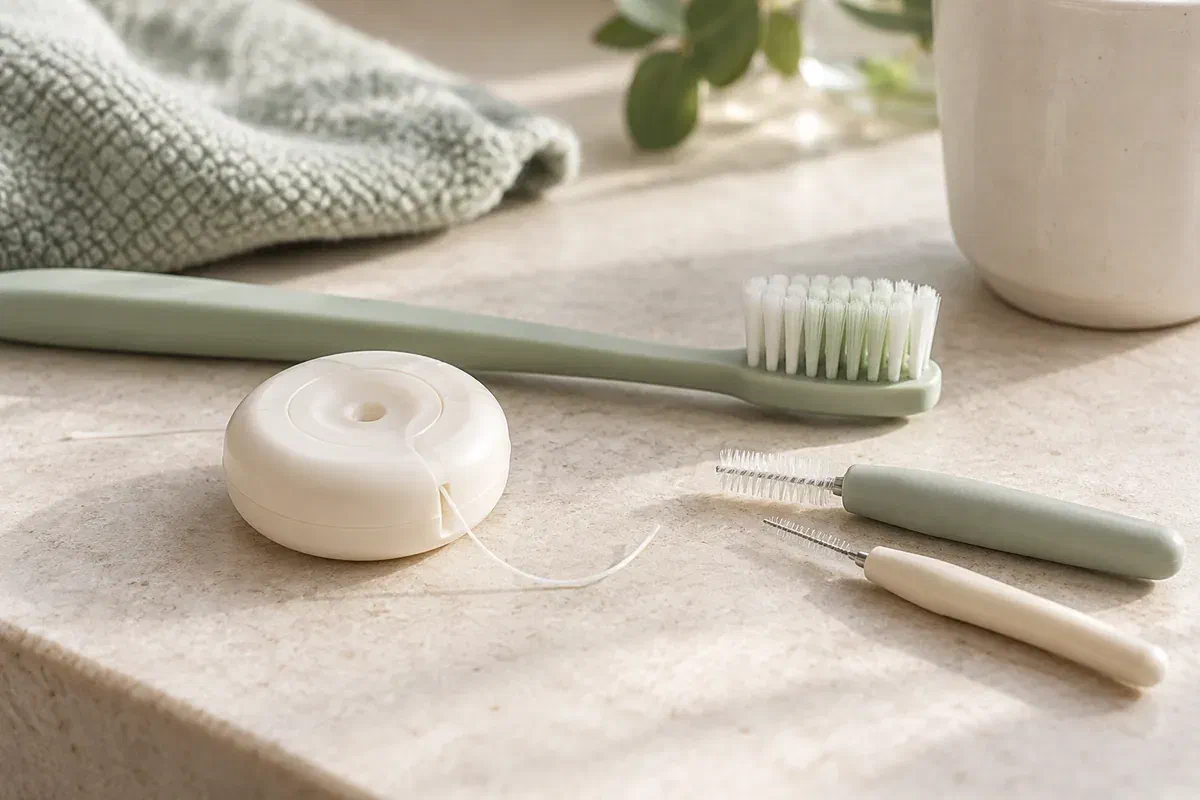
Illustrative soft toothbrush, floss, and interdental brushes arranged beside a ceramic cup
Worries people bring back with them

You do not need to catch up before you come in.

Arrive exactly as you are. Tell us what your routine looks like now, which steps fell away, and what would make it realistic to keep going this time.

Teeth you have stopped cleaning between

If floss became a once-in-a-while thing, that is common and fixable. Show us where it catches or hurts and mention any crowns or bridges. A demonstration at those teeth, with an aid that suits the space, will be easier to pick back up than a generic instruction.

Bleeding that started while you were away

Gums that bleed after a long gap are worth examining rather than avoiding. Tell us where you notice it and for how long. The clinician can look at the tissue, explain the likely reason, and say clearly whether it calls for prevention or for professional treatment.

Health changes since your last visit

A lot can change in a few years. Let us know about new diagnoses, medications, tobacco use, or previous periodontal treatment. Diabetes and smoking are examples of factors that influence gum health, and they help shape how often you should be reviewed.

Nobody here is keeping score. Many things affect gum health, and the visit is about understanding your situation today and choosing helpful care from this point.

What getting back on track gives you

A starting point, a short list, and a next date

A long list of changes can feel overwhelming when you are just getting back into the habit. Ask for the one or two habits that will matter most, and how to tell whether you are doing them properly. If a suggestion is uncomfortable or unrealistic for your week, say so, and we can find another way.

Gum disease can progress quietly, which is part of why time away matters. An examination reveals what a mirror and the absence of pain cannot. Ask how your findings today, and any history you remember, will influence how often cleanings and examinations are recommended going forward.

Patient information: Canadian Dental Association — plaque control, professional cleaning, and gum-disease review

A home routine you can actually restart

Discuss gentle brushing with fluoride toothpaste and one between-teeth method to begin with. Ask for guidance on pressure and angle where your gums are tender. Starting with a manageable step is more useful than an ambitious plan that lasts a week.

Professional removal of built-up tartar

Deposits that have hardened over time need professional cleaning. The team will explain where they are and whether the gum findings call for treatment beyond prevention. Ask how many visits might be involved and what the first one will cover.

A review rhythm that suits your findings

Your interval may differ depending on whether active disease is found or has been treated before. Ask why a particular spacing is suggested and what might change it. The goal is a schedule with a reason behind it, so you know why each visit matters.

The first visit back

What happens when you return after a gap

Your appointment may include an examination, a conversation about home care, and suitable professional cleaning. Ask in advance what to expect and whether treatment, if needed, would be scheduled for another day.

  1. Catch us up on the last few years

    Tell us roughly when your last visit was, how you clean your teeth now, and anything you have noticed, such as bleeding, food trapping, or a dry mouth. Mention health changes, medications, and any earlier gum treatment. Bring your usual aids.

  2. Assess the gums and explain what we find

    The clinician examines the gum tissue and supporting structures as appropriate, then explains which areas need attention. Ask directly whether this is prevention or active disease. Getting that answer first means home advice never stands in for treatment you need.

  3. Rebuild the routine with a demonstration

    See the recommended method on the teeth you find difficult, then try it with guidance. If an aid is hard to use, ask about another. Where it applies, talk about support for quitting tobacco or coordination with your doctor, leaving prescribed treatment as it is.

  4. Plan the next visit before you leave

    Agree on the first habit to work on and what the next appointment is for. Ask which signs mean you should call sooner. Booking ahead can make it easier to avoid another long gap, and at review we will adjust based on how things went.

Staying on track this time

Make the restart last longer than the first week.

Habits hold when the aids are easy to find, the steps are familiar, and the routine has a regular moment. Tell us early if something is not working, before the habit quietly stops.

Start small and keep the aids visible

Choose a consistent time and place for the agreed steps, and keep the tools where you will see them. If you travel or your schedule changes, plan how to keep the basics with you. Ask which products you genuinely need.

Tender gums need a gentler approach

Gums may be sensitive for the first while. Do not force an aid into a tight space or brush harder to compensate. Tell us where it hurts and ask for a different size or method. Persistent bleeding or soreness should be checked.

Let new symptoms prompt a call

If gum symptoms return, dental work changes, or cleaning becomes harder for physical reasons, mention it at your next visit or sooner. A routine that worked last year may need updating, and the plan should keep pace with you.

Where your gums stand

After a gap, the first job is finding the right category.

Ask which of these fits your examination. A steady home routine supports all three, but it cannot turn one into another or replace a proper diagnosis.

If the examination finds healthy tissue or early concerns

Prevention when gums show no established disease

Agree on cleaning, coaching, and examination timing based on your findings. Ask which areas to keep an eye on and how progress will be compared. The plan supports ongoing health, though no routine removes every future risk.

If the assessment identifies an active problem

Treatment if inflammation or disease is present

Professional treatment may be recommended along with a renewed home routine. Ask what has been found and how that changes the advice. Prevention should support the treatment plan, never become a reason to delay it again.

If you have been treated for gum disease before

Maintenance after periodontal treatment

Following active care, regular maintenance visits monitor the treated areas and address any remaining needs. Ask how these differ from an ordinary cleaning and why your spacing fits your history. Improvement does not end the need for follow-up.

Questions from Brampton about returning

What people want to know before booking after a long break

Bring your toothbrush and any aids, show us what feels difficult, and ask for a demonstration. Advice is most helpful when it fits your mouth and your everyday life.

(905) 876-4488
Will I be judged for not seeing a dentist in years?
No. Gaps happen for many reasons. The purpose of the visit is to understand where your gums are today and help you decide on next steps. Telling us honestly how long it has been simply helps us plan the appointment.
Will my first cleaning take more than one visit?
It depends on what the examination finds. Sometimes more than one appointment is needed, especially if there is significant buildup or gum disease requiring treatment. Ask the clinician to explain the plan and why.
Is it normal for gums to bleed when I restart flossing?
Bleeding should be checked rather than assumed normal. It may reflect inflammation that needs attention. Mention it at your visit so the clinician can examine the area and advise whether your technique, a different aid, or treatment is needed.
Can gum disease affect my breath or the way my teeth feel?
It can contribute to bad breath and, in some cases, changes in how teeth feel. Other causes are also possible. Mention any changes you have noticed so they can be examined and discussed.
How do I avoid letting it slip again?
Booking your next review before you leave helps, as does keeping the home routine short. Ask what each future visit is for, so you know why it matters even when your gums feel comfortable.
What is the easiest way to schedule from Brampton?
Call our Bronte Street practice and mention any days that suit you. We are open Monday to Thursday, 11am to 7pm, with Friday to Sunday by appointment. Bring a medicine list and your usual aids.
Ready when you are, Brampton

The hardest part is booking. We will make the rest straightforward.

Contact our Bronte Street practice to restart preventive gum care, ask about areas that are difficult to clean, or discuss earlier periodontal treatment. We will start from where you are now.

Advice, professional cleaning, treatment, and review intervals depend on your individual findings. No routine can guarantee you will stay free of gum disease.

Visit Milton Dental Clinic
Unit 1, 342 Bronte St. S, Milton, ON L9T 5B7
Get directions Clinic hours
Monday–Thursday
11am–7pm
Friday–Sunday
By appointment only

Areas we serve

  • Milton
  • Oakville
  • Mississauga
  • Georgetown
  • Halton Hills
  • Acton
  • Campbellville
  • Brampton
  • Burlington
  • Puslinch
  • Rockwood
  • Erin
  • Caledon
  • Etobicoke
  • Old Milton
  • Bronte Meadows
  • Timberlea
  • Dorset Park
  • Dempsey
  • Clarke
  • Beaty
  • Coates
  • Harrison
  • Scott
  • Willmott
  • Ford
  • Bowes
  • Cobden
  • Walker
  • Mountain View
  • Milton Heights
  • Hawthorne Village
  • Valley View
  • Fallingbrook
  • Nassagaweya
  • Trafalgar
  • Esquesing
  • Nelson
  • Brookville
  • Moffat
  • Glen Williams
  • Norval
  • Limehouse
  • Stewarttown
  • Ashgrove
  • Hornby
  • Silver Creek
  • Speyside
  • Scotch Block
  • North Oakville
  • River Oaks
  • Glen Abbey
  • West Oak Trails
  • Palermo
  • Bronte Creek
  • College Park
  • Joshua Creek
  • Uptown Core
  • Preserve
  • Iroquois Ridge
  • Lisgar
  • Meadowvale
  • Meadowvale Village
  • Churchill Meadows
  • Erin Mills
  • Central Erin Mills
  • Streetsville
  • East Credit
  • Creditview
  • Heartland
  • Sheridan
  • Mount Pleasant
  • Credit Valley
  • Huttonville
  • Churchville
  • Springbrook
  • Northwest Brampton
  • Bram West
  • Fletcher's Meadow
  • Fletcher's Creek South
  • Alton Village
  • Orchard
  • Millcroft
  • Headon Forest
  • Tansley
  • Brant Hills
  • Tyandaga
  • Kilbride
  • Lowville
  • Aberfoyle
  • Morriston
  • Arkell
  • Hillsburgh
  • Freelton
  • Carlisle
  • Waterdown
  • Flamborough
  • Mountsberg

How can we help?

Milton Dental Clinic

Have a question about your smile? Choose the option that works best for you.

For urgent dental concerns, please call.
Messages are reviewed during clinic hours.