

Illustrative patient discussing a daily gum-care routine with a dental clinician
Specialized Care

Gum Disease Prevention in Erin

Expecting a baby, or planning to, often brings gum health into focus. For anyone travelling from Erin or Hillsburgh, a preventive visit can check your gums, adapt your cleaning to how you are feeling, and set review timing that works with your prenatal care.

Gum care before and during pregnancy

Tender, puffy gums in pregnancy are worth a conversation.

Many people notice their gums bleed more easily or look swollen during pregnancy. Hormonal changes can make gums more prone to inflammation, which is why steady home cleaning and a professional check are both worth keeping up. Prevention at this stage looks much like it does at any other: daily plaque removal, plus an examination to see what is happening.

What changes is how the routine feels. Nausea can make brushing the back teeth unpleasant, fatigue can push the evening routine aside, and tender gums may tempt you to skip floss. A smaller brush head, a milder-tasting toothpaste, or cleaning at a different time of day often helps more than forcing your old routine or switching to an aggressive rinse.

Coming in from Erin, let us know when booking that you are pregnant or planning to be, and bring details of anything your prenatal care provider has mentioned. We will examine your gums, suggest adjustments that feel manageable, and recommend a follow-up interval, coordinating with your healthcare team where that is helpful.

Ask about gum care during pregnancy
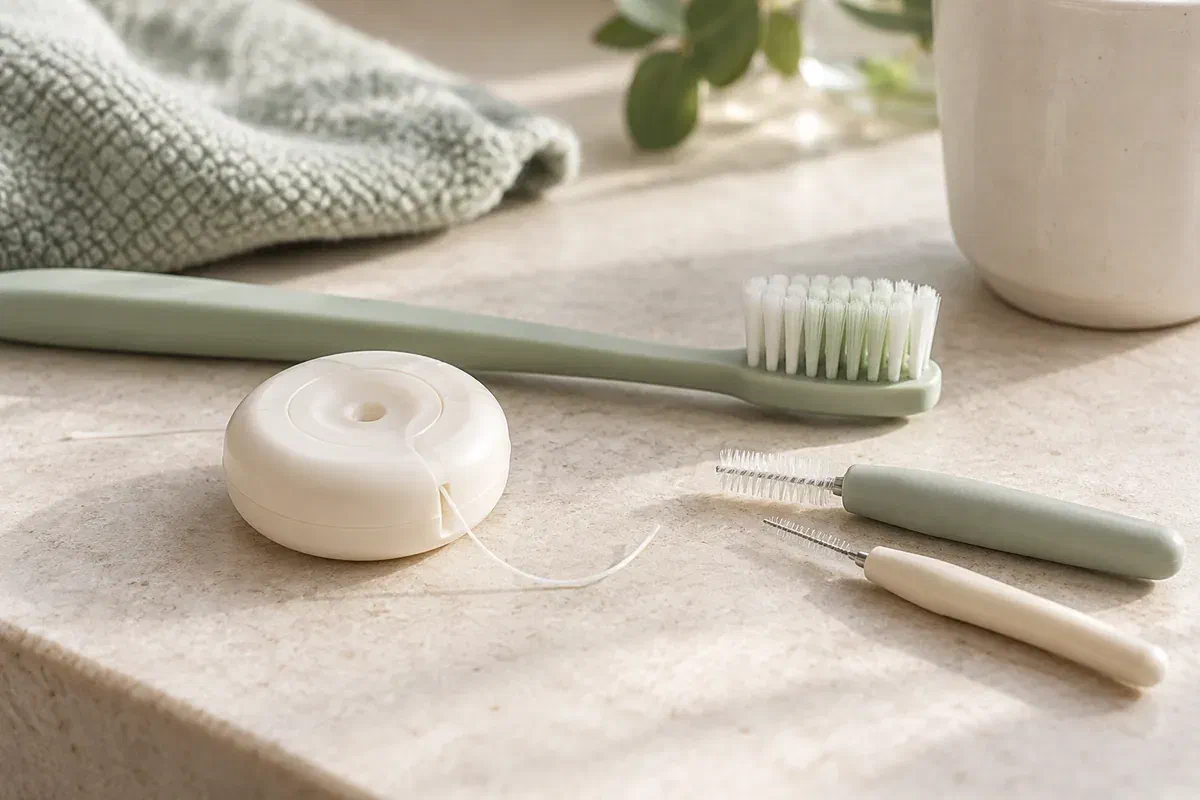
Illustrative soft toothbrush, floss, and interdental brushes arranged beside a ceramic cup
What people often notice

Bleeding, nausea, and a routine that keeps slipping

Come as you are. Tell us what your routine looks like at the moment, which parts have become harder, and what would make cleaning feel more manageable right now.

Back teeth that are hard to reach without gagging

If brushing or flossing the molars triggers nausea, tell us. A smaller brush, a different angle, or a change of timing may help. Mention any crowns or bridges, and show us the spaces where food collects, so the advice targets the right teeth.

Gums that bleed more than usual

Increased bleeding should be examined rather than assumed to be harmless. Describe where it happens and when it began. The clinician can check the tissue, look at your method, explain the likely cause, and say whether more than preventive care is needed.

Health history and medical coordination

Share your pregnancy stage, any medical conditions such as diabetes, medications or supplements, tobacco use, and past periodontal treatment. These help us plan advice and timing, and coordinate with your prenatal provider when appropriate.

Gum changes during pregnancy are common and not a sign you have done something wrong. The visit is about practical steps and appropriate care for this stage.

Why the check is worthwhile

Comfortable care now, and a clear plan for the months ahead

When energy is limited, a few well-chosen habits matter most. Ask which single change will help your gums the most and how to tell whether it is working. If an aid or flavour makes you feel unwell, say so, and we can look for alternatives.

An examination shows what you cannot see at home. Gum inflammation may be painless, so comfort is not a reliable reason to skip a check. Ask how your findings, history, and stage of pregnancy affect the recommended timing of examinations and cleanings.

Patient information: Canadian Dental Association — plaque control, professional cleaning, and gum-disease review

Cleaning methods you can tolerate

Talk about brushing gently with a fluoride toothpaste you can tolerate, and a between-teeth aid that suits your spaces. Ask for help with angle and pressure at the sites you struggle with. Comfort matters, because a routine that makes you queasy will not last.

Professional cleaning when deposits are present

Hardened tartar needs professional removal. The team can tell you where it has formed and whether your gums need care beyond prevention. Ask what the visit will include and what will be compared at your next appointment.

Review timing that fits your circumstances

A history of periodontitis, or findings during pregnancy, may affect how often you should be seen. Ask why the suggested interval suits you and what could change it, including after the baby arrives. With a newborn at home, routines often slip again, so planning a postpartum check in advance can make it more likely to happen.

What to expect

A gentle appointment that works around how you feel

Your visit may involve an examination, practical advice, and professional cleaning where it suits your findings. Ask what will be covered, and let us know about any positioning or comfort needs.

  1. Tell us how things are going

    Share your stage of pregnancy, how your routine has changed, and what has become difficult. Bring your toothbrush and any aids. Mention bleeding, nausea, food trapping, dry mouth, past gum treatment, and any medications or supplements.

  2. Examine your gums and explain the findings

    The clinician checks your gum tissue, and the supporting structures where appropriate, then explains which areas need attention. Ask whether this is prevention or something needing treatment, so advice at home does not take the place of care you need.

  3. Find a routine you can manage

    Try the suggested method on your difficult teeth, with adjustments for nausea or tenderness. Ask about alternative aids if needed. Where relevant, we can coordinate with your prenatal care provider; do not change prescribed medications without their advice.

  4. Plan follow-up around your due date

    Agree on one change to start with and when the next visit makes sense. Ask which symptoms should prompt you to call sooner. At review, tell us how the routine has been going so we can adjust it to your stage.

Between visits

Small changes that make cleaning easier to face

Routines last when tools are handy, steps are simple, and the timing suits your day. Let us know if something stops working rather than letting the routine drop.

Choose the time of day you feel best

If mornings are hard, brush and clean between teeth when you feel steadier. Keep your aids where you will see them. Ask which items you really need so the routine stays short.

Adjust aids for tender gums

Do not force an interdental brush through a tight space or scrub sore gums harder. Tell us where it is uncomfortable and ask for a softer or smaller option. Persistent bleeding or soreness should be checked.

Let us know when things change

Changes in your health, new dental work, or gum symptoms getting worse may mean the plan needs updating. Mention these at your next visit or sooner if needed. After the baby is born, a review can help reset your routine.

Understanding your findings

What kind of gum care do your findings call for?

Ask which description matches your examination. Good home care supports every option, but it does not make them the same or replace a diagnosis.

Keeping gums healthy through changing circumstances

Prevention when no periodontal disease is established

Agree on cleaning, coaching, and examination timing based on what is found. Ask which areas to watch and how changes will be noted. A plan supports ongoing health, but no routine can rule out every future concern.

Responding to a problem identified at the visit

Treatment if inflammation or disease is present

Professional treatment may be needed along with better daily cleaning. Ask what has been found, how it affects your routine, and how care can be timed. Prevention should support treatment rather than delay it.

Continuing care when you have a periodontal history

Maintenance after periodontal treatment

After active care, maintenance visits watch the tissues and address any remaining needs. Ask how they differ from routine cleaning and why that particular spacing was chosen for you. Sites that improved still need to be checked.

Questions from Erin and Hillsburgh

Gum care questions during pregnancy

Bring your aids, tell us what feels difficult, and ask to see a demonstration. Suggestions only help if they suit your mouth, how you are feeling, and your daily life.

(905) 876-4488
Is it safe to have a dental check-up while pregnant?
Routine dental examinations and cleanings are generally considered appropriate during pregnancy. Tell us you are pregnant when booking, and let us know what your prenatal care provider has advised so care can be planned accordingly.
Why do my gums bleed more since I became pregnant?
Hormonal changes can make gums more likely to become inflamed. Bleeding should still be examined. The clinician can check your gums and advise on cleaning, and whether anything further is needed. Keep cleaning gently along the gumline even when it bleeds a little; avoiding the area tends to let plaque build up and keep the irritation going.
What can I do if brushing makes me feel sick?
Try a smaller brush head, a milder-flavoured toothpaste, or brushing at a time of day when nausea is less intense. Mention it at your visit so we can suggest other options. Slowing down, leaning slightly forward, and focusing on breathing through your nose can make reaching the back teeth easier for some people. Even a briefer clean is better than skipping entirely on a difficult day.
Should I rinse after vomiting from morning sickness?
Ask the clinician for advice suited to you. Rinsing with water is often suggested, and some people are advised to wait before brushing. We can discuss what makes sense in your situation.
If my gums don’t hurt, can I skip my review?
Gum inflammation and disease can be painless, so comfort is not a reliable sign. Keep to the interval your examination supports, and let us know before then if the gums keep bleeding or start to swell.
How do I fit a visit in from Erin around prenatal appointments?
Mention your schedule when you call our Bronte Street practice. We can try to arrange a time that works and combine examination, cleaning, and advice where that is appropriate. Many households north of Milton group errands into a single trip, and a dental visit can often be planned the same way.
Erin to Bronte Street

Look after your gums now, while it matters to you most.

Contact our Bronte Street team to arrange a preventive gum visit during pregnancy or while planning one, to ask about difficult cleaning areas, or to discuss a past periodontal diagnosis. We will start with how you are feeling and what you want to know.

Recommendations about home care, professional cleaning, treatment, and follow-up are based on your examination and your health during this time. No routine can guarantee freedom from gum disease.

Visit Milton Dental Clinic
Unit 1, 342 Bronte St. S, Milton, ON L9T 5B7
Get directions Clinic hours
Monday–Thursday
11am–7pm
Friday–Sunday
By appointment only

Areas we serve

  • Milton
  • Oakville
  • Mississauga
  • Georgetown
  • Halton Hills
  • Acton
  • Campbellville
  • Brampton
  • Burlington
  • Puslinch
  • Rockwood
  • Erin
  • Caledon
  • Etobicoke
  • Old Milton
  • Bronte Meadows
  • Timberlea
  • Dorset Park
  • Dempsey
  • Clarke
  • Beaty
  • Coates
  • Harrison
  • Scott
  • Willmott
  • Ford
  • Bowes
  • Cobden
  • Walker
  • Mountain View
  • Milton Heights
  • Hawthorne Village
  • Valley View
  • Fallingbrook
  • Nassagaweya
  • Trafalgar
  • Esquesing
  • Nelson
  • Brookville
  • Moffat
  • Glen Williams
  • Norval
  • Limehouse
  • Stewarttown
  • Ashgrove
  • Hornby
  • Silver Creek
  • Speyside
  • Scotch Block
  • North Oakville
  • River Oaks
  • Glen Abbey
  • West Oak Trails
  • Palermo
  • Bronte Creek
  • College Park
  • Joshua Creek
  • Uptown Core
  • Preserve
  • Iroquois Ridge
  • Lisgar
  • Meadowvale
  • Meadowvale Village
  • Churchill Meadows
  • Erin Mills
  • Central Erin Mills
  • Streetsville
  • East Credit
  • Creditview
  • Heartland
  • Sheridan
  • Mount Pleasant
  • Credit Valley
  • Huttonville
  • Churchville
  • Springbrook
  • Northwest Brampton
  • Bram West
  • Fletcher's Meadow
  • Fletcher's Creek South
  • Alton Village
  • Orchard
  • Millcroft
  • Headon Forest
  • Tansley
  • Brant Hills
  • Tyandaga
  • Kilbride
  • Lowville
  • Aberfoyle
  • Morriston
  • Arkell
  • Hillsburgh
  • Freelton
  • Carlisle
  • Waterdown
  • Flamborough
  • Mountsberg

How can we help?

Milton Dental Clinic

Have a question about your smile? Choose the option that works best for you.

For urgent dental concerns, please call.
Messages are reviewed during clinic hours.