

Illustrative patient discussing a daily gum-care routine with a dental clinician
Specialized Care

Gum Disease Prevention in Halton Hills

Two people in one house can need very different gum care. For households in Halton Hills, we can examine each person’s gums, coach the routine that suits their mouth, and explain why one review interval may be shorter than another.

One household, different gums

Same bathroom, same toothpaste, different gum needs

It surprises people when a spouse is told to come back sooner, or when one adult needs a different floss than the other. Gum disease prevention is individual. It joins daily plaque removal at home with a professional examination that looks at each person’s gum tissue, history, and health, then sets care accordingly.

Mouths vary in ways a shared routine does not account for. One person has tight contacts, another has wider spaces from recession, a third has a bridge or crowded front teeth. Sore hands change things again. Matching each set of teeth with a suitable aid tends to work far better than everyone pressing harder with the same brush.

From anywhere in Halton Hills, it can be practical to book adults in the same household close together. Each person should bring their own aids and point out their own trouble spots. We will examine everyone individually, demonstrate a method for each mouth, and explain why intervals may differ between you.

Book gum reviews for your household
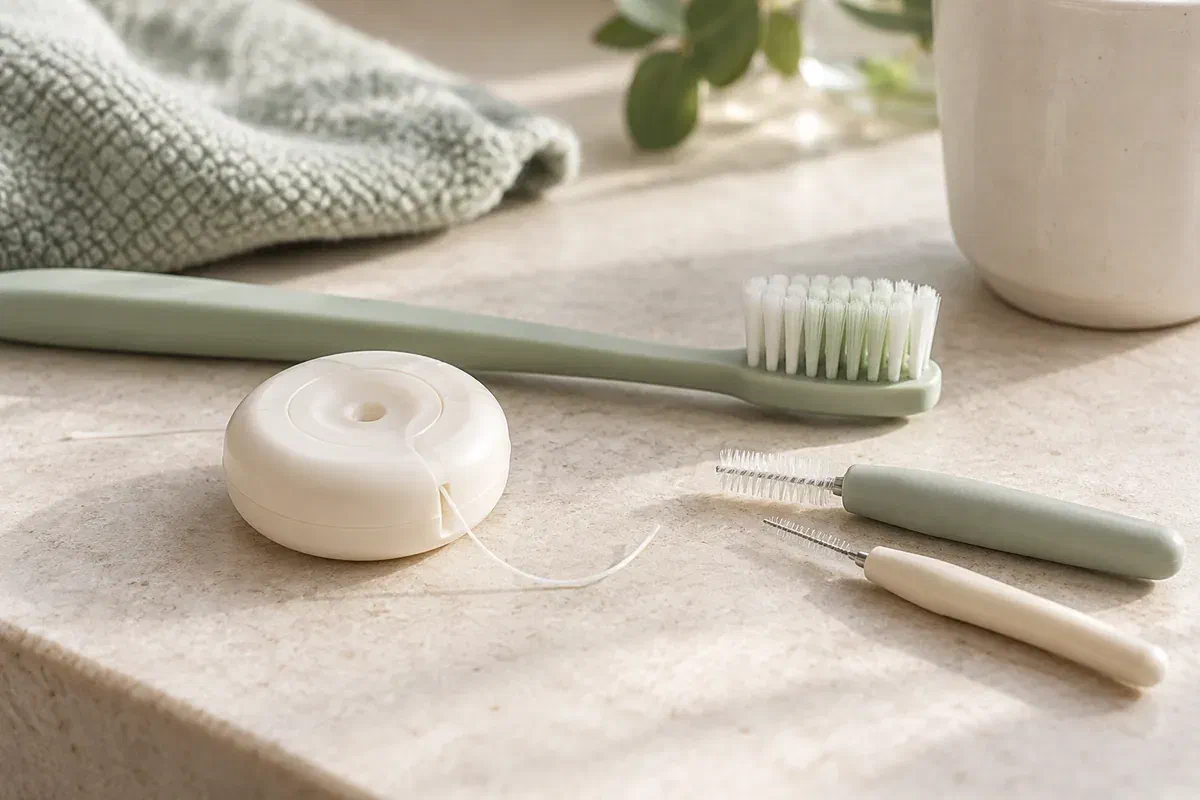
Illustrative soft toothbrush, floss, and interdental brushes arranged beside a ceramic cup
What differs from person to person

Spaces, bleeding, and health history are never identical.

Nobody needs a polished routine to book. Each person can explain what they do now, which steps they skip, and what tends to get in the way at home.

Spaces that need a particular aid

Show the teeth where floss rips, a brush will not pass, or food gathers. Mention any crowns, bridges, or implants. A household rarely shares one ideal tool, so each person benefits from seeing the right technique demonstrated at their own difficult teeth.

Bleeding in one person but not another

If one of you bleeds regularly, that deserves an examination of its own. Describe the location and how long it has been happening. The clinician can check the tissue, review technique, explain the likely reason, and clarify whether prevention or treatment fits.

Individual health, tobacco, and periodontal history

Each person should share their own medical conditions, medicines, and any past gum treatment. Diabetes and smoking are examples of factors that can influence gum health. These details are why advice and review intervals can differ under one roof.

Differences between family members are not a measure of who tries harder. Gum health reflects several factors, and each visit focuses on what will help that person now.

Why individual plans matter

Your gums get their own plan, even if you share a calendar.

Leave with a personal priority rather than a household rule. Ask what you yourself should change first and how to tell an aid is reaching its target. If a recommendation is uncomfortable, or simply clashes with your mornings, mention it, and the plan can be adjusted for you.

A professional examination reveals things home checks cannot. Gum disease may develop with little pain, so feeling fine does not settle whether a review is needed. Ask how your findings and history set your own interval, which may not match anyone else at home.

Patient information: Canadian Dental Association — plaque control, professional cleaning, and gum-disease review

Coaching suited to each mouth

Review gentle brushing with fluoride toothpaste and a between-teeth aid sized for your spaces. Ask for help with angle and pressure at the teeth you find awkward. A tool only helps when the person using it can manage it comfortably.

Professional cleaning based on individual findings

Tartar needs professional removal, and the amount varies from person to person. The team can explain what each of you needs and whether anyone’s findings go beyond prevention. Ask what will be measured and compared when you return.

Intervals set person by person

Someone treated for periodontitis may need closer maintenance than a partner who has not been. Ask why each interval was chosen and what might change it. Timing should follow each person’s clinical picture, not convenience alone.

How the visits work

Individual assessments, booked to suit the household

Every person’s appointment can bring together an examination, practical coaching, and professional cleaning where it fits. Find out what each visit will cover and whether treatment identified for anyone would need its own booking.

  1. Each person describes their own routine

    Talk us through your brushing and between-teeth cleaning, how many days a week each really happens, and what interrupts it. Bring your own aids rather than a shared set. Mention bleeding, food trapping, dryness, past gum treatment, and any change in health or medication, even if it seems unrelated to your mouth.

  2. Examine and set priorities individually

    The clinician assesses gum tissue and supporting structures as appropriate for each person and identifies the sites needing attention. Ask whether your findings mean prevention or active disease, so home advice does not cover up a need for treatment.

  3. Demonstrate a method for each mouth

    See the technique shown on your difficult teeth and try it yourself. Ask about alternatives if an aid is hard to hold. Where relevant, discuss quitting tobacco or coordinating with your physician, without changing prescribed treatment on your own.

  4. Confirm each person’s next step

    Agree on the first change and the reason for the next appointment. Ask which symptoms should prompt an earlier call. At review, share how the routine went so the plan can be fine-tuned for you rather than simply repeated.

At home together

Shared space, separate tools

Routines stick when the aids are easy to reach, the steps are clear, and there is a set time for them. Raise problems early instead of letting a routine fade.

Label or separate the aids

Keep each person’s brushes and interdental sizes apart so nobody ends up using the wrong fit. Choose a regular time for the agreed steps. Ask which items each of you actually needs, so the bathroom shelf stays manageable.

Change the size or method if it hurts

Do not force a brush through a space that is too tight or scrub a sore gumline. Note where the trouble is and ask for an adjustment. Continued bleeding or soreness should be examined, not dismissed.

Update plans as circumstances change

New dental work, reduced hand strength, or gum symptoms returning can make a routine less suitable. Mention these at the next visit or sooner if symptoms call for it. Each plan should remain realistic for the person following it.

Different needs, different visits

Why one person needs prevention and another needs maintenance

Ask which description fits your own findings. Good home care supports every path, yet it does not make the visits equivalent or remove the need for diagnosis.

Keeping healthy gums that way

Preventive care when no periodontal disease is established

Cleaning, coaching, and examination spacing are set around what the clinician sees in your mouth. Ask which teeth need watching and how changes will be recorded from one visit to the next. The plan supports continued health but cannot rule out every future risk.

Dealing with a current problem

Treatment where inflammation or disease is found

Professional treatment may be required in addition to better daily cleaning. Ask for your diagnosis in plain terms and how it changes your routine. Preventive habits support treatment and should not become a reason to delay it.

Ongoing care after a past diagnosis

Supportive maintenance after periodontal treatment

After active care, maintenance visits monitor the tissues and handle remaining needs. Ask what separates them from ordinary preventive cleaning and why your interval suits your history. Previously affected sites still need review even when they feel fine.

Household questions from Halton Hills

When family members get different advice

Each person can bring their own aids, show their difficult teeth, and ask for a demonstration. Advice works best when it fits the individual mouth and daily routine.

(905) 876-4488
Why was my partner given a shorter review interval than me?
Intervals depend on individual findings, history, and health factors. A past periodontal diagnosis, for example, may call for more frequent maintenance. Each person can ask the clinician to explain the reasoning behind their own schedule.
Can gum disease be passed between family members?
The bacteria involved in gum disease are common, but whether disease develops depends on many factors, including each person’s cleaning and health. Ask the clinician if you have concerns about your own risk. Sharing toothbrushes is best avoided in any case, and each person’s gums are assessed on their own findings rather than a relative’s diagnosis.
Should everyone in the house use the same floss or brush size?
Not necessarily. Spaces between teeth differ, so the best aid may vary from person to person. Bring your own tools and ask which sizes suit your mouth. It is common for one adult to need floss at the front and a small brush at the back, while another uses a single aid throughout. Write the sizes down so restocking is easy.
Does a powered toothbrush help with gum prevention?
Some people find a powered brush easier to use well, particularly with limited dexterity. A manual brush can also work when technique is good. Bring the one you use and ask whether it is reaching the gumline effectively.
If neither of us has gum pain, can we push our reviews back?
Pain is not a reliable signal, since gum disease often progresses quietly. Follow the interval recommended for your own findings, even if a partner’s differs, and call sooner about persistent bleeding or swelling. It can help to ask what each review is checking so the purpose stays clear.
Can several adults from Halton Hills be booked on the same day?
Ask when you call our Bronte Street practice. Booking close together can make planning easier for households coming from Georgetown, Acton, or Glen Williams, and each person will still have their own assessment.
Booking from Halton Hills

Book together. Get assessed individually.

Reach our Bronte Street practice to arrange preventive gum care for yourself or other adults in your household, or to discuss difficult cleaning areas and periodontal history. Each person’s visit starts with their own routine and questions.

Advice, professional cleaning, treatment needs, and review intervals depend on each person’s findings. No routine guarantees freedom from future gum disease.

Visit Milton Dental Clinic
Unit 1, 342 Bronte St. S, Milton, ON L9T 5B7
Get directions Clinic hours
Monday–Thursday
11am–7pm
Friday–Sunday
By appointment only

Areas we serve

  • Milton
  • Oakville
  • Mississauga
  • Georgetown
  • Halton Hills
  • Acton
  • Campbellville
  • Brampton
  • Burlington
  • Puslinch
  • Rockwood
  • Erin
  • Caledon
  • Etobicoke
  • Old Milton
  • Bronte Meadows
  • Timberlea
  • Dorset Park
  • Dempsey
  • Clarke
  • Beaty
  • Coates
  • Harrison
  • Scott
  • Willmott
  • Ford
  • Bowes
  • Cobden
  • Walker
  • Mountain View
  • Milton Heights
  • Hawthorne Village
  • Valley View
  • Fallingbrook
  • Nassagaweya
  • Trafalgar
  • Esquesing
  • Nelson
  • Brookville
  • Moffat
  • Glen Williams
  • Norval
  • Limehouse
  • Stewarttown
  • Ashgrove
  • Hornby
  • Silver Creek
  • Speyside
  • Scotch Block
  • North Oakville
  • River Oaks
  • Glen Abbey
  • West Oak Trails
  • Palermo
  • Bronte Creek
  • College Park
  • Joshua Creek
  • Uptown Core
  • Preserve
  • Iroquois Ridge
  • Lisgar
  • Meadowvale
  • Meadowvale Village
  • Churchill Meadows
  • Erin Mills
  • Central Erin Mills
  • Streetsville
  • East Credit
  • Creditview
  • Heartland
  • Sheridan
  • Mount Pleasant
  • Credit Valley
  • Huttonville
  • Churchville
  • Springbrook
  • Northwest Brampton
  • Bram West
  • Fletcher's Meadow
  • Fletcher's Creek South
  • Alton Village
  • Orchard
  • Millcroft
  • Headon Forest
  • Tansley
  • Brant Hills
  • Tyandaga
  • Kilbride
  • Lowville
  • Aberfoyle
  • Morriston
  • Arkell
  • Hillsburgh
  • Freelton
  • Carlisle
  • Waterdown
  • Flamborough
  • Mountsberg

How can we help?

Milton Dental Clinic

Have a question about your smile? Choose the option that works best for you.

For urgent dental concerns, please call.
Messages are reviewed during clinic hours.