

Illustrative patient discussing a daily gum-care routine with a dental clinician
Specialized Care

Gum Disease Prevention in Old Milton

Years of fillings, crowns, and bridges change where plaque likes to hide. For anyone in Old Milton, our nearby Bronte Street practice can review the gums around that dental work, adapt your cleaning tools, and plan follow-up around your history.

Prevention near Milton’s historic downtown

Has your mouth changed more than your brushing has?

Plenty of people still clean their teeth the way they were taught decades ago, even though the mouth itself has moved on. A bridge has arrived, a crown sits where a filling used to be, or gums have drawn back a little. Preventing gum disease means updating home cleaning for those surfaces and pairing it with periodic professional checks.

Dental work creates edges, gaps, and undersides that a toothbrush simply skims past. A pontic sitting over the gum, a crowded corner, or wider spaces after recession may each need a different aid. Stiff fingers can complicate things further. In those cases a better-matched tool usually helps more than extra force or an aggressive rinse.

Old Milton is a short distance from our Bronte Street practice, which makes a focused review straightforward to arrange. Bring the tools you rely on and tell us which teeth feel neglected. We can examine the gums, show you a method around your restorations, and suggest a review interval that can be revised as things change.

Talk about gums around your dental work
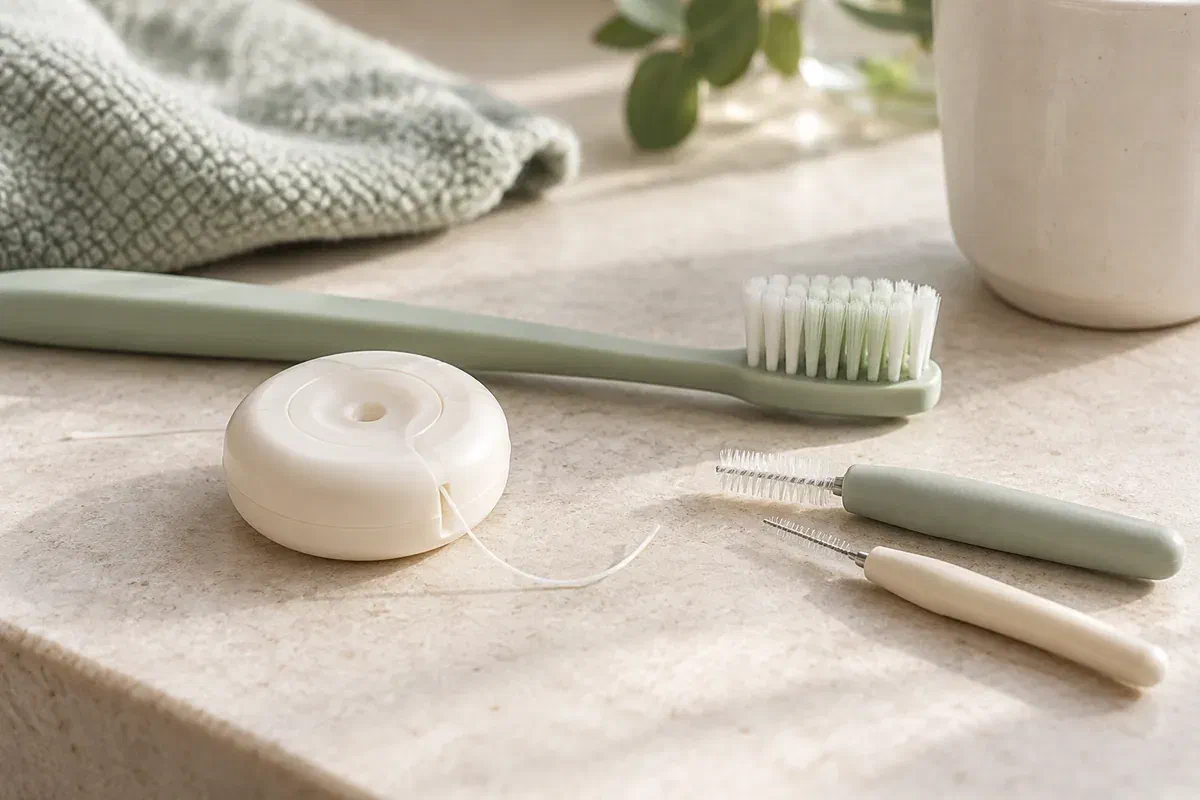
Illustrative soft toothbrush, floss, and interdental brushes arranged beside a ceramic cup
Where routines fall behind

Crowns, bridges, and receding gums need their own plan

Arrive with whatever routine you have now. Tell us the steps you keep up, the ones that have slipped, and any physical limits, so the advice suits how your hands and your teeth work today.

Restorations that trap food or block floss

Show where floss will not slide under a bridge, where a crown margin catches, or where meals leave debris behind. Tell us how old the work is if you know. Seeing the right technique at those sites beats a general reminder to clean between teeth.

Bleeding you have quietly put up with

Long-standing bleeding should be looked at, not accepted as part of getting older. Describe where it happens and roughly when it started. The clinician can examine the gums, review how you clean, explain what is probably going on, and say whether treatment is needed beyond prevention.

New medicines, diagnoses, or a past periodontal history

Share recent health changes and any earlier gum treatment. Diabetes and tobacco use are examples of influences on gum health that affect planning. When we know about them, review intervals and home advice can be shaped around you rather than a generic schedule.

Gum problems are not a verdict on how well you have looked after yourself. Several factors play a part, and the conversation is about choosing helpful actions and suitable care from now on.

What the plan gives you

Fewer products, clearer instructions

A cupboard of half-used gadgets rarely helps. One or two specific instructions usually do more. Ask what to change first and how to tell whether an aid is actually cleaning the surface it targets. If a suggestion is awkward or sore to use, tell us, because that shapes the next version of the plan.

An examination adds what you cannot see at home. Gum disease often develops without much discomfort, so a comfortable mouth is not proof that a review can wait. Ask how your findings today, and any periodontal history, affect the suggested interval between examinations and cleanings.

Patient information: Canadian Dental Association — plaque control, professional cleaning, and gum-disease review

Daily cleaning matched to your restorations

Talk about gentle brushing with fluoride toothpaste and the right way to clean between teeth and under bridgework. Ask for help with angle and pressure at the stubborn sites. An aid is only worthwhile if you can handle it comfortably at the places it is designed for.

Professional cleaning of hardened buildup

Calculus stays put no matter how carefully you brush. The team can point out where professional cleaning is needed and whether your gums need more than preventive care. Ask what the visit adds to your daily efforts and which findings will be compared when you return.

Review intervals that reflect your past

If you have been treated for periodontitis, maintenance may look different from someone without that history. Ask why your interval was chosen and what would change it. Timing should rest on a clinical reason rather than tradition or a convenient month.

Your visit, step by step

Look closely, practise together, then agree on a pace.

A prevention appointment can involve an examination, coaching, and any suitable professional cleaning. Ask in advance what yours will include and whether treatment found during the examination would need its own visit.

  1. Walk us through your routine

    Explain how and how often you brush and clean between teeth, and which parts are hardest. Bring the aids you would like checked. Mention bleeding, food trapping, a dry mouth, past gum treatment, and any change in your health or medications.

  2. Check the tissues around teeth and dental work

    The clinician examines the gums and supporting structures as appropriate, paying attention to crowns, bridges, and areas of recession. Ask whether the findings fit prevention or show active disease. That distinction keeps a cleaning chat from overshadowing a problem needing treatment.

  3. Try the method on the difficult sites

    Watch the technique on the teeth you struggle with, then have a go with guidance. If grip or reach is a problem, ask about alternatives. Where relevant, talk about tobacco support or working with your physician, without changing prescribed medicines yourself.

  4. Choose a starting change and a review

    Agree on the one habit you will begin with and what the next appointment is meant to do. Ask which signs should prompt an earlier call. At review, describe what helped and what did not, so the plan evolves instead of repeating itself.

Living with the routine

Small adjustments keep a routine from being abandoned.

Habits last when the tools are within reach, the steps are clear, and there is a natural moment for them. Mention difficulties as they come up instead of waiting until the routine has quietly stopped.

Keep the essentials in one place

Choose a regular time and spot for the agreed steps. When you are away or your days change, think about how to bring the basics along. Ask which items really matter so you are not relying on a crowded drawer of products.

Speak up if a tool causes pain

Do not push an interdental brush into a space that is too tight or brush tender gums harder. Tell us where the problem is and ask for a different size or method. Persistent bleeding or soreness deserves assessment rather than being written off as normal.

Revisit the plan when life or dental work changes

A new crown, arthritis in the hands, or gum symptoms coming back can make an established routine unsuitable. Raise these at your next visit, or sooner if symptoms justify it. The plan should stay workable and clinically appropriate.

Matching care to your gums

Not every gum visit has the same purpose

Ask which of these describes your findings today. Good home care supports all three, but it does not make the visits interchangeable or take the place of a diagnosis.

Maintaining health and responding to early warning signs

Prevention for gums without diagnosed periodontal disease

Discuss cleaning, practical coaching, and examination timing based on what was found. Ask which sites need watching and how changes will be recorded. The goal is ongoing health, without any promise that a routine removes all future risk.

Addressing a problem found during assessment

Treatment once inflammation or disease is identified

Professional treatment may be required in addition to improved home cleaning. Ask what the diagnosis is and how it alters the advice. Prevention should work alongside that treatment, not become a reason to delay it.

Following up a previous periodontal diagnosis

Periodontal maintenance following treatment

After active treatment, regular assessment and maintenance keep watch on the tissues and handle remaining needs. Ask how this differs from a routine preventive cleaning and why the timing reflects your past care. Sites treated before still need monitoring after they feel better.

Old Milton gum questions

What people ask once their dental work starts to add up

Bring the aid you use, point out the tricky tooth, and ask to see the method. The most useful advice fits your restorations, your hands, and your daily habits.

(905) 876-4488
How do I clean under a fixed bridge?
A regular toothbrush cannot reach beneath the false tooth. Floss threaders, specially designed floss, or small brushes may help, depending on the space. Ask to have the method shown on your own bridge so you can repeat it comfortably at home.
My gums have receded. Does that change how I should clean?
It can. Exposed root surfaces and wider spaces may suit a softer approach or different aids. Ask the clinician to check the receded areas and show you how to clean them gently, rather than brushing harder in the hope of keeping them clean.
Is arthritis a reason to give up on flossing?
It is a reason to find a different method. Floss holders, interdental brushes with larger handles, or a powered brush may be easier to manage. Describe what is difficult and ask to try an option during your visit.
Can the right mouthwash make up for missed cleaning?
No rinse removes plaque the way brushing and between-teeth cleaning do. Ask whether a rinse has a specific purpose in your plan and how to use it. It should support the routine, not replace it.
If nothing hurts, is a gum review still needed?
Yes, often. Gum disease can progress with little discomfort, so how your mouth feels is not a reliable guide. Follow the interval agreed after your examination and call sooner if bleeding or swelling persists.
Is a short notice visit realistic from Old Milton?
It is worth calling to ask. Our Bronte Street practice keeps Monday to Thursday hours from 11am to 7pm, with weekend and Friday visits by appointment. Bring your medicine list and cleaning aids to make the appointment count.
Visit us from Old Milton

Bring the routine you have. We will help it fit the mouth you have now.

Contact our Bronte Street practice about preventive gum care, cleaning around dental work, or a periodontal history. We will start with what you do today and the questions you want answered.

Recommendations, cleaning, treatment needs, and review timing depend on what your examination shows. No routine can promise you will avoid gum disease in future.

Visit Milton Dental Clinic
Unit 1, 342 Bronte St. S, Milton, ON L9T 5B7
Get directions Clinic hours
Monday–Thursday
11am–7pm
Friday–Sunday
By appointment only

Areas we serve

  • Milton
  • Oakville
  • Mississauga
  • Georgetown
  • Halton Hills
  • Acton
  • Campbellville
  • Brampton
  • Burlington
  • Puslinch
  • Rockwood
  • Erin
  • Caledon
  • Etobicoke
  • Old Milton
  • Bronte Meadows
  • Timberlea
  • Dorset Park
  • Dempsey
  • Clarke
  • Beaty
  • Coates
  • Harrison
  • Scott
  • Willmott
  • Ford
  • Bowes
  • Cobden
  • Walker
  • Mountain View
  • Milton Heights
  • Hawthorne Village
  • Valley View
  • Fallingbrook
  • Nassagaweya
  • Trafalgar
  • Esquesing
  • Nelson
  • Brookville
  • Moffat
  • Glen Williams
  • Norval
  • Limehouse
  • Stewarttown
  • Ashgrove
  • Hornby
  • Silver Creek
  • Speyside
  • Scotch Block
  • North Oakville
  • River Oaks
  • Glen Abbey
  • West Oak Trails
  • Palermo
  • Bronte Creek
  • College Park
  • Joshua Creek
  • Uptown Core
  • Preserve
  • Iroquois Ridge
  • Lisgar
  • Meadowvale
  • Meadowvale Village
  • Churchill Meadows
  • Erin Mills
  • Central Erin Mills
  • Streetsville
  • East Credit
  • Creditview
  • Heartland
  • Sheridan
  • Mount Pleasant
  • Credit Valley
  • Huttonville
  • Churchville
  • Springbrook
  • Northwest Brampton
  • Bram West
  • Fletcher's Meadow
  • Fletcher's Creek South
  • Alton Village
  • Orchard
  • Millcroft
  • Headon Forest
  • Tansley
  • Brant Hills
  • Tyandaga
  • Kilbride
  • Lowville
  • Aberfoyle
  • Morriston
  • Arkell
  • Hillsburgh
  • Freelton
  • Carlisle
  • Waterdown
  • Flamborough
  • Mountsberg

How can we help?

Milton Dental Clinic

Have a question about your smile? Choose the option that works best for you.

For urgent dental concerns, please call.
Messages are reviewed during clinic hours.