

Illustrative patient discussing a daily gum-care routine with a dental clinician
Specialized Care

Gum Disease Prevention in Rockwood

Helping a parent or partner keep their gums healthy is harder than doing your own. If you are coming from Rockwood with someone you care for, we can examine their gums, show both of you a workable routine, and plan reviews around their history and needs.

Caregivers welcome from Rockwood

When the hands holding the toothbrush are not always theirs

An older parent with arthritis, a partner recovering from surgery, or a relative whose memory is changing may need help with daily cleaning. That shifts gum disease prevention into a shared task. Plaque still has to be cleared from the tooth surfaces and between teeth each day, and an examination still needs to check for changes nobody at home would see.

Cleaning another adult’s teeth is awkward at first. Angles feel wrong, it is hard to see, and the person may tire quickly or find certain aids uncomfortable. Bridges, partial dentures, or crowded teeth make it trickier still. Choosing a simpler aid, a better position, or a shorter routine usually helps far more than trying to do everything with more force.

From Rockwood, plan for the visit to include both of you if that is what works best. Bring the aids currently used and a list of medications. We will examine the gums, demonstrate a method that the person or their helper can manage, and suggest a review interval that suits their health and the effort involved in getting here.

Plan gum care for someone you support
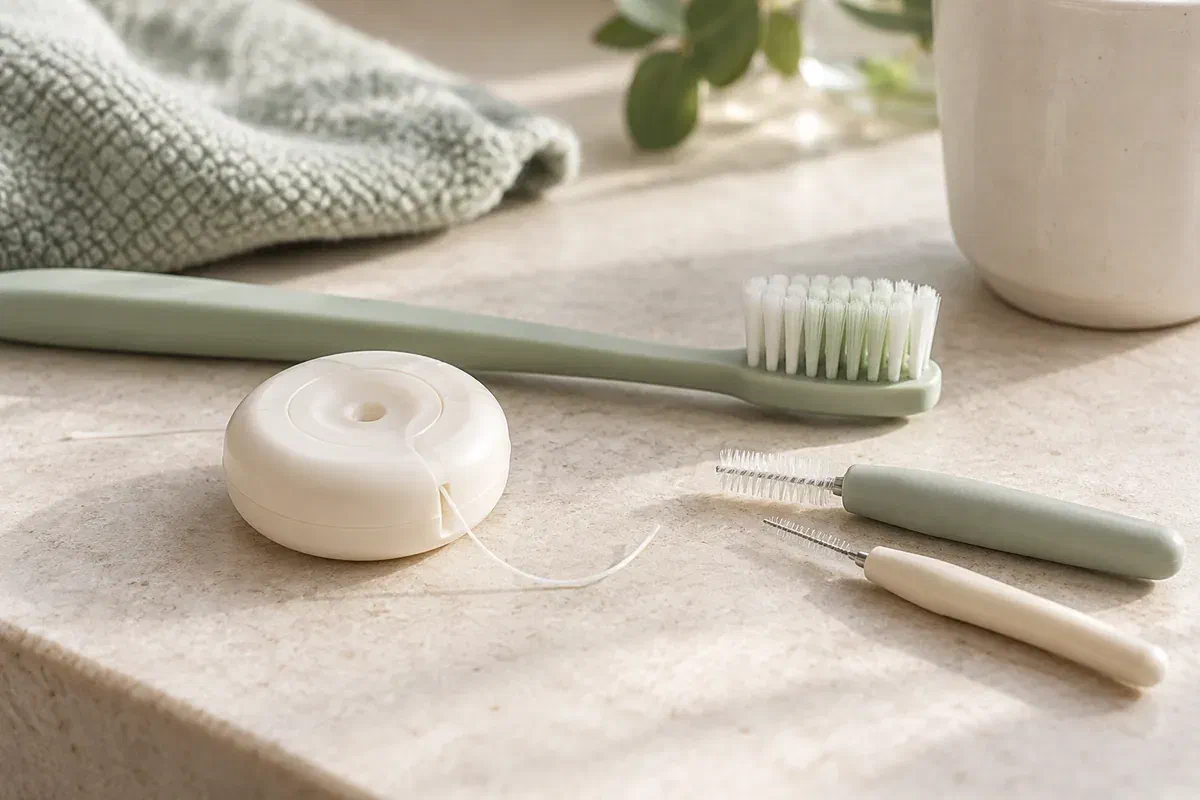
Illustrative soft toothbrush, floss, and interdental brushes arranged beside a ceramic cup
Common challenges for helpers

What makes cleaning someone else’s teeth difficult?

You do not have to arrive with a system already worked out. Tell us what you do now, who does which part, and what makes it hard, whether that is time, comfort, cooperation, or reach.

Teeth and dental work that are hard to reach for a helper

Point out where food collects, where floss is impossible to manage for someone else, or where a partial denture or bridge complicates things. A demonstration from the helper’s position, not just the patient’s, makes the advice usable at home.

Bleeding or soreness during cleaning

If gums bleed or the person flinches during cleaning, that deserves an examination. Note where it happens and how long it has been going on. The clinician can check the tissue, review the method, explain the likely reason, and say whether treatment is needed beyond prevention.

Medical conditions, medications, and past gum care

Bring a medication list and any details of conditions, tobacco use, or earlier periodontal treatment. Diabetes and other health factors can influence gum health. These details help set realistic advice and review timing for the person you are supporting.

Needing help with cleaning is common and nothing to apologise for. The visit focuses on making daily care workable and choosing the right level of professional care from here.

What helpers and patients gain

Simple steps that both of you can follow

Clear, limited instructions are easiest to share between two people. Ask which part of the routine is most important and how to tell whether it is being done effectively. If an aid causes discomfort or the person resists it, mention that, so a gentler or quicker alternative can be suggested.

Professional examination adds information that neither of you can gather at home. Gum disease can develop with little pain, and some people may not report discomfort clearly. Ask how the findings, history, and overall health influence how often examinations and cleanings should be scheduled.

Patient information: Canadian Dental Association — plaque control, professional cleaning, and gum-disease review

A daily routine adapted to a helper

Review how to brush softly with a fluoride toothpaste, and pick a between-teeth aid that someone else can use safely. Ask which position works best and how to manage pressure. An aid only helps if it can be used comfortably by whoever is holding it.

Professional cleaning where it is needed

Tartar must be removed professionally. The team can identify where it has built up, whether the gums need more than preventive care, and how to make appointments as comfortable as possible. Ask what each visit will cover and what will be checked next time.

A review schedule with realistic timing

Someone with a history of periodontitis may need closer maintenance. Ask why a particular interval is suggested and what could change it. Timing should reflect clinical need while taking into account what is practical for the person and their caregiver.

How we work with you both

A visit built around the person and the helper

Expect an examination, hands-on guidance for whoever does the cleaning, and professional cleaning where it suits the findings. Check in advance what will be covered, whether treatment would need another visit, and whether mobility, hearing, or comfort needs should be planned for.

  1. Explain the current arrangement

    Tell us who brushes, who cleans between teeth, how often each happens, and what gets in the way. Bring the aids you use. Mention bleeding, food trapping, dry mouth, previous gum treatment, and changes in health or medications.

  2. Examine and choose priorities

    We look at the gum tissue, and at the support around the teeth where that is appropriate, then point out which areas need the most attention. Ask whether the findings fit prevention or active disease, so home care does not mask a need for treatment.

  3. Demonstrate from the helper’s side

    We can show the technique on the person’s teeth and let the helper practise with guidance. If an aid is hard to manage, ask about alternatives. Where relevant, discuss coordination with the person’s physician, without adjusting prescribed treatment.

  4. Agree on a manageable plan

    Decide on one priority to start with and what the next visit will check. Ask which signs should prompt an earlier call. At review, share what has been realistic and what has not, so the routine can be simplified or adjusted.

Making it work at home

A calm, short routine at the same time each day

Shared routines last when tools are easy to find, the steps are agreed, and there is a predictable moment. Raise difficulties early rather than letting care quietly stop.

Keep everything together and ready

Store the brush, aids, and any denture supplies in one place, and choose a regular time when both of you are rested. If the person stays elsewhere for a while, send the essentials along. Ask which items truly matter.

Stop if cleaning causes pain

Do not force an aid into a tight space or brush harder on sore gums. Note where it hurts and ask about a different size, a softer aid, or another approach. Persistent bleeding or soreness should be assessed.

Update the plan when health changes

A hospital stay, new medicines, reduced mobility, or returning gum symptoms may mean the routine needs revising. Mention these at the next visit or call sooner if symptoms warrant it. The plan should stay manageable for both of you.

Matching care to the findings

Not all gum care has the same aim.

Ask which category applies to the current findings. Good daily care supports all three, but it cannot make the visits interchangeable or replace diagnosis.

Keeping gums healthy with practical support

Prevention for gums without established periodontal disease

Agree on cleaning, coaching, and examination timing that suits the findings and the helper’s capacity. Ask which areas to watch and how changes will be tracked. No routine can rule out all future problems, but a plan supports ongoing health.

Responding to an identified problem

Treatment when inflammation or disease is found

Professional treatment may be needed as well as improved daily cleaning. Ask what has been found and how it changes the routine at home. Prevention should support treatment, not delay it.

Continuing care for a past periodontal diagnosis

Maintenance after periodontal treatment

After active care, maintenance visits keep an eye on the tissues and handle any remaining needs. Ask how they differ from ordinary cleanings and why the chosen spacing suits the person’s history. Treated sites still need follow-up.

Caregiver questions from Rockwood

Helping someone else keep their gums healthy

Bring the aids you use, show us what feels difficult, and ask for a demonstration from the helper’s side. Advice works best when it fits the person and the people supporting them.

(905) 876-4488
What is the easiest position for brushing someone else’s teeth?
It depends on the person and the setting. Some helpers find standing behind a seated person easier, while others prefer sitting beside them. Ask the clinician to suggest and demonstrate a position that suits you both.
Is a powered toothbrush helpful for someone with arthritis?
Many people with limited grip find a powered brush or a thicker handle easier. Bring the current brush to your visit and ask whether an alternative would make cleaning more comfortable.
How do I clean around a partial denture?
Partials are usually removed for cleaning so the natural teeth and gums can be cleaned properly. Ask the clinician to show you how to clean both the denture and the teeth it touches, paying particular attention to the clasps, where plaque can collect against the natural teeth.
What if the person I care for refuses to have their teeth cleaned?
Mention it at the visit. The clinician can suggest ways to make cleaning shorter or more comfortable, and discuss what matters most if a full routine is not possible. Picking a calmer time of day, explaining each step before you do it, or splitting the routine into two short sessions can help some people feel more at ease.
Can we skip reviews if they do not complain of pain?
No. Gum disease can progress without pain, and some people may not report discomfort. Keep to the interval agreed after the examination and call sooner if bleeding or swelling appears.
How can we make the trip from Rockwood easier?
Tell our Bronte Street practice about any mobility or comfort needs when booking, and ask whether examination, cleaning, and coaching can be combined. Bring medications, aids, and any relevant notes.
Planning a visit from Rockwood

Come together, and leave with a routine you can share.

Contact our Bronte Street team to arrange preventive gum care for someone you support, ask about difficult cleaning areas, or discuss a past periodontal diagnosis. We will start with the current routine and both of your questions.

Advice, cleaning, treatment, and review intervals depend on individual findings. No routine can guarantee that gum disease will not develop.

Visit Milton Dental Clinic
Unit 1, 342 Bronte St. S, Milton, ON L9T 5B7
Get directions Clinic hours
Monday–Thursday
11am–7pm
Friday–Sunday
By appointment only

Areas we serve

  • Milton
  • Oakville
  • Mississauga
  • Georgetown
  • Halton Hills
  • Acton
  • Campbellville
  • Brampton
  • Burlington
  • Puslinch
  • Rockwood
  • Erin
  • Caledon
  • Etobicoke
  • Old Milton
  • Bronte Meadows
  • Timberlea
  • Dorset Park
  • Dempsey
  • Clarke
  • Beaty
  • Coates
  • Harrison
  • Scott
  • Willmott
  • Ford
  • Bowes
  • Cobden
  • Walker
  • Mountain View
  • Milton Heights
  • Hawthorne Village
  • Valley View
  • Fallingbrook
  • Nassagaweya
  • Trafalgar
  • Esquesing
  • Nelson
  • Brookville
  • Moffat
  • Glen Williams
  • Norval
  • Limehouse
  • Stewarttown
  • Ashgrove
  • Hornby
  • Silver Creek
  • Speyside
  • Scotch Block
  • North Oakville
  • River Oaks
  • Glen Abbey
  • West Oak Trails
  • Palermo
  • Bronte Creek
  • College Park
  • Joshua Creek
  • Uptown Core
  • Preserve
  • Iroquois Ridge
  • Lisgar
  • Meadowvale
  • Meadowvale Village
  • Churchill Meadows
  • Erin Mills
  • Central Erin Mills
  • Streetsville
  • East Credit
  • Creditview
  • Heartland
  • Sheridan
  • Mount Pleasant
  • Credit Valley
  • Huttonville
  • Churchville
  • Springbrook
  • Northwest Brampton
  • Bram West
  • Fletcher's Meadow
  • Fletcher's Creek South
  • Alton Village
  • Orchard
  • Millcroft
  • Headon Forest
  • Tansley
  • Brant Hills
  • Tyandaga
  • Kilbride
  • Lowville
  • Aberfoyle
  • Morriston
  • Arkell
  • Hillsburgh
  • Freelton
  • Carlisle
  • Waterdown
  • Flamborough
  • Mountsberg

How can we help?

Milton Dental Clinic

Have a question about your smile? Choose the option that works best for you.

For urgent dental concerns, please call.
Messages are reviewed during clinic hours.