

Illustrative patient and clinician discussing options beside a small gum model
Specialized Care

Gum Grafting in Brampton

Firm bristles, a scrubbing stroke and good intentions can all play a part in a receding gum. From Brampton, you can have the area assessed to understand what may be driving the change, whether a graft has a clear role, and which habits, simpler measures or specialist care should come first.

Causes before cures

Start with your toothbrush, not the operating chair.

People who brush the hardest are often the most conscientious, and they're sometimes surprised to hear that technique may be contributing to recession. Pressure, a stiff brush, inflammation, tooth position and thin tissue can all play a role. Identifying the likely mix matters before deciding what treatment, if any, should follow.

A gum graft is a way of adding or moving soft tissue at a tooth so a particular goal can be met. That might mean thicker, more resilient tissue, partial coverage of a root surface, or a margin that's easier to clean without discomfort. A graft chosen for one of those purposes won't necessarily achieve the others.

Bring your usual toothbrush to the visit if you like, and describe your routine honestly. We'll examine the gum, the support around the tooth and any signs of what's contributing. Then we'll explain whether habit changes, monitoring, nonsurgical care, a periodontal referral or a graft looks most appropriate.

Book a gum check from Brampton
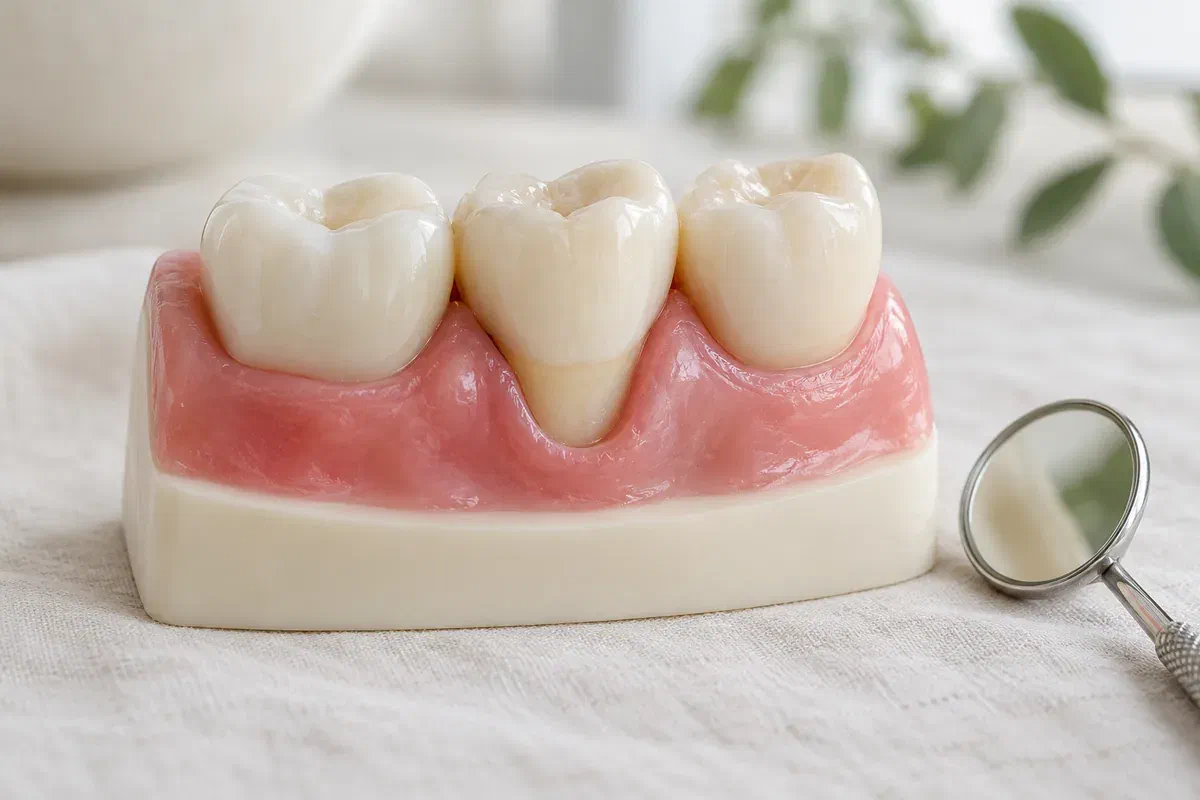
Illustrative physical tooth-and-gum model showing a localized lowered gum margin
Signs that send people in

Something changed at the gumline. What now?

Say whether your main worry is a tooth that looks different, a tender spot, cleaning trouble or a suggestion from another dentist. That lets us direct the visit, and the examination clarifies which outcomes are possible.

Root surface showing where gum used to be

Show us the tooth and tell us roughly when you noticed it. Previous photos or charts can reveal whether the site is still moving. We'll talk through what might be contributing, including brushing, and what we'd want to confirm before suggesting watching or treating it.

A spot that stings or is awkward to brush

Describe whether cold drinks, sweets or the brush itself set it off. Many things can cause sensitivity, and recession is only one of them. We can look at whether a gentler technique or a nonsurgical product might help, and what grafting would contribute beyond that.

A note about delicate tissue before other treatment

If grafting came up before orthodontic or restorative work, ask what was seen, how the steps fit and who organizes them. A clear recommendation explains the issue at that specific tooth rather than relying on the word thin to justify surgery.

A graft works with the gum tissue only. It isn't a fix for bone or attachment already lost to periodontal disease, and a completely covered root is never guaranteed.

What a graft is for

Be specific about the benefit you're paying for.

Success has to be judged against why a graft was done. At one tooth, the main target might be sturdier tissue that copes better with daily brushing. At another, covering part of the root could be reasonable. Ask what should change at your tooth and what is likely to stay the same afterward.

If brushing pressure contributed, it will keep contributing unless it changes. The same goes for inflammation or other habits. Surgery should be one part of a broader plan that includes a sustainable routine, regular cleanings and follow-up, not a replacement for any of them.

Patient information: Cambridge University Hospitals — soft-tissue grafting goals, procedure, and risks

An honest forecast for that tooth

The tissue and bone around nearby teeth shape what can be reached, and two sites in your mouth can have different outlooks. A good explanation sets out the intended improvement, what's uncertain, and how the result will be reviewed later on.

Knowing what tissue will be used

Some grafts use tissue taken from the palate; other materials may be appropriate in certain cases. Find out which one is planned, why, and whether your palate would also need time to recover. That information is part of consenting to treatment.

A frank look at healing and its limits

Discuss expected soreness, changes to eating and cleaning, stitches, review visits and possible complications. Think about work and family commitments around the date. Every procedure carries some risk, and further care might be needed if healing doesn't match the goal.

The path to a decision

Habits, findings, options, then treatment

Coming from Brampton, you may find that assessment and surgery happen in different places, sometimes with different clinicians. Ask where each step would be done and how records and reviews will be shared before you book anything.

  1. Describe your routine and have the area examined

    We'll ask about symptoms, past gum care, how and how often you brush and floss, your health history and medicines. The recession and the surrounding support are assessed. If more records or a periodontist's view would help, we'll explain why.

  2. Weigh habit changes, monitoring and surgery

    We compare adjusting technique, watching the site, nonsurgical care and grafting where each fits. Ask what would happen if you changed habits first and waited, and what improvement surgery could realistically add. Tissue source, any donor site, anaesthetic, fees and preparation should all be explained.

  3. Go ahead with the graft if it's warranted

    Whoever performs the surgery walks you through preparing the site and stabilizing the new tissue. Local anaesthetic is usually used, and other arrangements are assessed individually. The exact approach and setting depend on the tooth, the goal and the provider.

  4. Heal, then build a gentler routine

    Get written instructions covering cleaning, eating, medicines and stitches for the graft and any donor area. Confirm your review dates and when to restart normal brushing. Ask for coaching on a technique that protects the result over the long term.

After the procedure

Hold the brush back until you're told otherwise.

Recovery instructions should fit the procedure you had. If the graft and donor area have different guidance, ask for clarity, and keep the treating office's number where you can find it quickly.

Keep hands and mirrors away

Lifting the lip to inspect the graft, pressing on it or testing whether it has settled can disturb the tissue. The clinician will check it at review. If you're the type who likes to monitor progress, this is the moment to trust the process instead.

Use the temporary cleaning plan

Your usual brushing and flossing may need to stop at the surgical site for a time, which can feel strange if you're diligent. Your written notes should say which teeth to leave alone, whether a rinse stands in for the brush, and what to eat until you're cleared. Don't scrub a new graft.

Speak up about unexpected symptoms

Find out what level of soreness is normal and which pain relief is safe with your health history. Contact the treating provider about bleeding that won't stop, rising pain, fever or other concerns. Keep the review even if the area seems comfortable.

Patient information: Guy's and St Thomas' — protecting a gum graft and following postoperative instructions

Choosing a route

Sometimes the best first step is a softer brush.

Line the choices up against what the exam actually found. A good plan weighs how the tooth feels, whether the gum is still moving, the tissue and bone in that area, and what you most want to change.

When the site appears stable

Change the routine and keep watching

The area can be recorded, your technique and brush adjusted, and the site rechecked over time. Agree on the kind of shift that would put grafting back on the table, and how one visit's findings will be set beside the next. Monitoring should have a clear purpose and date.

When comfort is the immediate need

Ease the symptom without surgery

Desensitizing products, treating inflammation or a lighter touch with the brush may help where suitable. These won't rebuild tissue, so ask what each can realistically achieve. Relief from sensitivity and the structural concern may need separate parts of the plan.

When the examination supports surgery

A graft with a stated purpose

Compare the expected tissue change with the risks and recovery. Ask which technique is planned and who would carry it out. A grafting page online isn't proof of suitability, an in-house specialist, or a promise of full coverage.

Brushing and grafting questions

What to ask before surgery

Point out the area and ask for any recommendation to be explained in terms of your own exam. These questions can help you separate the likely causes from the proposed fix.

(905) 876-4488
Can brushing too hard really cause gums to recede?
It’s one of several possible contributors, often alongside thin tissue, tooth position or inflammation. We can look at your technique and brush and suggest changes. Improving habits may help protect the area whether or not a graft is eventually needed.
Is an electric toothbrush better or worse for receding gums?
Either can work when used gently. Some electric brushes include pressure warnings, which can help people who press hard. Ask us to watch your technique and recommend a brush and approach that suit your mouth.
If I change how I brush, will the gum grow back?
Gum tissue that has receded doesn’t usually return on its own. Better technique may help prevent further change, which is why it’s often a first step. Ask whether monitoring after the change is reasonable for your site.
Does every graft aim to cover the whole exposed root?
No. Some grafts mainly target tissue thickness, and the coverage possible depends on the site. Ask what outcome is intended at your tooth and what limits it. Complete coverage should not be promised automatically.
Is the palate always the source of graft tissue?
Not always. What makes sense for a scrubbing-related site may differ from other cases, and the surgeon will explain the reasoning. Ask what material is planned, why, and how it affects healing and consent.
When can I go back to my normal brushing after a graft?
Your surgeon sets that date, and timing varies with the procedure. Until then, follow the temporary cleaning instructions for the site. When normal brushing resumes, ask for guidance on a gentle technique that protects the result.
Brampton gum consultations

Find the cause, then decide on the care.

Contact our Bronte Street practice about recession, a sensitive area or a grafting suggestion. We'll explain what the assessment involves and how we work with a periodontist or your regular dentist when that's needed.

Whether grafting is appropriate, and the method, tissue source, referral, fees, healing time and likely coverage, depend on an individual exam.

Visit Milton Dental Clinic
Unit 1, 342 Bronte St. S, Milton, ON L9T 5B7
Get directions Clinic hours
Monday–Thursday
11am–7pm
Friday–Sunday
By appointment only

Areas we serve

  • Milton
  • Oakville
  • Mississauga
  • Georgetown
  • Halton Hills
  • Acton
  • Campbellville
  • Brampton
  • Burlington
  • Puslinch
  • Rockwood
  • Erin
  • Caledon
  • Etobicoke
  • Old Milton
  • Bronte Meadows
  • Timberlea
  • Dorset Park
  • Dempsey
  • Clarke
  • Beaty
  • Coates
  • Harrison
  • Scott
  • Willmott
  • Ford
  • Bowes
  • Cobden
  • Walker
  • Mountain View
  • Milton Heights
  • Hawthorne Village
  • Valley View
  • Fallingbrook
  • Nassagaweya
  • Trafalgar
  • Esquesing
  • Nelson
  • Brookville
  • Moffat
  • Glen Williams
  • Norval
  • Limehouse
  • Stewarttown
  • Ashgrove
  • Hornby
  • Silver Creek
  • Speyside
  • Scotch Block
  • North Oakville
  • River Oaks
  • Glen Abbey
  • West Oak Trails
  • Palermo
  • Bronte Creek
  • College Park
  • Joshua Creek
  • Uptown Core
  • Preserve
  • Iroquois Ridge
  • Lisgar
  • Meadowvale
  • Meadowvale Village
  • Churchill Meadows
  • Erin Mills
  • Central Erin Mills
  • Streetsville
  • East Credit
  • Creditview
  • Heartland
  • Sheridan
  • Mount Pleasant
  • Credit Valley
  • Huttonville
  • Churchville
  • Springbrook
  • Northwest Brampton
  • Bram West
  • Fletcher's Meadow
  • Fletcher's Creek South
  • Alton Village
  • Orchard
  • Millcroft
  • Headon Forest
  • Tansley
  • Brant Hills
  • Tyandaga
  • Kilbride
  • Lowville
  • Aberfoyle
  • Morriston
  • Arkell
  • Hillsburgh
  • Freelton
  • Carlisle
  • Waterdown
  • Flamborough
  • Mountsberg

How can we help?

Milton Dental Clinic

Have a question about your smile? Choose the option that works best for you.

For urgent dental concerns, please call.
Messages are reviewed during clinic hours.