

Illustrative patient and clinician discussing options beside a small gum model
Specialized Care

Gum Grafting in Caledon

The word surgery can make a gum graft sound bigger than it feels to talk about. From Caledon, Bolton or a nearby village, you can come in simply to ask questions: what the graft is for, what the appointment involves, how anaesthetic and recovery are handled, and whether a different approach would suit you.

For the hesitant

Nervous about gum surgery? Start with a conversation.

Plenty of people put off asking about a receding gum because they're worried the answer will be an operation. Booking an assessment doesn't commit you to anything. It gives you facts about your tooth, a sense of the options, and time to think before any decision is made.

A gum graft relocates or adds soft tissue at a tooth so that a specific goal can be reached. Sometimes that means building up thin tissue; sometimes it means covering part of a root; sometimes it's about a margin that's more comfortable to clean. A technique is generally picked for one of these aims rather than all of them.

If you're coming from Caledon, tell us at the start that you're anxious, and what in particular worries you. We'll go at a comfortable pace, examine the gum and the support under it, look at likely causes, and explain whether grafting, observation, simpler care or a periodontal referral makes sense.

Ask a question from Caledon
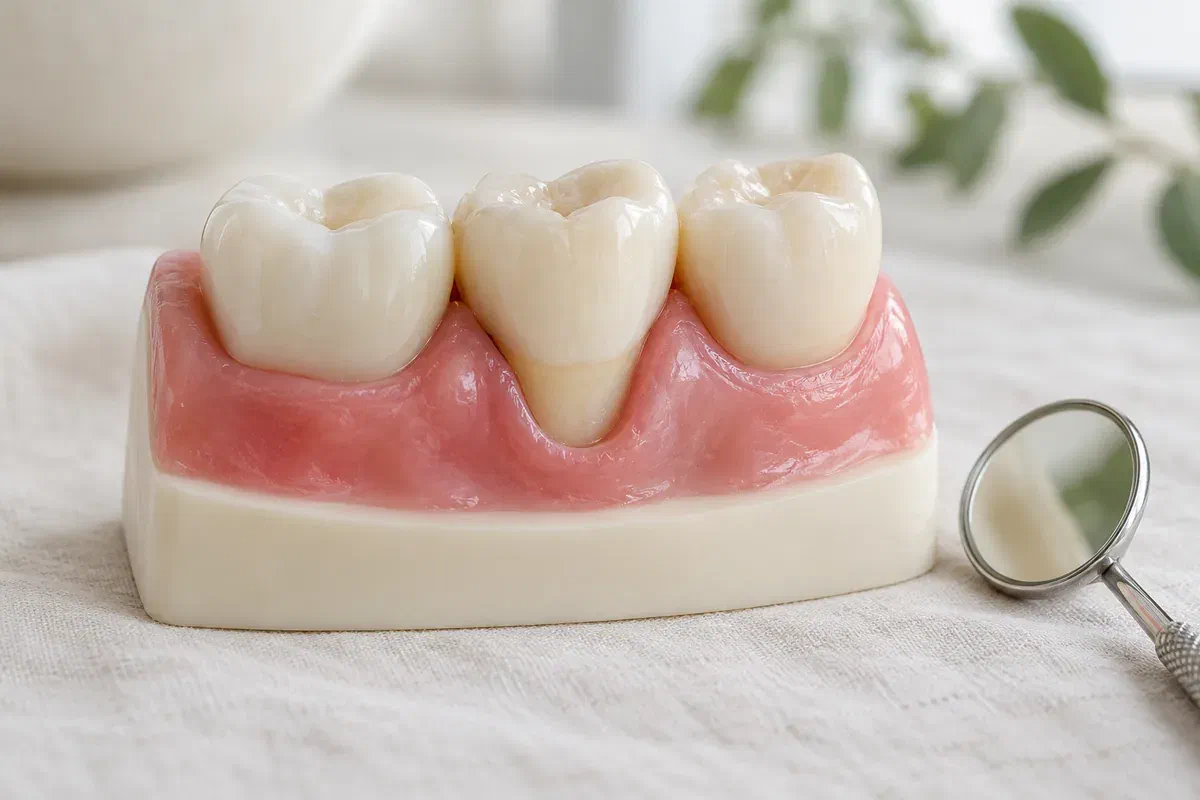
Illustrative physical tooth-and-gum model showing a localized lowered gum margin
Reasons people finally ask

The change that finally made you call

Your reason might be how a tooth looks, a sensitive area, a spot that's hard to clean, or a recommendation you've been sitting on. Knowing it helps us focus, and the exam then shows which goals are realistic.

Root surface now showing at the gumline

Let us see the tooth and tell us when it first caught your attention. Photos or records from earlier years help us see whether it's moving. From there, we'll discuss what might be contributing and what we'd want to confirm before suggesting monitoring or treatment.

A sensitive or awkward area to brush

Explain which drinks, foods or brushing motions trigger it. Sensitivity has a range of causes, and recession is just one. Some can be eased without surgery, so we'll look at that first and then at what a graft might add for you.

A recommendation you've been putting off

If another dentist or an orthodontist suggested grafting, bring their note. Ask how it relates to other planned work, what the timing is and who coordinates it. The reason should describe your tooth's specific concern, not just the word thin.

A graft treats soft tissue. It won't replace bone or attachment that gum disease has already taken, and a fully covered root is not a promise any clinician should make.

Deciding if it's worth it

A clear benefit makes a nervous decision easier.

If you're anxious, knowing exactly what you'd gain helps you weigh it honestly. At one tooth, the realistic aim may be firmer tissue; at another, partial root coverage. Ask what should change, what likely won't, and whether the benefit is enough to justify the procedure for you.

Causes still need attention either way. Brushing force, inflammation and other habits can affect the gum whether or not you have surgery. A graft is one part of long-term care, and it doesn't replace regular cleanings or a gentle daily routine.

Patient information: Cambridge University Hospitals — soft-tissue grafting goals, procedure, and risks

An honest outlook for your tooth

The gum and bone around neighbouring teeth influence the result, and prospects can differ even between adjacent teeth. Ask what improvement is expected, how sure the clinician is, and how the result will be judged at follow-up.

Understanding the tissue source

Tissue is commonly taken from the palate, which creates a second area to heal, though some cases allow other materials. If the idea of a donor site worries you, say so and ask whether alternatives are reasonable for your tooth. This belongs in your consent discussion.

Recovery explained in plain terms

Ask about expected tenderness, eating and cleaning changes, stitches, reviews and possible complications. Knowing what's typical makes the days after less uncertain. Some risk always remains, and if healing goes differently than planned, further care might be needed.

What happens, step by step

No surprises at any stage

Assessment and surgery might happen with different clinicians in separate offices. Ask where each step is, who you'll meet and how records will be shared, so nothing feels unexpected on the day.

  1. Talk first, then a gentle examination

    We'll cover your concerns, symptoms, past gum care, cleaning habits, health and medicines before examining the gum and the tooth's support. Tell us if you'd like pauses or explanations as we go. If more records or a periodontist's view would help, we'll explain why.

  2. Go over options without pressure

    Monitoring, nonsurgical care and grafting are discussed where they fit. You can ask what holding off might cost you and how much better things could realistically get. Tissue source, donor area, anaesthetic, any options to help you relax, fees and preparation should all be explained, and you can take time to decide.

  3. If you proceed, know what the day involves

    The treating clinician tells you how they'll ready the area and fix the tissue in place. Local anaesthetic is commonly used, and whether any additional comfort measures are suitable is assessed individually. Ask how long it will take and whether you'll need a ride.

  4. Heal with clear guidance and support

    You should get written instructions on cleaning, food, medicines and stitches for each treated area. Confirm review dates, whom to call with questions, and when normal routines can resume. Later, the result should be checked against the original goal.

The recovery stretch

Simple instructions, followed carefully

Your aftercare should match your procedure. Ask about anything that seems unclear, especially if the graft and a donor area have separate instructions, and keep the treating office's number on your fridge or phone.

Let the graft be

Lifting the lip or cheek to peek, pressing on the tissue or testing whether it's attached can disturb healing. The clinician will look at it at review. If you're worried, call rather than checking it yourself.

Follow the cleaning and eating instructions

For a while, the treated tooth may be left out of your usual brushing and flossing. Use any recommended rinse, choose soft meals and hold off on brushing the new tissue until you're told it's ready. Keep caring for the rest of your mouth as instructed.

Call about worries and attend reviews

Ask what tenderness and swelling are typical and which pain relief is safe with your health history. Phone the treating provider about ongoing bleeding, rising pain, fever or anything that concerns you. For severe symptoms, seek urgent care near home. Keep each review.

Patient information: Guy's and St Thomas' — protecting a gum graft and following postoperative instructions

Gentler starting points

Surgery may not be the first step, or any step.

Ask which choice fits what was really found at your tooth, and how each one compares in effort and benefit. A good plan takes in how the tooth feels, any sign of ongoing change, the tissue and bone nearby, and your comfort level.

When the site looks stable

Monitoring with improved home care

The area can be recorded, your cleaning gently adjusted and the tooth rechecked at planned visits. Agree on what kind of change would bring grafting back into the conversation, so you're not left wondering between appointments.

When a simpler step meets the need

Nonsurgical care for sensitivity or inflammation

A desensitizing product, managing gum inflammation or a softer brushing technique may help where appropriate. These won't restore receded tissue, so be clear on what each is meant to do. For many anxious patients, trying these first feels more manageable.

When the exam supports surgery

A graft when the benefit is clear

Set the expected tissue change against the risks and recovery, and take the time you need. Find out which method is planned and whether a gum specialist would be the right person to do it. Reading about grafting on a web page tells you nothing about whether your tooth is a good candidate, whether specialist care is offered here, or how much of the root might be covered.

Questions from nervous patients

Honest answers to common worries

Ask that any recommendation be explained using your own findings, and take notes if that helps. These questions focus on what the experience involves.

(905) 876-4488
Will I be awake during a gum graft?
Grafts are commonly done with local anaesthetic, so you’re awake but the area is numbed. Whether any additional options are suitable depends on your health and the treating provider. Ask what’s available and what each would involve.
Can I book a consultation without agreeing to surgery?
Yes. An assessment is a chance to understand your tooth and your options. You can take time to think, ask more questions or seek another opinion before deciding anything.
What can I do to feel calmer on the day of a procedure?
Let the team know you’re anxious, ask for explanations as things happen, and agree on a signal for a pause. Eating as advised, arranging a ride if needed and planning a quiet rest of the day can also help.
How uncomfortable is recovery usually?
Experiences vary. Tenderness, especially at a donor site, is common for a time. The treating clinician should explain what to expect and how to manage it safely. Ask when to call if discomfort seems out of proportion.
Is complete root coverage likely after my graft?
That depends on the site. Some grafts mainly aim to strengthen the tissue, and the amount of coverage varies. Ask what result is intended at your tooth and what could limit it.
Do I have to decide on grafting right away?
Often not, unless the clinician has a specific reason for urgency. Ask what the risk of waiting is for your tooth and whether monitoring in the meantime would be sensible.
Caledon gum consultations

Ask your questions first. Decide later.

Call or email our Bronte Street practice whenever you're ready to talk about a gum that has pulled back, a tender tooth or a graft someone has recommended. We'll explain the assessment, take your concerns seriously, and describe how we work with a periodontist when that's the better fit.

Need, technique, tissue source, anaesthetic options, referral, fees, recovery and possible coverage are determined by individual assessment.

Visit Milton Dental Clinic
Unit 1, 342 Bronte St. S, Milton, ON L9T 5B7
Get directions Clinic hours
Monday–Thursday
11am–7pm
Friday–Sunday
By appointment only

Areas we serve

  • Milton
  • Oakville
  • Mississauga
  • Georgetown
  • Halton Hills
  • Acton
  • Campbellville
  • Brampton
  • Burlington
  • Puslinch
  • Rockwood
  • Erin
  • Caledon
  • Etobicoke
  • Old Milton
  • Bronte Meadows
  • Timberlea
  • Dorset Park
  • Dempsey
  • Clarke
  • Beaty
  • Coates
  • Harrison
  • Scott
  • Willmott
  • Ford
  • Bowes
  • Cobden
  • Walker
  • Mountain View
  • Milton Heights
  • Hawthorne Village
  • Valley View
  • Fallingbrook
  • Nassagaweya
  • Trafalgar
  • Esquesing
  • Nelson
  • Brookville
  • Moffat
  • Glen Williams
  • Norval
  • Limehouse
  • Stewarttown
  • Ashgrove
  • Hornby
  • Silver Creek
  • Speyside
  • Scotch Block
  • North Oakville
  • River Oaks
  • Glen Abbey
  • West Oak Trails
  • Palermo
  • Bronte Creek
  • College Park
  • Joshua Creek
  • Uptown Core
  • Preserve
  • Iroquois Ridge
  • Lisgar
  • Meadowvale
  • Meadowvale Village
  • Churchill Meadows
  • Erin Mills
  • Central Erin Mills
  • Streetsville
  • East Credit
  • Creditview
  • Heartland
  • Sheridan
  • Mount Pleasant
  • Credit Valley
  • Huttonville
  • Churchville
  • Springbrook
  • Northwest Brampton
  • Bram West
  • Fletcher's Meadow
  • Fletcher's Creek South
  • Alton Village
  • Orchard
  • Millcroft
  • Headon Forest
  • Tansley
  • Brant Hills
  • Tyandaga
  • Kilbride
  • Lowville
  • Aberfoyle
  • Morriston
  • Arkell
  • Hillsburgh
  • Freelton
  • Carlisle
  • Waterdown
  • Flamborough
  • Mountsberg

How can we help?

Milton Dental Clinic

Have a question about your smile? Choose the option that works best for you.

For urgent dental concerns, please call.
Messages are reviewed during clinic hours.