

Illustrative patient and clinician discussing options beside a small gum model
Specialized Care

Gum Grafting in Etobicoke

Gum grafting usually involves an assessment, possibly a referral, the procedure and several reviews. Travelling from Etobicoke, it helps to see the whole sequence up front: what the graft is meant to achieve, how visits can be grouped, and what to do if a healing concern comes up closer to home.

Planning grafting care from a distance

Map the visits, then decide on the graft.

When a clinic is a longer trip away, every appointment counts. Before committing to gum grafting, it's worth asking how many visits are likely, which ones could be combined, and which reviews really need to happen in person. Knowing the shape of the journey makes the decision itself clearer.

The procedure involves adding or repositioning gum tissue at a tooth to serve a defined aim: thicker tissue, partial root coverage, or a site that's easier and more comfortable to clean. One technique is usually chosen for one main purpose, so the expected change should be spelled out before you book.

At a first visit, bring any records, photos or treatment notes so we can make the most of the trip. We'll examine the tooth and its support, consider contributing factors, and discuss whether a graft, monitoring, nonsurgical care or a periodontal referral fits, and how the steps could be arranged efficiently.

Plan a gum assessment from Etobicoke
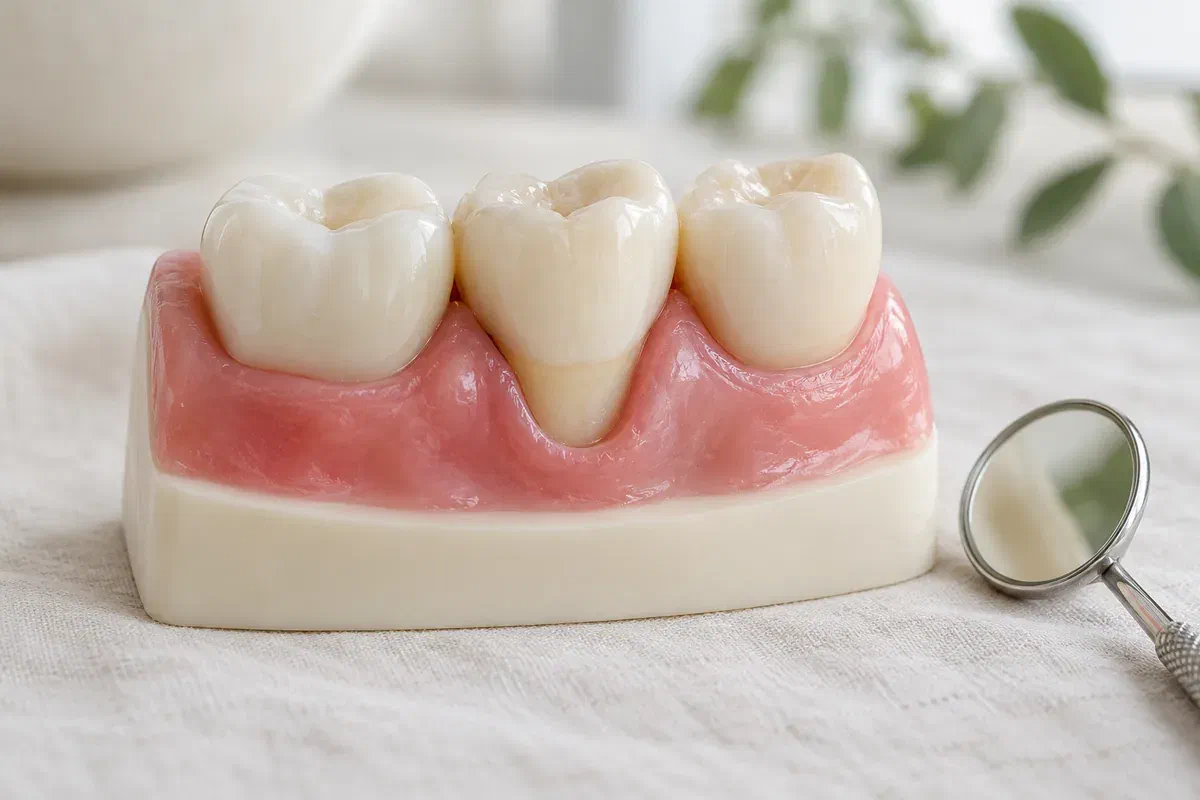
Illustrative physical tooth-and-gum model showing a localized lowered gum margin
Reasons to look closer

One trip, three possible questions

Let us know whether the issue is appearance, sensitivity, cleaning difficulty or a recommendation from your regular dentist. That keeps the visit focused, and the exam determines which goals are realistic.

A gumline that has visibly shifted

Point out the tooth and give a sense of when it changed. If your regular dentist can share earlier records or photos before you come, we can judge progression more easily. Then we'll talk about contributors and what's needed before choosing to observe or treat.

A twinge or cleaning trouble at one site

Explain what triggers discomfort and whether it stops you from cleaning properly. Sensitivity can arise from several causes beyond recession. We'll consider whether a nonsurgical step could help, possibly managed nearer home, and what a graft would add.

Thin tissue mentioned before other work

If grafting has been raised before braces or restorations, ask how the treatments connect, which comes first and who coordinates them. The recommendation should explain the specific concern at that tooth, not simply label the tissue as thin.

Grafting is a soft-tissue procedure. It doesn't restore bone or attachment lost to periodontal disease, and you shouldn't assume that an exposed root will be completely covered.

Is the trip worth it?

Weigh the expected change against the visits it takes.

The benefit of a graft depends on what it's meant to do. For some teeth, sturdier tissue is the realistic aim. For others, partial root coverage may be achievable. Ask for the specific change expected at your tooth, what probably won't change, and whether that's worth the appointments involved.

Contributing factors need attention too, and much of that work can happen in your daily routine and with your regular dentist. Inflammation and brushing technique still matter after surgery. A graft fits into ongoing care; it isn't an exemption from cleanings or maintenance.

Patient information: Cambridge University Hospitals — soft-tissue grafting goals, procedure, and risks

A tooth-specific expectation

Neighbouring tissue and bone influence what any graft can achieve, and outlooks can vary between teeth. A clear explanation says what should get better, where the doubt lies and how the outcome will be measured, including which reviews could be shared with your local dentist so you aren't making the trip for every check.

Understanding the donor tissue

Tissue is often taken from the palate, though other materials may suit certain cases. Ask which is proposed, why, and whether you'd have two areas healing. A second site can affect how comfortable the trip home feels, so factor it into consent and planning.

Recovery logistics you can live with

Ask about soreness, eating and cleaning limits, stitches, reviews and possible complications. Consider who could drive you, how you'll manage the first evening and when you can return to work. No method is risk-free. If the tissue heals in an unexpected position, another visit or procedure could be required, so leave some room in your calendar rather than booking the weeks after surgery solid.

A sequence built for fewer trips

Group what you can, separate what you must.

The assessment, the surgery and the reviews may be handled by different clinicians in different offices. Ask where each step happens and how records and follow-up will be shared before you set dates.

  1. Assess the area in one well-prepared visit

    We cover symptoms, previous gum treatment, cleaning habits, health history and medicines, then examine the recession and supporting tissue. If more records or a periodontist's opinion are needed, we'll try to arrange them without unnecessary extra trips.

  2. Agree on the goal and the visit plan

    Monitoring, nonsurgical care and grafting are compared where each applies. Ask what waiting would mean and what improvement is realistic. Cover tissue source, donor site, anaesthetic, fees and preparation, and ask for a written outline of the expected appointments.

  3. Have the graft if it's indicated

    The treating clinician explains how the site will be prepared and the tissue placed and stabilized. Local anaesthetic is common, with any other arrangements assessed individually. Plan to rest afterward rather than heading straight into a busy day, and pack any prescribed medicines and soft food for the drive back.

  4. Recover and attend the essential reviews

    Take home written instructions for cleaning, food, medicines and stitches at the graft and any donor site. Confirm which reviews must be in person and when routines can resume. Later checks should return to the original goal, not just appearance.

Healing at home

Know the instructions, and know whom to call.

Aftercare must match the procedure you had. Clarify any differences between graft and donor-site instructions before you leave, and save the treating office's number in your phone.

Leave the site alone between reviews

Don't pull the lip or cheek back to look, press on the tissue or test its attachment. With reviews spaced out, it's tempting to check progress yourself. A stretched-lip photo isn't worth disturbing healing; the clinician will assess it properly.

Follow the temporary cleaning and food plan

Normal brushing and flossing may pause at the surgical site for a while. Stick to the instructions on where to clean, any rinse, soft foods and when to resume. Don't apply your usual routine to a new graft until you've been cleared.

Call first, and know when to seek care nearby

Ask what soreness and swelling are expected and how to manage them safely. Phone the treating office about ongoing bleeding, increasing pain, fever or other worries. For severe symptoms such as heavy bleeding or spreading swelling, seek urgent care closer to home.

Patient information: Guy's and St Thomas' — protecting a gum graft and following postoperative instructions

Options to consider

Not every receded gum calls for surgery.

A recommendation is easier to judge when you can see it next to the other choices. Ask which path answers the problem that was actually found at your tooth. A sound plan weighs how the site behaves, whether it's changing, the tissue and bone around it, what matters to you, and practical factors such as how often you can make the trip.

When the site appears stable

Monitoring, possibly with your regular dentist

The area can be documented, home care adjusted and the site rechecked over time, sometimes as part of routine visits closer to home. Ask what change would prompt reconsidering treatment and how records will be compared between offices.

When something simpler addresses the need

Nonsurgical care for the symptom

Desensitizing products, managing inflammation or refining your brushing may help where appropriate. These don't replace lost tissue, so ask what each can achieve. Easing sensitivity and addressing the tissue itself may be separate decisions.

When the examination supports surgery

A planned soft-tissue graft

Compare the expected change with the risks, recovery and number of visits. Ask about the technique and whether a periodontist should perform it. A web page about grafting doesn't confirm suitability, an in-house specialist or complete coverage.

Planning questions

Before you commit to the trips

Bring your records and ask that the recommendation be explained using your own exam. These questions focus on what to expect and how to plan around it.

(905) 876-4488
How many appointments does gum grafting usually involve?
It varies. There’s typically an assessment, the procedure and at least one or two reviews, plus any referral visits. Ask for an outline at the start so you can plan time off and transport, and ask which visits are short check-ins and which need more of your day.
Can some follow-up checks be done by my regular dentist?
Sometimes, depending on the procedure and the treating clinician’s preference. Ask which reviews need to be with the surgeon and whether records can be shared with your local dentist for routine checks.
What should I do if something worries me after hours?
Follow the after-hours guidance you’re given and contact the treating office. For heavy bleeding, rapidly spreading swelling, difficulty breathing or swallowing, or fever with worsening symptoms, seek urgent medical care nearby rather than waiting.
Is complete root coverage the goal of every graft?
No. Some grafts mainly aim to improve tissue thickness, and coverage depends on the site. Ask what’s intended at your tooth and what may limit it. Full coverage shouldn’t be promised automatically.
Does a gum graft rebuild bone around the tooth?
No. Soft-tissue grafting and procedures aimed at regenerating deeper support are separate. Ask which structures the plan addresses rather than treating better gum coverage as proof of restored support.
Should I arrange a ride home after the procedure?
Ask the treating clinician. It depends on the anaesthetic and any other arrangements used. Even when driving is allowed, having someone with you can make a longer trip home more comfortable.
Etobicoke grafting consultations

A clear plan makes each visit worthwhile.

Contact our Bronte Street practice about recession, a sensitive tooth or a grafting recommendation. We'll explain the assessment and how we can coordinate with a periodontist and your regular dentist to keep trips manageable.

Need, technique, tissue source, referral, number of visits, fees, recovery and expected coverage are determined through individual assessment.

Visit Milton Dental Clinic
Unit 1, 342 Bronte St. S, Milton, ON L9T 5B7
Get directions Clinic hours
Monday–Thursday
11am–7pm
Friday–Sunday
By appointment only

Areas we serve

  • Milton
  • Oakville
  • Mississauga
  • Georgetown
  • Halton Hills
  • Acton
  • Campbellville
  • Brampton
  • Burlington
  • Puslinch
  • Rockwood
  • Erin
  • Caledon
  • Etobicoke
  • Old Milton
  • Bronte Meadows
  • Timberlea
  • Dorset Park
  • Dempsey
  • Clarke
  • Beaty
  • Coates
  • Harrison
  • Scott
  • Willmott
  • Ford
  • Bowes
  • Cobden
  • Walker
  • Mountain View
  • Milton Heights
  • Hawthorne Village
  • Valley View
  • Fallingbrook
  • Nassagaweya
  • Trafalgar
  • Esquesing
  • Nelson
  • Brookville
  • Moffat
  • Glen Williams
  • Norval
  • Limehouse
  • Stewarttown
  • Ashgrove
  • Hornby
  • Silver Creek
  • Speyside
  • Scotch Block
  • North Oakville
  • River Oaks
  • Glen Abbey
  • West Oak Trails
  • Palermo
  • Bronte Creek
  • College Park
  • Joshua Creek
  • Uptown Core
  • Preserve
  • Iroquois Ridge
  • Lisgar
  • Meadowvale
  • Meadowvale Village
  • Churchill Meadows
  • Erin Mills
  • Central Erin Mills
  • Streetsville
  • East Credit
  • Creditview
  • Heartland
  • Sheridan
  • Mount Pleasant
  • Credit Valley
  • Huttonville
  • Churchville
  • Springbrook
  • Northwest Brampton
  • Bram West
  • Fletcher's Meadow
  • Fletcher's Creek South
  • Alton Village
  • Orchard
  • Millcroft
  • Headon Forest
  • Tansley
  • Brant Hills
  • Tyandaga
  • Kilbride
  • Lowville
  • Aberfoyle
  • Morriston
  • Arkell
  • Hillsburgh
  • Freelton
  • Carlisle
  • Waterdown
  • Flamborough
  • Mountsberg

How can we help?

Milton Dental Clinic

Have a question about your smile? Choose the option that works best for you.

For urgent dental concerns, please call.
Messages are reviewed during clinic hours.