

Illustrative patient and clinician discussing options beside a small gum model
Specialized Care

Gum Grafting in Rockwood

What will a gum graft actually look like as it heals, and when can you tell whether it worked? From Rockwood, you can talk through realistic expectations before deciding: the intended change, how the tissue tends to look along the way, and whether grafting, monitoring or specialist care suits your tooth.

Expectations, set early

Picture the end result, and the in-between.

People considering a graft often search for before-and-after pictures and then feel uneasy when their own healing looks nothing like them. Knowing in advance that the early weeks can look patchy, swollen or oddly coloured makes the experience far less worrying, and helps you judge the decision itself more fairly.

During a graft, gum tissue is added or repositioned at a tooth for a set purpose: thicker, more durable tissue, partial root coverage, or a site that's simpler and kinder to clean. Each purpose leads to a different end point, so it's worth asking which one applies before imagining how the finished gum will look.

From Rockwood, you can bring photos of the area, any records and the questions that worry you. We'll examine the tooth and the tissue supporting it, look for anything that might be feeding the problem, and tell you honestly whether a graft, observation, nonsurgical care or a periodontal referral best matches your goal and your expectations.

Discuss grafting from Rockwood
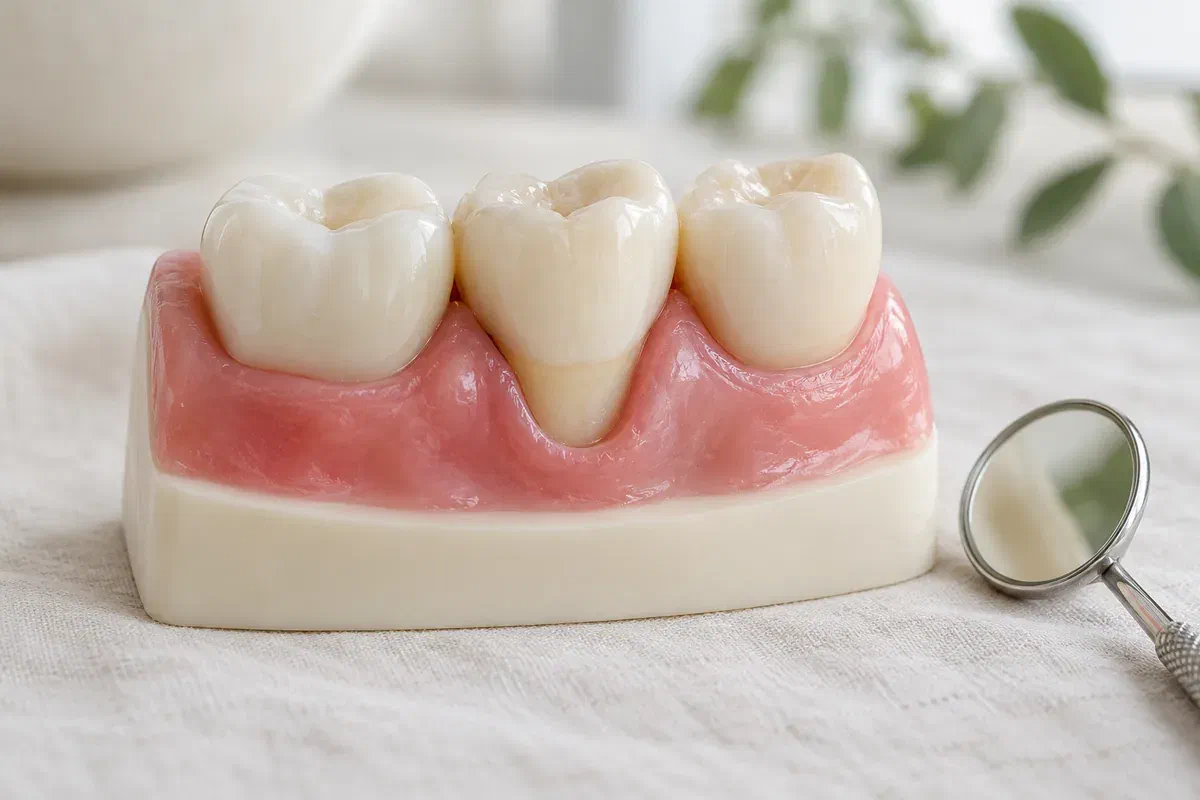
Illustrative physical tooth-and-gum model showing a localized lowered gum margin
Where it starts

A change you noticed, felt or were told about

Let us know what's prompting the question, whether that's the look of a tooth, a twinge, cleaning trouble or another clinician's advice. We'll focus there, and the exam shows which goals can realistically be met.

A tooth that seems to show more root

Point it out and tell us when you first saw the difference. Older photos and records help reveal whether it's still changing. That lets us talk about likely contributors and what we'd need before suggesting watching, treating or referring.

Sensitivity, or a spot that's hard to keep clean

Describe what triggers it and whether it limits your cleaning. Recession is only one possible cause of sensitivity. We'll consider whether a nonsurgical step could help, and what a graft would offer beyond that for your situation.

Advice about thin tissue linked to other care

If a graft was suggested ahead of braces or restorative work, ask how the plans fit together, in what order and under whose coordination. A good recommendation describes the issue at the tooth rather than leaning on the word thin.

Grafting is limited to soft tissue. It can't be relied on to restore bone or attachment that gum disease has removed, and you shouldn't expect any exposed root to be fully covered as a matter of course.

What the end point should be

Agree on how success will be measured before you start.

It's easier to judge a result if you know the target. For one tooth, the aim might be firmer tissue that looks only slightly different. For another, covering part of the root could be realistic and more visible. Ask what you should eventually see at your tooth, and what's likely to stay much as it is.

Ongoing causes still matter. Brushing force, inflammation and other habits can affect the gum after it heals. A graft is one element of continuing care, not a guarantee that the area will never need attention again.

Patient information: Cambridge University Hospitals — soft-tissue grafting goals, procedure, and risks

A realistic description for your tooth

The tissue and bone around nearby teeth affect what can be achieved, and teeth in one mouth can heal differently. Ask what the finished site might reasonably look like, what's uncertain, and when it will be reviewed.

The tissue source and how it may look

Many grafts use tissue from the palate, while other materials may suit some cases. Ask which is proposed and whether it might look slightly different in texture or colour as it matures. You may also have a second area healing, which belongs in your consent discussion.

A timeline for recovery and review

Ask about likely tenderness, food and cleaning limits, stitches, review visits and possible complications. Ask roughly when the site can be judged. Risk can't be removed entirely, and if healing differs from the plan, more care could be needed.

How it progresses

From first look to final assessment

Your assessment, any surgery and the reviews may involve more than one clinician or office. Find out where each stage happens, and who keeps the records, before you plan the dates.

  1. Take baseline records and examine

    We'll ask about symptoms, previous gum care, how you clean, your health and any medicines. The gum and the tooth's support are assessed, and photos may be taken as a baseline for comparison later. We'll say if a periodontal opinion or more records would help.

  2. Set the goal and the measure of success

    Monitoring, nonsurgical care and grafting are considered where relevant. Ask what waiting would mean, what improvement is realistic and how it will be judged, including which photos or measurements will be compared. Before any booking, you should understand where the graft tissue would come from, whether a second site will heal, the anaesthetic planned, the fees, and anything that has to be done first.

  3. Proceed with the graft if it's appropriate

    The treating clinician explains how the area will be readied and how the new tissue is placed and held. Local anaesthetic is typical, with other arrangements considered individually. The technique and setting are chosen for your tooth and goal.

  4. Heal in stages and compare to the baseline

    Follow written guidance on cleaning, food, medicines and stitches at each treated site. Attend reviews as booked. When the tissue has matured, compare the result with the baseline records and the original goal rather than with early impressions.

The healing weeks

Patchy, swollen, uneven: often normal at first.

Aftercare should fit the procedure you received. If you're unsure whether the tooth and the palate have separate instructions, ask, and keep the treating office's contact details easy to reach.

Resist the daily photo

Stretching your lip or cheek to photograph the graft, pressing on it or testing whether it's attached can disturb the tissue. Reviews are where progress gets checked. Comparing your own pictures day to day mostly creates worry, and the angle and lighting of a phone camera can make normal healing look alarming.

Keep to the temporary routine

Regular brushing and interdental cleaning may need to stop at the graft for a while, even though the rest of your mouth still needs care. Your instructions should say which teeth to skip, whether a prescribed rinse replaces brushing there, which meals are gentle enough, and when ordinary habits can resume. Don't brush the new tissue as usual until you're cleared.

Tell the provider about unexpected symptoms

Ask what tenderness and swelling are normal and which pain relief is safe for you. Contact the treating office about bleeding that keeps going, increasing pain, fever or other worries. Keep every review, including stitch removal, even if things feel fine.

Patient information: Guy's and St Thomas' — protecting a gum graft and following postoperative instructions

Possible routes

Recession can be watched, eased or grafted.

Ask which option fits the concern documented at your tooth and what each realistically offers. A thoughtful plan considers symptoms, whether the site is changing, the surrounding tissue and bone, and your expectations.

When the area appears stable

Documented monitoring

Baseline photos or measurements are taken, your cleaning is refined and the site is reviewed at intervals. Agree on what kind of change would bring grafting back into discussion. With good records, monitoring gives you a real comparison over time.

When comfort is the immediate goal

Symptom-focused care without surgery

A desensitizing approach, attention to inflammation or a gentler brushing method may help where appropriate. These don't add tissue, so ask what each can do. Easing discomfort and changing the gum's position are separate questions.

When the exam supports surgery

A graft with an agreed end point

Weigh the change you can reasonably expect against surgical risk and healing time. Ask about technique, and whether a specialist in gum surgery would be better placed to carry it out. Grafting described on a website doesn't confirm suitability, in-house specialist care or complete coverage.

Healing and results questions

What to expect as the graft settles

Ask that any advice be linked to your own findings and the goal for your tooth. These questions focus on appearance and timing during healing.

(905) 876-4488
Why might a new graft look pale or a different colour at first?
Healing tissue often changes colour and texture as it settles and its blood supply develops. This can look surprising early on. Ask the treating clinician what’s typical for your procedure and which changes would warrant a call.
When can I fairly judge how my graft turned out?
It usually takes a while for the tissue to mature, and the timing depends on the procedure and your healing. Ask the treating clinician when the result can be assessed, and avoid drawing conclusions from the first few weeks.
Will the grafted gum match the rest of my gums?
Often it blends in reasonably well over time, but some differences in colour or texture can remain. Ask what’s likely for your technique and tissue source, especially if the tooth shows when you smile.
Should I expect complete coverage of the exposed root?
Not necessarily. A graft may be planned chiefly for thicker tissue, and how much root can be covered varies. Ask what’s intended at your tooth and which local factors might limit it.
Is it worth photographing my gums before treatment?
Clear photos taken at the clinic can serve as a useful baseline. Ask whether they’ll be part of your records. After surgery, though, avoid stretching the tissues to take your own pictures; the planned reviews are the safer place to compare before and after.
Does a graft rebuild missing bone under the gum?
No. Grafting soft tissue and regenerating deeper support are different matters. Ask which structures the proposed procedure targets rather than reading improved coverage as restored bone.
Rockwood grafting consultations

Know what to expect at every stage.

Reach our Bronte Street practice about a receding gum, a sensitive tooth or a graft you've been advised to have. We'll outline the assessment and how we work alongside a periodontist where that's the right fit.

Indication, technique, tissue source, referral, fees, healing course and expected coverage depend on an individual assessment.

Visit Milton Dental Clinic
Unit 1, 342 Bronte St. S, Milton, ON L9T 5B7
Get directions Clinic hours
Monday–Thursday
11am–7pm
Friday–Sunday
By appointment only

Areas we serve

  • Milton
  • Oakville
  • Mississauga
  • Georgetown
  • Halton Hills
  • Acton
  • Campbellville
  • Brampton
  • Burlington
  • Puslinch
  • Rockwood
  • Erin
  • Caledon
  • Etobicoke
  • Old Milton
  • Bronte Meadows
  • Timberlea
  • Dorset Park
  • Dempsey
  • Clarke
  • Beaty
  • Coates
  • Harrison
  • Scott
  • Willmott
  • Ford
  • Bowes
  • Cobden
  • Walker
  • Mountain View
  • Milton Heights
  • Hawthorne Village
  • Valley View
  • Fallingbrook
  • Nassagaweya
  • Trafalgar
  • Esquesing
  • Nelson
  • Brookville
  • Moffat
  • Glen Williams
  • Norval
  • Limehouse
  • Stewarttown
  • Ashgrove
  • Hornby
  • Silver Creek
  • Speyside
  • Scotch Block
  • North Oakville
  • River Oaks
  • Glen Abbey
  • West Oak Trails
  • Palermo
  • Bronte Creek
  • College Park
  • Joshua Creek
  • Uptown Core
  • Preserve
  • Iroquois Ridge
  • Lisgar
  • Meadowvale
  • Meadowvale Village
  • Churchill Meadows
  • Erin Mills
  • Central Erin Mills
  • Streetsville
  • East Credit
  • Creditview
  • Heartland
  • Sheridan
  • Mount Pleasant
  • Credit Valley
  • Huttonville
  • Churchville
  • Springbrook
  • Northwest Brampton
  • Bram West
  • Fletcher's Meadow
  • Fletcher's Creek South
  • Alton Village
  • Orchard
  • Millcroft
  • Headon Forest
  • Tansley
  • Brant Hills
  • Tyandaga
  • Kilbride
  • Lowville
  • Aberfoyle
  • Morriston
  • Arkell
  • Hillsburgh
  • Freelton
  • Carlisle
  • Waterdown
  • Flamborough
  • Mountsberg

How can we help?

Milton Dental Clinic

Have a question about your smile? Choose the option that works best for you.

For urgent dental concerns, please call.
Messages are reviewed during clinic hours.