

Illustrative young adult discussing a wisdom-tooth assessment with a dental clinician
Specialized Care

Impacted Wisdom Teeth Removal

An impacted wisdom tooth needs an individual decision about care. Discuss its position, symptoms, nearby structures, and the reasons for removal or monitoring in Milton, with a clear explanation of surgical planning, recovery, and any referral needed.

A closer look at impacted wisdom teeth removal

Understand the tooth's position and the reason for recommending surgery.

An impacted wisdom tooth has not reached a normal fully erupted position, often because its path or available space is restricted. It may remain beneath the gum or bone, or partly emerge at the back of the mouth. The word impacted describes its situation; it does not, by itself, explain whether removal is needed.

The decision considers symptoms, disease, effects on the neighbouring tooth, the likelihood of future problems, and the risks of treatment. Some teeth can be monitored, while others have a clear reason for removal. An assessment should explain how those considerations apply to the particular tooth being discussed.

At Milton Dental Clinic, bring any earlier images or surgical recommendation and describe your symptoms. We can discuss the assessment, available care, and whether an oral surgeon should be involved. Before choosing treatment, you should understand its purpose, the alternatives, the recovery plan, and the risks relevant to your anatomy.

Discuss an impacted wisdom-tooth assessment
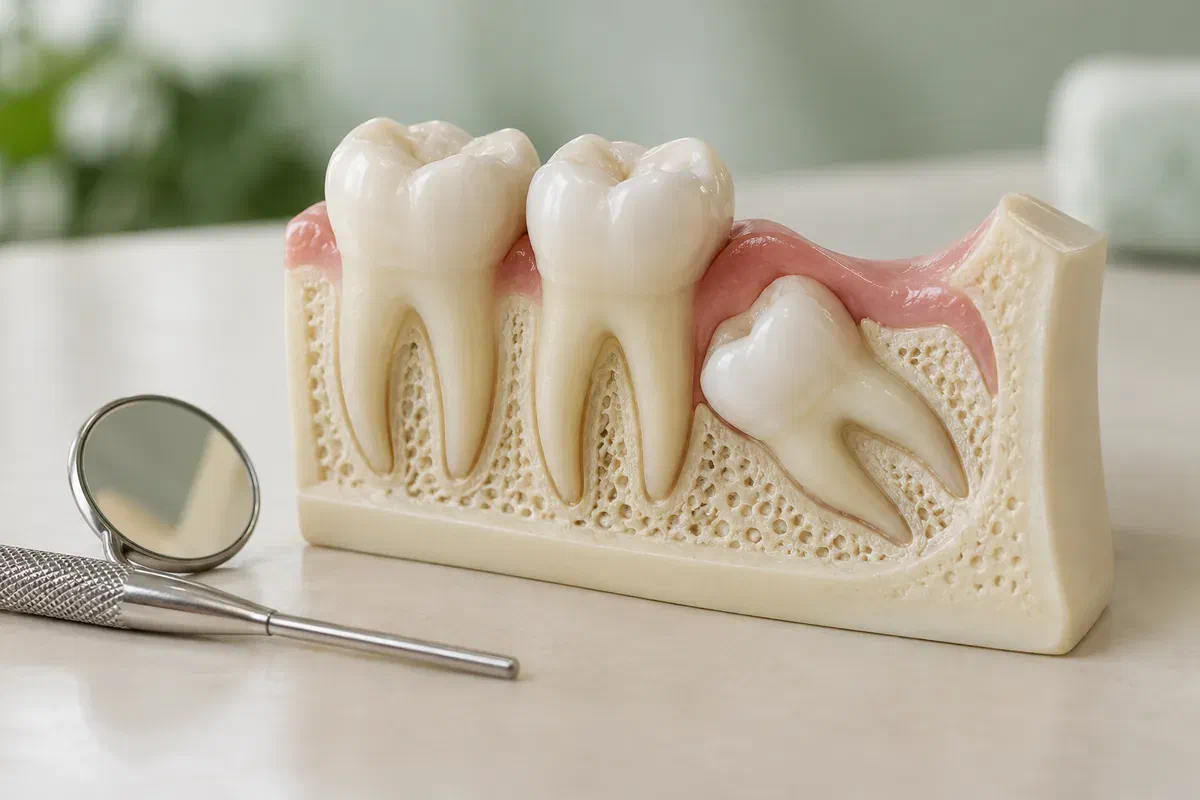
Illustrative physical jaw model with an angled wisdom tooth behind two upright molars
What brings the tooth to attention

Look beyond the angle on an X-ray to the actual clinical concern.

Tell us whether the tooth has caused repeated episodes, a new change, or no noticeable symptoms. The history helps distinguish a current problem from a finding that needs a considered discussion of monitoring and risk.

Pain or inflammation around a partly emerged tooth

Describe swelling, tenderness, difficulty cleaning, or food collecting beneath the gum. Mention previous episodes and any care received. An acute episode may need attention before a longer-term surgical decision, and worsening swelling or difficulty opening should be reported promptly rather than saved for a routine consultation.

Decay or effects on the tooth in front

The assessment includes the wisdom tooth and nearby structures, not just the part you can see. Ask whether the neighbouring molar is affected and what the findings show. If another tooth also needs treatment, clarify how that care fits the overall sequence.

A finding discovered without obvious discomfort

An image may reveal an impacted tooth before you notice symptoms. Ask whether disease is present, what future concern is being considered, and what monitoring would involve. Neither absence of pain nor the label impacted should be used alone to make an automatic decision.

Call promptly about increasing swelling, fever, or worsening mouth opening. Difficulty breathing or swallowing, swelling affecting the eye, or severe spreading swelling requires emergency medical care rather than waiting for a wisdom-tooth appointment.

What an appropriate removal aims to address

Relate the benefit of surgery to the problem identified.

When removal is indicated, it is intended to address a particular source of disease or a carefully assessed risk. Ask which problem the procedure is expected to resolve and whether other treatment remains necessary. Removing a wisdom tooth should not be presented as a universal answer to unrelated jaw pain or every concern about tooth alignment.

Planning matters because impacted teeth differ in position and complexity. A tooth close to a sensory nerve raises different questions from an upper tooth near the sinus. The consultation is the time to understand those differences and how they influence the procedure, setting, and need for specialist care.

Patient information: British Association of Oral and Maxillofacial Surgeons — impacted wisdom-tooth treatment decisions and risks

An explanation of the balance between removal and retention

Ask about the likely consequences of leaving the tooth in place and the risks of removing it. The answer should use your findings rather than a blanket recommendation to remove every wisdom tooth. If monitoring is reasonable, clarify what changes would lead to another discussion.

Surgical planning based on relevant anatomy

The clinician reviews the tooth's relationship to neighbouring teeth, bone, and relevant nerves or sinus structures. Additional imaging may be considered if it would answer a question that changes management. Ask why a particular view is useful rather than assuming everyone needs the same scan.

A realistic understanding of recovery and possible complications

Discuss discomfort, swelling, bleeding, dry socket, infection, and risks specific to the tooth's location. For lower teeth, altered sensation can sometimes persist. Ask how your individual risk is assessed and what follow-up is available; a routine procedure still deserves an informed consent discussion.

From examination to a surgical plan

Confirm the indication, choose the setting, and prepare for recovery.

An assessment does not mean surgery must happen that day. The plan depends on symptoms, anatomy, medical history, treatment availability, and whether a specialist consultation or additional investigation is needed.

  1. Review the tooth and your health history

    Describe previous pain, swelling, infections, and treatment in the area. Bring your medicine list, allergies, relevant medical information, and earlier images when available. Tell the clinician about anxiety or previous anaesthetic experiences so comfort and planning can be discussed accurately.

  2. Explain the findings and compare appropriate options

    Review the reason for intervention, the possibility of monitoring, and any procedure-specific alternative. Ask how the tooth's position influences risk and whether referral is recommended. Discuss fees, expected visits, and which questions need answering before you decide.

  3. Provide the agreed procedure in the appropriate setting

    Removal may involve opening the gum, removing some surrounding bone, and dividing the tooth to allow controlled extraction. The clinician explains the approach and anaesthetic arrangements in advance. Sedation or general anaesthesia is not assumed and requires suitability assessment and confirmed provider availability.

  4. Give aftercare and confirm how to obtain help

    Before leaving, receive instructions for bleeding control, cleaning, food, medicines, activity, and any stitches. Confirm the review plan and the contact route for concerns. If sedation was used, follow the specific escort, supervision, driving, and activity instructions supplied by the treating provider.

After an impacted wisdom tooth is removed

Protect the healing site and respond to changes in the recovery pattern.

Follow the written instructions for your procedure and health circumstances. Recovery varies, so ask what is expected in your case and which symptoms should prompt a call rather than relying on another person's timeline.

Follow the specific cleaning and eating instructions

Ask how to care for the rest of your mouth while protecting the extraction site and any stitches. Avoid probing the socket or trying to remove material from it with improvised tools. Use the recommended food choices and resume normal cleaning only as the treating team advises.

Plan medicines, rest, and practical support

Use pain relief according to the clinician's or pharmacist's directions and your medical history. Do not stop prescribed blood thinners or other medicines on your own. Arrange any required help at home and confirm restrictions related to the anaesthetic before planning work, driving, or exercise.

Report persistent bleeding or worsening symptoms

Contact the treating provider about bleeding that does not settle with the instructed measures, worsening pain, increasing swelling, fever, or a concerning change in sensation. Pain that becomes worse after initial improvement deserves review. Do not assume every painful recovery is normal or that all such pain requires antibiotics.

Choosing the approach for this tooth

Monitoring, full removal, and selected alternatives each need a reason.

The decision should be made tooth by tooth. Ask how the expected benefit compares with the risks and what each option means for future review, possible symptoms, and further treatment.

When the assessment supports observation

Continued monitoring when retention is appropriate

A tooth without a current indication for surgery may be followed with clinical review and imaging when justified. Ask what is being monitored and which symptoms or findings would change the recommendation. Observation is a planned approach, not a guarantee that the tooth will never cause a problem.

When the expected benefit supports extraction

Complete removal of the impacted wisdom tooth

Discuss the procedure, tooth-specific risks, anaesthetic, and treatment setting. Ask whether an oral surgeon should provide care and whether other teeth require separate decisions. The recommendation should explain why removal fits this tooth rather than treating all four wisdom teeth as one automatic package.

When nerve proximity makes an alternative worth assessing

Coronectomy in selected lower-wisdom-tooth cases

A surgeon may consider removing the crown while intentionally retaining suitable roots to reduce a particular nerve-injury risk. It is not appropriate for every tooth. Ask about eligibility, retained-root monitoring, and the possibility of later surgery before choosing this option.

Patient information: British Association of Oral and Maxillofacial Surgeons — coronectomy selection and retained-root considerations

Impacted wisdom-tooth questions

Ask what the position means for treatment, risk, and follow-up.

Bring your images or the details of where they were taken. The most helpful discussion connects the proposed treatment to the specific tooth, its surrounding anatomy, and your health circumstances.

(905) 876-4488
Must an impacted wisdom tooth be removed simply because it is angled?
No. The angle is part of the assessment, but the decision also considers disease, symptoms, nearby structures, future concerns, and treatment risks. Ask what finding supports removal in your case and what monitoring would involve if leaving the tooth is a reasonable option.
Will I automatically need all four wisdom teeth removed if one is impacted?
No. Each tooth needs its own reason for treatment. A clinician may discuss more than one tooth when appropriate, but you should understand the findings and recommendation for each. Ask about the benefits and recovery implications of any proposed combined procedure.
Why might a surgeon discuss coronectomy instead of removing all the roots?
In selected lower wisdom teeth, the roots lie close to a sensory nerve. Retaining suitable roots while removing the crown may reduce a particular nerve-injury risk. The option has eligibility limits and follow-up requirements, including the possibility of later root treatment or removal.
Does impacted wisdom-tooth surgery always require general anaesthesia?
No. Anaesthetic arrangements depend on complexity, health, anxiety, and the treating setting. Local anaesthetic may be suitable; other options require assessment and confirmed availability. Ask what is proposed for you and what preparation, escort, and recovery arrangements it requires.
Can a normal-looking gum over a wisdom tooth rule out a problem underneath?
No. The visible surface does not show the entire tooth or its relationship to surrounding structures. Examination and appropriate imaging help assess what is present. Ask which findings matter rather than judging the need for care only by what you can see in a mirror.
What should I do if pain worsens several days after impacted wisdom-tooth removal?
Contact the treating provider for assessment, especially with swelling, fever, a bad taste, or difficulty opening. Several recovery problems can cause worsening pain and need different management. Do not probe or pack the socket yourself or assume another course of antibiotics is the answer.
Impacted wisdom-tooth assessment in Milton

Understand whether removal is appropriate and how it would be planned.

Contact our Bronte Street practice to discuss an impacted wisdom tooth, recurring symptoms, or a surgical recommendation. Tell us about active swelling or worsening pain when arranging care, and bring relevant earlier records when available.

Removal, monitoring, coronectomy, imaging, anaesthetic, treatment setting, referral, and individual risks require clinical assessment. No procedure or urgent appointment availability is guaranteed.

Visit Milton Dental Clinic
Unit 1, 342 Bronte St. S, Milton, ON L9T 5B7
Get directions Clinic hours
Monday–Thursday
11am–7pm
Friday–Sunday
By appointment only

How can we help?

Milton Dental Clinic

Have a question about your smile? Choose the option that works best for you.

For urgent dental concerns, please call.
Messages are reviewed during clinic hours.