

Illustrative young adult discussing a wisdom-tooth assessment with a dental clinician
Specialized Care

Impacted Wisdom Teeth Removal in Etobicoke

Coming from the west end of Toronto means each appointment takes real planning. For an impacted wisdom tooth, that makes it worth knowing up front how many visits are likely, what happens at each, and when a problem should be seen closer to Etobicoke instead.

Making each trip count

Fewer trips, clearer answers

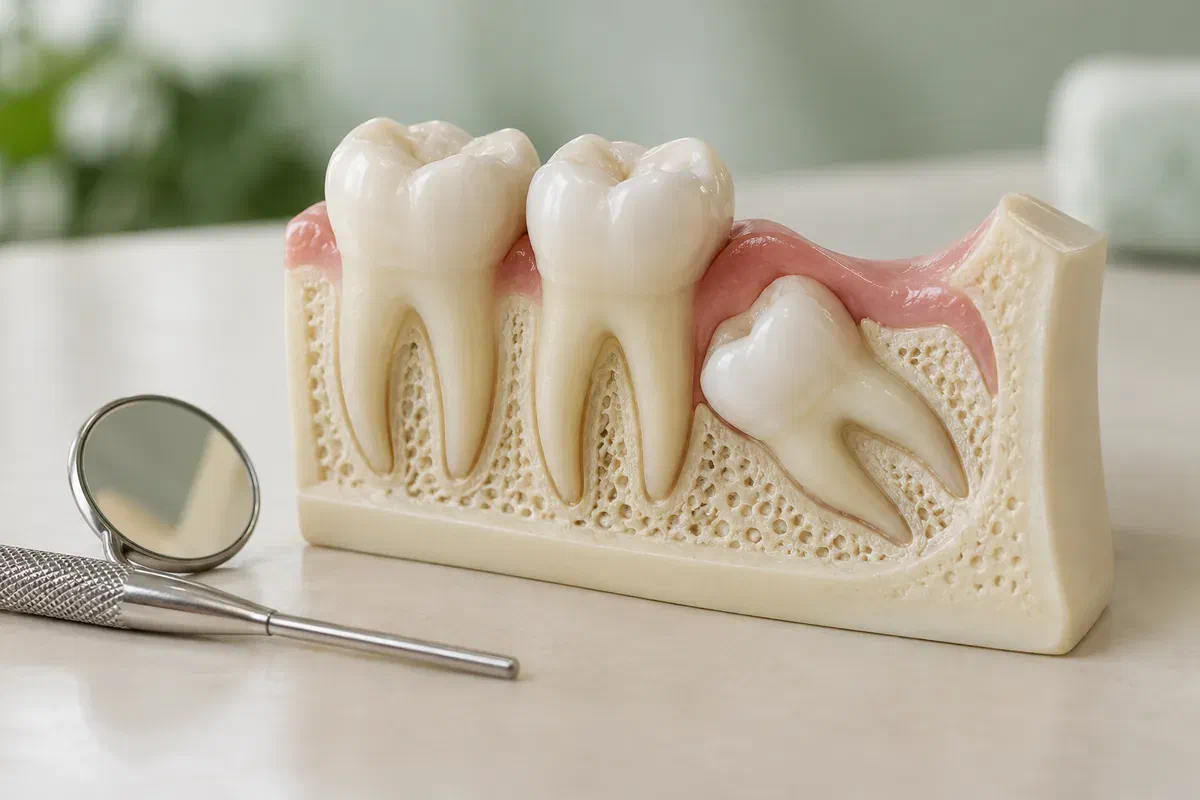
Picture the tooth first. It sits at the far end of the jaw, and because the space was too tight or its path ran crooked, it never surfaced the way the other molars did. Some of it may show through the gum; some may still be locked in bone. Dentists call that impacted, which is a statement about where the tooth ended up rather than a ruling that it must go.

A ruling, if there is one, depends on other facts. Has the area been infected? Is the molar in front decaying or losing bone? How likely are future problems, and what would surgery risk for this particular tooth? Some impacted teeth are left alone and checked periodically. Others clearly need removing. You deserve an explanation that sorts yours into the right group.

Since the trip from Etobicoke is a long one, send or bring everything at the first visit: earlier X-rays, any surgeon's letter, a medicine list, and a short timeline of symptoms. That often lets us explain the findings, outline available care, and say whether a referral is needed in one sitting. You should leave understanding the purpose, alternatives, recovery, and risks specific to your anatomy.

Plan an efficient wisdom-tooth assessment
Illustrative physical jaw model with an angled wisdom tooth behind two upright molars
Deciding what can wait

Some problems need a visit soon. Others can be planned.

Tell us whether the tooth has flared repeatedly, changed recently, or never been felt. When travel takes planning, that history helps us judge whether you need to be seen quickly or whether a scheduled consultation is appropriate.

Gum trouble around a partly visible tooth

A swollen, tender flap, a bad taste, or food lodging at the back are typical complaints. Let us know how often they return and what has helped before. A current episode may need managing ahead of any surgical plan. If swelling is growing or opening is getting harder, call right away; you may be advised to seek care closer to home rather than make the drive.

Hidden damage next door

Decay or bone changes on the second molar may be visible only on images. Ask whether the neighbouring tooth is affected and how much. If it needs a filling or other work, ask whether that can be planned alongside the wisdom-tooth decision to reduce separate visits.

An image finding with no symptoms

A quiet tooth found on an X-ray is usually something to discuss, not rush. Ask whether disease is present, what possible future issue is being weighed, and how monitoring would work. Neither comfort nor the label alone should make the decision for you.

Severe or rapidly spreading swelling, swelling toward the eye, or any difficulty breathing or swallowing means going to the nearest emergency department, not travelling to a dental appointment. For increasing swelling, fever, or reduced opening, call us promptly so we can advise on where to be seen.

The point of taking it out

Surgery should earn its place.

Where removal is recommended, it should be aimed at something specific, such as a recurring infection or decay that keeps involving the next tooth, or at a risk that has been carefully weighed. Find out what the procedure should fix and whether you will need further care after it. A wisdom tooth extraction will not cure jaw pain that comes from somewhere else or guarantee your teeth stay aligned.

Difficulty ranges a lot from one impacted tooth to another. When a lower root sits close to the nerve that gives feeling to the lip, or an upper tooth is tucked against the sinus, the plan changes. Knowing this early also helps with logistics: it tells you whether treatment is likely at our practice, with a specialist, or in a hospital-based setting.

Patient information: British Association of Oral and Maxillofacial Surgeons — impacted wisdom-tooth treatment decisions and risks

Pros and cons for this tooth, laid side by side

Ask what leaving the tooth could lead to and what removing it could risk. The comparison should rest on your own images and examination. If monitoring is reasonable, ask how often reviews would be needed and whether any could coincide with routine checkups.

Imaging only where it changes the plan

The tooth's relationship to bone, neighbouring teeth, nerve, and sinus guides the approach. Sometimes a more detailed scan is useful; ask what it would clarify and whether it can be done at the same visit as your consultation, rather than assuming everyone needs one.

Recovery and complications, discussed honestly

Healing can bring soreness, swelling, bleeding, dry socket, or infection, and lower teeth carry a small chance of lasting altered sensation. Ask how your individual risk is judged and how follow-up would work at a distance. Even a frequent procedure calls for informed consent.

A plan built for fewer trips

How many visits should you expect?

Surgery is rarely done at the first assessment. The number of visits depends on your symptoms, anatomy, health history, what treatment is available, and whether a specialist opinion or more imaging is needed, so ask for a realistic outline at the start.

  1. Send what you have ahead of time

    Earlier X-rays, a referral letter, medicines, allergies, and medical conditions are easier to review when they arrive before you do. Note past pain, swelling, and infections. Tell us about anxiety or past anaesthetic experiences so comfort can be discussed properly.

  2. Leave the first visit with a clear outline

    We explain the reason for any treatment, whether monitoring suits you, and any alternative worth considering. Ask how the tooth's position affects risk and whether referral is recommended. Fees, the likely number of appointments, and remaining questions should all be on the table.

  3. Have the procedure in the right place

    Surgery may mean opening the gum, removing some bone, and sectioning the tooth so it comes out in controlled pieces. You will know the approach and anaesthetic plan beforehand. Sedation or general anaesthesia needs a suitability assessment and confirmed availability, and it also means arranging an escort for the trip home.

  4. Agree on follow-up before you leave

    Take home instructions on bleeding, cleaning, eating, medicines, activity, and stitches. Ask whether a review can be by phone or must be in person, and who to call with a concern. After sedation, follow the provider's rules on supervision, driving, and activity.

Healing at home in Etobicoke

Know what to watch for when the clinic is not around the corner.

Follow the written instructions you are given for your procedure and health. Healing follows its own pace for each person, so ask what to expect and which symptoms need a call, instead of relying on an online timeline.

Protect the site, eat sensibly

Ask how to clean your other teeth while leaving the socket and any stitches alone. Resist checking the area with fingers or tools. Stick with the recommended foods and go back to your normal routine on the schedule your treating team gives.

Stock up before the day

Have any recommended pain relief ready and use it as your clinician or pharmacist directs, mindful of your medical history. Keep taking prescribed medicines, including blood thinners, unless advised otherwise. Arrange help at home and check anaesthetic restrictions before work, driving, or exercise.

Call before you drive in

If bleeding will not settle with the measures shown, or pain, swelling, fever, or a change in sensation gets worse, phone the treating provider first. Pain that returns after easing should be assessed, and they can advise whether a visit is needed. Not every difficult recovery is normal, and antibiotics are not the automatic fix.

Comparing the routes

Choose the option for the tooth, then plan the trips.

Make the decision for this tooth on its own merits. Ask how the benefit weighs against the risks, and what each option means for future reviews, symptoms, and appointments.

Suitable when nothing currently calls for surgery

Periodic monitoring

Clinical checks, with imaging when justified, can often fit into routine dental visits. Ask what is being tracked and which findings or symptoms would change the plan. Monitoring is a chosen approach and does not guarantee the tooth will stay trouble-free.

Suitable when removal clearly helps

Full extraction

Talk through the procedure, risks for this tooth, anaesthetic, and setting. Ask whether a specialist should treat you and whether other wisdom teeth need separate decisions; occasionally combining treatment is reasonable, but each tooth still needs its own justification.

Suitable for some lower teeth very near the nerve

Coronectomy

Here a surgeon removes the crown and leaves suitable roots to reduce a particular nerve-injury risk. It is only right for selected teeth. Ask about eligibility, how the roots would be monitored over time, and the possibility of another procedure later.

Patient information: British Association of Oral and Maxillofacial Surgeons — coronectomy selection and retained-root considerations

Planning questions from Etobicoke

Fitting care into a longer trip

Send your images in advance if you can, or let us know which office has them. A useful conversation links the proposed treatment to your tooth, the anatomy around it, and your health.

(905) 876-4488
Could my assessment and surgery be booked on the same day?
Occasionally, for a straightforward tooth when all the information is available and you have had time to consider the plan. More often, the consultation comes first so imaging, consent, and anaesthetic arrangements can be confirmed. Ask what is realistic for your situation.
What is dry socket?
It happens when the blood clot in the socket is lost or does not form properly, leaving the area painful a few days after surgery. Following aftercare instructions reduces the risk. If pain increases rather than settles, contact the treating provider for assessment.
How likely is numbness after a lower wisdom tooth is removed?
Temporary changes in feeling of the lip, chin, or tongue can happen, and less often they last. The risk depends on how close the roots are to the nerves. Ask how your own images affect that risk and whether an alternative such as coronectomy is worth discussing.
Can an impacted upper wisdom tooth affect my sinus?
Upper wisdom teeth can sit close to the sinus floor, which is one reason planning matters. The clinician will explain whether that applies to you and what precautions or aftercare it involves.
Is general anaesthesia the only way to remove a deeply impacted tooth?
Not always. Many teeth can be removed under local anaesthetic, with or without sedation. Complexity, health, anxiety, and the setting all affect the choice, and options beyond local anaesthetic require assessment and confirmed availability.
Is it safe to judge the tooth by how the gum looks?
No. The surface hides the roots, bone, and the side of the neighbouring molar. Examination and suitable imaging give a much fuller picture, so ask which findings are driving the advice.
Wisdom-tooth assessment for Etobicoke

One well-prepared visit is a good place to start.

Contact our Bronte Street practice about an impacted wisdom tooth, a recurring sore area, or a surgical recommendation. Tell us about worsening swelling or pain when you call so we can advise on timing, and send earlier records ahead of the appointment if possible.

Monitoring, removal, coronectomy, imaging, anaesthetic, treatment setting, referral, and your individual risk depend on clinical assessment. We cannot guarantee any procedure, same-day treatment, or urgent appointment availability.

Visit Milton Dental Clinic
Unit 1, 342 Bronte St. S, Milton, ON L9T 5B7
Get directions Clinic hours
Monday–Thursday
11am–7pm
Friday–Sunday
By appointment only

Areas we serve

  • Milton
  • Oakville
  • Mississauga
  • Georgetown
  • Halton Hills
  • Acton
  • Campbellville
  • Brampton
  • Burlington
  • Puslinch
  • Rockwood
  • Erin
  • Caledon
  • Etobicoke
  • Old Milton
  • Bronte Meadows
  • Timberlea
  • Dorset Park
  • Dempsey
  • Clarke
  • Beaty
  • Coates
  • Harrison
  • Scott
  • Willmott
  • Ford
  • Bowes
  • Cobden
  • Walker
  • Mountain View
  • Milton Heights
  • Hawthorne Village
  • Valley View
  • Fallingbrook
  • Nassagaweya
  • Trafalgar
  • Esquesing
  • Nelson
  • Brookville
  • Moffat
  • Glen Williams
  • Norval
  • Limehouse
  • Stewarttown
  • Ashgrove
  • Hornby
  • Silver Creek
  • Speyside
  • Scotch Block
  • North Oakville
  • River Oaks
  • Glen Abbey
  • West Oak Trails
  • Palermo
  • Bronte Creek
  • College Park
  • Joshua Creek
  • Uptown Core
  • Preserve
  • Iroquois Ridge
  • Lisgar
  • Meadowvale
  • Meadowvale Village
  • Churchill Meadows
  • Erin Mills
  • Central Erin Mills
  • Streetsville
  • East Credit
  • Creditview
  • Heartland
  • Sheridan
  • Mount Pleasant
  • Credit Valley
  • Huttonville
  • Churchville
  • Springbrook
  • Northwest Brampton
  • Bram West
  • Fletcher's Meadow
  • Fletcher's Creek South
  • Alton Village
  • Orchard
  • Millcroft
  • Headon Forest
  • Tansley
  • Brant Hills
  • Tyandaga
  • Kilbride
  • Lowville
  • Aberfoyle
  • Morriston
  • Arkell
  • Hillsburgh
  • Freelton
  • Carlisle
  • Waterdown
  • Flamborough
  • Mountsberg

How can we help?

Milton Dental Clinic

Have a question about your smile? Choose the option that works best for you.

For urgent dental concerns, please call.
Messages are reviewed during clinic hours.