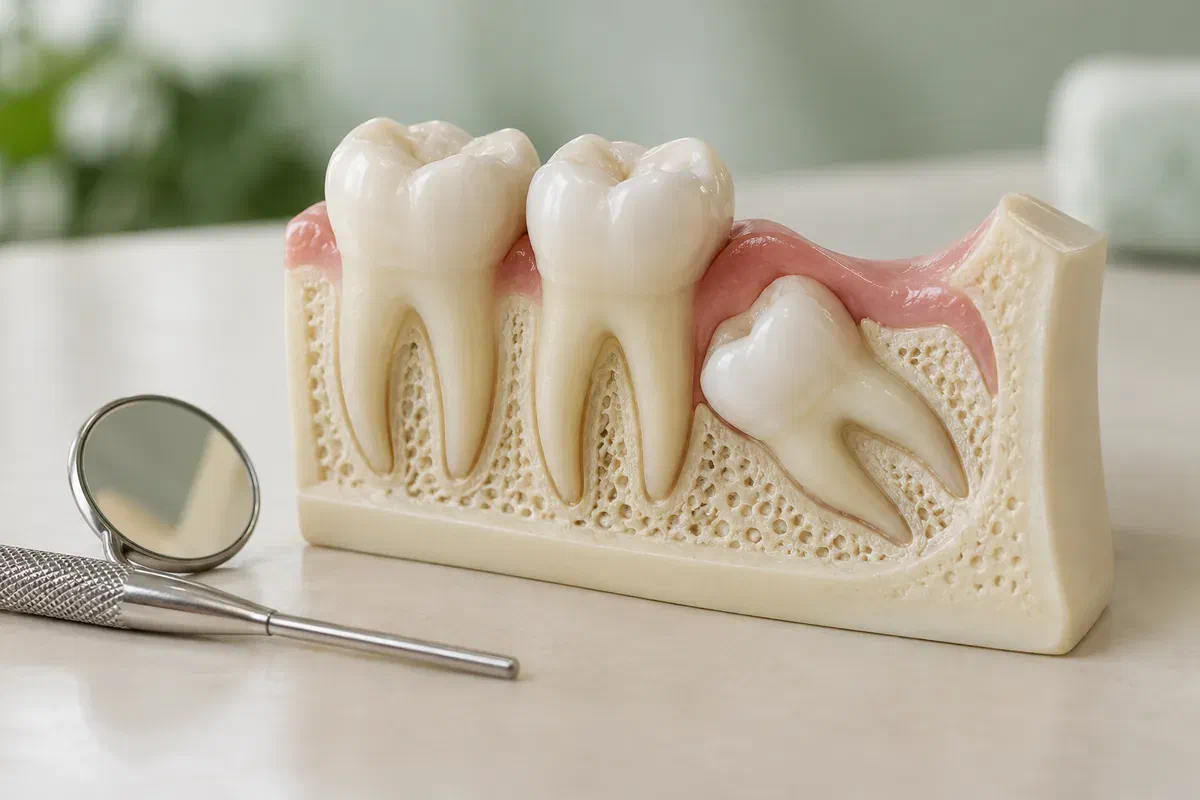
Lower wisdom teeth develop at the back of the jaw, near a canal carrying the nerve that gives feeling to the lower lip and chin, and close to another nerve serving the tongue. When one of these teeth is impacted, unable to erupt normally because space is limited or the angle is off, it may remain deep in bone where those relationships become important. Being impacted does not, on its own, mean it should come out.
The decision depends on symptoms, any disease, the health of the molar in front, the likelihood of future trouble, and the risks of surgery, including nerve risk. A tooth sitting near the nerve with no disease may be a good candidate for monitoring. One causing repeated infection may still be worth treating, with the approach adjusted to the anatomy.
When you contact us from Georgetown, gather any X-rays or scans and the name of the office that took them, plus a description of your symptoms. We will go over the findings, explain the treatment options, and discuss whether a specialist should take the case, which is often raised when nerve proximity is a factor. You should understand why each option is offered, its alternatives, recovery, and the risks for your anatomy.