

Illustrative patient discussing an infected tooth and treatment choices with a clinician
Specialized Care

Infected Tooth Extraction

An infected tooth needs timely assessment, but infection does not automatically mean removal. Call our Milton team to discuss the source, the tooth's prospects, suitable alternatives, and extraction planning when removal is the appropriate option.

A closer look at infected tooth extraction

Address the infection and understand why the tooth may need removal.

Extraction may be considered when an infected tooth cannot reasonably be retained or when removal is the selected option after an informed discussion. The assessment needs to identify the source of infection and evaluate the tooth's structure and support. The presence of swelling alone does not establish that extraction is the only possible treatment.

You may already have received medicine, noticed drainage, or been told the tooth has a poor outlook. Those details matter, but the current condition still needs review. A reduction in pain does not prove the source has been resolved, and repeated temporary improvement should not replace a clear plan for definitive care.

Call Milton Dental Clinic to discuss an infected tooth and appointment availability. Explain whether swelling is spreading or you feel unwell. We can review the next step, including alternatives and referral where necessary. If immediate dental care is needed and we are unavailable, seek another emergency dental provider.

Discuss assessment of an infected tooth
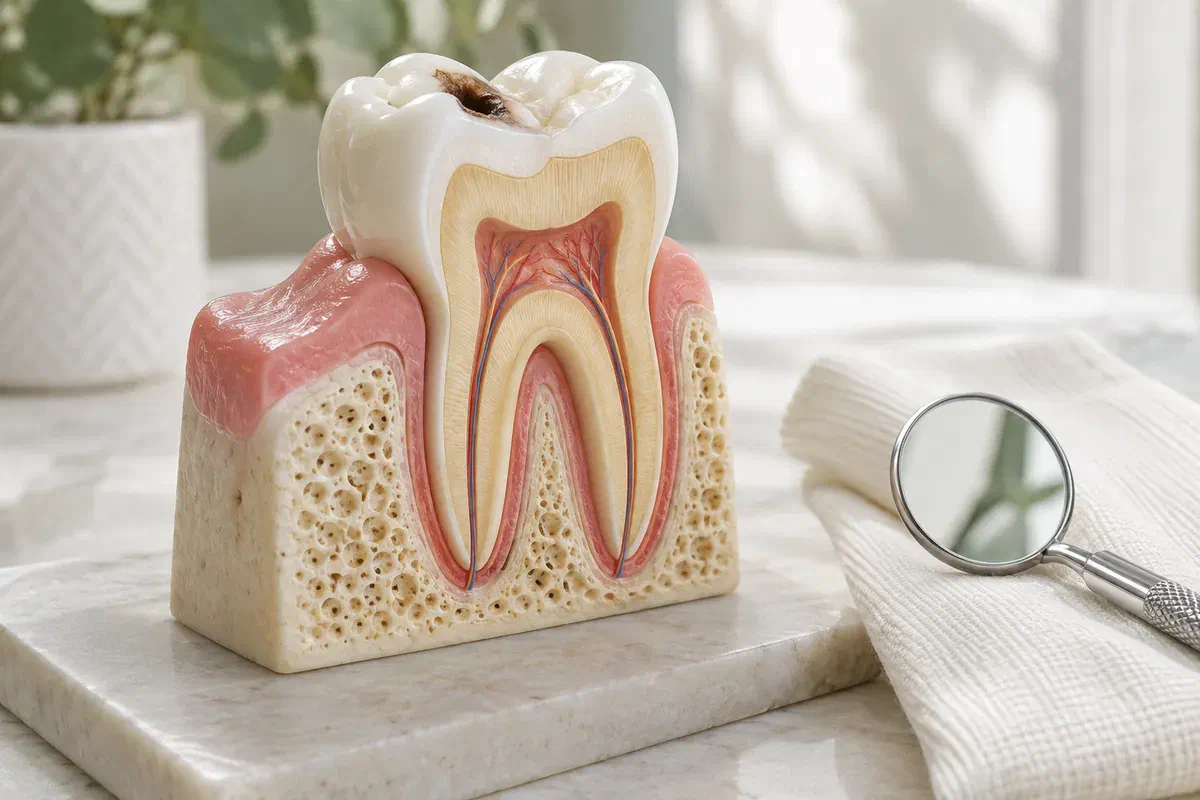
Illustrative physical molar cross-section showing decay within a supported tooth model
Details that shape the decision

Explain the infection history and the tooth's earlier treatment.

Bring any recommendation, images, and medicine details from previous care. The clinician needs to understand both the present symptoms and the work already done before advising whether removal is appropriate.

Swelling or drainage that returns after settling

Describe each episode and whether treatment changed the symptoms. Mention a recurring gum bump, bad taste, or discomfort when biting. An improvement may be temporary if the source remains, so ask what care is intended to resolve the underlying problem rather than only the latest flare-up.

A tooth with extensive damage or limited support

Tell the clinician about breakage, previous root canal treatment, large restorations, or earlier advice about gum support. Ask which current findings affect the possibility of retaining the tooth. A treatment history provides context, but it should not substitute for explaining the tooth's present prognosis.

Health circumstances that affect infection or surgery

Provide your medicine list and relevant medical history, including immune-system concerns, bleeding history, and previous surgical difficulties. Mention all antibiotics recently prescribed and any reactions. Do not stop regular medicines yourself; the team should explain whether medical coordination is needed before treatment.

Breathing or swallowing difficulty, significant spreading swelling, swelling affecting the eye, or severe difficulty opening the mouth needs emergency medical assessment. Call 911 for an immediate emergency rather than waiting for an extraction consultation or callback.

What removal is intended to accomplish

Remove an unsuitable tooth while keeping the wider care plan clear.

When extraction is appropriate, removing the tooth can address the diagnosed dental source of infection. Ask what else may need treatment or review and how recovery will be monitored. The procedure should be explained as part of managing the clinical problem, with realistic expectations about symptoms and healing afterward.

The consultation is also a chance to consider the consequences of losing the tooth. Depending on its location and your circumstances, replacement options may be discussed later or included in advance planning. An urgent infection should receive timely care without leaving you uncertain about what the resulting space could mean.

Patient information: American Dental Association — source-directed dental care and antibiotic decisions

A reasoned comparison with tooth-retaining care

Ask whether root canal treatment, retreatment, or another approach is clinically reasonable. The comparison should include the remaining tooth structure, supporting tissues, expected restoration, and likely follow-up. A treatment's name is less useful than understanding what would be required to make that particular tooth maintainable.

An explanation of antibiotics within the plan

A prescription may be appropriate in some circumstances, including spreading or systemic infection, but it does not replace addressing the source. The clinician considers your health, symptoms, and access to definitive care. Ask what the medicine is intended to do and what treatment is still needed.

Planning for the actual extraction and recovery

Discuss anaesthetic, procedural difficulty, relevant risks, and whether specialist care is advisable. Ask what is expected if roots are difficult to remove or additional surgical steps become necessary. The plan should include how questions and complications will be handled after you leave.

From infection assessment to an agreed procedure

Confirm the source, discuss the alternatives, and prepare for removal if indicated.

The appropriate timing and setting depend on severity, anatomy, health, and available care. An infected tooth does not create one universal rule about whether extraction must happen immediately or after another intervention.

  1. Assess the infection and identify the responsible tooth

    The dentist reviews the history, examines the area, and considers relevant tests and images. Explain any fever, spreading swelling, or difficulty with eating and opening. Ask what the findings show about urgency and whether the condition requires a different level of care.

  2. Review retention, removal, and consent

    Discuss the tooth's prognosis and the reasonable alternatives, including any specialist assessment that might help. If extraction is selected, confirm the tooth, expected procedure, risks, fees, and aftercare. Ask for the recommendation to be clarified before consenting to a permanent decision.

  3. Provide the planned treatment and comfort measures

    The clinician selects an appropriate approach to numbing and removing the tooth. Tell the team about anxiety or previous anaesthetic difficulty and agree on a signal to pause. Some teeth require surgical steps or referral, which should be discussed as part of the individual plan.

  4. Review the site and arrange follow-up

    Receive instructions for bleeding control, cleaning, food, medicines, and any stitches. Ask when the infection and healing should be reassessed and how to obtain help outside normal hours. Confirm whether another visit is needed for the remaining dental plan or replacement discussion.

After an infected tooth is removed

Protect the socket and report a recovery that changes direction.

Follow instructions tailored to your extraction and health circumstances. The fact that infection was present does not make every postoperative symptom expected or mean that all later pain should be treated with antibiotics.

Follow the local bleeding and cleaning guidance

Use the measures demonstrated by the treating clinician and avoid disturbing the socket with fingers or objects. Ask when to resume rinsing and cleaning near the site. If bleeding does not settle as instructed, contact the provider instead of repeatedly checking or manipulating the wound.

Use the prescribed medicines safely

Follow the directions for any pain relief or antibiotic and ask about interactions, side effects, or uncertainty. Do not use leftover prescriptions or increase doses because you are worried about infection. Continue regular medicines unless the relevant clinician has specifically advised a change.

Attend the review and describe new symptoms promptly

Report worsening pain, renewed swelling, fever, persistent bleeding, or an unexpected change in sensation. Explain the extraction date and how the symptoms developed. Keep the recommended follow-up even if you feel better so healing and any remaining infection concerns can be assessed.

Patient information: Royal Devon — bleeding advice and prescribed anticoagulant precautions

Choosing how to address the source

Retention, extraction, and urgent escalation are different decisions.

Ask which route fits the diagnosis, the tooth's condition, and the severity of the infection. A plan may begin with urgent care and still require another stage before treatment is complete.

When the structure and prognosis support preservation

Treatment aimed at retaining a suitable tooth

Root canal treatment or another indicated approach may be considered, with the necessary final restoration and follow-up. Ask whether specialist input would change the discussion. Retention should be a realistic plan for the whole tooth, not simply a promise that the infection can be temporarily quieted.

When removal is appropriate after considering alternatives

Extraction with an individual recovery plan

Discuss why the tooth is unsuitable for retention or why extraction is the selected option. Review the procedure, relevant risks, and the resulting space. Ask whether any future replacement or site-planning decision needs attention before removal and which decisions can reasonably wait.

When infection severity or procedure complexity warrants escalation

Care in a more appropriate urgent or specialist setting

Severe infection, medical concerns, or difficult anatomy may require another provider or hospital assessment. Ask what the referral is intended to address and how urgently it should occur. Do not delay necessary escalation while waiting for a preferred appointment location.

Infected-tooth extraction questions

Understand what is being removed and what the treatment still needs to achieve.

Bring earlier prescriptions and recommendations to the consultation. These answers help prepare for the decision but cannot establish whether a particular tooth needs extraction without examination.

(905) 876-4488
Does an infection at a tooth root automatically rule out saving the tooth?
No. The tooth’s structure, support, previous treatment, and overall prognosis affect the options. Ask whether root canal care or another approach is appropriate and what restoration would be needed afterward. Infection alone does not decide the question of retention.
Must every infected tooth wait for an antibiotic course before it can be extracted?
No universal rule applies. The clinician considers severity, your health, the procedure, and the appropriate setting. Some situations need prompt definitive treatment, while others require additional measures or escalation. Do not postpone care on the assumption that antibiotics must always come first.
If antibiotics stopped the pain, why might an infected tooth still need treatment?
A reduction in symptoms does not necessarily remove the underlying dental source. The tooth still needs assessment and a definitive plan. Ask whether retention or extraction is appropriate and what follow-up is required rather than waiting for another painful episode.
Can I ask about root canal retreatment before agreeing to remove a previously treated infected tooth?
Yes. Ask whether the cause and condition make retreatment or specialist assessment reasonable. Some teeth can be reconsidered, while others have structural or supporting-tissue problems that limit the options. The recommendation should explain why an alternative is or is not suitable.
Will removing an infected tooth automatically include an implant at the same visit?
No. Replacement planning depends on the site, infection, available support, health, and your preferences. Ask whether a replacement is appropriate and what timing or additional care it may require. An extraction appointment should not be assumed to include immediate implant placement.
Who should I contact if swelling returns after an infected tooth was extracted?
Contact the treating provider promptly and describe the timing and severity. Recurrent swelling needs assessment rather than an assumption that another antibiotic is sufficient. Seek emergency medical care for breathing or swallowing difficulty, eye involvement, or severe spreading symptoms.
Infected-tooth assessment in Milton

Call about the infection and get a clear explanation of the options.

Contact our Bronte Street practice at (905) 876-4488 to discuss symptoms and availability. Bring relevant records and medicine details. If urgent care is needed and we cannot see you, seek another available emergency dental provider.

Treatment choice, extraction timing, antibiotic need, referral, and replacement options require individual assessment. Email and online forms are for non-urgent enquiries.

Visit Milton Dental Clinic
Unit 1, 342 Bronte St. S, Milton, ON L9T 5B7
Get directions Clinic hours
Monday–Thursday
11am–7pm
Friday–Sunday
By appointment only

How can we help?

Milton Dental Clinic

Have a question about your smile? Choose the option that works best for you.

For urgent dental concerns, please call.
Messages are reviewed during clinic hours.