

Illustrative patient discussing an infected tooth and treatment choices with a clinician
Specialized Care

Infected Tooth Extraction in Erin

Tooth infections have a habit of flaring on a Friday night. For households in Erin and Hillsburgh, it helps to know which signs can wait for an appointment, which cannot, and how we assess whether an infected tooth should be kept or carefully removed.

When it starts at the wrong time

A throbbing tooth at the end of the week

Our regular hours run Monday to Thursday, with Friday to Sunday by appointment, so an infection that builds late in the week needs a little planning. Call as early as you can. Once you are seen, the dentist’s task is to find which tooth is responsible and judge whether it has the structure and support to be kept, since swelling alone does not mean extraction.

In the meantime, resist the urge to finish an old bottle of antibiotics from the cupboard. Medicine should be prescribed for this episode, and even when it helps, feeling better does not prove the source has cleared. A plan made after examination is what breaks the cycle of weekend flare-ups.

Phone to describe the tooth and ask what is possible. If the swelling is getting larger, you have a fever or you feel generally unwell, say so straight away. We will talk about keeping, removing or referring the tooth. When care is needed immediately and we are not available, find another emergency dental provider.

Call about a flare-up
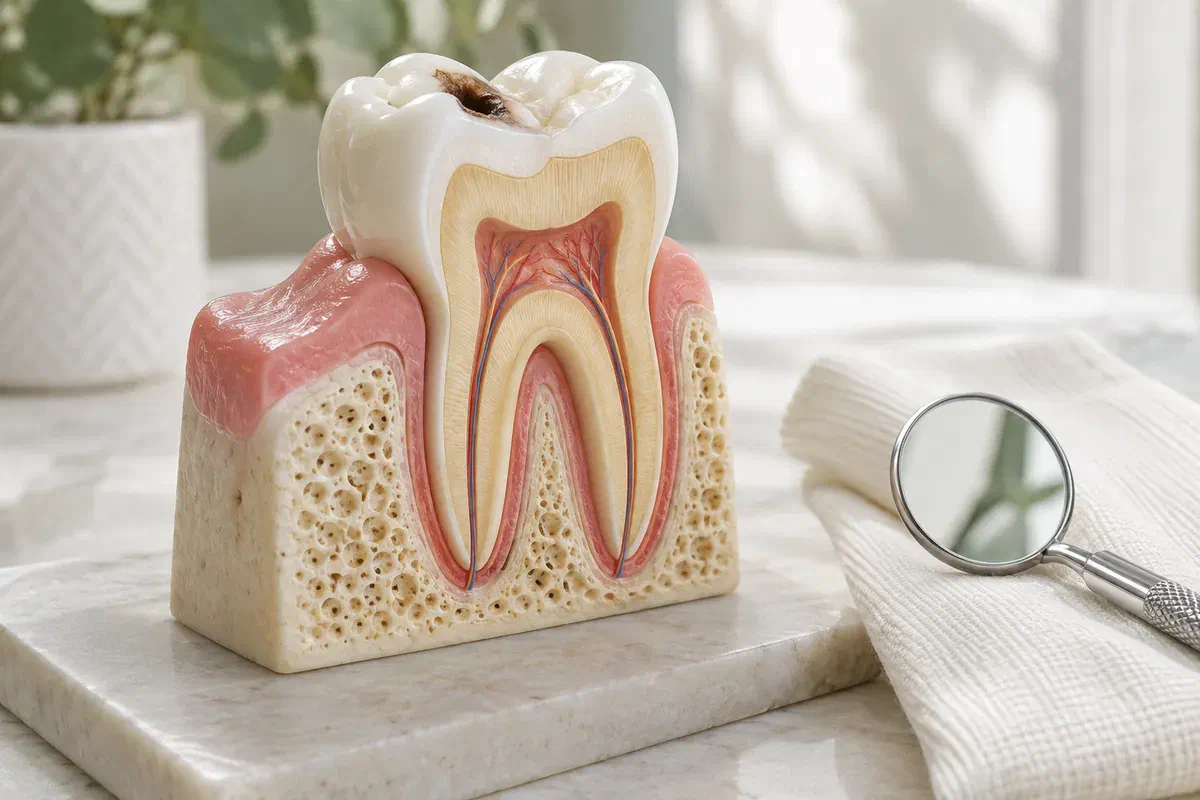
Illustrative physical molar cross-section showing decay within a supported tooth model
Useful when you call

How it started, how it has changed, and what you have taken

A quick summary of the timeline, the tooth’s past treatment and any medicine taken this week lets the dentist judge urgency and, at the visit, whether removal is appropriate.

A pattern of flares

Say when this episode began and whether it has happened before. A gum bump that drains, a bitter taste or pain on chewing are worth mentioning. If past flares settled and came back, that hints the source is still there, and it is worth asking what treatment would resolve it for good.

Past repairs and present damage

Tell the dentist about cracks, an old root canal, large fillings or a crown, and anything said before about gum or bone loss. Ask which current findings make the tooth hard to keep. Background helps, but the decision depends on the tooth’s prognosis now.

Medicines, including anything taken this week

List regular medicines and anything you have taken for the pain or swelling, plus immune or bleeding conditions and past surgical difficulty. Note reactions to antibiotics. Keep regular medicines going; the team will say whether your doctor needs to be part of the plan.

Do not wait for Monday with these signs: difficulty breathing or swallowing, swelling that spreads quickly or affects the eye, or a jaw so stiff it hardly opens. Go to emergency medical care, and call 911 if it is immediate.

Breaking the cycle

Why treating the tooth beats managing the weekends

If the tooth cannot reasonably be kept, removing it deals with the diagnosed dental source of infection that keeps causing trouble. Ask what else needs to be addressed and how healing will be followed. The dentist should present the extraction as part of a plan and describe recovery realistically.

Planning includes the space left behind. The tooth’s position and your preferences decide whether replacement is discussed now or after healing. An urgent infection needs prompt treatment, yet you should still know what the gap may mean before you go home.

Patient information: American Dental Association — source-directed dental care and antibiotic decisions

Whether the tooth could be kept instead

Root canal treatment, retreatment or another method can be clinically reasonable for some teeth. Compare what is left of the tooth, the gum and bone holding it, the restoration it would need and the visits involved. What it would take to keep this tooth healthy is the real question.

What a prescription does and does not do

Antibiotics have a place, for example with spreading or whole-body infection, but they cannot remove the source. The dentist weighs your health, symptoms and how soon definitive care is possible. Ask what a medicine is meant to achieve and what treatment is still needed.

How the extraction would be handled

Talk through how the area will be frozen, how hard the tooth looks to remove, what could go wrong in your case and whether an oral surgeon ought to do it. Ask what happens if a root breaks or surgical steps are needed, and who to contact if a problem appears over a weekend afterward.

What to expect

Call, assess, decide, treat

How soon and where care happens depends on how serious the infection has become, the shape of the tooth and its roots, your health and what is open. No rule says every infected tooth must come out immediately, or that something else must always be tried first.

  1. A call to gauge urgency

    Describe the swelling, pain and how you feel. The team can help you judge whether to come in, wait for the next opening or go elsewhere. Mention fever, spreading swelling or difficulty eating and opening the mouth.

  2. Examination and diagnosis

    The dentist reviews your history, examines the area and uses suitable tests and X-rays to identify the tooth. You discuss its prognosis and the alternatives, including a specialist opinion. If extraction is chosen, confirm the tooth, approach, risks, fees and aftercare.

  3. The extraction

    Freezing is chosen to suit you and checked before the tooth is removed. Let the team know about nerves or poor freezing in the past, and agree on a signal for a break. Surgical steps or a referral are sometimes needed and should be explained beforehand.

  4. Aftercare and the next visit

    You receive guidance on bleeding, cleaning, eating, medicines and stitches. Ask when the site will be rechecked and who to call outside regular hours. Confirm whether further visits are needed for the rest of your treatment or replacement planning.

After the tooth is out

Plan for the evenings and weekends of recovery too.

Aftercare is tailored to your extraction and health. A tooth that was infected does not make every later symptom normal, and new pain is not automatically a reason for antibiotics.

Looking after the socket

Control bleeding using the method shown to you and avoid disturbing the area. Ask when rinsing and brushing near the site can resume. Oozing that carries on longer than you were told to expect is a reason to phone for advice, not to keep lifting the gauze to look.

Handling medicines responsibly

Follow directions for pain relief and any antibiotic, and ask about side effects and interactions before your first dose. Avoid leftover prescriptions and do not raise doses out of worry. Regular medicines continue unless your clinician has told you otherwise.

Knowing who to contact, and when

Before you leave, find out who answers after hours. Report worsening pain, renewed swelling, fever, persistent bleeding or new numbness, along with the extraction date. The follow-up still matters on a good day; it is where the dentist confirms the socket is healing and nothing of the infection lingers.

Patient information: Royal Devon — bleeding advice and prescribed anticoagulant precautions

Possible outcomes

Keep the tooth, remove it, or get help elsewhere first

The diagnosis, the state of the tooth and how serious the infection is decide the route. Urgent care can be a first step, with more treatment needed afterward.

When structure and outlook support it

Keeping a tooth with a future

A root canal or other indicated treatment may be recommended, followed by a restoration and review. A specialist might view the tooth differently, so ask. Keeping it should be a realistic long-term plan rather than another short break between flares.

When extraction is right after alternatives

A planned removal

You should hear why keeping the tooth is unsuitable, or confirm that removal is your choice. Review the procedure, the risks and the gap. Ask which replacement decisions need to happen before removal and which can wait.

When severity or complexity calls for it

Emergency or specialist care

Serious infection, health concerns or challenging anatomy may mean another provider or a hospital is needed, sometimes before a dental visit is possible. Ask what any referral is for and how quickly to act. Do not wait for a preferred location.

Erin questions

When the tooth will not wait for the weekday

Have past records and prescriptions ready. These answers can guide you, but whether a tooth should be removed is decided only after examination.

(905) 876-4488
My tooth started swelling on a Friday. Is it safe to wait until the next weekday?
It depends on the signs. Mild, stable symptoms may allow a call and a planned visit, but spreading swelling, fever, eye involvement, or breathing or swallowing difficulty need emergency medical care now. Call us early to ask about an appointment.
Can I take leftover antibiotics from a previous prescription?
No. Leftover medicine may be the wrong drug, the wrong dose or not enough, and it can delay proper assessment. Contact a dentist, physician or pharmacist for advice.
Can a pharmacist help with a tooth infection?
A pharmacist can advise on pain relief and when to seek care, but the tooth still needs a dental examination to identify and treat the source.
Will the dentist always remove a tooth that has flared up several times?
No. Repeated flares point to an ongoing source, but whether the tooth can be kept depends on its structure, support and previous treatment. Root canal care may be an option for a suitable tooth.
Does an infected tooth need to calm down with antibiotics before extraction?
Not as a fixed rule. How sick you are, your medical background, the kind of extraction planned and where it will happen all feed into that choice. In some cases the source is best removed promptly, while in others medicine or a referral comes first.
Is some swelling normal in the first days after an extraction?
Some swelling after the procedure can be expected, but swelling that grows, returns after settling, or comes with fever should be reported promptly. Seek emergency care for breathing, swallowing or eye involvement.
Booking from Erin

Call early in the flare, not late.

Our Bronte Street practice is open Monday to Thursday, 11am to 7pm, and Friday to Sunday by appointment. From Erin, phone (905) 876-4488 to describe your symptoms. If no time with us comes soon enough for an urgent problem, another emergency dental provider should be your next step.

Extraction, timing, antibiotics, referral and replacement are decided after individual assessment. Email and online forms suit non-urgent questions, so please phone about anything urgent.

Visit Milton Dental Clinic
Unit 1, 342 Bronte St. S, Milton, ON L9T 5B7
Get directions Clinic hours
Monday–Thursday
11am–7pm
Friday–Sunday
By appointment only

Areas we serve

  • Milton
  • Oakville
  • Mississauga
  • Georgetown
  • Halton Hills
  • Acton
  • Campbellville
  • Brampton
  • Burlington
  • Puslinch
  • Rockwood
  • Erin
  • Caledon
  • Etobicoke
  • Old Milton
  • Bronte Meadows
  • Timberlea
  • Dorset Park
  • Dempsey
  • Clarke
  • Beaty
  • Coates
  • Harrison
  • Scott
  • Willmott
  • Ford
  • Bowes
  • Cobden
  • Walker
  • Mountain View
  • Milton Heights
  • Hawthorne Village
  • Valley View
  • Fallingbrook
  • Nassagaweya
  • Trafalgar
  • Esquesing
  • Nelson
  • Brookville
  • Moffat
  • Glen Williams
  • Norval
  • Limehouse
  • Stewarttown
  • Ashgrove
  • Hornby
  • Silver Creek
  • Speyside
  • Scotch Block
  • North Oakville
  • River Oaks
  • Glen Abbey
  • West Oak Trails
  • Palermo
  • Bronte Creek
  • College Park
  • Joshua Creek
  • Uptown Core
  • Preserve
  • Iroquois Ridge
  • Lisgar
  • Meadowvale
  • Meadowvale Village
  • Churchill Meadows
  • Erin Mills
  • Central Erin Mills
  • Streetsville
  • East Credit
  • Creditview
  • Heartland
  • Sheridan
  • Mount Pleasant
  • Credit Valley
  • Huttonville
  • Churchville
  • Springbrook
  • Northwest Brampton
  • Bram West
  • Fletcher's Meadow
  • Fletcher's Creek South
  • Alton Village
  • Orchard
  • Millcroft
  • Headon Forest
  • Tansley
  • Brant Hills
  • Tyandaga
  • Kilbride
  • Lowville
  • Aberfoyle
  • Morriston
  • Arkell
  • Hillsburgh
  • Freelton
  • Carlisle
  • Waterdown
  • Flamborough
  • Mountsberg

How can we help?

Milton Dental Clinic

Have a question about your smile? Choose the option that works best for you.

For urgent dental concerns, please call.
Messages are reviewed during clinic hours.