

Illustrative patient calmly discussing jaw movement with a dental clinician
Specialized Care

Jaw Clicking Assessment in Acton

Told your clicking jaw needs a bite adjustment or a costly appliance, and not sure it adds up? People from Acton can ask our team for a careful second look. A painless click often needs nothing. Pain, locking, or restricted opening is a different conversation.

A second look before you commit

Someone recommended treatment for your click. Is it actually needed?

It is unsettling to hear that your jaw needs fixing when it has never really bothered you. Before agreeing to anything permanent, it helps to know a basic fact: joint sounds are very common, and many cause no pain or harm at all. A click is not, by itself, evidence of damage, and it is not a sufficient reason to grind, move, or rebuild teeth.

That does not mean every click is trivial. Pain while chewing, a jaw that catches or locks, opening that has become limited, or symptoms that started after an injury all change the picture. Weighing them requires a full history and an in-person examination. A photo of a proposal, or a description over the phone, is not enough to judge it.

Bring whatever you were given, along with what you have actually noticed. We will examine the jaw and teeth, tell you whether observation is reasonable, and explain when further care or a referral is worthwhile. Our goal is a plan you understand for comfort and function. Promising a silent joint is not part of it.

Ask for a second opinion on a jaw click
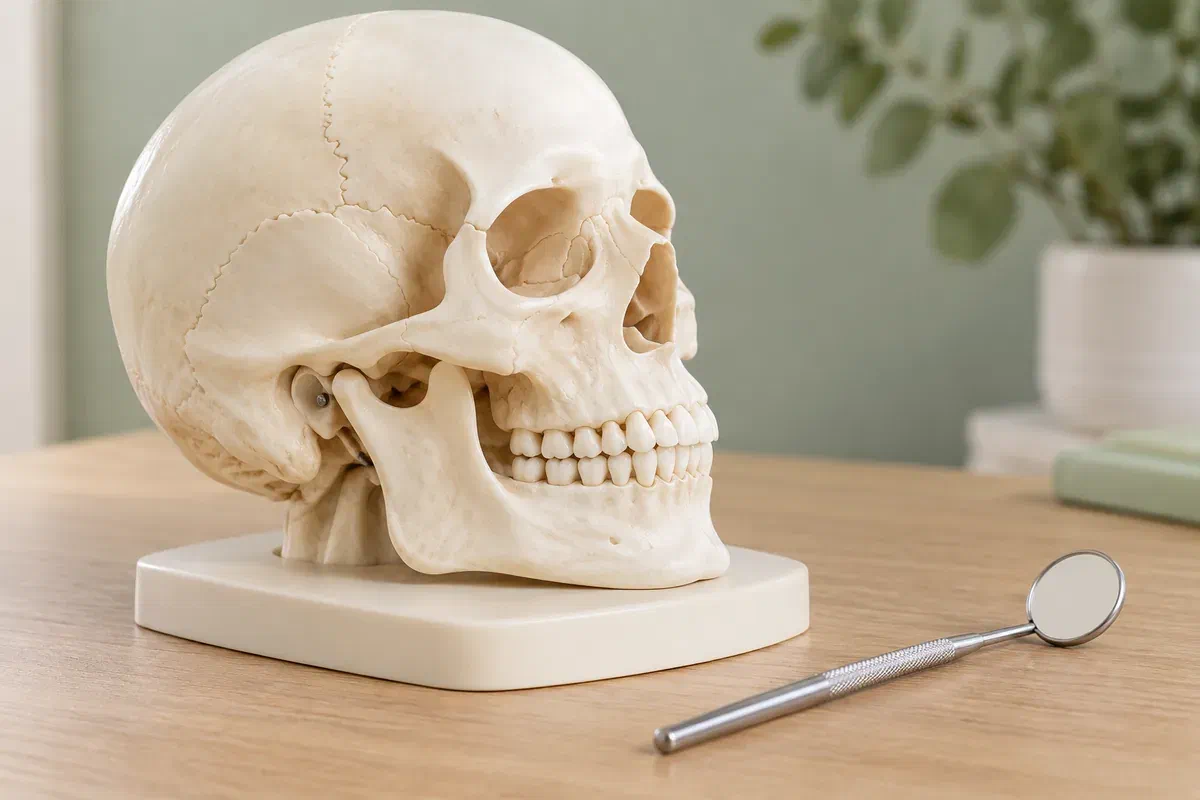
Illustrative anatomical skull model with an attached lower jaw and visible joint region
Acton, check the starting point

What exactly is being treated?

Before any treatment discussion, be clear about which side clicks, when it happens, and how long it has been there. There is no need to rehearse the sound. Describe your usual days, including what does and does not bother you.

A sound you could happily ignore

If the click has been around for a long time and never interferes with eating or opening, say so directly. Ask whether the examination shows anything that would change that view. When nothing else is wrong, an explanation and an occasional look may be the most appropriate response.

A sound that comes with discomfort

Point out whether the soreness sits at the joint, in the cheek muscles, or elsewhere, and what has become harder to do. Mention tenderness, fatigue, and any dental symptoms. That pain deserves its own assessment, because it may not come from the part of the jaw that clicks.

A jaw that catches or will not open fully

Describe whether it hitches briefly, stays stuck, or no longer opens to its usual range, and mention any injury or difficulty eating or drinking. Significant restriction or locking warrants prompt contact. Forcing the jaw or attempting a home repositioning trick is not safe.

Prompt professional care is needed when a jaw is stuck, after a serious injury, or if eating or drinking has become impossible. For difficulty breathing or swallowing, major swelling, or other severe symptoms, go to emergency medical care.

What an independent assessment offers

Clarity about the problem before you pay for a solution

A second assessment asks the same first question again: is this a harmless sound, or a problem involving pain or limited function? You are entitled to know how strongly the examination backs any diagnosis you were given, or whether one exists at all. An honest answer may include uncertainty, which is more useful than a single label applied to every noisy joint.

Any treatment should have a purpose you can put into words. Easing painful chewing or freeing a restricted jaw is a clear target. Making a comfortable joint go quiet is a far weaker reason for anything irreversible. Ask how a proposal ties back to your symptoms and how its benefit would be checked.

Findings matched to your symptoms

History, jaw movement, tenderness, and relevant dental findings are reviewed together. Ask which observations are meaningful and which are probably incidental. A loud, easily reproduced click should not be the main justification when there is no other complaint.

Tests and referrals with a stated aim

Imaging or another opinion is useful when it can answer a question or change care. Ask what it would contribute and what it cannot show. No single scan is required for every clicking joint, and results still depend on the examination for meaning.

Reversible steps before irreversible ones

Where care is warranted, start by discussing conservative options and when progress will be reviewed. You should know what a good result would look like and who to call if the jaw gets worse. Permanent changes to the teeth should not be assumed necessary because a joint makes noise.

How the second opinion works

We start from scratch, then compare notes

The assessment begins with your own experience, not the earlier recommendation. If opening wide is uncomfortable, mention it, and agree how you will signal for a break.

  1. Your symptoms, in your words

    Explain when the clicking began, whether one or both sides are affected, and whether pain or restriction is involved. Bring up injuries, earlier jaw care, appliances, and relevant health details. Then share the treatment you were offered and what was said about why.

  2. An independent examination

    The clinician assesses opening and closing, tender areas, and dental findings as appropriate. You should not have to push through sharp pain. Tell us if the examination brings on your familiar symptom or something new.

  3. Where the two opinions agree or differ

    Ask whether the findings support observation, a jaw-related diagnosis, a dental concern, or further assessment, and how that compares with what you were told. If imaging or referral is suggested, clarify what it would answer. Keep the observed sound separate from theories about its cause.

  4. A plan you can decide on calmly

    Confirm whether any treatment is needed and which changes should prompt earlier contact. If care is proposed, ask about purpose, costs, limitations, and follow-up. There is no pressure to decide on the spot, and no need to keep checking the click while you think.

After the second opinion

Take your time. Watch how the jaw works.

Follow the advice that fits your findings. A plan for painless clicking may look nothing like one for pain or locking, so a programme suggested for someone else's jaw is not automatically suited to yours.

Keep an eye on daily comfort

If observation is advised, notice new pain, catching, or difficulty with eating and opening. Making the click repeatedly to see whether it is still there is not necessary. Ask what is worth recording and when a review would be useful.

Follow movement advice with limits

If exercises or temporary activity changes are suggested, ask for a demonstration and a clear sense of how much is enough. Never force a jaw that has locked, and avoid painful movements meant to make a click disappear. Get in touch if the advice worsens your symptoms.

Bring the appliance you were given

If you already have a splint or guard, explain why it was made and how symptoms changed while you wore it. Do not alter it or order a different one just to quiet the joint. If it causes pain, take it out and contact whoever prescribed it.

Comparing the options

Proportionate care for what was actually found

Ask which response fits your mix of sound, pain, and function. A recommendation should target the assessed problem, and the absence of every click should not be the condition for calling it a success.

Painless clicking and comfortable function

No treatment, with a clear explanation

The finding may simply be that the click needs nothing. You can still ask what would make a future look worthwhile and whether it fits into routine care. The reasons a device or procedure is unnecessary should be spelled out for you.

Pain or another assessed jaw concern

Conservative management of discomfort

Reversible care may address habits, comfortable movement, or other factors that seem to add to symptoms. Find out which measure comes first and how you will tell whether it is working. Expectations should be realistic, and no single approach can promise to correct every joint sound.

Locking, injury, or ongoing difficulty

Further evaluation

A clinician who focuses on jaw joints or facial pain may help when the situation is complex or movement remains limited. Ask what will be shared and whether interim care is needed. Urgent symptoms deserve prompt attention, not a routine wait.

Patient information: NIDCR — conservative TMD care and avoiding permanent bite changes

Second-opinion questions

Before you agree to treatment for a click

These answers can help you discuss a clicking jaw without assuming it needs correcting. When you call, say whether the jaw hurts, sticks, or opens less than before, and mention the treatment you were offered.

(905) 876-4488
Is it all right to ask for a second opinion on jaw treatment?
Yes. Asking for another view before irreversible or costly care is reasonable and common. A clinician should be comfortable explaining the diagnosis, the evidence for a proposal, and the alternatives.
What should I bring to a second-opinion appointment?
Bring the written treatment proposal if you have one, any appliance you were given, and notes about your symptoms. If you have recent X-rays or reports, ask the original office whether they can be shared. Your own description of how the jaw feels is still the most important part.
Can a bite adjustment be undone if it does not help?
Procedures that grind or reshape tooth surfaces remove enamel and cannot be reversed. That is one reason conservative, reversible options are generally discussed first. Ask exactly what is being proposed and why before agreeing.
A splint has been recommended. Which questions are worth asking about it?
Ask what it is meant to achieve, how long you would wear it, how its effect will be judged, and what to do if it causes pain. A splint offered only to silence a painless click deserves careful questions.
If my click is painless, should I treat it now to prevent problems later?
Generally not. Painless clicking often needs no treatment. Ask whether the examination found anything else and what would justify a review. A sound alone does not support a device or a permanent procedure.
Do I need an MRI before deciding on treatment?
Not in every case. Imaging is considered when it can answer a specific question that might change your care. Ask what the examination suggests and what a scan would add before agreeing to one.
From Acton to our practice

Get a clear answer before anything permanent.

Reach our Bronte Street practice to arrange a second look at a clicking jaw, especially if it comes with discomfort, catching, or limited movement. If the jaw is locked, opening is badly restricted, or eating and drinking are difficult, tell us when you call.

Painless clicking may not need treatment. Recommendations, including imaging and referral, come from your own history and examination, and an end to the sound is not guaranteed.

Visit Milton Dental Clinic
Unit 1, 342 Bronte St. S, Milton, ON L9T 5B7
Get directions Clinic hours
Monday–Thursday
11am–7pm
Friday–Sunday
By appointment only

Areas we serve

  • Milton
  • Oakville
  • Mississauga
  • Georgetown
  • Halton Hills
  • Acton
  • Campbellville
  • Brampton
  • Burlington
  • Puslinch
  • Rockwood
  • Erin
  • Caledon
  • Etobicoke
  • Old Milton
  • Bronte Meadows
  • Timberlea
  • Dorset Park
  • Dempsey
  • Clarke
  • Beaty
  • Coates
  • Harrison
  • Scott
  • Willmott
  • Ford
  • Bowes
  • Cobden
  • Walker
  • Mountain View
  • Milton Heights
  • Hawthorne Village
  • Valley View
  • Fallingbrook
  • Nassagaweya
  • Trafalgar
  • Esquesing
  • Nelson
  • Brookville
  • Moffat
  • Glen Williams
  • Norval
  • Limehouse
  • Stewarttown
  • Ashgrove
  • Hornby
  • Silver Creek
  • Speyside
  • Scotch Block
  • North Oakville
  • River Oaks
  • Glen Abbey
  • West Oak Trails
  • Palermo
  • Bronte Creek
  • College Park
  • Joshua Creek
  • Uptown Core
  • Preserve
  • Iroquois Ridge
  • Lisgar
  • Meadowvale
  • Meadowvale Village
  • Churchill Meadows
  • Erin Mills
  • Central Erin Mills
  • Streetsville
  • East Credit
  • Creditview
  • Heartland
  • Sheridan
  • Mount Pleasant
  • Credit Valley
  • Huttonville
  • Churchville
  • Springbrook
  • Northwest Brampton
  • Bram West
  • Fletcher's Meadow
  • Fletcher's Creek South
  • Alton Village
  • Orchard
  • Millcroft
  • Headon Forest
  • Tansley
  • Brant Hills
  • Tyandaga
  • Kilbride
  • Lowville
  • Aberfoyle
  • Morriston
  • Arkell
  • Hillsburgh
  • Freelton
  • Carlisle
  • Waterdown
  • Flamborough
  • Mountsberg

How can we help?

Milton Dental Clinic

Have a question about your smile? Choose the option that works best for you.

For urgent dental concerns, please call.
Messages are reviewed during clinic hours.