

Illustrative patient calmly discussing jaw movement with a dental clinician
Specialized Care

Jaw Clicking Assessment in Brampton

Your teenager's jaw pops at breakfast, or yours does during a phone call. Households in Brampton can bring that question to our team. Painless clicking often needs no care at all. Soreness, a jaw that catches, or less room to open is the part worth checking.

A question for the whole household

Someone at home has a clicking jaw

Jaw sounds turn up at all ages, from teenagers to grandparents. One person mentions it, someone else admits theirs does it too, and suddenly the family is comparing pops over dinner. It is reassuring to know that these joints move with every word and bite, and that a click often comes with no pain and no harm. The sound does not prove the joint is injured, and nobody's bite needs changing because of it alone.

The useful question for each person is different: does it hurt, does it catch, and does the jaw still open the way it used to? Has there been a sports knock or a fall? Answers like these are gathered by listening and examining, one person at a time. A clip on a family group chat is no substitute.

Bring the person with the click, and the details you have noticed. We will look at the jaw and the teeth, explain whether simply keeping watch is fine, and say whether more care or a referral would help. What you should get is a sensible plan for comfort and function, not a pledge to silence every noisy joint in the house.

Book an assessment for a clicking jaw
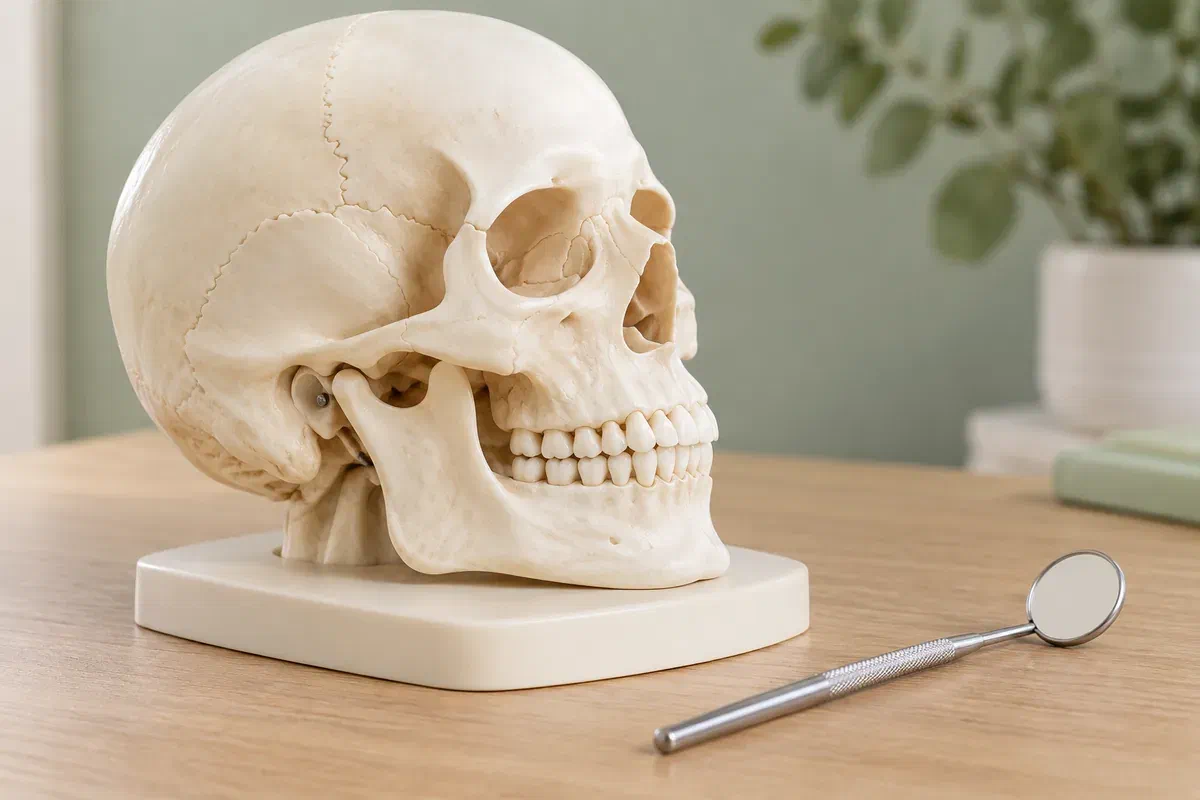
Illustrative anatomical skull model with an attached lower jaw and visible joint region
Brampton households often describe

Same sound, three different stories

Jot down which side clicks, when it happens, and whether it is brand new or has been around for years. Nobody needs to practise the click at home before the visit. What happens on an ordinary day is what the clinician wants to hear.

Noisy but comfortable

Many people have a click that has been there for ages and never interferes with eating or opening. Say so plainly, and ask whether the examination finds anything that changes how it should be viewed. Often the right answer is an explanation and occasional review.

Noisy and now sore

Ask the person to point to the ache, whether it is right by the ear, across the cheek, or somewhere else, and to name what has become harder. Mention tenderness, tiredness after chewing, and any tooth symptoms. Pain is assessed on its own, since it may not be coming from the clicking side.

Stuck, or not opening fully

Describe whether the jaw catches briefly, stays stuck, or opens less than before. Mention any injury, including a sports knock, and any trouble eating or drinking. For a locked or badly restricted jaw, contact a clinician promptly, and do not force it or copy a home technique.

Anyone whose jaw is stuck, whose face has been seriously hurt, or who cannot eat or drink should be seen promptly. Go to emergency medical care for difficulty with breathing or swallowing, large swelling, or any other severe symptom.

Why bother checking

One honest answer, so the family can stop guessing

An assessment tells a harmless click apart from a problem with pain or movement. You are welcome to ask what the findings support and whether there is a confirmed diagnosis. Sometimes the truthful answer includes a degree of uncertainty, and that beats squeezing every noisy jaw into one label.

If care does come up, its purpose should be easy to explain to the person receiving it. Helping someone chew comfortably or open freely is a real aim; making a painless joint go quiet is a different aim. Ask how the plan fits the concern that brought you in and how its usefulness will be checked.

Examination tied to real symptoms

The clinician puts the history, jaw movement, tender spots, and the teeth into one picture. You can ask which details are meaningful and which are probably just noise. A click someone can show off at the table should not distract from a quieter complaint that affects comfort more.

Extra tests only for good reason

A scan or referral is worthwhile when it can answer a question or change care. Ask what it would add and what its limits are. There is no single test every clicking jaw needs, and results still have to be read next to the examination.

Gentle and reversible first

When treatment is needed, ask about conservative options and when progress will be reviewed. Find out what to expect and what to do if things worsen. Clicking alone is no reason to assume the teeth need reshaping or moving.

How the appointment runs

Talk first, examine gently, then explain in plain terms

We start with everyday life: school, work, meals, conversation. Anyone who finds a wide opening uncomfortable can say so, and we will agree on a hand signal for a rest.

  1. Start with the story

    How long has it been clicking? Left, right, or both? Is there any ache or stiffness with it? Add sports knocks or falls, earlier jaw care, braces, retainers, guards, and anything in the medical history that could matter. Then tell us which change is the real worry.

  2. Check movement comfortably

    The clinician examines opening and closing, tender areas, and related dental findings where appropriate. Nobody should push through sharp pain to show the problem. Say whether the examination brings on the usual symptom or feels different from home.

  3. Explain what we know and what we do not

    You will hear whether the picture fits simple watching, a jaw-related diagnosis, a problem with the teeth instead, or a need for another opinion. If a scan or referral is mentioned, ask what it should clear up. The sound heard in the room is separate from any theory about its cause.

  4. Settle the plan and a review date

    Check whether anything needs treating, and learn which signs mean calling before the review. For any proposed care, ask about purpose, costs, limits, and follow-up. With clear instructions, nobody at home has to keep testing the click.

Keeping track at home

Function first. The click can wait.

Follow the advice for the person who was assessed. Guidance for painless clicking is often very different from guidance for pain or locking, so one family member's exercises should not be passed to another.

Notice everyday comfort

When monitoring is advised, watch for new pain, catching, or difficulty eating and opening. Making the jaw click on purpose to check serves no purpose. Ask which changes to note and when the clinician wants to hear about them.

Follow only the advice given

If exercises or temporary activity changes are recommended, ask for a demonstration and clear limits. A locked jaw should never be forced, and painful movements should not be used to try to stop a click. Call if the advice increases discomfort or restriction.

Bring any guard, splint, or retainer

Tell the clinician why it was made and whether symptoms changed while it was worn. Do not alter it at home or buy a different one only to quiet the joint. A prescribed device that hurts should be set aside until whoever provided it has had a look.

Possible responses

Not every click leads to the same place

Ask which option suits the combination of sound, pain, and function you or your family member has. The recommendation should address what was found, not treat complete silence as the only success.

Painless clicking with comfortable function

Explain and observe

For a lot of households, this is where things end: the click is explained and left alone. Find out what would be a reason to come back, and whether the jaw can simply be checked at each family member's routine visit. The reasons no guard or procedure is needed should be clear to everyone involved.

Pain or another assessed jaw concern

Conservative care for discomfort

When soreness is part of it, reversible steps may target daily habits, easier use of the jaw, or anything else that seems to be adding to the strain. Ask what the first step is and how you will tell whether it is working. Expect realistic goals tied to the diagnosis, never a promise that a single method quiets every joint.

Locking, injury, or ongoing difficulty

Referral for further evaluation

If a jaw keeps locking, was injured, or simply will not open properly, a clinician focused on jaw joints or facial pain may be the next stop. Ask what records go with you and what to do in the meantime. Anything urgent is handled promptly instead of joining an ordinary queue.

Patient information: NIDCR — conservative TMD care and avoiding permanent bite changes

Family questions

What parents and partners tend to ask

These answers can help your household talk about clicking without assuming it needs fixing. When you book, mention any pain, locking, or change in movement.

(905) 876-4488
Is it unusual for a teenager's jaw to click?
Jaw sounds can occur at any age, including the teen years, and many are painless. As with adults, what matters is whether there is pain, catching, or reduced opening. Bring your teen in if any of those appear or if they are worried.
My child has braces and their jaw has started clicking. Who should we tell?
Let the orthodontist know, since they are managing the treatment, and mention it at dental visits too. A click during orthodontic care is worth describing, but its significance depends on pain, movement, and the examination.
Should my teen wear a mouthguard for sports if their jaw clicks?
A properly fitted sports mouthguard is a sensible protection for contact sports in general. It is not a treatment for a click. If the jaw has been hit or symptoms change after a game, arrange an assessment.
Can two family members be seen on the same day?
Ask when you call, and the team will try to arrange times that suit your household. Mention anyone with locking, significant restriction, or trouble eating, so their appointment can be prioritised appropriately.
Is a very loud click more serious than a soft one?
Not by itself. How loud the sound is does not settle a diagnosis or the need for care. Pain, movement, and the examination tell the clinician far more than volume does.
The click went away but now the jaw seems stuck. Is that a good sign?
No, it needs prompt attention. A new restriction or locking matters even if the sound has stopped, particularly if eating or drinking is affected. Contact a clinician soon and do not try to force the jaw open.
Brampton bookings

Bring whoever has the click, and the questions.

Reach our Bronte Street practice about clicking with discomfort, catching, or limited jaw movement, for yourself or someone in your family. If a jaw is locked, opening is very restricted, or eating and drinking have become difficult, tell us when you call.

A click with no pain often needs nothing done. Each person's own history and examination guide what we suggest, scans and referrals included, and no one can guarantee the sound will stop.

Visit Milton Dental Clinic
Unit 1, 342 Bronte St. S, Milton, ON L9T 5B7
Get directions Clinic hours
Monday–Thursday
11am–7pm
Friday–Sunday
By appointment only

Areas we serve

  • Milton
  • Oakville
  • Mississauga
  • Georgetown
  • Halton Hills
  • Acton
  • Campbellville
  • Brampton
  • Burlington
  • Puslinch
  • Rockwood
  • Erin
  • Caledon
  • Etobicoke
  • Old Milton
  • Bronte Meadows
  • Timberlea
  • Dorset Park
  • Dempsey
  • Clarke
  • Beaty
  • Coates
  • Harrison
  • Scott
  • Willmott
  • Ford
  • Bowes
  • Cobden
  • Walker
  • Mountain View
  • Milton Heights
  • Hawthorne Village
  • Valley View
  • Fallingbrook
  • Nassagaweya
  • Trafalgar
  • Esquesing
  • Nelson
  • Brookville
  • Moffat
  • Glen Williams
  • Norval
  • Limehouse
  • Stewarttown
  • Ashgrove
  • Hornby
  • Silver Creek
  • Speyside
  • Scotch Block
  • North Oakville
  • River Oaks
  • Glen Abbey
  • West Oak Trails
  • Palermo
  • Bronte Creek
  • College Park
  • Joshua Creek
  • Uptown Core
  • Preserve
  • Iroquois Ridge
  • Lisgar
  • Meadowvale
  • Meadowvale Village
  • Churchill Meadows
  • Erin Mills
  • Central Erin Mills
  • Streetsville
  • East Credit
  • Creditview
  • Heartland
  • Sheridan
  • Mount Pleasant
  • Credit Valley
  • Huttonville
  • Churchville
  • Springbrook
  • Northwest Brampton
  • Bram West
  • Fletcher's Meadow
  • Fletcher's Creek South
  • Alton Village
  • Orchard
  • Millcroft
  • Headon Forest
  • Tansley
  • Brant Hills
  • Tyandaga
  • Kilbride
  • Lowville
  • Aberfoyle
  • Morriston
  • Arkell
  • Hillsburgh
  • Freelton
  • Carlisle
  • Waterdown
  • Flamborough
  • Mountsberg

How can we help?

Milton Dental Clinic

Have a question about your smile? Choose the option that works best for you.

For urgent dental concerns, please call.
Messages are reviewed during clinic hours.