

Illustrative patient calmly discussing jaw movement with a dental clinician
Specialized Care

Jaw Clicking Assessment in Etobicoke

Making the trip from Etobicoke for a clicking jaw? Plan one well-prepared visit with our team. A click that does not hurt frequently needs no care. When pain, catching, or reduced opening are involved, a focused assessment helps you decide what comes next.

A trip worth taking

Arrive prepared, and one appointment can answer a lot.

When the drive is longer, you want the visit to settle real questions. The good news is that a jaw click on its own is often unremarkable. These joints hinge and slide all day long, and many make noise without pain or harm. A sound does not establish that anything is damaged, and it is no reason by itself to rework how your teeth fit together.

Preparation is mostly about the surrounding details. Write down when the click started, which side it favours, whether chewing or yawning ever hurts, and whether the jaw has caught, locked, or begun opening less. Note any blow to the face. Those notes, followed by a hands-on examination, give the clinician far more to work with than a recording ever could.

From there, we review what your jaw and teeth show, discuss whether watching it is enough, and explain whether more care or a referral is likely to help. We will try to give you a clear plan by the end of that visit. The aim is comfortable function you can rely on, not a promise that the joint goes silent.

Plan a jaw clicking visit
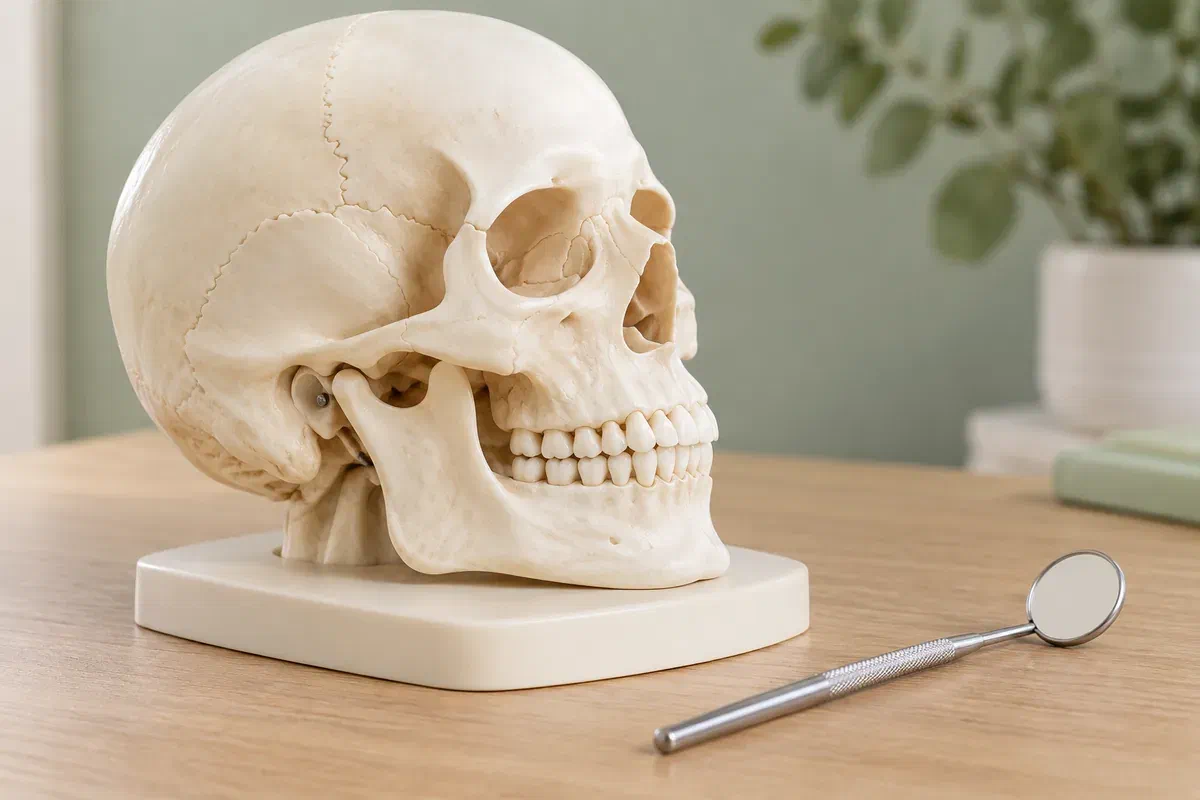
Illustrative anatomical skull model with an attached lower jaw and visible joint region
Before you set out from Etobicoke

Which description sounds like you?

A short note on the side involved, the triggers, and how long it has gone on is the best preparation. Skip the urge to keep making the click on the way in. What the jaw does on ordinary days is what counts.

Clicking with nothing else attached

Maybe it has popped for years and never once stopped you eating or opening wide. Tell the clinician that, and ask whether the examination changes how the history should be read. When nothing else is going on, reassurance and an eye on it can be enough.

Clicking that now comes with an ache

Notice where the discomfort lives, whether at the joint itself, across the chewing muscles, or elsewhere, and which tasks have grown harder. List tenderness, end-of-day tiredness, and anything strange with your teeth. Pain is assessed separately, as it may not come from the noisiest spot.

Catching, locking, or a smaller opening

Describe a brief snag, a jaw that stays stuck, or opening that has shrunk. Say if you were injured or have struggled to eat or drink. Marked restriction or locking calls for prompt contact, and closer urgent care may be wiser than a long drive. Never force the jaw or try a home manoeuvre.

If your jaw is stuck, you have a significant injury, or you cannot eat or drink, seek prompt care, which may mean somewhere closer to home. Go to emergency medical care for trouble breathing or swallowing, major swelling, or other severe symptoms.

What the visit should settle

Is there a problem here, or only a sound?

The central task is distinguishing a benign click from a problem with pain or movement. Before you head home, find out how solid the conclusions are and whether a diagnosis has been pinned down. If some of it remains uncertain, a clinician should tell you so, rather than reaching for the same name for every noisy joint.

If treatment is on the table, its purpose should be clear before you drive home. Restoring comfortable chewing or easing a restricted jaw is a meaningful aim. Quieting a joint that already feels fine is not the same thing. Ask how the plan addresses your concern and how you will judge its value later.

Your symptoms set the agenda

The history, movement, tenderness, and any related dental findings are considered side by side. Ask which observations are important and which are likely coincidence. The click that is easiest to demonstrate should not crowd out the complaint that bothers you most.

Tests with a clear question behind them

A scan or referral is useful when it answers something or could change care. Find out what it would add and where its blind spots are. No single test applies to every clicking joint, and results only mean something next to the examination.

Conservative care before permanent change

When help is needed, ask about reversible approaches and when progress will be checked. Agree on what progress should look like and on who to phone if symptoms slide between visits. A noisy joint is not proof that the teeth need altering.

Making the most of the appointment

Notes in hand, a careful look, and an answer to take home

Everything starts with ordinary life and the notes you bring. If wide opening is uncomfortable, mention it right away, and agree on a simple way to request a pause.

  1. Go through your notes

    Share when the click began, whether it affects one side or both, and any pain or stiffness that accompanies it. Add earlier injuries, prior jaw treatment, appliances, and any health information that could be relevant. Lead with the change that concerns you most.

  2. A careful, comfortable examination

    The clinician checks opening and closing, tender areas, and related dental findings as appropriate. You should never have to push through sharp pain. Tell us if what you feel in the chair resembles your usual symptom or something different.

  3. Hear what is known and what is not

    Ask whether the picture fits observation, a jaw-related diagnosis, a separate tooth problem, or the need for further assessment. If imaging or a referral is proposed, clarify what it is meant to answer. The noise heard is one thing; ideas about its cause are another.

  4. Leave with a plan that limits extra trips

    Confirm whether treatment is needed and which signs should prompt a call before the review. If care is proposed, ask about purpose, costs, limitations, and follow-up, and whether any check-in could happen by phone. A specific plan spares you from monitoring the click all day.

Between visits

Track comfort at home and call before driving in

Use the advice designed for your findings. A plan for a painless click can look nothing like a plan for pain or locking, so a routine that helped someone else is not necessarily right for you.

Keep a few simple notes

If the plan is to monitor, record any new pain, catching, or difficulty eating or opening. There is no need to trigger the click to see if it is still there. Ask what is worth writing down and when the clinician would like an update.

Only the exercises you were shown

Should exercises or a temporary change in activity be recommended, have them demonstrated before you leave and ask how far is too far. A jaw that has locked should never be forced, and pain should not be used to try to end a click. Phone us if the advice is making things worse.

Pack any appliance you already own

Explain why it was made and how symptoms behaved while you wore it. Leave it unaltered, and avoid buying a new one simply to quiet the joint. A prescribed device that causes pain should be put aside until you have spoken with the provider who made it.

Where the findings may lead

Reassurance, gentle care, or a referral closer to home

Ask which approach suits your particular mix of sound, pain, and function. The recommendation should respond to what was assessed, without treating a completely quiet joint as the only good result.

A painless click, comfortable movement

Reassurance and occasional review

It may turn out the click needs nothing at all. Ask what would warrant a second look and whether that can happen at routine dental visits wherever you usually go. You should understand why an appliance or procedure is not being recommended.

Pain or another assessed jaw concern

Reversible care for an aching jaw

A conservative approach might look at habits, gentler jaw use, or other contributing factors. Ask what the first step is and how its effect will be measured. Care should follow the diagnosis and your priorities, and no honest plan promises that one method ends every sound.

Locking, injury, or difficulty that continues

A referral for complex problems

A clinician with experience in jaw joints or facial pain may be appropriate, and you can ask whether one nearer to Etobicoke would be practical. Find out what information will be shared and whether you need care while waiting. Urgent symptoms should never wait on a routine timeline.

Patient information: NIDCR — conservative TMD care and avoiding permanent bite changes

Planning questions

Practical answers for a longer trip

These answers can help you prepare to discuss a clicking jaw without assuming it needs correcting. When you call, describe any pain, locking, or recent change in how your jaw moves.

(905) 876-4488
What should I write down before the appointment?
Note when the click began, which side is involved, what seems to trigger it, and whether pain, catching, or reduced opening comes with it. Add any injury, earlier jaw care, and current medications or health conditions. A list helps the visit stay focused.
What if my jaw locks at night or on a weekend?
Seek prompt care rather than waiting for a scheduled visit. Depending on the situation, that may mean urgent dental care or a medical service near you. Do not force the jaw, and go to emergency care for breathing or swallowing difficulty.
Can I combine the assessment with a regular checkup or cleaning?
Ask when you book. Combining appointments may be possible, though if your jaw is sore, a long visit can be tiring. The team can help you decide what makes sense to do in one trip.
My ear feels full on the clicking side. Should I see a doctor instead?
Mention it at the assessment. Sensations near the ear can come from the jaw or from other sources. If something outside the jaw seems likely, the clinician may suggest you also see your family physician.
Is imaging always ordered to look into a click?
No. A scan is considered when it can answer a particular question and might change what happens next. Ask what the examination already suggests and what a test would add before agreeing to one.
If my click does not hurt, should I treat it early just in case?
Not without a specific reason. Painless clicking is common and often left alone. Ask whether the examination found anything else and what would justify reassessment. A sound by itself does not support a device or a permanent procedure.
Etobicoke to Bronte Street

One well-planned visit, and a clear way forward.

Contact our Bronte Street practice before you travel, so the visit can be organised around your concern. If the jaw is locked, will barely open, or you are struggling to eat or drink, tell us at once so we can advise whether closer urgent care is the better choice.

Clicking without pain may need no treatment. Recommendations, including scans and referrals, come from your history and examination, and we cannot promise an end to the sound.

Visit Milton Dental Clinic
Unit 1, 342 Bronte St. S, Milton, ON L9T 5B7
Get directions Clinic hours
Monday–Thursday
11am–7pm
Friday–Sunday
By appointment only

Areas we serve

  • Milton
  • Oakville
  • Mississauga
  • Georgetown
  • Halton Hills
  • Acton
  • Campbellville
  • Brampton
  • Burlington
  • Puslinch
  • Rockwood
  • Erin
  • Caledon
  • Etobicoke
  • Old Milton
  • Bronte Meadows
  • Timberlea
  • Dorset Park
  • Dempsey
  • Clarke
  • Beaty
  • Coates
  • Harrison
  • Scott
  • Willmott
  • Ford
  • Bowes
  • Cobden
  • Walker
  • Mountain View
  • Milton Heights
  • Hawthorne Village
  • Valley View
  • Fallingbrook
  • Nassagaweya
  • Trafalgar
  • Esquesing
  • Nelson
  • Brookville
  • Moffat
  • Glen Williams
  • Norval
  • Limehouse
  • Stewarttown
  • Ashgrove
  • Hornby
  • Silver Creek
  • Speyside
  • Scotch Block
  • North Oakville
  • River Oaks
  • Glen Abbey
  • West Oak Trails
  • Palermo
  • Bronte Creek
  • College Park
  • Joshua Creek
  • Uptown Core
  • Preserve
  • Iroquois Ridge
  • Lisgar
  • Meadowvale
  • Meadowvale Village
  • Churchill Meadows
  • Erin Mills
  • Central Erin Mills
  • Streetsville
  • East Credit
  • Creditview
  • Heartland
  • Sheridan
  • Mount Pleasant
  • Credit Valley
  • Huttonville
  • Churchville
  • Springbrook
  • Northwest Brampton
  • Bram West
  • Fletcher's Meadow
  • Fletcher's Creek South
  • Alton Village
  • Orchard
  • Millcroft
  • Headon Forest
  • Tansley
  • Brant Hills
  • Tyandaga
  • Kilbride
  • Lowville
  • Aberfoyle
  • Morriston
  • Arkell
  • Hillsburgh
  • Freelton
  • Carlisle
  • Waterdown
  • Flamborough
  • Mountsberg

How can we help?

Milton Dental Clinic

Have a question about your smile? Choose the option that works best for you.

For urgent dental concerns, please call.
Messages are reviewed during clinic hours.