

Illustrative patient calmly discussing jaw movement with a dental clinician
Specialized Care

Jaw Clicking Assessment in Rockwood

Does your jaw click and tire when you hold it open for dental work, or during a big yawn? From Rockwood, talk it over with our team before your next treatment. A painless click often needs no care, but soreness or catching should be planned around.

Wide open, and wondering

Holding your mouth open is when the jaw speaks up

Some people only notice their jaw in the dental chair. Twenty minutes of opening wide, a pop as they close, and a dull ache on the drive home. Others hear it mid-yawn. Clicking of this kind is common and, by itself, rarely a sign of harm. A sound from the joint does not mean the joint is damaged, and it is not a signal that your bite needs to be corrected.

The useful details are the ones around it. Does the ache fade within the day, or linger? Does the jaw catch, lock, or open less than it did? Has anything happened to your face? Is there soreness while chewing at home too? Gathering that history and examining the jaw in person tells far more than any recording, and it helps plan future treatment comfortably.

Coming from Rockwood, let us know what you notice and what you are hoping to manage. We will look at the jaw and teeth together, explain whether observation is enough, and say when more care or a referral is worthwhile. We can also talk about pacing longer appointments. The aim is comfort and function, not a promise that the click goes away.

Plan care around a sensitive jaw
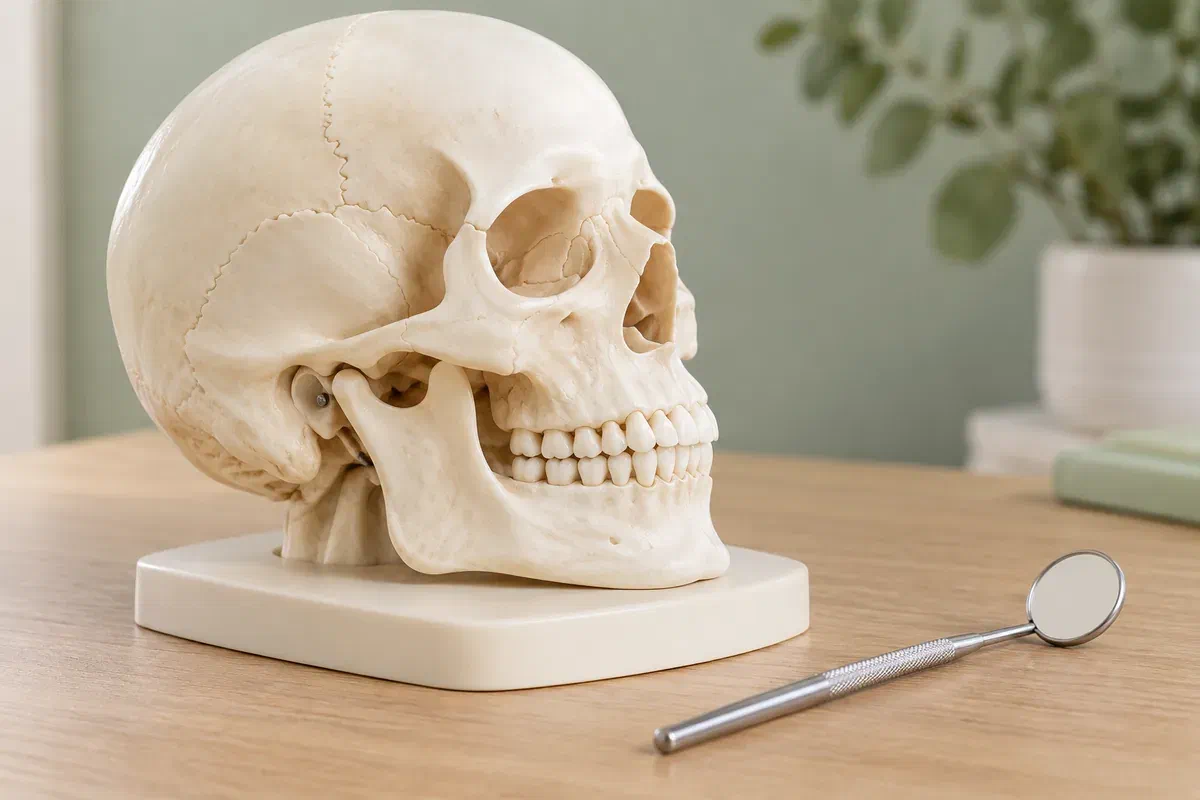
Illustrative anatomical skull model with an attached lower jaw and visible joint region
Rockwood, what to tell us

A click in the chair, or a problem at home too?

Mention which side clicks, whether it happens mostly during long openings or also day to day, and how long it has been around. No need to rehearse it. A simple account of normal life and past appointments is plenty.

A painless pop during long visits

If the click appears mainly during extended treatment and never affects eating or everyday opening, tell the clinician. Ask whether anything in the examination changes how it should be viewed. Often the response is an explanation, plus a few adjustments to how appointments are paced.

Aching that lingers after treatment

Describe whether the soreness is at the joint, in the cheek muscles, or elsewhere, how long it lasts, and what it makes harder. Mention tenderness, fatigue, and any tooth symptoms. That discomfort is assessed separately from the sound, which may not be its cause.

Catching or reduced opening

Explain whether the jaw hitches, sticks, or no longer opens as far, and mention any injury or difficulty eating or drinking. Contact a clinician promptly for significant restriction or locking. Do not force the jaw open or try a home repositioning technique.

A jaw stuck open or shut, a hard blow to the face, or an inability to eat or drink all need to be seen promptly. Struggling to breathe or swallow, swelling that is large or growing, or any severe symptom belongs in emergency medical care.

Why it helps to know

Understanding the click makes every future visit easier

An assessment distinguishes a harmless sound from a complaint involving pain or limited movement. You can ask what the examination supports and whether a diagnosis has been established. Uncertainty is sometimes part of the honest answer, and a careful clinician will not attach one label to every clicking joint.

If care is proposed, its purpose should be clear. Making chewing comfortable, easing a restricted jaw, or getting through dental treatment with less strain are reasonable aims. Quieting a joint that does not hurt is a different goal. Ask how the plan relates to your concern and how its usefulness will be checked.

An examination focused on your experience

Your history, jaw movement, tenderness, and dental findings are considered as one picture. Ask which findings are significant and which are probably incidental. A click that is easy to hear should not distract from the ache that follows a long visit.

A purpose behind any extra test

Imaging or referral is worthwhile when it can answer a clinical question or change care. Ask what it would add and where its limits are. A clicking joint does not need the same scan as every other, and results still depend on the examination.

Conservative support before permanent change

If treatment is needed, ask about reversible approaches and a time to review progress. Find out what you can reasonably expect and what to do if symptoms flare. Clicking alone is not a reason to reshape or reposition your teeth.

How we assess it

A short history, a gentle examination, and an honest explanation

This visit asks very little of your jaw. We begin with conversation about meals, yawns, and past dental appointments. If opening is uncomfortable, say so, and agree on a signal for a rest.

  1. Talk about past appointments and daily life

    Explain when the clicking started, which side is involved, and whether pain or stiffness follows long visits or appears at home as well. Add any knocks to the face, jaw treatment you have had before, a guard or splint, and health matters worth knowing.

  2. Examine without strain

    The clinician checks opening, closing, tender areas, and dental findings as appropriate, keeping the examination brief and comfortable. You do not need to push through sharp pain. Tell us if what you feel matches your usual symptom.

  3. Explain what was found

    You will hear whether it looks like something to simply watch, a jaw-related diagnosis, a problem with a tooth, or a reason for more assessment. When a scan or referral comes up, find out what it is supposed to clear up. The sound itself and an idea about its mechanism are not the same.

  4. Plan monitoring and future visits

    Confirm whether treatment is needed and which changes should prompt an earlier call. Discuss how future dental work can be paced. If treatment is offered, ask what it aims to do, what it costs, what it cannot do, and how it will be followed up, so you know what to report without testing the click.

Between appointments

Easy does it, and no testing

Follow the guidance meant for your findings. A plan for painless clicking may be very different from a plan for pain or locking, so an exercise routine from a friend is not automatically suitable.

Notice comfort after long openings

If monitoring is advised, pay attention to new pain, catching, or trouble eating and opening, including after dental visits. There is no reason to recreate the click to check on it. Ask what is worth noting and when the clinician wants to hear about it.

Use the advice tailored to you

When exercises or brief changes in activity are suggested, request a demonstration and clear boundaries. A stuck jaw is not something to work loose by force, and discomfort is not a price worth paying to get rid of a click. Get in touch if the advice increases discomfort or restriction.

Bring any guard or splint

If you already have an appliance, explain why it was made and whether symptoms changed while you wore it. Do not adjust it yourself or buy a new one only to quiet the joint. A prescribed device that hurts should be left out until you have checked with its provider.

Ways forward

Pacing, conservative care, or a specialist opinion

Ask which approach suits your combination of sound, pain, and function. The plan should respond to the assessed problem, and a perfectly silent joint is not the measure of a good result.

Painless clicking and comfortable everyday movement

Explanation and well-paced appointments

The click itself may need no treatment. Ask what would justify a reassessment, and whether short breaks during long dental work would help. You should understand why no appliance or procedure is being recommended.

Pain or another assessed jaw concern

Conservative care for an aching jaw

Reversible measures might target habits, comfortable jaw use, or other contributing factors. Find out which step comes first and how you will judge whether it helps. Care should be based on the diagnosis and your needs, without a promise that any one approach silences the joint.

Locking, injury, or persistent difficulty

Referral for complex or ongoing problems

If the jaw keeps catching, was hurt, or stays stiff despite sensible care, a colleague who concentrates on jaw joints or facial pain may see you. Ask what will be sent ahead and how to cope in the meantime, including around any dental work. Anything urgent should not be parked on a waiting list.

Patient information: NIDCR — conservative TMD care and avoiding permanent bite changes

Questions about treatment and a clicking jaw

Dental visits, yawning, and a sensitive jaw

These answers can help you discuss clicking without assuming anything needs to be corrected. When you call, mention any pain, locking, or recent change in how your jaw moves.

(905) 876-4488
Is it normal for my jaw to ache after a long dental appointment?
Some tiredness after holding your mouth open for a while is common and usually settles. If soreness lasts, keeps coming back, or comes with catching or reduced opening, let us know so it can be assessed.
Can longer dental treatment be adjusted for a jaw that clicks?
Often, yes. Tell the team beforehand so they can plan breaks or shorter sessions where practical. Signal at any point if opening becomes painful or the jaw starts to catch.
Should I be careful when yawning?
If wide yawns bring on pain or catching, it is reasonable to ask the clinician about avoiding very wide openings for now. If yawning is comfortable apart from a painless click, there may be nothing to change.
Can my jaw be checked before planned dental work begins?
Yes. Mentioning a click or sore jaw before treatment gives the clinician a chance to examine it and plan accordingly. It also creates a record of how the jaw was before the work started.
My jaw used to click but now it stops halfway when I open. What should I do?
Contact a clinician promptly. A new restriction matters even though the sound has gone, particularly if eating or drinking is affected. Do not force the jaw open or assume the quiet means things are better.
Should I try to make it click during the assessment so you can hear it?
There is no need. Describe when it happens and let the clinician keep the examination comfortable. Pain, catching, and changes in movement matter more than demonstrating the sound on the day.
Rockwood bookings

Mention the click before the next long appointment.

Contact our Bronte Street practice about clicking with discomfort, catching, or limited movement, or simply to plan treatment around a sensitive jaw. A locked jaw, very little opening, or trouble with food and drink should be the first thing you mention, so the team can guide you on timing.

Clicking without pain may need no treatment. Diagnosis, imaging, management, and referral are based on your history and examination, and we cannot promise the click will stop.

Visit Milton Dental Clinic
Unit 1, 342 Bronte St. S, Milton, ON L9T 5B7
Get directions Clinic hours
Monday–Thursday
11am–7pm
Friday–Sunday
By appointment only

Areas we serve

  • Milton
  • Oakville
  • Mississauga
  • Georgetown
  • Halton Hills
  • Acton
  • Campbellville
  • Brampton
  • Burlington
  • Puslinch
  • Rockwood
  • Erin
  • Caledon
  • Etobicoke
  • Old Milton
  • Bronte Meadows
  • Timberlea
  • Dorset Park
  • Dempsey
  • Clarke
  • Beaty
  • Coates
  • Harrison
  • Scott
  • Willmott
  • Ford
  • Bowes
  • Cobden
  • Walker
  • Mountain View
  • Milton Heights
  • Hawthorne Village
  • Valley View
  • Fallingbrook
  • Nassagaweya
  • Trafalgar
  • Esquesing
  • Nelson
  • Brookville
  • Moffat
  • Glen Williams
  • Norval
  • Limehouse
  • Stewarttown
  • Ashgrove
  • Hornby
  • Silver Creek
  • Speyside
  • Scotch Block
  • North Oakville
  • River Oaks
  • Glen Abbey
  • West Oak Trails
  • Palermo
  • Bronte Creek
  • College Park
  • Joshua Creek
  • Uptown Core
  • Preserve
  • Iroquois Ridge
  • Lisgar
  • Meadowvale
  • Meadowvale Village
  • Churchill Meadows
  • Erin Mills
  • Central Erin Mills
  • Streetsville
  • East Credit
  • Creditview
  • Heartland
  • Sheridan
  • Mount Pleasant
  • Credit Valley
  • Huttonville
  • Churchville
  • Springbrook
  • Northwest Brampton
  • Bram West
  • Fletcher's Meadow
  • Fletcher's Creek South
  • Alton Village
  • Orchard
  • Millcroft
  • Headon Forest
  • Tansley
  • Brant Hills
  • Tyandaga
  • Kilbride
  • Lowville
  • Aberfoyle
  • Morriston
  • Arkell
  • Hillsburgh
  • Freelton
  • Carlisle
  • Waterdown
  • Flamborough
  • Mountsberg

How can we help?

Milton Dental Clinic

Have a question about your smile? Choose the option that works best for you.

For urgent dental concerns, please call.
Messages are reviewed during clinic hours.