

Illustrative patient describing a specific urgent dental concern to a clinician
Specialized Care

Limited Emergency Examinations in Puslinch

Many people with a bad toothache hope a prescription will sort it out. Often the tooth itself needs attention, and antibiotics are not always appropriate. A limited emergency examination finds out what is driving the pain and explains the options. From Puslinch, phone us first to describe the problem and ask about availability.

Beyond a quick prescription

Can't I just get something for the pain?

It is an understandable question, especially when coming in means organising a drive. The trouble is that medicine alone rarely addresses where dental pain comes from. A limited emergency examination targets one complaint, such as a throbbing tooth, broken dental work or a swollen patch of gum, and sets out to identify the probable cause and how urgently it should be treated.

To do that well, the dentist looks past the tooth to your overall health. Medical conditions, prescriptions you already take, allergies, recent injuries and symptoms like fever influence what is examined, which treatments are safe, and whether a hospital is more suitable. The cause may be evident on the day, or the dentist may need imaging, older records or a specialist first.

For anyone in Puslinch, a phone call is the place to begin. Explain the symptom, mention any medicines you have already taken, and ask what the appointment would involve. Bring recent records if you have them. You will leave with an explanation and a plan, though not necessarily every procedure completed.

Ask about an urgent dental assessment
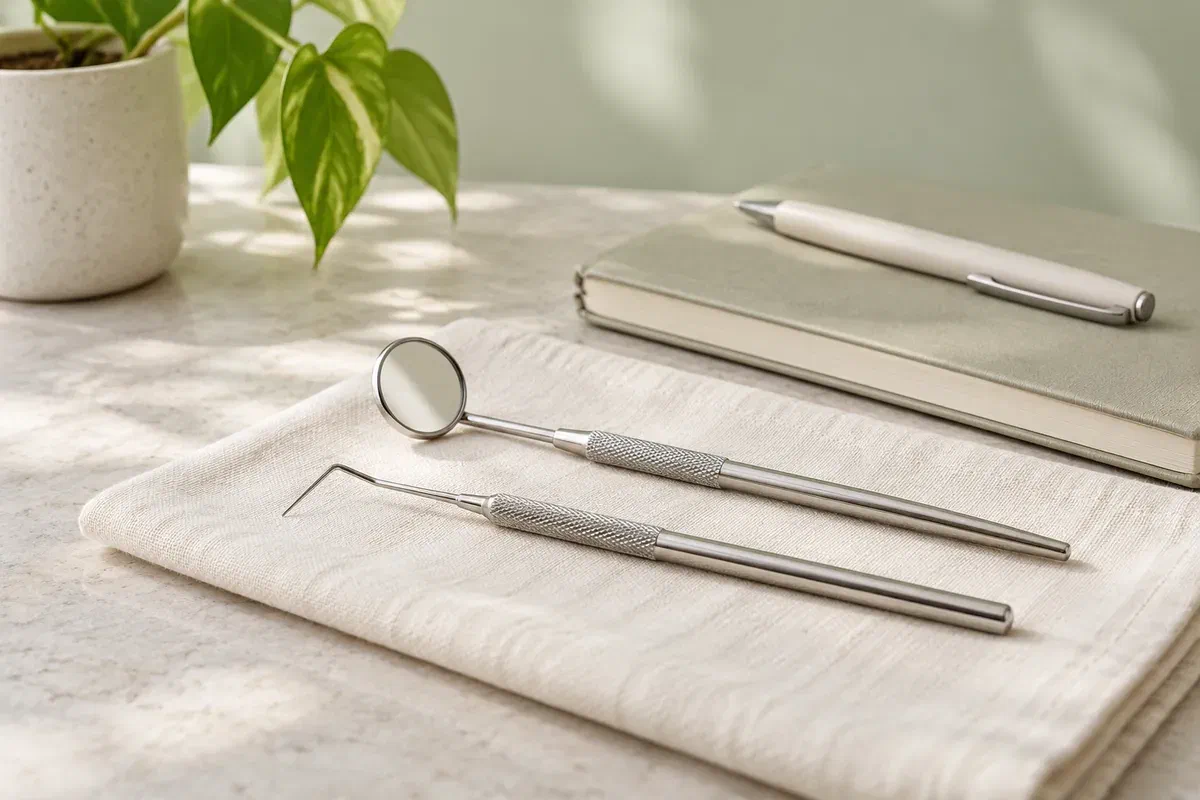
Illustrative dental examination instruments beside a closed notebook
What to tell us when you ring

Mention what you have already tried.

Describe the main problem first, along with any medicines you have taken for it and how much they helped. If you have more than one issue, tell us which is newer or getting worse so the visit can be set up appropriately.

How the pain responds

Where is it, when did it start, and does chewing, cold, heat or rest affect it? Has pain relief helped, and for how long? Mention night waking or spreading pain. If you are unsure which tooth it is, that is useful to know, not a problem.

A damaged tooth or restoration

Tell us what broke or came out, whether there is a sharp edge, and whether your teeth fit together normally. Save any detached piece or crown in a clean container. Please do not try to glue or press it back before the dentist checks the area.

Swelling, fever or an injury

Describe whether swelling is increasing and how quickly, whether there was an accident, and whether you feel feverish or generally unwell. Share important health conditions and allergies. If symptoms worsen after booking, call again, because the timing may need to change.

Medicines at home should not delay emergency care. If breathing or swallowing becomes difficult, swelling reaches the eye or spreads quickly, bleeding will not stop, or there is a serious facial injury, call 911 or go to the nearest emergency department.

The value of a proper look

A cause you understand beats a prescription you hope will work.

When pain is strong, details blur, so it is reasonable to ask for a plain summary. The dentist should name the main finding and explain how it produces your symptoms. If the source is still unclear, the plan ought to identify what further assessment is required, not offer certainty the evidence cannot yet support.

Ask, too, which care is happening now and which is planned for later. Relieving pressure, smoothing a sharp edge or placing a temporary filling can all help in the short term, but each has limits and a review date. Find out whether the next appointment completes treatment, re-examines the area, or covers a fuller check.

Patient information: American Dental Association — individualized selection of dental radiographs

Investigation geared to your symptom

To narrow the possibilities, the dentist may examine the surrounding teeth and gum and use specific tests. X-rays are taken when they are likely to inform the diagnosis. Ask what each one is meant to clarify; there is no standard set for every focused visit.

A frank discussion of options

Hear the realistic choices, including what each aims to do, the risks and the fees. Being in pain does not remove your consent, and no single treatment is automatic. Ask whether a decision is needed today, or whether further information could change it.

Arrangements for continuing care

Confirm who will provide the next stage and what they need from you. If another office usually looks after your teeth, ask how notes and X-rays can be sent along. A clear handover makes the urgent visit far more worthwhile.

What happens in the chair

Start with the facts, finish with a decision you understand.

The sequence adapts to your symptom and its severity. If you feel nervous or need a break, say so, and ask for decisions to be explained before any procedure.

  1. Review the symptom and your medicines

    Explain how the problem developed, what treatment that tooth has had before, and what you have taken for pain, including doses and timing. The team reviews medical conditions and allergies. Bring previous images if you can, but urgent care should not wait for them.

  2. Check the area with suitable tests

    The dentist assesses the affected region and any nearby structures that might explain the pain. Ask what a test is for and say whether it feels like your usual symptom. More imaging or another assessment may follow if an important question is still open.

  3. Explain the cause and the options for now

    You will hear the likely diagnosis or the remaining uncertainty, its urgency, and the dentist's recommendation. Ask whether the proposed care is temporary or final and what alternatives exist. Time, complexity and your health affect whether treatment happens today.

  4. Confirm instructions and next steps

    Before leaving, clarify how to manage pain safely until the next stage and which changes need an earlier call. Agree on the follow-up provider, timing and records. If a comprehensive examination is recommended, ask what it adds.

Managing at home

Medicines help, but treatment finishes the job.

Advice depends on the diagnosis and whether treatment was provided. Keep written instructions and ask about anything unclear rather than relying on guidance from another procedure or a previous prescription.

Protect any temporary work

If a temporary restoration or similar measure was placed, ask how to care for it and when it needs review. If nothing was placed, confirm which precautions apply while assessment continues. Less pain does not mean the cause has been dealt with for good.

Use medicines exactly as advised

Check pain relief with the dentist or a pharmacist, particularly if you take other medicines or have health conditions. If antibiotics are prescribed, take them as directed. They are not an automatic outcome of an urgent examination, and they do not replace treating the dental source.

Call when symptoms change

Phone about rising pain, new or spreading swelling, fever, difficulty opening your mouth, or a temporary repair that has failed. Describe what is different. New information can change the urgency or plan, even with a follow-up already scheduled.

Patient information: American Dental Association — dental treatment and antibiotic decisions for pain and swelling

Possible routes forward

Treat the source, protect it for now, or send you onward

Ask how the recommended route connects to the findings. Urgent problems do not all end with the same procedure, and medicine alone is rarely the whole answer, but you should leave with a clear next step.

When the diagnosis is clear and treatment is suitable

Treatment aimed at the cause

The dentist may propose a repair or another procedure directed at the source of the pain. Ask what it will achieve and whether more visits will be needed. Consent, time, resources and suitability still matter in urgent care.

When comfort or protection comes before completion

Interim relief with a set review

A temporary step may ease symptoms while further assessment or treatment is organised. Ask how long it should last, what its limits are, and what would justify returning earlier. The remaining work should be clearly named.

When another provider or a wider check is needed

Referral or a broader examination

You may be referred to a specialist, another urgent provider, or a complete dental visit. Ask what each referral will clarify and how soon it should take place. Serious medical warning signs require emergency attention immediately.

Medicine and urgent-care questions

What a prescription can and cannot do

These questions help you get ready for a focused visit and follow the plan afterward. For urgent symptoms, please call rather than sending an email or waiting on a callback.

(905) 876-4488
Will the dentist just prescribe antibiotics for my toothache?
Not necessarily. Antibiotics are only appropriate in certain situations and do not treat the source of most dental pain. The dentist will explain whether they are needed in your case and what treatment the tooth itself requires.
What pain relief is safe to take before my appointment?
Follow the label or a pharmacist’s advice, particularly if you have health conditions or take other medicines. Tell the dentist what you took and when, since it can affect how symptoms respond during testing.
My pain improved on painkillers. Do I still need the visit?
Yes, in most cases. Medication can mask symptoms while the underlying problem continues. Call to discuss timing, and keep the appointment unless the dentist advises otherwise.
Does a limited examination look at every tooth?
No. It is focused on the urgent concern and related information. A full examination is booked separately, so ask what was not assessed during this visit.
Should I bring my medication list?
Yes. A list of prescriptions, supplements and allergies helps the dentist choose safe treatment and pain relief. If you cannot find it, bring the containers or come anyway; urgent care should not be delayed.
What should I do if pain gets worse at night out in Puslinch?
Use pain relief only as advised and call the practice when it opens. If you develop breathing or swallowing difficulty, swelling near the eye or rapidly spreading swelling, call 911 or go to emergency care rather than waiting.
Puslinch urgent dental visits

Talk to us before you reach for another painkiller.

Call (905) 876-4488 to speak with our Bronte Street practice. Describe the problem, mention what you have taken, and ask about the next assessment time. If immediate care is needed and we cannot see you, seek another emergency dental provider.

Availability, tests, same-day treatment and referral are decided individually. Online forms and email should be used only for non-urgent questions.

Visit Milton Dental Clinic
Unit 1, 342 Bronte St. S, Milton, ON L9T 5B7
Get directions Clinic hours
Monday–Thursday
11am–7pm
Friday–Sunday
By appointment only

Areas we serve

  • Milton
  • Oakville
  • Mississauga
  • Georgetown
  • Halton Hills
  • Acton
  • Campbellville
  • Brampton
  • Burlington
  • Puslinch
  • Rockwood
  • Erin
  • Caledon
  • Etobicoke
  • Old Milton
  • Bronte Meadows
  • Timberlea
  • Dorset Park
  • Dempsey
  • Clarke
  • Beaty
  • Coates
  • Harrison
  • Scott
  • Willmott
  • Ford
  • Bowes
  • Cobden
  • Walker
  • Mountain View
  • Milton Heights
  • Hawthorne Village
  • Valley View
  • Fallingbrook
  • Nassagaweya
  • Trafalgar
  • Esquesing
  • Nelson
  • Brookville
  • Moffat
  • Glen Williams
  • Norval
  • Limehouse
  • Stewarttown
  • Ashgrove
  • Hornby
  • Silver Creek
  • Speyside
  • Scotch Block
  • North Oakville
  • River Oaks
  • Glen Abbey
  • West Oak Trails
  • Palermo
  • Bronte Creek
  • College Park
  • Joshua Creek
  • Uptown Core
  • Preserve
  • Iroquois Ridge
  • Lisgar
  • Meadowvale
  • Meadowvale Village
  • Churchill Meadows
  • Erin Mills
  • Central Erin Mills
  • Streetsville
  • East Credit
  • Creditview
  • Heartland
  • Sheridan
  • Mount Pleasant
  • Credit Valley
  • Huttonville
  • Churchville
  • Springbrook
  • Northwest Brampton
  • Bram West
  • Fletcher's Meadow
  • Fletcher's Creek South
  • Alton Village
  • Orchard
  • Millcroft
  • Headon Forest
  • Tansley
  • Brant Hills
  • Tyandaga
  • Kilbride
  • Lowville
  • Aberfoyle
  • Morriston
  • Arkell
  • Hillsburgh
  • Freelton
  • Carlisle
  • Waterdown
  • Flamborough
  • Mountsberg

How can we help?

Milton Dental Clinic

Have a question about your smile? Choose the option that works best for you.

For urgent dental concerns, please call.
Messages are reviewed during clinic hours.