

Illustrative patient discussing restricted jaw movement with a dental clinician
Specialized Care

Limited Jaw Opening Assessment in Halton Hills

Stiffness after a long dental appointment or an extraction often eases, but not always. For people across Halton Hills, our assessment checks whether recent treatment, infection, muscle strain or the joint explains the restriction, and what should happen next.

Halton Hills · after recent treatment

It was meant to settle. It hasn’t.

Holding your mouth open for a long filling, a crown preparation or a tooth removal can leave the jaw tired and stiff for a day or two. That is common. What deserves a closer look is stiffness that is worsening rather than fading, new swelling, a fever, a bad taste or opening that seems to shrink each morning. Those changes tell a different story.

Restricted opening after treatment is not always related to the procedure itself. Strained chewing muscles, a joint that has started catching, inflammation or infection near a tooth, an unrelated injury and the long-term effects of past cancer treatment to the face or neck can each limit movement. The order in which symptoms appeared helps the dentist work out which is most likely.

From Georgetown, Acton, Glen Williams or one of the hamlets, the best start is a phone call describing the timeline. Nobody will ask you to stretch to your widest. We want to hear where comfort ends now, how that compares with before the treatment, and whether meals, drinks or brushing have become harder.

Ask about stiffness after treatment
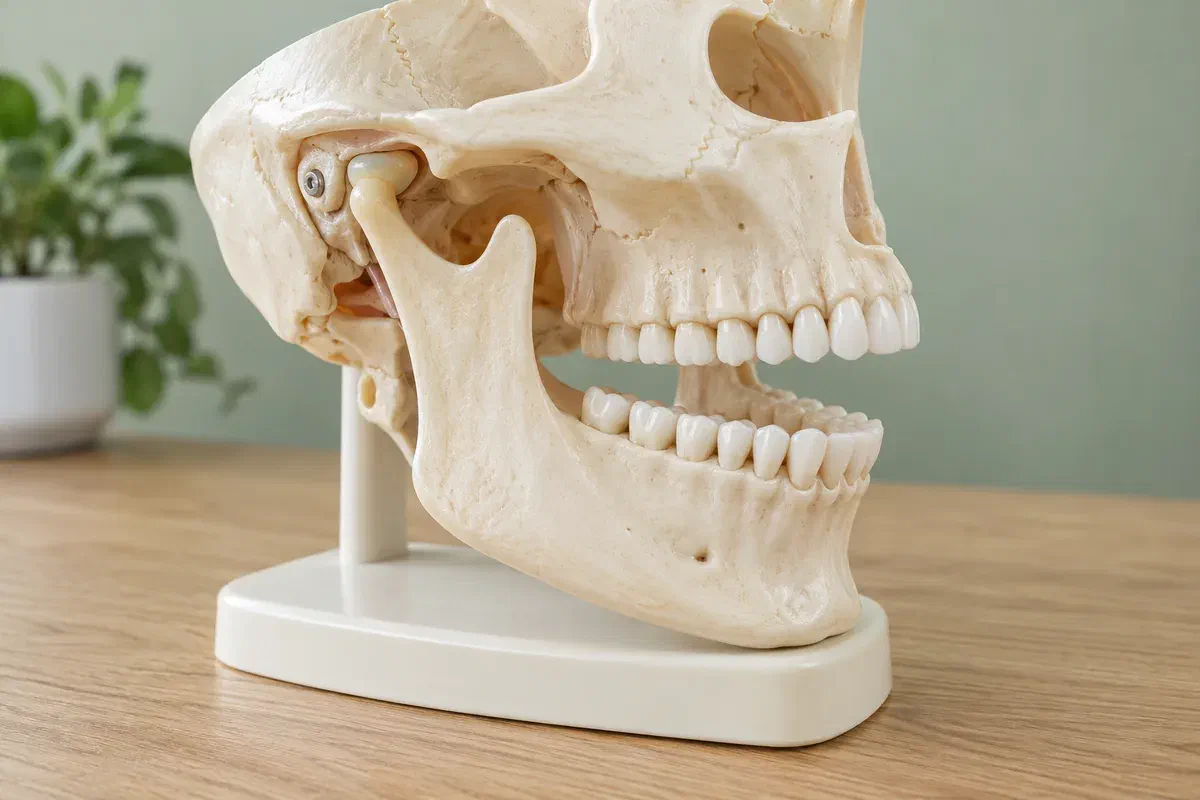
Illustrative physical teaching model showing the jaw and its supporting joint
Tracing the timeline

Which came first: the procedure, the pain or the stiffness?

Have this sequence ready when you call. If opening has suddenly worsened, or swelling, fever or a bad taste has developed, raise it straight away rather than holding it for a checkup.

How the stiffness has changed since

Describe whether movement stops abruptly, feels tight throughout or varies, and whether it has improved, stalled or worsened since treatment. Has the jaw stuck open or closed? Please don’t keep forcing it to the point of pain to check.

Recovery tasks that feel harder

Tell us whether you can drink well, eat enough and keep the treated area clean. If any of those has become difficult, ask for advice promptly. These details help the dentist plan an examination that stays within your current range.

The treatment and anything else relevant

Mention what procedure you had, where and when, plus any swelling, injury or earlier jaw problems. Previous operations or radiotherapy involving the head and neck also matter. They influence what needs ruling out and whether the original treating clinician should be involved.

Seek urgent help if your jaw has locked, opening has dropped sharply, or you can no longer eat or drink. Rapidly spreading swelling, swelling around the eye, or any difficulty breathing or swallowing needs emergency medical care; for an immediate emergency, call 911.

Why it is worth checking

Sorting ordinary recovery from something that needs treatment

The dentist may note how far you can open, which gives a reference for whether things are moving in the right direction. A figure on its own can’t separate normal post-treatment stiffness from infection or a joint problem, though. Ask how your timeline and the exam findings fit together. If doubt remains, find out what further information would help.

If more dental work is still planned, the assessment can also help make it manageable. Explain which positions bring on discomfort and agree on a signal to stop. When the area can’t be fully examined today, ask what was checked safely and how the rest will be covered.

Patient information: NIDCR — assessment and management of temporomandibular disorders

Opening checked without strain

The dentist observes your movement and listens to your description of tightness or pain. Let them know when you reach the edge of comfort. Forcing the jaw open, especially soon after treatment, would only add discomfort without improving the assessment.

The treated site and the wider area examined

Teeth, gums, the treated area, muscles and nearby tissues may all be looked at. Ask which findings support the explanation and whether imaging would help. Assuming it is just a sore joint could mean overlooking an infection or another condition.

A recovery goal you can recognise

Agree what better should look like, perhaps chewing on both sides again or brushing the treated area comfortably. Set a review date and decide which changes should bring you back sooner. A plan with clear aims and limits is easier to follow.

During your appointment

Timeline, examination, explanation, plan

Describing the stiffness is enough; you don’t need to show the movement that hurts most. If opening is very restricted, mention it when booking so the visit can be arranged with care.

  1. Walk through the days since treatment

    We ask when the stiffness began relative to the procedure and whether it is easing, worsening or variable. Medicines, injuries and general health are reviewed. If another clinic did the treatment, bring their details or any notes you were given.

  2. Look at movement and the treated area

    The dentist assesses your comfortable range and examines the site and surrounding structures. Point out where you feel symptoms and whether they’re spreading. Rest breaks are fine, and any part of the exam that couldn’t be done should be acknowledged.

  3. Explain what is likely and what is not yet clear

    You hear the probable cause and any remaining uncertainty. An X-ray or referral may be suggested if it would answer a specific question. Ask what a test would change and whether the original clinician, your doctor or a specialist needs to be involved first.

  4. Agree on care and a check-in

    Confirm any interim advice, what treatment is intended to achieve and how progress will be judged. If exercises are appropriate, ask for instructions that suit your diagnosis. Know whom to call if stiffness worsens or new symptoms appear.

While you recover

Let healing happen without forcing the jaw.

Home advice should be based on what the assessment finds. A routine intended for recovery after a specific operation may be wrong for an unexplained restriction, even though both reduce opening.

No prising or aggressive stretching

Avoid using objects or fingers to lever the jaw wider and don’t repeat painful movements to test it. If you’re given a movement programme, confirm technique, frequency and stopping rules. If symptoms increase, phone rather than doing extra repetitions.

Watch the trend, not every opening

Note meaningful changes in eating, drinking, brushing and comfort, and when symptoms appear. A short diary helps at review. There’s no need to measure repeatedly or deliberately provoke a lock; ordinary days tell us whether things are improving.

Keep the treated area clean and ask if you can’t

Tell us if you can’t reach the site to clean it or are struggling with food and fluids. The team can suggest adjustments or further assessment. Don’t let care slide on the assumption that your opening must return to normal first.

Patient information: Guy's and St Thomas' — jaw opening advice after relevant medical treatment

Possible next steps

The cause sets the course.

Ask what each recommended step should change and how you will both know if it has worked. Restricted opening does not in itself justify an appliance, another procedure or permanent bite changes.

If a dental cause is confirmed

Treatment for an infection or tooth problem

An infection at or near the treated site, or another tooth problem, may need care aimed directly at it. Discuss timing and whether it can be handled at our clinic. Improving movement alone would not deal with the underlying source.

If muscles or the joint seem responsible

Reversible care for strained muscles or the joint

A plan for you might include reassurance, explanation and other reversible measures. Ask what to start with, which habits to drop and when to return. Going gradually means your progress can be reviewed without assuming an irreversible bite change.

If past treatment or a lasting restriction needs more expertise

Wider input when history calls for it

A specialist, your physician or the team that treated you before may need to be involved, particularly after cancer surgery or radiotherapy. Ask who will lead and what the referral aims to answer. Rehabilitation should be planned for your situation alone.

Halton Hills jaw opening FAQs

Stiffness after treatment and other common worries

Use these answers to prepare. If a restriction is severe and new, or you can’t get enough to eat or drink, phone for timely advice instead of depending on an online request.

(905) 876-4488
How long is jaw stiffness normal after a dental procedure?
Mild stiffness after a long appointment often eases within a few days. Stiffness that is getting worse, or comes with swelling, fever or a bad taste, should be checked. Call if you are unsure.
Can an extraction site infection limit how far I can open?
It can. Infection or inflammation near the back teeth sometimes reduces opening. Mention any swelling, pain that is increasing or an unpleasant taste when you call, as these affect urgency.
My treatment was done elsewhere. Can you still assess me?
Yes. Bring details of the procedure and the treating clinic if possible. We may suggest contacting them as part of your care, so that information is shared appropriately.
Should I use heat or ice on my jaw?
Simple comfort measures are sometimes suggested, but the right advice depends on the cause. If there is swelling or possible infection, get assessed rather than relying on home remedies.
Is limited opening after treatment always a joint problem?
No. Muscle strain, infection, the treated tooth itself or other conditions may be involved. That is why the examination looks beyond the joint before any explanation is settled.
Do I need a referral if my opening stays restricted?
Possibly. Persistent restriction, or a history of head and neck cancer treatment, may need specialist input. Ask what question the referral would answer and who will coordinate your care.
Jaw assessments for Halton Hills

Tell us what you had done, and what has changed since.

Ring (905) 876-4488 to book an assessment at our Bronte Street practice. Be sure to mention sudden locking, swelling, fever, injury or any struggle with eating and drinking so the team can weigh up urgency and arrange the right next step.

Causes, suitable care, the need for referral and recovery differ between people. Online requests are meant for non-urgent questions and won’t replace urgent assessment when symptoms are severe or worsening.

Visit Milton Dental Clinic
Unit 1, 342 Bronte St. S, Milton, ON L9T 5B7
Get directions Clinic hours
Monday–Thursday
11am–7pm
Friday–Sunday
By appointment only

Areas we serve

  • Milton
  • Oakville
  • Mississauga
  • Georgetown
  • Halton Hills
  • Acton
  • Campbellville
  • Brampton
  • Burlington
  • Puslinch
  • Rockwood
  • Erin
  • Caledon
  • Etobicoke
  • Old Milton
  • Bronte Meadows
  • Timberlea
  • Dorset Park
  • Dempsey
  • Clarke
  • Beaty
  • Coates
  • Harrison
  • Scott
  • Willmott
  • Ford
  • Bowes
  • Cobden
  • Walker
  • Mountain View
  • Milton Heights
  • Hawthorne Village
  • Valley View
  • Fallingbrook
  • Nassagaweya
  • Trafalgar
  • Esquesing
  • Nelson
  • Brookville
  • Moffat
  • Glen Williams
  • Norval
  • Limehouse
  • Stewarttown
  • Ashgrove
  • Hornby
  • Silver Creek
  • Speyside
  • Scotch Block
  • North Oakville
  • River Oaks
  • Glen Abbey
  • West Oak Trails
  • Palermo
  • Bronte Creek
  • College Park
  • Joshua Creek
  • Uptown Core
  • Preserve
  • Iroquois Ridge
  • Lisgar
  • Meadowvale
  • Meadowvale Village
  • Churchill Meadows
  • Erin Mills
  • Central Erin Mills
  • Streetsville
  • East Credit
  • Creditview
  • Heartland
  • Sheridan
  • Mount Pleasant
  • Credit Valley
  • Huttonville
  • Churchville
  • Springbrook
  • Northwest Brampton
  • Bram West
  • Fletcher's Meadow
  • Fletcher's Creek South
  • Alton Village
  • Orchard
  • Millcroft
  • Headon Forest
  • Tansley
  • Brant Hills
  • Tyandaga
  • Kilbride
  • Lowville
  • Aberfoyle
  • Morriston
  • Arkell
  • Hillsburgh
  • Freelton
  • Carlisle
  • Waterdown
  • Flamborough
  • Mountsberg

How can we help?

Milton Dental Clinic

Have a question about your smile? Choose the option that works best for you.

For urgent dental concerns, please call.
Messages are reviewed during clinic hours.