

Illustrative patient discussing tooth support with a clinician and a dental teaching model
Specialized Care

Loose Adult Tooth Treatment

A permanent tooth that feels loose deserves an assessment, even when it does not hurt. Our Milton team can examine the tooth and its supporting tissues, discuss possible causes, and explain the options for protecting function and planning appropriate care.

A closer look at a loose adult tooth

Look beyond the movement to understand what supports the tooth.

A loose permanent tooth is different from a child's baby tooth becoming ready to fall out. The important question is why movement has developed and what condition the tooth and its support are in. Pain is not a reliable measure of how much attention the problem needs, so a painless change is still worth reporting.

Sometimes movement follows a clear injury. In other situations, changes in the gums and supporting bone or another dental problem may be involved. A loose crown or other restoration can also feel like a moving tooth. The examination helps distinguish these situations before a treatment recommendation is made.

At Milton Dental Clinic, we discuss what the findings mean for comfort, function, and the outlook for the tooth. You do not need to test how far it moves before contacting us. Explain when you noticed the change, whether anything happened beforehand, and whether biting or the position of the tooth now feels different.

Arrange an assessment of a loose tooth
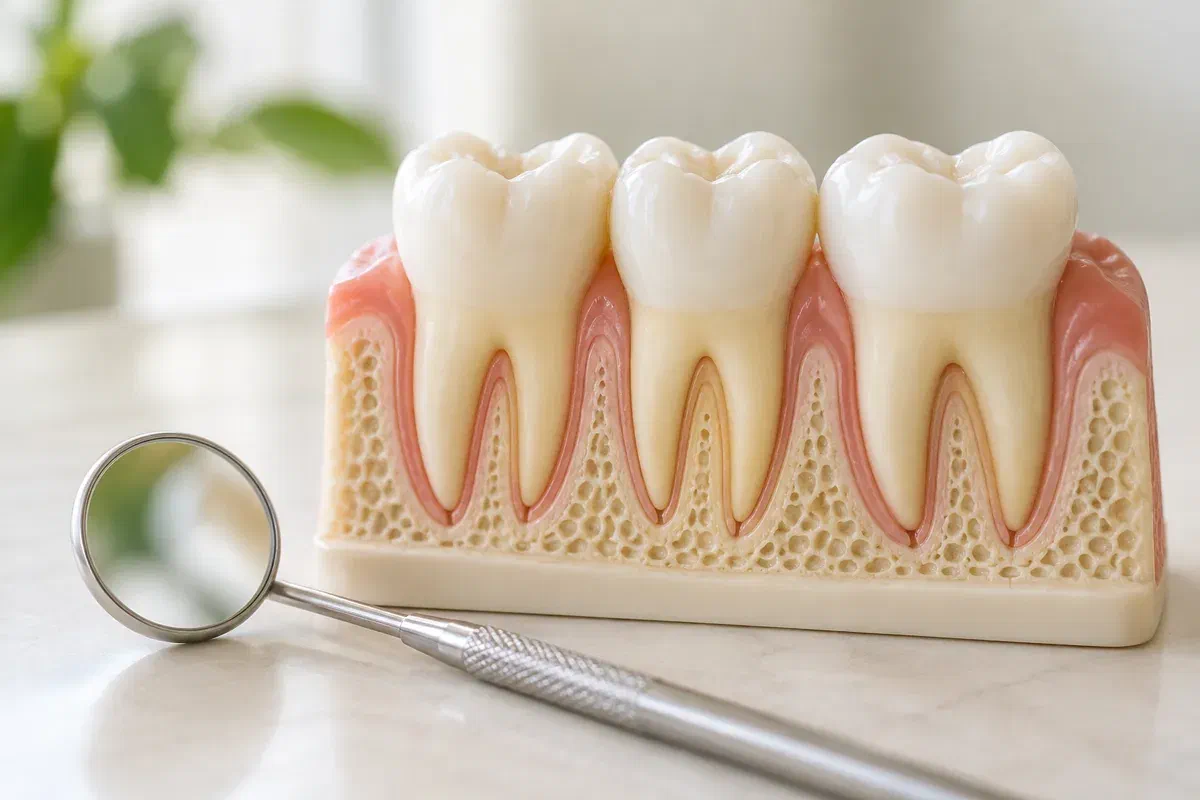
Illustrative cross-section teaching model showing teeth within gum and supporting bone
What to tell the team

Movement after an injury and gradual loosening need different questions.

Describe the timing and associated changes when you call. A permanent tooth that becomes loose or displaced after an accident needs prompt dental assessment rather than waiting to see whether pain develops.

A blow, fall, or sports injury

Explain when the injury occurred, whether the tooth changed position, and whether your bite now feels different. Mention any injury to the lips, face, or jaw as well. Nearby teeth can also need examination even when one tooth seems to be the main concern.

Bleeding gums or a gradually changing tooth position

Tell the dentist about bleeding, gum recession, spaces that have developed, or food collecting differently. A history of periodontal treatment is relevant. These details help guide an assessment of the tissues supporting the tooth rather than focusing only on its visible crown.

Uncertainty about what is actually moving

Mention whether the tooth has a crown, filling, or other restoration. Describe the sensation without repeatedly pushing the area to identify the moving part. If something detaches, keep it safely and contact the team; do not glue it back into place yourself.

Call promptly about a loose or displaced adult tooth after trauma. A tooth completely knocked out is a separate time-sensitive emergency. Serious facial injury, uncontrolled heavy bleeding, or breathing difficulty requires emergency medical care; call 911 for an immediate emergency.

What the examination should clarify

Understand the cause, the available support, and the realistic choices.

The dentist needs more than a description of movement to advise whether a tooth can be retained predictably. Ask which findings affect its outlook and which questions remain unresolved. If further investigation or a specialist opinion is recommended, clarify what that additional assessment is intended to establish.

An explanation should also separate short-term comfort or protection from treatment of the underlying problem. Holding a tooth steadier may have a role in selected circumstances, but it does not automatically restore lost support or resolve disease. Discuss what each proposed step can reasonably accomplish for your particular tooth.

Patient information: NIDCR — assessment and treatment of gum disease

An assessment of the surrounding tissues

The dentist may examine gum condition, supporting tissues, and relevant images alongside the tooth itself. Medical history and earlier periodontal care can help interpret the findings. Ask whether the concern is localized or whether a wider assessment of gum health is appropriate.

A distinction between the tooth and its restoration

A loose restoration and a mobile natural tooth may require different care. Ask what is moving and whether the underlying tooth remains sound. This distinction helps explain why simply recementing a visible crown may or may not address the actual problem.

A plan with an honest outlook

Discuss the expected benefits, limitations, costs, and review requirements of the available options. Retaining a tooth may involve ongoing care, and the outcome cannot be promised from appearance alone. Ask what findings would cause the plan to change as treatment progresses.

From concern to a decision

Examine the movement in context before choosing how to respond.

Tell the clinician if the area is tender or if you are worried about losing the tooth. A clear explanation of the examination and its findings can help you take part in the decision without having to guess the diagnosis.

  1. Review the timeline and relevant background

    Explain when movement was first noticed and whether it followed an injury or dental procedure. Discuss earlier gum treatment, symptoms, medicines, and health conditions. If the tooth has been treated elsewhere, available records may help show how its condition has changed.

  2. Assess the tooth, its support, and related findings

    The examination considers the mobile area and other structures relevant to the suspected cause. Tests or images are selected according to the clinical question. Ask what the findings show about supporting tissues, the root, or the inside of the tooth when those areas need investigation.

  3. Discuss immediate needs and longer-term choices

    An injury may require prompt care, while another cause may need a staged treatment plan. Ask whether any proposed stabilization is temporary, what it protects, and what further treatment remains. If extraction is discussed, ask why retention may not be a reasonable option.

  4. Set a follow-up plan with clear responsibilities

    Confirm the purpose and timing of review, including any specialist referral. Ask how to clean and use the area in the meantime and what changes require earlier contact. Monitoring is meaningful when the team explains what will be checked and how the result could alter care.

Looking after the area

Reduce avoidable disturbance and keep the agreed review.

Instructions depend on whether the cause is an injury, gum disease, a restoration problem, or another condition. Follow the advice given for your own examination rather than using a remedy intended for a different situation.

Avoid repeatedly testing the movement

Do not keep pushing the tooth with a finger or tongue to check whether it has improved. Avoid using it to bite hard items while awaiting professional advice. Do not attempt to pull, glue, wire, or otherwise secure the tooth at home.

Ask how to clean any treated or stabilized area

If a splint or another restoration is placed, ask the team to demonstrate suitable cleaning around it. Explain any area you cannot reach comfortably. A device can create additional cleaning needs, and instructions should account for both the treatment and the condition of the surrounding gums.

Report changes and attend the planned reviews

Contact the team about increasing movement, a changed bite, new pain or swelling, or a loose stabilization device. Do not remove a device yourself. After an injury, follow-up can remain important even when the tooth feels quieter because later findings may affect further treatment decisions.

Choosing appropriate care

Treat the reason for looseness and weigh the tooth's longer-term outlook.

No single procedure suits every mobile tooth. Ask how the recommendation addresses the findings and whether its purpose is immediate protection, disease management, restoration, or replacement planning.

When periodontal findings guide the plan

Management of the supporting tissues

Gum treatment and ongoing maintenance may be recommended when periodontal disease is involved. Discuss the extent of lost support and realistic goals. Treatment is intended to address disease and support care; it cannot promise that every loose tooth will become firm again.

When the injury and tooth condition justify it

Selected stabilization or injury-related treatment

A clinician may recommend stabilization and a defined review schedule for an appropriate injury. Ask what else is needed and how long the support is intended to remain. Root canal treatment is considered according to findings involving the pulp, not simply because any movement exists.

When the moving component or prognosis changes the choice

Restoration repair or removal when appropriate

A loose restoration may be repairable if the underlying tooth permits it. A tooth with an unfavourable outlook may instead require discussion of removal and later replacement choices. Ask for the reasoning, alternatives, and implications before deciding which route fits the clinical situation.

Loose adult tooth questions

Make sense of movement without trying to diagnose it at home.

The examination determines which options are relevant. Contact us promptly about a new change, especially after an injury, and explain whether the tooth or your bite has shifted.

(905) 876-4488
Does a painless loose adult tooth still need checking?
Yes. Lack of pain does not establish that the supporting tissues and tooth are healthy. Describe when the movement began and any gum changes or injury. The examination can help clarify the cause and whether care is time-sensitive.
Could the movement be my crown rather than the natural tooth?
Yes, a loose restoration can create that impression. Tell the dentist about existing dental work and avoid repeatedly moving it to investigate. The clinician can assess the restoration and underlying tooth before deciding whether repair, replacement, or other care is appropriate.
Will every loose adult tooth need a splint?
No. Stabilization is selected according to the cause and findings. Ask what a proposed splint would achieve and whether treatment of the supporting tissues or another problem is also needed. A splint is not a universal cure for tooth mobility.
Does tooth mobility automatically mean I need root canal treatment?
No. Root canal decisions depend on assessment of the pulp and related findings, including the type of injury when relevant. Movement alone does not answer that question. Ask what evidence supports any recommended treatment inside the tooth.
Should I keep wiggling my tooth to see whether treatment is working?
No. Avoid repeatedly disturbing the area and follow the clinician’s instructions. Report meaningful changes in comfort, position, or biting instead. The scheduled examination provides a more useful opportunity to assess the response and decide whether the plan needs adjustment.
Can a tooth feel stable after an injury and still need follow-up?
Yes. A more comfortable or stable feeling does not replace the recommended injury reviews. Ask what the clinician will monitor and how long follow-up is advised. Later findings can influence treatment even when the initial symptoms have settled.
Loose adult tooth treatment in Milton

Let us assess the movement and explain the choices for your tooth.

Contact our Bronte Street practice at (905) 876-4488 to describe the change and arrange appropriate assessment. If the tooth became loose after an injury, say so when you call so the team can discuss the urgency and available next steps.

The ability to retain a tooth, the need for stabilization or referral, and the response to treatment depend on individual findings. Online forms are for non-urgent enquiries.

Visit Milton Dental Clinic
Unit 1, 342 Bronte St. S, Milton, ON L9T 5B7
Get directions Clinic hours
Monday–Thursday
11am–7pm
Friday–Sunday
By appointment only

How can we help?

Milton Dental Clinic

Have a question about your smile? Choose the option that works best for you.

For urgent dental concerns, please call.
Messages are reviewed during clinic hours.