

Illustrative patient discussing tooth support with a clinician and a dental teaching model
Specialized Care

Loose Adult Tooth Treatment in Puslinch

“Am I going to lose it?” is usually the first worry with a loose permanent tooth. The honest answer depends on what is holding it. For adults in Puslinch, our dentist examines the tooth and the gum and bone around it, explains the outlook plainly, and sets out the choices.

Facing the big question

Can this tooth be saved? Let's find out properly.

Feeling an adult tooth give way slightly can be unsettling, and it's common to jump straight to the worst outcome. Some loose teeth can be kept for many years with the right care; others have a poorer outlook. Nobody can tell which from the feeling alone, and the amount of pain is no guide either. What decides it is the condition of the root and the support around it.

Several different things can be going on. A recent blow can loosen an otherwise healthy tooth. Gum disease can gradually reduce the bone that anchors a root. Other dental problems may contribute, and sometimes the tooth is fine while a crown on top has come loose. Each has its own outlook, which is why a proper exam matters before anyone talks about removal.

From Puslinch, a phone call to describe the change is a good first step. There's no need to keep testing how loose it feels. Tell the team when you noticed it, whether something struck the tooth, and whether your teeth now come together differently, so they can advise how soon to come in.

Find out where your tooth stands
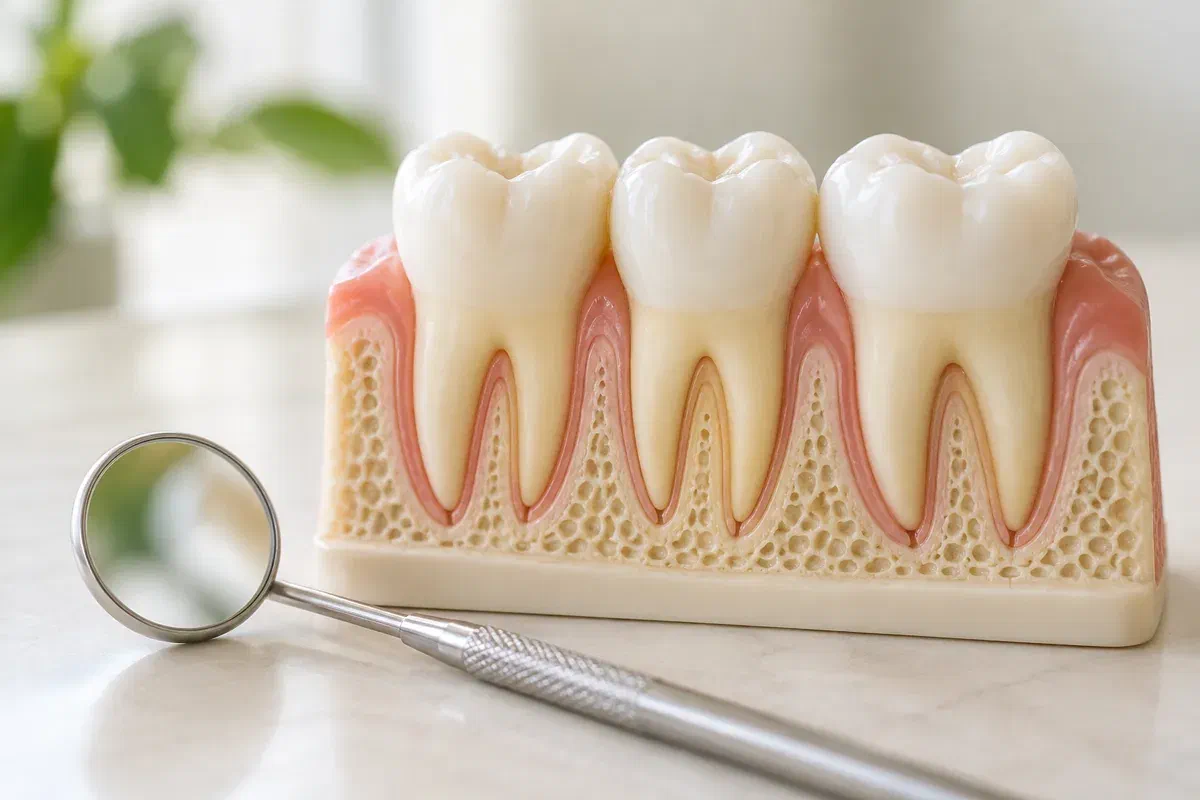
Illustrative cross-section teaching model showing teeth within gum and supporting bone
What shapes the outlook

How it began tells us a great deal.

Some causes call for speed. If a permanent tooth was jolted loose or out of position in an accident, have it examined promptly; a quick assessment can matter more than whether it hurts today.

A sudden blow

Injured teeth can sometimes recover well, but timing matters. Tell us when it happened, whether the tooth looks out of place, and how your bite feels now. Mention any facial cuts, bruising or jaw pain, and expect the teeth on either side to be checked.

Gradual loss of gum and bone

The outlook here depends largely on how much support is left. Share any bleeding gums, receding gumlines, new spaces or trapped food, and whether you've been treated for gum disease before. These details guide a closer look at what is anchoring the root.

Dental work that might be loose

Sometimes the news is better than feared: the crown or filling is loose and the tooth underneath is sound. Mention any work on that tooth. Don't push on it to check, and if a piece comes away, store it safely and call us instead of gluing it.

A loose or displaced adult tooth after an accident needs a prompt phone call. If a tooth has been knocked completely out, treat it as a separate emergency and call at once. Major facial injury, heavy bleeding that won't ease or trouble breathing call for emergency medical care through 911.

An honest assessment

You deserve to know the real prospects.

Judging whether a tooth can be kept predictably takes more than a quick look at how it moves. The dentist weighs the state of the root, the gum and bone holding it, and any damage from injury or decay. Ask which findings are most important to the outlook and which still carry uncertainty. If a specialist's opinion is recommended, ask what extra clarity it should bring.

It's equally important to understand what treatment can and can't do. Steadying a tooth may protect it while it heals after certain injuries. That is different from restoring bone that has been lost or treating gum disease, which a splint can't do on its own. Ask what each proposed step is expected to change, and how you'll know if it's working.

Patient information: NIDCR — assessment and treatment of gum disease

A clear picture of remaining support

The exam may cover your gums and supporting tissue, with images where useful, in addition to the tooth. Medical history and any past gum care help put the findings in context. Ask whether the problem is limited to this tooth or part of a wider gum concern.

Tooth, or just the crown?

When it's the restoration that has loosened, the tooth underneath may still have a good future. Ask which applies to you. If the tooth itself is moving, re-cementing a crown won't solve that, and the dentist can explain why.

Straight answers about the future

Go through the expected benefits, limits, costs and follow-up for each route, including keeping the tooth and removing it. Saving a tooth can mean ongoing care, and no outcome can be promised from appearance. Ask what would make the dentist revise the plan.

Getting to an answer

Gather the facts, then talk openly about them.

If you're anxious about losing the tooth, say so; it helps us explain things in a way that's useful to you. The exam and its findings are explained step by step so the decision is yours to share.

  1. Understand the background

    We'll ask when the movement began, whether anything happened beforehand, and about earlier gum treatment, current symptoms, your medicines and general health. Records from a previous dentist can show whether the tooth has been changing over time.

  2. Look closely at the tooth and its anchorage

    The dentist examines the loose tooth and structures nearby that could explain it. Tests and images are chosen for the specific question. Ask what they reveal about the root, the bone level, and whether the nerve inside the tooth seems affected.

  3. Discuss the outlook honestly

    Here the dentist explains whether the tooth is likely to be kept, what's uncertain, and what each option involves. An injury may need prompt care, while gum-related loosening is often treated in stages. If removal is suggested, ask why keeping the tooth looks unlikely to succeed.

  4. Plan the next steps and reviews

    Agree on the purpose and timing of follow-up visits and any referral. Ask how to care for the tooth at home and what changes should prompt an earlier call. Reviews help track whether the outlook is improving or needs rethinking.

Protecting your chances

Small precautions now can matter later.

Good home care for an injured tooth isn't identical to good home care for gum-related loosening or a crown that has slipped. The instructions from your own visit are the ones to follow.

Give it a break

Each time you press the tooth with your tongue or finger, you disturb the tissues trying to settle. Keep hard and chewy foods away from it until you've been advised. Pulling, gluing or wiring it yourself can do real harm, so leave that to the dentist.

Keep the area clean, gently

Good cleaning protects the gums around a tooth with reduced support. If a splint or restoration is added, have the team demonstrate how to clean around it, and mention any spot you struggle with. Advice should suit both the device and your gums.

Call about changes and keep reviews

Let us know about more movement, a bite that feels different, new swelling or pain, or a splint that comes loose. Never remove a splint yourself. After an injury, keep your reviews even if the tooth feels steady, because later findings can affect its prospects.

Keeping it, or planning beyond it

Options that reflect the tooth's real outlook.

There's no universal answer for a loose tooth. Ask how each recommendation ties to your findings, and whether its purpose is protection now, control of disease, repair of dental work, or planning what comes after the tooth.

When gum disease is affecting the outlook

Treating the supporting tissues

Periodontal treatment and ongoing maintenance may be advised if gum disease is present. Talk about how much support has been lost and what treatment can reasonably achieve. It aims to manage the disease, not to guarantee that every loose tooth will firm up.

When an injury gives the tooth a fair chance

Stabilizing an injured tooth

For a suitable injury, a splint and a defined review schedule may be recommended. Ask what further care could be required and how long the splint will stay. The need for root canal treatment rests on the condition of the nerve, not on movement alone.

When the dental work or the prognosis decides

Repair, or removal and replacement

If only the restoration is loose, repair may be possible when the tooth beneath is sound. If the tooth's outlook is poor, removal and later replacement can be discussed. Ask for the full reasoning and any alternatives before making a decision.

Puslinch loose tooth questions

Honest answers to the questions people dread asking.

Your exam determines what applies. Get in touch soon about new looseness, particularly following an injury, and tell us if the tooth has moved or your bite feels different.

(905) 876-4488
How does the dentist decide whether a loose tooth can be kept?
The decision is based on findings such as the amount of gum and bone support, the condition of the root and nerve, the cause of the movement, and your overall oral health. Ask the dentist to explain which findings matter most for your tooth.
If the tooth has to come out, what are the replacement options?
Options such as a bridge, an implant or a removable partial denture may be discussed, depending on your mouth and health. The right choice depends on individual findings. Ask about the benefits, limits and timing of each.
Can gum treatment save a tooth that's already loose?
Sometimes treatment helps control the disease and protect remaining support, which may improve the outlook. It can’t guarantee the tooth will become firm. Ask what results the dentist hopes for in your case.
Is a painless loose tooth less likely to be lost?
Not necessarily. Pain doesn’t reflect how much support remains. A tooth can lose support quietly. The exam is what determines its outlook.
Can I get a second opinion before deciding on removal?
Yes. It’s reasonable to seek another opinion or a specialist’s view before an extraction that isn’t urgent. Ask for copies of your images and findings to share.
After a splint, how will I know if the tooth is going to make it?
Follow-up visits are how the dentist tracks healing after an injury. Ask what signs are being monitored and how long reviews will continue, since some changes appear later.
For adults in Puslinch

Get a clear answer, not a guess.

Phone (905) 876-4488 to talk with our Bronte Street team about the change and book an assessment. If the tooth loosened after a fall or blow, mention it first so they can advise how quickly you should come in.

Whether a tooth can be kept, and whether it needs a splint or a referral, depends on what your exam finds, as does its response to care. Online forms are meant for non-urgent questions.

Visit Milton Dental Clinic
Unit 1, 342 Bronte St. S, Milton, ON L9T 5B7
Get directions Clinic hours
Monday–Thursday
11am–7pm
Friday–Sunday
By appointment only

Areas we serve

  • Milton
  • Oakville
  • Mississauga
  • Georgetown
  • Halton Hills
  • Acton
  • Campbellville
  • Brampton
  • Burlington
  • Puslinch
  • Rockwood
  • Erin
  • Caledon
  • Etobicoke
  • Old Milton
  • Bronte Meadows
  • Timberlea
  • Dorset Park
  • Dempsey
  • Clarke
  • Beaty
  • Coates
  • Harrison
  • Scott
  • Willmott
  • Ford
  • Bowes
  • Cobden
  • Walker
  • Mountain View
  • Milton Heights
  • Hawthorne Village
  • Valley View
  • Fallingbrook
  • Nassagaweya
  • Trafalgar
  • Esquesing
  • Nelson
  • Brookville
  • Moffat
  • Glen Williams
  • Norval
  • Limehouse
  • Stewarttown
  • Ashgrove
  • Hornby
  • Silver Creek
  • Speyside
  • Scotch Block
  • North Oakville
  • River Oaks
  • Glen Abbey
  • West Oak Trails
  • Palermo
  • Bronte Creek
  • College Park
  • Joshua Creek
  • Uptown Core
  • Preserve
  • Iroquois Ridge
  • Lisgar
  • Meadowvale
  • Meadowvale Village
  • Churchill Meadows
  • Erin Mills
  • Central Erin Mills
  • Streetsville
  • East Credit
  • Creditview
  • Heartland
  • Sheridan
  • Mount Pleasant
  • Credit Valley
  • Huttonville
  • Churchville
  • Springbrook
  • Northwest Brampton
  • Bram West
  • Fletcher's Meadow
  • Fletcher's Creek South
  • Alton Village
  • Orchard
  • Millcroft
  • Headon Forest
  • Tansley
  • Brant Hills
  • Tyandaga
  • Kilbride
  • Lowville
  • Aberfoyle
  • Morriston
  • Arkell
  • Hillsburgh
  • Freelton
  • Carlisle
  • Waterdown
  • Flamborough
  • Mountsberg

How can we help?

Milton Dental Clinic

Have a question about your smile? Choose the option that works best for you.

For urgent dental concerns, please call.
Messages are reviewed during clinic hours.