

Illustrative patient discussing tooth support with a clinician and a dental teaching model
Specialized Care

Loose Adult Tooth Treatment in Rockwood

A loose permanent tooth isn't handled in one appointment and forgotten. Injuries and gum problems both call for checks over the following months. Adults from Rockwood can have the tooth and its support examined, the cause explained, and a review schedule set up that makes sense from the start.

The longer view

Months, not minutes.

Picture the tooth a few weeks after it first moved. It feels calmer, chewing is comfortable, and the worry has faded. That's often exactly when follow-up gets skipped, and it's also when certain changes inside an injured tooth or around a root with reduced support can still be developing quietly. A loose adult tooth is best thought of as something to watch over time.

That starts with understanding the cause. A knock can loosen a tooth that was perfectly healthy. Gum and bone changes tend to build gradually. Other dental issues, or a crown that has lost its grip, can create the same sensation. Pain doesn't sort these out; plenty of loose teeth feel fine.

Arranging care from Rockwood, it's worth knowing at the outset that more than one visit is likely. Call, describe when you noticed the movement and whether anything happened first, and mention any change in your bite. Resist the urge to test it in the meantime.

Start with a loose tooth assessment
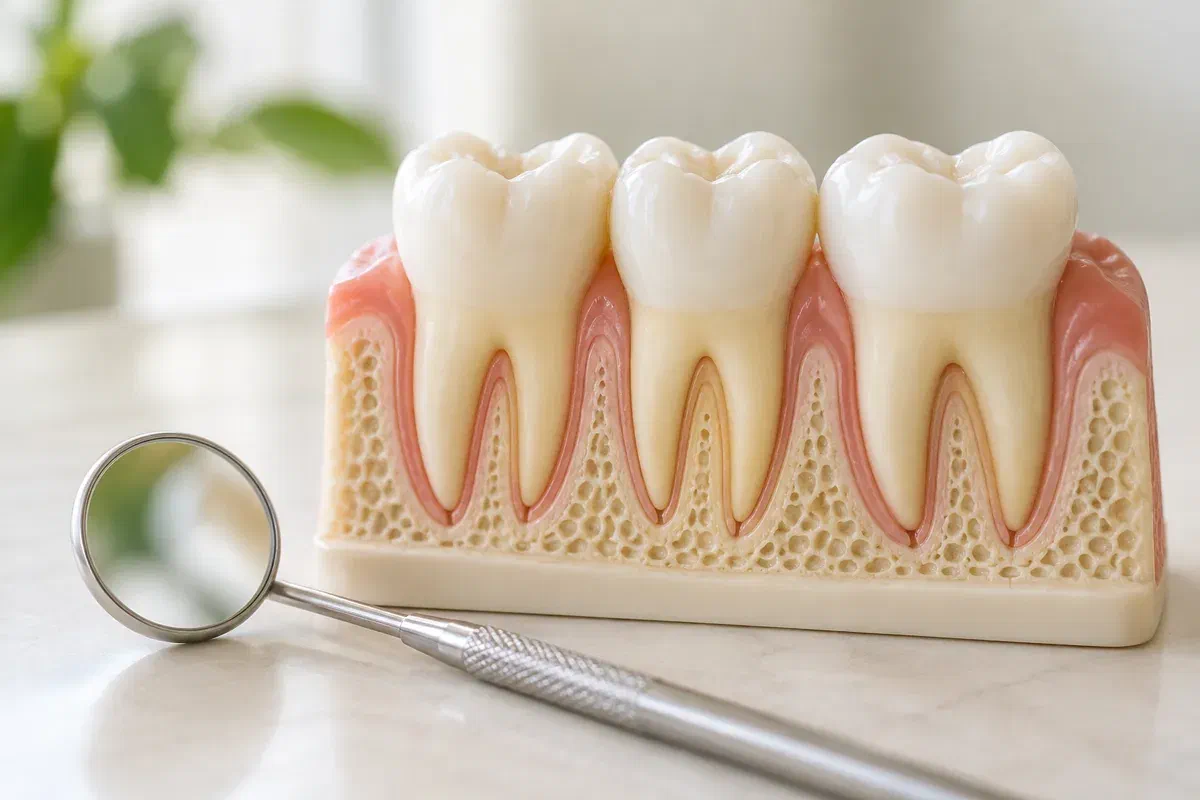
Illustrative cross-section teaching model showing teeth within gum and supporting bone
The starting point

Tell us the beginning so we can plan the middle and the end.

The cause shapes both the first visit and the reviews after it. An adult tooth knocked loose or pushed out of position by an accident needs prompt assessment; waiting for pain to develop wastes useful time.

Following an injury

Explain when the injury happened, whether the tooth looks displaced, and whether your teeth meet differently. Report lip, face or jaw injuries too. Injured teeth often need a series of reviews, and nearby teeth are usually included.

Over many months

Gradual loosening often comes with gum signs such as bleeding, receding gums, new gaps or food getting trapped. Mention earlier gum treatment. These clues focus attention on the support around the root, which may need regular maintenance afterwards.

Around existing dental work

Tell the team whether the tooth carries a crown, bridge or large filling. Describe the feeling rather than repeatedly pushing it. If anything comes away, keep it safe and phone us; trying to glue it back yourself isn't a good idea.

Call promptly about a permanent tooth that is loose or displaced after trauma. If the tooth has come right out, that's a different emergency that needs immediate action. For serious facial injury, bleeding that can't be controlled, or breathing difficulty, dial 911.

What the first exam establishes

A baseline to measure the tooth against.

The first assessment does two jobs. It identifies the likely cause, and it records the tooth's condition so later visits have something to compare with. The dentist considers the root, gum and bone, not just the movement. Ask which findings matter most for the outlook and which will be clearer at later reviews. If a specialist is suggested, ask what they'll look for.

It also helps to understand that steadying a tooth and treating its cause are separate. A splint may be useful after some injuries, but it won't rebuild bone or resolve gum disease. Ask what each step is for, and what the reviews will tell you about whether it's working.

Patient information: NIDCR — assessment and treatment of gum disease

The supporting tissues recorded

Gums, supporting tissue and suitable images may be examined alongside the tooth, giving a starting point for comparison. Your health history and past gum care add context. Ask whether the concern is local or whether broader gum maintenance would help.

The moving part clarified

A loose restoration and a mobile tooth follow different paths. Ask which you have and whether the tooth beneath any crown is sound, since that shapes whether re-cementing is the right answer.

An outlook that's revisited

Talk through the benefits, limits, costs and review needs of each option. A tooth's prospects can become clearer over time, and no result can be promised at the start. Ask what the dentist would need to see to change the plan.

First visit and beyond

Assess, treat if needed, then keep watching.

Let the dentist know if the area is tender or if you're worried about the tooth's future. Findings are explained at each visit, so you can follow how things are going and take part in decisions.

  1. Record the history

    We'll note when the movement began, whether it followed an injury or treatment, and your gum history, symptoms, medicines and health conditions. Earlier dental records can help show how the tooth has changed.

  2. Examine and establish a baseline

    The dentist checks the tooth and surrounding structures, using tests and images suited to the question. These become a reference for later comparison. Ask what they show about the bone, the root and the nerve.

  3. Treat what's needed now

    An injury may need prompt care; gum-related causes are usually staged. If a splint is placed, ask how long it will stay and what it is protecting. If removal is discussed, ask what in the findings argues against keeping the tooth.

  4. Schedule the reviews

    Agree on when you'll be seen again, what each review checks, and any referral. Ask how to clean and chew in the meantime and what should prompt an earlier call. Knowing the purpose of each review makes it easier to keep.

In between reviews

Quiet care at home, steady attendance at the clinic.

Home instructions differ for injuries, gum disease, restoration problems and other causes. Use the guidance from your own visit rather than advice aimed at something else.

Stop checking it

Testing the tooth with your tongue or finger disturbs it and won't tell you how it's healing. Avoid biting hard things with it while it settles. Don't try to pull, glue or secure it at home.

Keep cleaning around any splint

If a splint or new restoration is placed, ask for a demonstration of how to clean around it and mention any hard-to-reach spots. Plaque collects easily around devices, so good cleaning protects the gums during the review period.

Keep a note of changes

Jot down anything new between visits: more movement, a different bite, darkening of the tooth, pain or swelling, or a loosening splint, and call about it. Don't remove a splint yourself. Bring your notes to each review.

How treatment might unfold

Treatment with a timeline attached.

No procedure suits every loose tooth. Ask how the recommendation relates to the findings, what it is meant to achieve, and how progress will be checked over the coming months.

When periodontal disease is part of the cause

Ongoing gum care

Gum treatment followed by regular maintenance visits may be recommended. Ask how much support has been affected and what the treatment can realistically accomplish. Maintenance helps control disease over time but can't promise every loose tooth will tighten.

When an injury calls for it

Splinting and injury reviews

A splint with a schedule of reviews may be suitable for certain injuries. Ask how long it stays and what the reviews will check. Root canal treatment is considered if findings involve the nerve, which can sometimes only become clear over time.

When the restoration or prognosis decides

Repair now, or replacement later

When only the crown or filling has worked free and the tooth beneath it is healthy, a repair may be all that's needed. When the tooth's own prospects look weak, the dentist may raise taking it out and deciding on a replacement once the area has healed. Ask what points toward each route and how the steps would be spaced out.

Rockwood follow-up questions

What happens after the first appointment?

Follow-up looks different for everyone, and your own findings set the schedule. If the tooth moves again, or your bite shifts between visits, phone rather than waiting for the next review; after a fresh injury, call the same day.

(905) 876-4488
How many follow-up visits does a loosened tooth usually need?
It varies with the cause. Injured teeth are commonly reviewed several times over the following months, and gum treatment involves ongoing maintenance. Ask your dentist what schedule they recommend and why.
What is the dentist looking for at each review?
Reviews may check movement, the gums, the bite, and signs about the nerve’s health, sometimes with tests or images. Ask what’s being checked at each visit and what would prompt a change in treatment.
Why might a tooth change colour months after an injury?
Darkening can sometimes signal that the nerve inside was affected, and it may not show up until well after the tooth feels normal. It’s one of the things reviews watch for. Report any colour change between visits rather than waiting for the next booked date.
If my tooth feels completely normal, can I cancel the review?
It’s best not to. Some changes after an injury or gum treatment can’t be felt and only show up on examination or images. If the date no longer works, rebook rather than cancel, and ask the dentist before changing the plan.
What happens at gum maintenance visits?
Maintenance visits typically involve checking the gums, cleaning, and reviewing your home care, with measurements compared against earlier visits. Their frequency depends on your findings. Ask what interval suits you and why it was chosen.
Could the tooth loosen again later?
It’s possible, depending on the cause and how well it’s managed. Gum disease, for example, can become active again if maintenance lapses. Keeping up with maintenance and reviews helps catch changes early. Report any new movement promptly.
Coming in from Rockwood

Begin with an exam, and we'll map the follow-up.

Call our Bronte Street team on (905) 876-4488 to describe the change and book an assessment. If an injury came first, say so at the outset so they can advise on how soon to come in and what to do before your visit.

The chance of keeping the tooth, the need for a splint or referral, and how it responds over time depend on your own findings. Online forms are for questions that aren't urgent.

Visit Milton Dental Clinic
Unit 1, 342 Bronte St. S, Milton, ON L9T 5B7
Get directions Clinic hours
Monday–Thursday
11am–7pm
Friday–Sunday
By appointment only

Areas we serve

  • Milton
  • Oakville
  • Mississauga
  • Georgetown
  • Halton Hills
  • Acton
  • Campbellville
  • Brampton
  • Burlington
  • Puslinch
  • Rockwood
  • Erin
  • Caledon
  • Etobicoke
  • Old Milton
  • Bronte Meadows
  • Timberlea
  • Dorset Park
  • Dempsey
  • Clarke
  • Beaty
  • Coates
  • Harrison
  • Scott
  • Willmott
  • Ford
  • Bowes
  • Cobden
  • Walker
  • Mountain View
  • Milton Heights
  • Hawthorne Village
  • Valley View
  • Fallingbrook
  • Nassagaweya
  • Trafalgar
  • Esquesing
  • Nelson
  • Brookville
  • Moffat
  • Glen Williams
  • Norval
  • Limehouse
  • Stewarttown
  • Ashgrove
  • Hornby
  • Silver Creek
  • Speyside
  • Scotch Block
  • North Oakville
  • River Oaks
  • Glen Abbey
  • West Oak Trails
  • Palermo
  • Bronte Creek
  • College Park
  • Joshua Creek
  • Uptown Core
  • Preserve
  • Iroquois Ridge
  • Lisgar
  • Meadowvale
  • Meadowvale Village
  • Churchill Meadows
  • Erin Mills
  • Central Erin Mills
  • Streetsville
  • East Credit
  • Creditview
  • Heartland
  • Sheridan
  • Mount Pleasant
  • Credit Valley
  • Huttonville
  • Churchville
  • Springbrook
  • Northwest Brampton
  • Bram West
  • Fletcher's Meadow
  • Fletcher's Creek South
  • Alton Village
  • Orchard
  • Millcroft
  • Headon Forest
  • Tansley
  • Brant Hills
  • Tyandaga
  • Kilbride
  • Lowville
  • Aberfoyle
  • Morriston
  • Arkell
  • Hillsburgh
  • Freelton
  • Carlisle
  • Waterdown
  • Flamborough
  • Mountsberg

How can we help?

Milton Dental Clinic

Have a question about your smile? Choose the option that works best for you.

For urgent dental concerns, please call.
Messages are reviewed during clinic hours.