

Illustrative patient discussing morning jaw discomfort with a dental clinician
Specialized Care

Morning Jaw Pain Treatment in Mississauga

A week of notes can say more than a vague memory of feeling sore. For people travelling from Mississauga, we suggest jotting down a few plain details about your mornings, then bringing them in so we can examine your teeth and jaw and talk through care that suits the pattern.

From Mississauga, with notes in hand

Write it down for a week, then let us look.

Busy weeks blur together, and by the time an appointment comes around it can be hard to remember whether the jaw ached on Tuesday or every day. A short note each morning fixes that. Record where you felt it, roughly how long it lasted, and whether eating was awkward. Those few lines often reveal a pattern, although a pattern is still not a diagnosis.

Many people assume night grinding is behind it. That might be true for some, yet waking sore cannot prove it. Your record may point elsewhere: a tooth that twinges when you bite, a jaw that opens less than it used to, or a partner remarking on snoring. Muscles, joints, teeth, overall health, and sleep may all need consideration, and each clue changes the questions.

Bring the notes, along with any guard you already wear, and we will start from what you have written. The examination comes before any treatment talk. By the end, each suggestion should have a reason you can repeat back, and we will agree how to tell whether it is making a difference.

Bring your morning notes to an assessment
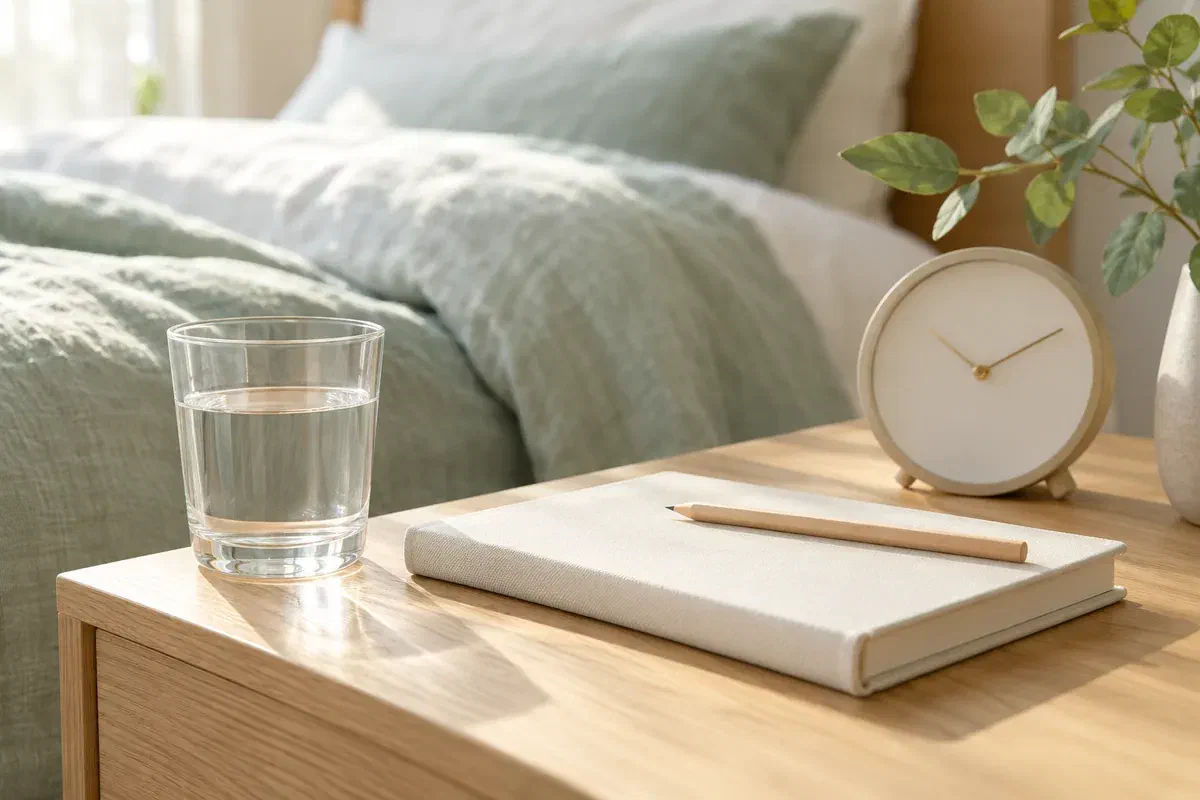
Illustrative morning bedside scene with water, a notebook, and a simple clock
What belongs in the notes

Three things to record before you come in

Keep it to what you notice on an ordinary day, not a theory about the cause. Anything involving sleep, how your jaw moves, or a single tooth deserves its own line.

How the ache behaves through the first meal

Note where it sits and whether breakfast eases it, leaves it unchanged, or sharpens it. Add whether it is on one side or both, and whether opening wide feels restricted. We compare this with the examination, because similar-feeling soreness can come from different places.

Anything unusual about a tooth or appliance

List sensitivity, pain on chewing, a chip, or a crown or filling that feels unfamiliar. For a guard, write down roughly when it was made and any change in fit or comfort. Bring it with you instead of adjusting it yourself.

Night-time signs for a medical conversation

Loud snoring, breathing pauses that someone has seen, waking with a gasp, or marked daytime drowsiness belong in the notes and in a discussion with a medical provider. These cannot be diagnosed from jaw pain. If you have had a sleep assessment, include what you were told.

Skip the notes and call promptly for new jaw locking, considerable swelling, fever, or being unable to eat or drink. If jaw pain comes with chest pressure, difficulty breathing, sweating, or sudden illness, it may be a medical emergency: call 911 rather than putting it down to teeth or sleep.

What the record and the exam add up to

Your notes tell the story; the examination tests it.

Seeing the same entry day after day can make the answer look obvious. During the visit, the dentist checks your explanation against the examination. You can ask directly which conclusions are firm, which are tentative, and whether any other assessment should come before treatment.

Any worthwhile plan states the purpose of each piece. Protecting enamel from wear, easing a tired jaw, and following up a possible sleep problem are different goals with different measures of success. Agree on which apply and how you will judge them, instead of hoping a single device will cover all of it.

Patient information: NIDCR — bruxism history, symptoms, and examination · NIDCR — conservative care and limitations of jaw pain treatments

Findings from the teeth and from the jaw

Tooth damage that might matter, tender muscles, and the way your jaw opens are all checked. Ask whether something found explains your symptom or simply calls for monitoring. A tooth that has been worn for years may not be the reason for soreness that began recently.

An appliance only with a stated job

When a guard is raised, ask if protecting teeth is its main role and how comfort will be monitored. Suitability and design depend on your assessment. A general dental guard is not a treatment for sleep apnea and offers no guarantee that morning pain will end.

Your record becomes the review tool

Keep tracking a few of the same details, such as how long stiffness lasts or how breakfast goes. Confirm when to return and which changes mean calling sooner. At the review, your notes are read next to the clinical findings.

The appointment, in order

We read the notes, examine, explain, then plan.

There is no need to arrange a sleep study first. Your notes on timing, accompanying symptoms, and anything you have tried give the dentist a practical starting point, and even a rough memory will do if you did not keep a record.

  1. Going through your record and history

    We look at when the ache began and how long it typically lasts each morning. Headaches, tooth pain, movement changes, sleep concerns, and appliances come up here. Bring a current medicine list; any change to prescribed treatment should be made with your prescriber, not on your own.

  2. Checking teeth, joints, and sore muscles

    The dentist examines the relevant areas and asks whether anything reproduces the ache you described. Tests or images are suggested only if they would help answer a particular question. Tell us right away if the examination feels uncomfortable.

  3. Talking through the likely contributors

    You hear what seems to be involved and whether a separate dental or medical concern needs investigating. Where muscle or joint care fits, conservative steps and their purpose are explained. If an appliance is suggested, ask about its role, limitations, fees, and how it will be reviewed.

  4. Agreeing on what to do and when to return

    Check that the instructions are clear and what to do should symptoms change. Set a review and decide which notes to keep. When a referral is advised, find out who books it and how its findings could shape the dental plan.

Between visits

A notebook, not a full-time job

Use only the measures chosen for you, and keep the routine light. Trying several unreviewed fixes at once leaves you unable to tell which one helped and which one did harm.

Keep the entries short

One or two lines a morning is plenty: when it started, about how long it lasted, and whether eating or opening was affected. Add sleep or appliance notes if relevant. Avoid deliberately clenching or stretching just to have something to record.

Wear any guard as you were shown

Follow the wear and cleaning instructions and bring the appliance to your review. If it hurts, take it out and contact whoever provided it. It should not be reshaped at home, and pain is not a sign that it is working.

Note other healthcare changes too

Write down new medical results, medicine changes, or sleep treatment, and pass them on. Prescribed sleep therapy and medication should continue even after dental care starts. If advice seems to conflict between clinicians, ask each to clarify before you alter anything.

Possible next steps

What the pattern and findings point toward

Morning soreness does not always lead to the same kind of care. For each recommendation, ask which examination finding it responds to and whether it is dental treatment, symptom relief, or a look into a different health question.

When your notes and the exam point at a tooth

Dental treatment for a tooth that is involved

A damaged or decayed tooth may need its own treatment. Ask which entries in your record that care should change and whether a jaw concern will still need attention. A general guard should not be used in place of investigating one painful tooth.

When a reversible plan suits the findings

Conservative care for the jaw, protection if warranted

Expect education and other suitable conservative measures, with an appliance considered when the findings call for it. Your notes help show whether it is working, so the response is reviewed rather than presumed. Irreversible changes to the bite or tooth surfaces are not a routine opening move.

When the record raises a question beyond dentistry

Another clinician's assessment alongside ours

Sleep breathing symptoms or pain that stays unexplained may need a physician or specialist. Ask what a referral would investigate and who coordinates. No sleep condition can be diagnosed from a jaw that aches when you wake; it needs its own assessment.

Patient information: NHLBI — evaluation and diagnosis of sleep apnea

Questions about tracking symptoms

Getting the most from your notes and your visit

These cover what people usually ask before coming in. Your plan rests on your own history and examination, and on whether a tooth, jaw, or sleep issue needs more attention.

(905) 876-4488
How long should I keep notes before booking?
No set length is required. A week or so can show a pattern, but do not delay booking to collect more if the ache is affecting meals or sleep. Bring whatever you have, even a few days of entries.
Is a phone note as good as a paper diary?
Either works. What matters is that the entries are brief and consistent: where it hurt, roughly how long, and whether eating or opening was harder. Choose whichever you are most likely to keep up.
Could stress at work be linked to my sore mornings?
Stress is commonly discussed alongside clenching, and it is reasonable to mention busy or difficult periods. That said, it does not explain every case. The dentist considers it along with your examination and other history rather than assuming it is the cause.
Do my notes need to mention medicines I have started or stopped?
Yes, record the date of any change. Timing can be useful context, but it does not prove a medicine is responsible. Keep taking prescribed treatment unless your prescriber advises otherwise, and bring your current list.
My ache comes back in the evening too. Should I record that?
Yes. Pain that returns later in the day is worth noting, along with what you were doing, such as chewing or concentrating. It may change how the dentist interprets the morning pattern and which areas to examine.
Can I send my notes ahead from Mississauga before the appointment?
Online forms and email are fine for non-urgent information, but please bring the notes on the day as well, so they can be read during the history. Anything urgent should be handled by phone instead.
Morning jaw pain appointments for Mississauga

Your notes are the best place to start.

Book through (905) 876-4488 for an assessment at our Bronte Street practice. Along with your notes, bring any guard you wear, and we will work through the findings and a measured next step with you.

What causes the ache, whether an appliance suits you, how you respond, and the need for medical or specialist care all vary. Online forms and email suit non-urgent enquiries only.

Visit Milton Dental Clinic
Unit 1, 342 Bronte St. S, Milton, ON L9T 5B7
Get directions Clinic hours
Monday–Thursday
11am–7pm
Friday–Sunday
By appointment only

Areas we serve

  • Milton
  • Oakville
  • Mississauga
  • Georgetown
  • Halton Hills
  • Acton
  • Campbellville
  • Brampton
  • Burlington
  • Puslinch
  • Rockwood
  • Erin
  • Caledon
  • Etobicoke
  • Old Milton
  • Bronte Meadows
  • Timberlea
  • Dorset Park
  • Dempsey
  • Clarke
  • Beaty
  • Coates
  • Harrison
  • Scott
  • Willmott
  • Ford
  • Bowes
  • Cobden
  • Walker
  • Mountain View
  • Milton Heights
  • Hawthorne Village
  • Valley View
  • Fallingbrook
  • Nassagaweya
  • Trafalgar
  • Esquesing
  • Nelson
  • Brookville
  • Moffat
  • Glen Williams
  • Norval
  • Limehouse
  • Stewarttown
  • Ashgrove
  • Hornby
  • Silver Creek
  • Speyside
  • Scotch Block
  • North Oakville
  • River Oaks
  • Glen Abbey
  • West Oak Trails
  • Palermo
  • Bronte Creek
  • College Park
  • Joshua Creek
  • Uptown Core
  • Preserve
  • Iroquois Ridge
  • Lisgar
  • Meadowvale
  • Meadowvale Village
  • Churchill Meadows
  • Erin Mills
  • Central Erin Mills
  • Streetsville
  • East Credit
  • Creditview
  • Heartland
  • Sheridan
  • Mount Pleasant
  • Credit Valley
  • Huttonville
  • Churchville
  • Springbrook
  • Northwest Brampton
  • Bram West
  • Fletcher's Meadow
  • Fletcher's Creek South
  • Alton Village
  • Orchard
  • Millcroft
  • Headon Forest
  • Tansley
  • Brant Hills
  • Tyandaga
  • Kilbride
  • Lowville
  • Aberfoyle
  • Morriston
  • Arkell
  • Hillsburgh
  • Freelton
  • Carlisle
  • Waterdown
  • Flamborough
  • Mountsberg

How can we help?

Milton Dental Clinic

Have a question about your smile? Choose the option that works best for you.

For urgent dental concerns, please call.
Messages are reviewed during clinic hours.