

Illustrative patient discussing morning jaw discomfort with a dental clinician
Specialized Care

Morning Jaw Pain Treatment in Oakville

Is it a tooth, or is it the jaw? That is often the first thing people ask when they wake up sore. If you are coming from Oakville, we can examine both, go through how your mornings unfold, and explain which kind of care the findings support before any appliance is mentioned.

Sorting out a waking ache

Tooth or jaw? The examination helps tell them apart.

Pain that shows up on waking can be hard to place. It may feel as though it comes from a back tooth, yet the cause sits in a tired muscle, or the reverse. Some people feel it along the cheekbone, others close to the ear, and a few only notice it when they bite. Paying attention to exactly where it sits gives the dentist a useful starting point.

Night-time clenching or grinding is a common suspicion, and sometimes it is relevant. A morning ache does not confirm it, though. A cracked or decayed tooth, an irritated joint, strained muscles, health factors, and sleep problems can all overlap. Sharp pain on biting one tooth, a jaw that will not open as wide as it did, or snoring that someone has commented on would each change the questions we ask.

We start by listening, then examining, and only then talking about treatment. If you wear any kind of guard, bring it and let us know whether it seems to help. You should come away knowing why each part of the plan was chosen and how we will tell whether it is working.

Ask whether it is a tooth or your jaw
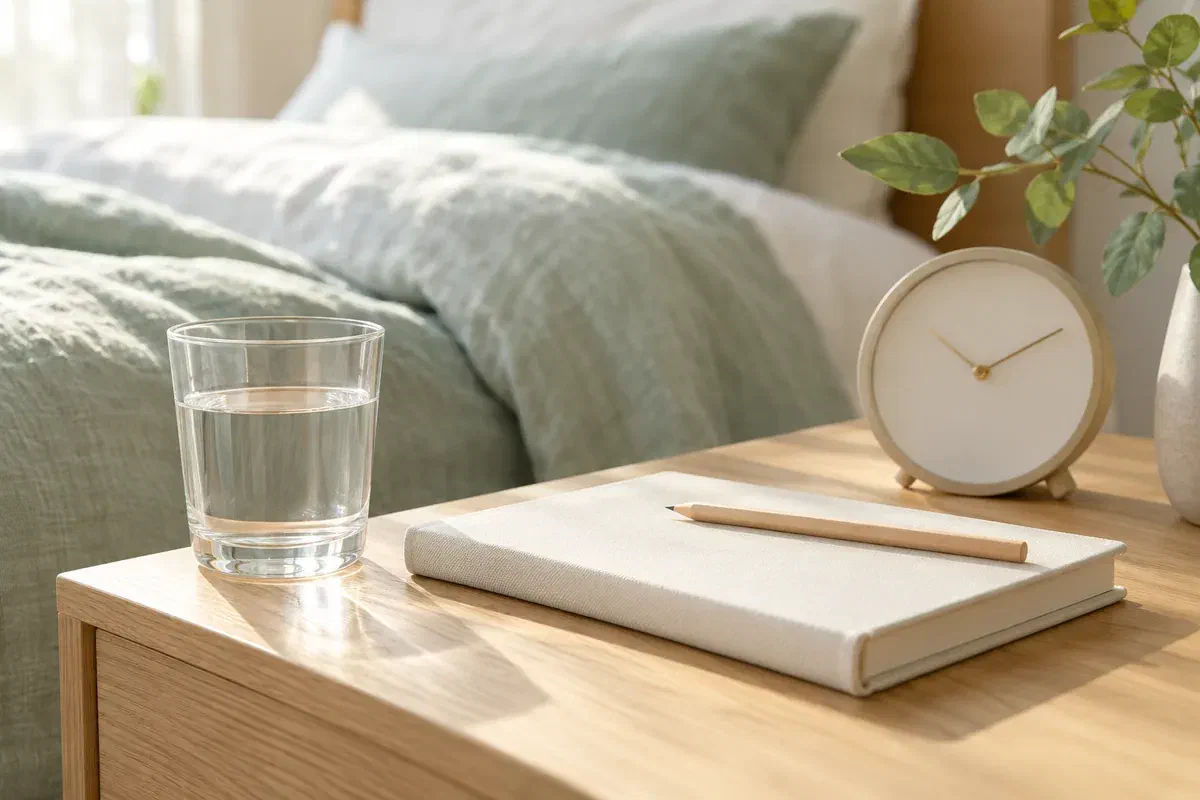
Illustrative morning bedside scene with water, a notebook, and a simple clock
Clues that help locate it

Where it hurts, when it starts, and what makes it worse

Rather than guessing at the cause, describe what an ordinary morning feels like. Point out anything affecting one tooth, the way your jaw moves, or your sleep, instead of summing it up as a general ache.

A muscle-type ache or stiffness when you first eat

Say where the soreness is and whether chewing eases it, leaves it alone, or makes it sharper. Mention whether both sides hurt and whether opening wide is difficult. Those details are matched against the examination, since not every morning ache comes from the same structure.

One tooth that stands out, or a guard that feels different

Sensitivity to cold, pain when you bite down, a chip, or a filling that feels high can all point toward a dental cause. If you own a guard, mention its age and any change in how it fits. Bring it with you and leave any trimming to the dental team.

Sleep symptoms that need a medical opinion

Snoring loudly, stopping breathing as observed by someone else, waking with a gasp, or struggling to stay awake in the day should be discussed with a medical provider. Jaw soreness is not a test for a sleep disorder. Share any prior sleep assessment so our advice fits with it.

Do not wait on a newly locked jaw, significant swelling, fever, or being unable to eat or drink comfortably. If jaw pain arrives with chest tightness, breathlessness, sweating, or a sudden sense of being unwell, treat it as a possible medical emergency and call 911.

Why we look before we treat

Finding the source spares you from treating the wrong thing.

When the same soreness keeps arriving with the alarm, a simple explanation is appealing. The visit lets the dentist test that explanation against your history and the examination. It is fair to ask what has been established, what is still a question mark, and whether more assessment would help before choosing a treatment.

A sensible plan spells out what each step is for. Protecting teeth, reducing discomfort, and following up on a possible sleep issue are distinct aims. Talk about which apply to you and how improvement will be judged, rather than expecting one appliance or one change in routine to resolve everything.

Patient information: NIDCR — bruxism history, symptoms, and examination · NIDCR — conservative care and limitations of jaw pain treatments

A dental and a jaw examination in the same visit

The dentist checks for tooth damage that could be relevant, presses on and examines sore areas, and looks at how the jaw functions. Ask whether a given finding explains the pain or just needs watching. Old wear on a tooth does not, on its own, explain discomfort that is recent.

A guard recommended for a clear reason, if at all

Should an appliance come up, ask whether its main role is protecting teeth and how comfort will be reviewed. What suits you depends on the assessment. A general dental guard is not sleep apnea treatment and cannot guarantee that jaw pain will stop.

A review that counts what you feel day to day

Choose what to keep track of, perhaps how long the stiffness lasts or whether breakfast is less of a chore. Ask when to return and what should prompt an earlier call. What you report from home is reviewed together with the clinical findings.

What happens at the appointment

Four steps from a sore morning to a plan you understand

Nobody needs a sleep study just to book this visit. A quick summary of when the ache appears, what comes with it, and what you have tried so far is enough to begin.

  1. A conversation about mornings, days, and health

    We ask when the problem started and how long it usually lasts after you get up. Headaches, tooth pain, movement changes, sleep worries, and appliances are all relevant. Your medicines and any recent changes are reviewed too, and prescribed treatment should only be changed by the prescriber.

  2. Examining teeth, joints, and muscles

    Relevant areas are checked, and you will be asked whether any part of the examination brings on the ache you recognize. Images or other tests are suggested only when they would answer a specific question. Mention discomfort at any point and the examination will be adapted.

  3. Explaining what seems to be going on

    Ask what looks to be contributing and whether a separate dental or medical problem should be investigated. If muscle or joint care fits, the conservative options and their purpose are explained. Appliance advice should include its role, its limits, the fees, and how it will be reviewed.

  4. Settling the plan and a reassessment

    Before leaving, confirm the instructions and what to do if things change. Agree on when to check in again and what to bring. If you are referred to a physician or specialist, ask who will arrange it and how the findings may affect dental care.

Until your review

Watch for patterns, not every twinge.

Stay with the advice chosen for you and keep it simple. Adding several new remedies at the same moment makes it difficult to tell which helps and which makes things worse.

Track a handful of details

Note when the soreness begins, about how long it lasts, and whether chewing or opening is affected. Include sleep concerns or appliance use where relevant. A short note works well; you do not need to provoke the pain to check on it.

Follow appliance instructions closely

With a recommended guard, stick to the wear and cleaning advice and bring it to your review. If it hurts, stop wearing it and contact the clinician who provided it. Avoid adjusting it yourself, and do not accept pain as part of how it works.

Connect your dental and medical care

Tell the team about new medical findings, medicine changes, or sleep treatment. Prescribed sleep therapy and medication should continue even though dental care has started. If advice from two clinicians seems contradictory, ask them to clarify before changing anything.

Where care may go next

Different findings lead to different kinds of care.

A waking ache can lead to more than one sort of treatment. Ask how each recommendation ties back to the examination and whether you need dental work, help managing symptoms, or attention to a separate health concern.

When a dental cause explains part of the pain

Addressing a tooth that turns out to be involved

A damaged tooth or other dental condition may need treatment in its own right. Ask which symptoms that care should improve and whether a jaw concern would remain. A general guard is not a stand-in for finding out what is wrong with a painful tooth.

When the examination supports reversible steps

Conservative jaw care, with protection when suitable

Education and other conservative measures are discussed first, with an appliance considered if indicated. Your response should be checked rather than taken for granted. Permanently changing tooth surfaces or the bite is not a routine first response to morning jaw pain without a clear cause.

When the history points beyond the mouth

A medical or specialist assessment in parallel

Breathing symptoms during sleep or ongoing pain without an explanation may need another clinician's input. Ask what the referral is meant to look into and who will coordinate. A sleep diagnosis needs an appropriate assessment and is never based only on a sore jaw at dawn.

Patient information: NHLBI — evaluation and diagnosis of sleep apnea

Oakville questions about waking sore

Tooth, jaw, or both? Your questions answered.

Read these before your appointment to help frame the discussion. Your plan depends on the history and examination, including any tooth, jaw, or sleep concern that needs more attention.

(905) 876-4488
How can the dentist tell whether the pain comes from a tooth or the jaw?
By combining your description with an examination of the teeth, muscles, and joints. Tests or images may be used if they answer a specific question. Sometimes both are involved, and the dentist will explain which findings point where and what remains uncertain.
A back tooth aches every morning. Should I treat it as a jaw problem?
Not until it has been checked. A tooth that hurts on its own or when you bite may need dental treatment, and a guard is not a substitute for that. Describe the tooth and the timing so it can be examined properly.
Can sinus congestion feel like morning jaw or tooth pain?
Upper back teeth and the sinuses sit close together, so it is worth mentioning any congestion or recent cold. The dentist can examine the teeth and suggest seeing your physician if the pattern points away from a dental cause.
Does an aching jaw on waking always mean I clench at night?
No. Clenching may be part of it, but timing alone cannot confirm it. Share what you feel and anything a bed partner has heard or seen. The examination helps the dentist judge whether clenching is likely relevant and whether more investigation is sensible.
Should I keep wearing my guard while I wait for the appointment?
If it is comfortable and was provided for you, you can generally keep to your usual routine and bring it along. Stop if it causes pain, and do not reshape it. Mention whether symptoms started or changed after you began wearing it.
Is a single assessment enough if I am coming from Oakville?
Often the first visit covers the history, examination, and initial options. A review is usually planned to see how you respond. Ask at booking what the first appointment includes so you can plan around it, and call between visits if symptoms change.
Booking from Oakville

Find out where the ache is coming from.

Ring (905) 876-4488 to arrange an assessment at our Bronte Street practice in Milton. Bring any guard you use and a few notes on where and when it hurts, and we will explain what we find and a fitting next step.

Causes, the suitability of any appliance, how you respond to care, and whether you need medical or specialist input vary from one person to the next. Online forms and email are meant for non-urgent enquiries.

Visit Milton Dental Clinic
Unit 1, 342 Bronte St. S, Milton, ON L9T 5B7
Get directions Clinic hours
Monday–Thursday
11am–7pm
Friday–Sunday
By appointment only

Areas we serve

  • Milton
  • Oakville
  • Mississauga
  • Georgetown
  • Halton Hills
  • Acton
  • Campbellville
  • Brampton
  • Burlington
  • Puslinch
  • Rockwood
  • Erin
  • Caledon
  • Etobicoke
  • Old Milton
  • Bronte Meadows
  • Timberlea
  • Dorset Park
  • Dempsey
  • Clarke
  • Beaty
  • Coates
  • Harrison
  • Scott
  • Willmott
  • Ford
  • Bowes
  • Cobden
  • Walker
  • Mountain View
  • Milton Heights
  • Hawthorne Village
  • Valley View
  • Fallingbrook
  • Nassagaweya
  • Trafalgar
  • Esquesing
  • Nelson
  • Brookville
  • Moffat
  • Glen Williams
  • Norval
  • Limehouse
  • Stewarttown
  • Ashgrove
  • Hornby
  • Silver Creek
  • Speyside
  • Scotch Block
  • North Oakville
  • River Oaks
  • Glen Abbey
  • West Oak Trails
  • Palermo
  • Bronte Creek
  • College Park
  • Joshua Creek
  • Uptown Core
  • Preserve
  • Iroquois Ridge
  • Lisgar
  • Meadowvale
  • Meadowvale Village
  • Churchill Meadows
  • Erin Mills
  • Central Erin Mills
  • Streetsville
  • East Credit
  • Creditview
  • Heartland
  • Sheridan
  • Mount Pleasant
  • Credit Valley
  • Huttonville
  • Churchville
  • Springbrook
  • Northwest Brampton
  • Bram West
  • Fletcher's Meadow
  • Fletcher's Creek South
  • Alton Village
  • Orchard
  • Millcroft
  • Headon Forest
  • Tansley
  • Brant Hills
  • Tyandaga
  • Kilbride
  • Lowville
  • Aberfoyle
  • Morriston
  • Arkell
  • Hillsburgh
  • Freelton
  • Carlisle
  • Waterdown
  • Flamborough
  • Mountsberg

How can we help?

Milton Dental Clinic

Have a question about your smile? Choose the option that works best for you.

For urgent dental concerns, please call.
Messages are reviewed during clinic hours.