

Illustrative patient discussing morning jaw discomfort with a dental clinician
Specialized Care

Morning Jaw Pain Treatment in Puslinch

The aching started a few weeks after a new prescription, and now you are wondering whether the two are connected. If you are travelling in from Puslinch, bring your medicine list and your questions; we will examine your teeth and jaw, look at the timing with you, and keep any medical changes in your prescriber's hands.

When the timing makes you wonder

New prescription, new ache. Coincidence?

It is natural to look for whatever changed just before a symptom began. Perhaps you started a medicine, adjusted a dose, changed jobs, or had dental work, and soon afterwards your jaw began to feel stiff and sore on waking. Noting those dates is genuinely helpful. A close match in timing is still only a clue, and it does not by itself show what is responsible.

Clenching or grinding during sleep might be part of it, yet waking sore cannot confirm that either. The dentist considers the teeth, the jaw muscles and joints, your health history, and how you sleep. A tooth that aches on biting, reduced opening, or snoring and breathing pauses noticed by someone else would each open a different line of questions.

We start by listening and examining, and only then talk about care. Please bring an up-to-date list of everything you take, along with any guard you wear. If a medicine question comes up, it goes back to your prescriber, and nothing should be stopped on your own. You should leave understanding the reason for each suggestion and how it will be reviewed.

Bring your medicine list to an assessment
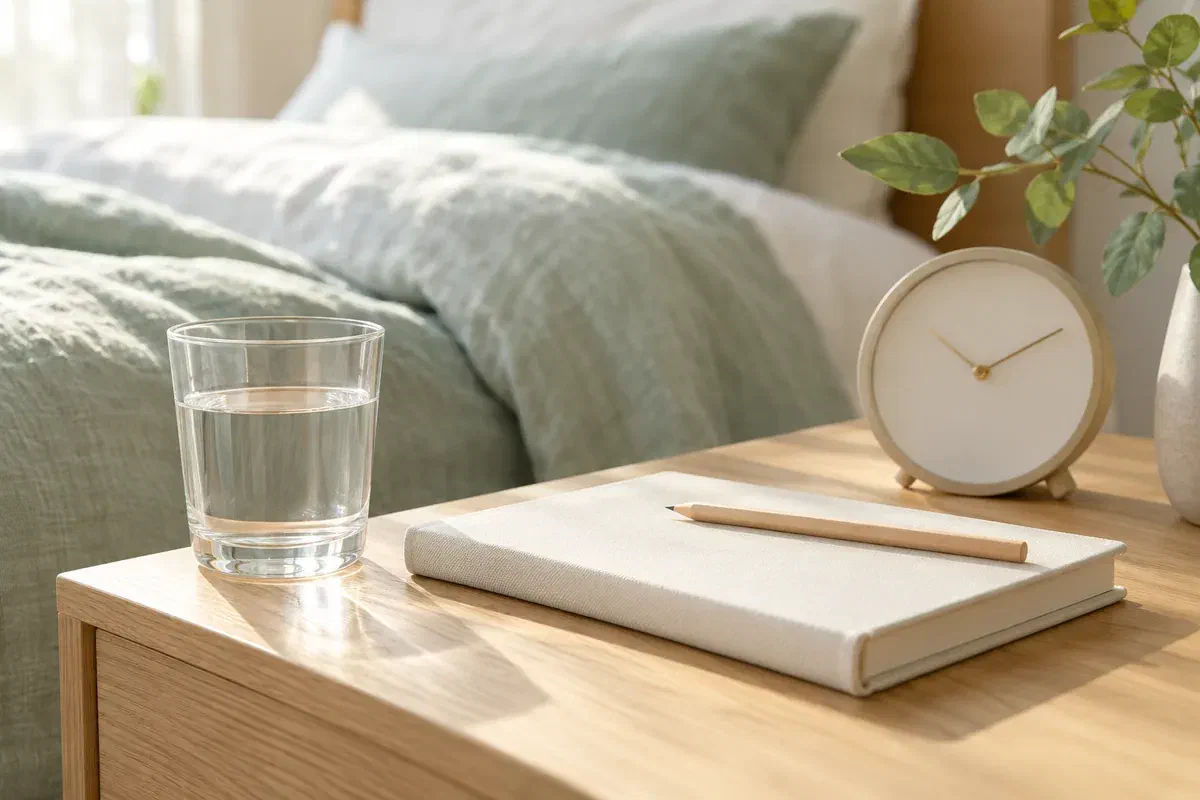
Illustrative morning bedside scene with water, a notebook, and a simple clock
Dates and details

A short timeline is the most useful thing you can bring.

Rather than settling on a cause, jot down what happened and when. Separate out anything to do with sleep, the movement of your jaw, or a single tooth.

When the soreness began and how mornings feel now

Write down roughly when it started and what else changed around then. Describe where it aches and whether breakfast relieves it, leaves it alone, or makes it worse, and note one side or both and any limit on opening. The dentist reads this alongside the examination.

Recent dental work, tooth symptoms, or a guard

A new filling or crown, sensitivity, pain when biting, or a chipped tooth can be relevant, so give approximate dates. If you wear an appliance, recall when it was made and whether the fit has changed. Bring it along without trimming it.

Sleep changes worth reporting to your doctor

If snoring has become louder, someone has noticed you stop breathing, you wake gasping, or daytime sleepiness is heavy, tell your physician as well as us. Sleep disorders cannot be diagnosed from jaw pain. Mention any sleep assessment or therapy already in place.

A jaw that locks for the first time, swelling, fever, or being unable to eat or drink needs prompt advice. If jaw pain comes with a heavy feeling in the chest, breathlessness, sweating, or sudden illness, treat it as a possible emergency and call 911; do not wait for a dental opinion.

Sorting clues from conclusions

Timing is a starting point, not the verdict.

When an ache begins soon after a change, the link can feel certain. The appointment is where your history and the examination are used to test that impression. Ask what the findings support, what remains uncertain, and whether your prescriber or another clinician should weigh in before any treatment decision.

Every element of a plan should have a stated aim. Guarding teeth from damage, easing jaw discomfort, reviewing a medication question, and following up a sleep concern are separate tasks, and some are not dental. Agree which ones the dental plan covers and how progress will be judged.

Patient information: NIDCR — bruxism history, symptoms, and examination · NIDCR — conservative care and limitations of jaw pain treatments

Dental and jaw findings considered together

The dentist checks for relevant tooth damage, examines tender areas, and considers how your jaw functions. Ask whether a finding explains the ache or only needs monitoring. Worn surfaces from the past may tell little about pain that started recently.

A guard only if its role is clear

If an appliance is suggested, ask whether protecting teeth is its main job and how its comfort will be followed. Design depends on your assessment. A general guard is not a sleep apnea therapy and carries no promise that morning soreness will end.

Follow-up that tracks the same details

Choose a few markers, such as how long stiffness lasts, how breakfast feels, and any changes your prescriber makes. Agree when to return and what should bring you back sooner. Your account of everyday life is reviewed with the clinical findings.

Working through it together

Timeline, examination, explanation, plan

There is nothing to arrange beforehand, and a sleep recording is not required. A brief account of when the ache appears, what came before it, and what you have tried so far is the ideal place to start.

  1. Building the timeline

    We map when the soreness began, how long it lasts after waking, and what else changed around that time. Headaches, tooth pain, movement changes, sleep concerns, and appliances are covered. Your medicine list is reviewed, and any question about it is referred to the prescriber.

  2. Checking teeth and jaw

    The dentist examines the relevant teeth, muscles, and joints and asks whether anything brings back the familiar ache. A test or image is proposed only when it would clarify something specific. Let us know if the examination feels uncomfortable.

  3. Discussing what fits and what does not

    You hear what appears to be contributing and whether another dental or medical concern should be checked. If conservative care for muscles or joints is suitable, its purpose is explained. For any appliance, ask about its function, its limits, the fees, and the review it needs.

  4. Next steps, including your prescriber if needed

    Make sure the instructions are clear and you know what change should prompt a call. Agree on a review and what to bring. If your physician or prescriber should be involved, ask who will contact whom and how their view could shape the dental plan.

Back in Puslinch

Keep watching the dates, gently.

Use the measures chosen for you, one at a time where possible. Adding several unreviewed changes at once, including over-the-counter products, makes it hard to tell what is making a difference.

Keep the timeline going

Note when the morning ache begins, roughly how long it lasts, whether eating or opening is affected, and any change in medicines or routine. One line a day is enough. You do not need to clench or stretch the jaw to see how it feels.

Follow appliance instructions

Wear and clean a recommended guard as directed and bring it to your review. If it causes pain, take it out and call the clinician who made it. Do not grind or trim it at home, and pain is not a sign it is working.

Let each clinician know what the others advised

Pass on any new medical findings, medication changes, or sleep treatment to us, and tell your prescriber about dental advice. Keep taking prescribed medicine and using prescribed sleep therapy unless the prescriber says otherwise. Check with both sides if advice seems to clash.

Where things may go

Dental care, jaw care, and the questions for your doctor

A sore jaw on waking can lead to more than one type of care. Ask which part of the examination each suggestion is based on, and whether it is dental treatment, symptom relief, or something for another clinician.

When dental findings explain part of the ache

Treating a tooth that is contributing

A tooth that is damaged or otherwise unhealthy may need its own treatment, including a check of recent dental work. Ask which symptoms it should help and whether a jaw concern remains. A guard does not replace investigating a painful tooth.

When a reversible plan suits the assessment

Conservative jaw care, with protection if needed

Education and other suitable measures are discussed, and an appliance is considered when indicated. Its effect is reviewed rather than assumed. Permanently changing tooth surfaces or the bite is not where care usually starts for unexplained morning pain.

When the history points to a medical question

A prescriber, physician, or specialist

A possible medication link, sleep breathing symptoms, or ongoing unexplained pain may need input outside dentistry. Ask what the referral would explore and who will coordinate. A sleep condition needs its own diagnosis and is not identified from jaw pain on waking.

Patient information: NHLBI — evaluation and diagnosis of sleep apnea

Questions from Puslinch

Medicines, timing, and jaw pain

These may help you plan for the visit. Your care depends on your own history, the examination, and whether a tooth, jaw, or sleep concern needs attention.

(905) 876-4488
Can certain medicines be linked to clenching or grinding?
Some medicines have been associated with bruxism in some people, which is why the dentist asks about them. A link in timing does not prove cause. Bring a current list, and discuss any concerns about a medicine with the person who prescribed it.
Should I pause my new medicine to see if the jaw pain improves?
No. Do not stop or change prescribed treatment on your own. Speak with your prescriber about the symptom and its timing. The dentist can share dental findings that may help that conversation.
Does over-the-counter pain relief belong on my medicine list?
Yes. Include pain relievers, supplements, and anything else you take regularly or occasionally, with approximate dates. A complete list gives the clearest picture during the history.
Could a new filling be the reason my jaw is sore in the morning?
It is worth mentioning any recent dental work. A restoration that feels high or different can be checked during the examination. The dentist will explain whether it seems related or whether something else is more likely.
What if my doctor and dentist give different advice?
Ask each to explain what their recommendation is for. Dental care and medical care may address different parts of the problem, and with your permission the clinicians can coordinate. Avoid changing prescribed treatment until it is clarified.
Is one trip from Puslinch usually enough to get started?
Often the first appointment covers the history, examination, and initial plan, with a review later. Bringing your medicine list, any guard, and your timeline helps make that first visit as complete as possible.
Morning jaw pain care for Puslinch

Bring your list and your dates.

Arrange an assessment at our Bronte Street practice by calling (905) 876-4488. Your medicine list, any guard you wear, and a few notes on when things changed will help us explain the findings and agree on a reasonable next step.

Causes vary, as do the suitability of appliances, how people respond, and the need for medical or specialist input. Keep online forms and email for enquiries that are not urgent.

Visit Milton Dental Clinic
Unit 1, 342 Bronte St. S, Milton, ON L9T 5B7
Get directions Clinic hours
Monday–Thursday
11am–7pm
Friday–Sunday
By appointment only

Areas we serve

  • Milton
  • Oakville
  • Mississauga
  • Georgetown
  • Halton Hills
  • Acton
  • Campbellville
  • Brampton
  • Burlington
  • Puslinch
  • Rockwood
  • Erin
  • Caledon
  • Etobicoke
  • Old Milton
  • Bronte Meadows
  • Timberlea
  • Dorset Park
  • Dempsey
  • Clarke
  • Beaty
  • Coates
  • Harrison
  • Scott
  • Willmott
  • Ford
  • Bowes
  • Cobden
  • Walker
  • Mountain View
  • Milton Heights
  • Hawthorne Village
  • Valley View
  • Fallingbrook
  • Nassagaweya
  • Trafalgar
  • Esquesing
  • Nelson
  • Brookville
  • Moffat
  • Glen Williams
  • Norval
  • Limehouse
  • Stewarttown
  • Ashgrove
  • Hornby
  • Silver Creek
  • Speyside
  • Scotch Block
  • North Oakville
  • River Oaks
  • Glen Abbey
  • West Oak Trails
  • Palermo
  • Bronte Creek
  • College Park
  • Joshua Creek
  • Uptown Core
  • Preserve
  • Iroquois Ridge
  • Lisgar
  • Meadowvale
  • Meadowvale Village
  • Churchill Meadows
  • Erin Mills
  • Central Erin Mills
  • Streetsville
  • East Credit
  • Creditview
  • Heartland
  • Sheridan
  • Mount Pleasant
  • Credit Valley
  • Huttonville
  • Churchville
  • Springbrook
  • Northwest Brampton
  • Bram West
  • Fletcher's Meadow
  • Fletcher's Creek South
  • Alton Village
  • Orchard
  • Millcroft
  • Headon Forest
  • Tansley
  • Brant Hills
  • Tyandaga
  • Kilbride
  • Lowville
  • Aberfoyle
  • Morriston
  • Arkell
  • Hillsburgh
  • Freelton
  • Carlisle
  • Waterdown
  • Flamborough
  • Mountsberg

How can we help?

Milton Dental Clinic

Have a question about your smile? Choose the option that works best for you.

For urgent dental concerns, please call.
Messages are reviewed during clinic hours.