

Illustrative patient discussing a dental appliance with a clinician
Specialized Care

Nightguards for Teeth Grinding in Campbellville

A nightguard only helps if it survives daily life: the morning rinse, the case on the counter, the dog who finds it first. For Campbellville households, we cover assessment and fit, plus the care habits that keep a guard working.

Everyday life with a guard

Protection that has to fit your routine as well as your teeth.

Ask anyone who has owned a nightguard for a while and you will hear about the near misses: the one chewed by the family dog, the one left on a warm windowsill, the one thrown out in a napkin. Those stories are a reminder that the appliance is only as useful as the habits around it.

The appliance itself has a modest, specific purpose. Worn over the teeth during sleep, it places a protective surface between them when grinding is a concern. It is not designed to stop the habit, guarantee relief from jaw soreness, or repair enamel already worn away. Before any guard is made, your dentist examines the teeth and history to see whether protection is the right fit.

From Campbellville, where errands and appointments are often grouped into one trip, it is worth asking early what the plan will involve. Bring any guard you already have, along with its case, and talk about how you clean and store it now. Small details like these often explain why an earlier appliance cracked, warped, or stopped fitting.

Ask about a nightguard
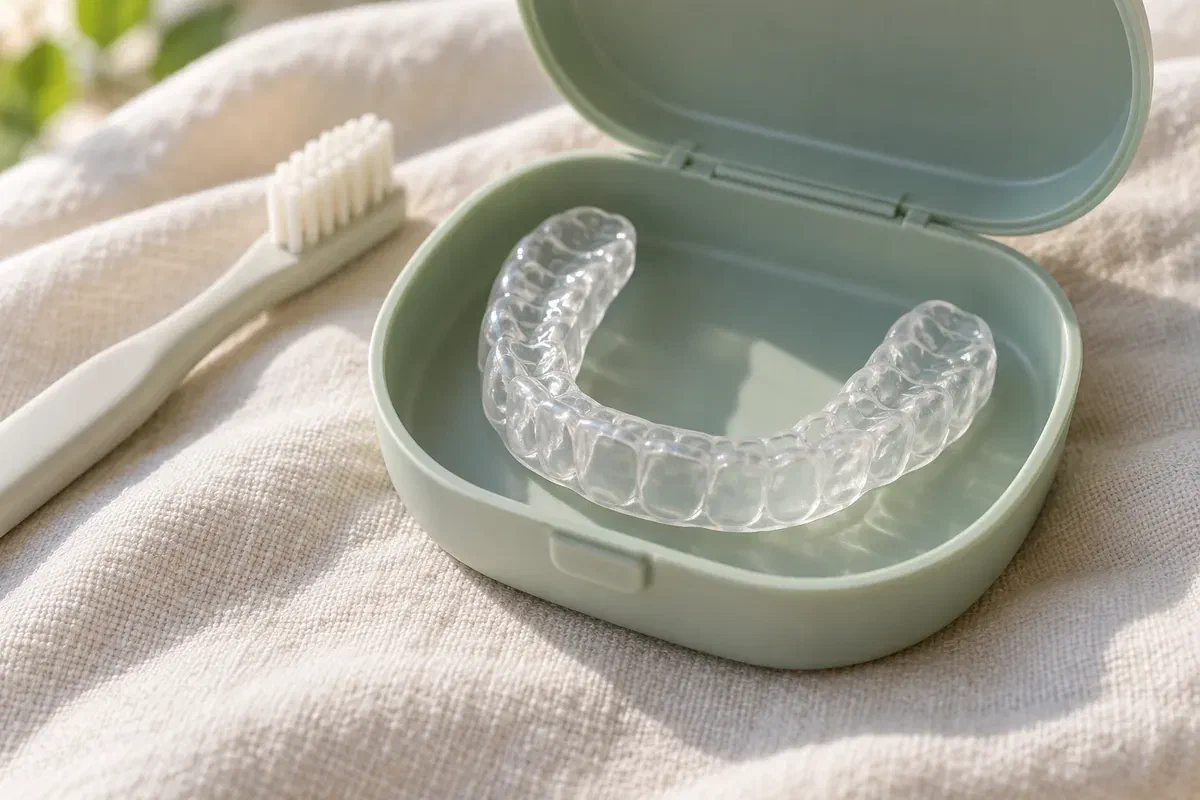
Illustrative translucent dental nightguard in an open storage case beside a toothbrush
Questions to bring to the exam

Is it the teeth, the habit, or the appliance?

A guard is worthwhile when the findings support it. Explain what you have noticed and how you have been caring for any current appliance, and let the dentist sort out which signs are connected.

Chips, flattening, or fragile fillings

Show the dentist teeth that have changed shape, become sensitive, or had repairs more than once. Ask whether the pattern looks active or older and simply needs watching. Any tooth that needs investigation or treatment should be cared for first, not hidden under a guard.

What happens while you sleep and while you work

Grinding someone hears at night and clenching you notice while driving, doing chores, or concentrating are separate pieces of your history. A sleep-time guard leaves daytime habits untouched, so mention both and ask what applies to each.

A guard that has warped, cracked, or loosened

Heat, chewing pets, and accidental drops can all change an appliance. So can dental work. If yours rocks, pinches, causes soreness, or looks distorted, bring it in rather than forcing it on.

A painful tooth, swelling, a jaw that locks, or difficulty eating needs assessment of that specific problem. Slipping in an over-the-counter guard and waiting will not address what is causing it.

Realistic goals

Define what the guard protects, then plan for its upkeep.

The clearest plans start with one simple question: what exactly are we protecting? It may be a set of worn edges, a crown, or teeth that have chipped. Ask what the dentist will compare at future visits and whether any tooth needs repair before records are taken.

Even a well-made appliance needs care, review, and occasionally replacement. Mention anything that could make nightly use difficult, from a gag reflex or tender teeth to stiff hands or a busy early-morning routine. If keeping it clean and safe will be hard, say so; the team can help you plan around it.

Patient information: NIDCR — limitations and review of intraoral appliances for jaw pain

A design matched to your examination

Talk through which teeth the appliance will cover and what it will be made of, and ask why that design suits your mouth. If restorative work is planned, ask whether it should come first. A guard shaped around a tooth that is about to change may soon stop fitting.

Clear limits around pain and sleep

Tooth protection does not guarantee less jaw pain or fewer headaches. It is also different from an oral appliance used in treating sleep apnea. If snoring or pauses in breathing have been noticed at home, mention them so a suitable assessment can be discussed.

Reviews that include the appliance's condition

Agree on when the guard should come back for a look and which changes justify an earlier appointment. The team checks it for cracks, distortion, and fit, and asks how wearing it has been going for you.

Getting a guard made

Four stages, with care instructions built in.

How many visits you need depends on your teeth and the appliance under consideration. Ask early what the plan includes so you can group appointments where possible.

  1. Explain the concern and be examined

    Describe your symptoms, any grinding others have heard, your dental work, and earlier appliances, including how they were stored and cleaned. The dentist examines the teeth and considers whether another problem needs attention. Ask what supports protection and whether watching first is reasonable.

  2. Choose the design and take records

    If a guard is suitable, discuss the coverage, the material, fees, and how it will fit into your routine. Scans or impressions are taken to make it. Mention treatment planned with another provider so timing reflects any change in tooth shape.

  3. Fitting, handling, and a care lesson

    At the fitting, the clinician checks how the guard sits and has you practise inserting and removing it. Ask to see the cleaning method and storage routine in person. Mention any pressure, rough edges, or trouble seating it before you leave.

  4. Review the guard and the routine

    Agree on a follow-up and on what would justify a sooner visit. Bring the appliance and its case to routine dental appointments. Reviews look at your experience and symptoms as well as wear, damage, and fit.

Daily care

Rinse, clean, case, and keep it cool.

Your appliance comes with instructions for its specific material, and they take priority. If anything is unclear, ask the team to show you or to write the steps down.

A cleaning routine that suits the material

Brush your teeth before bed, then clean the guard in the morning using the method you were shown. Some products and household cleaners can harm certain materials, so check before using one. Keep water lukewarm rather than hot, and clean the case regularly too.

Storage that keeps pets and heat away

Dogs in particular seem drawn to appliances, so keep the guard in its closed case and out of reach. Avoid sunny windowsills, car dashboards, and anywhere it could be crushed. A napkin or tissue is not storage. Ask how to pack it for travel.

When something is wrong, stop and call

Pain while wearing the guard means taking it out and phoning the clinic. Resist home fixes such as filing, heating, bending, or gluing. Cracks, chewed edges, a lingering bite change, or difficulty seating it need a professional look.

Patient information: United Lincolnshire Hospitals — bite guard care instructions

Possible paths

Watching, protecting, or looking further.

Discuss what each choice is likely to accomplish given your findings. Your teeth, your symptoms, and whether you can care for and wear a guard realistically should guide the decision.

When the findings support observation

A planned recheck instead of a guard for now

If wear appears stable, a scheduled review may be sensible before anything is made. Ask what will be compared next time and which change would alter the advice. Monitoring should have both a purpose and a date.

When protection has a defined role

A fitted guard and the habits to keep it working

Talk through a suitable design, its limits, and the follow-up and daily care it needs. The guard protects surfaces while other contributing factors are addressed. Fillings, routine hygiene visits, and assessment of new symptoms remain separate parts of your care.

When a symptom needs its own plan

Separate attention for another concern

Ongoing jaw symptoms, a tooth that hurts, or signs of breathing problems during sleep may need further investigation. The dentist can suggest which professional is best placed for each. A guard should not delay a diagnosis or stand in for prescribed medical sleep treatment.

Care and handling questions

Practical answers about living with a nightguard.

Bring your questions, your current guard, and its case. The advice should match your appliance's material and your teeth, and cover what to do if it ever becomes uncomfortable.

(905) 876-4488
My dog chewed my nightguard. Can I still wear it?
Please stop using it. Chewed areas can be sharp, and the fit may have changed. Bring it in so the team can see whether it is still usable or should be replaced. Keep any loose pieces in the case, and try not to leave the next one where a pet can reach it.
Can I soak my guard in mouthwash or bleach?
Do not assume any product is safe. Some can damage certain materials or leave residue. Use the method you were shown, and ask the clinic before trying anything else.
Why does my nightguard look cloudy?
Discolouration or cloudiness can have several causes, including the cleaning method or buildup on the surface. Mention it at your next visit, and bring the guard so the team can check it. Changing your cleaning routine on your own, especially with harsh products, could make the problem worse.
Does it matter where I keep my guard during the day?
Yes. Heat can distort some materials, and pets or heavy objects can damage it. Keep it in its case, somewhere cool and out of reach. Choosing one regular spot, such as beside your toothbrush, also makes it less likely to go missing between nights.
Is a broken guard still giving my teeth some protection?
Do not rely on it. A crack or missing piece can create sharp edges and change how it seats. Stop wearing it and have it reviewed rather than gluing it at home.
Can my guard review happen on the same trip as other Campbellville errands?
Ask the front desk about appointment times that suit you. The clinic is open Monday to Thursday from 11am to 7pm, with Friday to Sunday by appointment only, so a review can often be booked around your other plans.
Campbellville nightguard visits

Bring the guard, the case, and your routine.

To book, call (905) 876-4488. At our Bronte Street practice we will look at your teeth and any appliance you use, talk through how you clean and store it, and discuss planned dental work, protection, and follow-up.

Appliance suitability, design, how long it lasts, and symptom response vary from person to person. A grinding guard is not a diagnosis or treatment for a sleep-related breathing disorder.

Visit Milton Dental Clinic
Unit 1, 342 Bronte St. S, Milton, ON L9T 5B7
Get directions Clinic hours
Monday–Thursday
11am–7pm
Friday–Sunday
By appointment only

Areas we serve

  • Milton
  • Oakville
  • Mississauga
  • Georgetown
  • Halton Hills
  • Acton
  • Campbellville
  • Brampton
  • Burlington
  • Puslinch
  • Rockwood
  • Erin
  • Caledon
  • Etobicoke
  • Old Milton
  • Bronte Meadows
  • Timberlea
  • Dorset Park
  • Dempsey
  • Clarke
  • Beaty
  • Coates
  • Harrison
  • Scott
  • Willmott
  • Ford
  • Bowes
  • Cobden
  • Walker
  • Mountain View
  • Milton Heights
  • Hawthorne Village
  • Valley View
  • Fallingbrook
  • Nassagaweya
  • Trafalgar
  • Esquesing
  • Nelson
  • Brookville
  • Moffat
  • Glen Williams
  • Norval
  • Limehouse
  • Stewarttown
  • Ashgrove
  • Hornby
  • Silver Creek
  • Speyside
  • Scotch Block
  • North Oakville
  • River Oaks
  • Glen Abbey
  • West Oak Trails
  • Palermo
  • Bronte Creek
  • College Park
  • Joshua Creek
  • Uptown Core
  • Preserve
  • Iroquois Ridge
  • Lisgar
  • Meadowvale
  • Meadowvale Village
  • Churchill Meadows
  • Erin Mills
  • Central Erin Mills
  • Streetsville
  • East Credit
  • Creditview
  • Heartland
  • Sheridan
  • Mount Pleasant
  • Credit Valley
  • Huttonville
  • Churchville
  • Springbrook
  • Northwest Brampton
  • Bram West
  • Fletcher's Meadow
  • Fletcher's Creek South
  • Alton Village
  • Orchard
  • Millcroft
  • Headon Forest
  • Tansley
  • Brant Hills
  • Tyandaga
  • Kilbride
  • Lowville
  • Aberfoyle
  • Morriston
  • Arkell
  • Hillsburgh
  • Freelton
  • Carlisle
  • Waterdown
  • Flamborough
  • Mountsberg

How can we help?

Milton Dental Clinic

Have a question about your smile? Choose the option that works best for you.

For urgent dental concerns, please call.
Messages are reviewed during clinic hours.