

Illustrative patient discussing a dental appliance with a clinician
Specialized Care

Nightguards for Teeth Grinding in Etobicoke

A nightguard usually involves an assessment, records, a fitting, and review. Travelling from Etobicoke, it pays to plan those steps well, bring what you need the first time, and know which problems warrant care closer to home.

Making the longer trip worthwhile

Fewer visits, better prepared, clearer goals.

When the clinic is not around the corner, every appointment should move things forward. For a nightguard, that starts with knowing what the appliance is for. It sits over the teeth during sleep and gives them a protective surface to meet. It is not meant to switch off grinding, promise relief from jaw pain, or replace enamel that has already worn away.

The first visit is about deciding whether a guard has a purpose for you. Arrive with the details that help: when you first noticed wear or soreness, whether anyone has heard grinding, which teeth have had work, and any appliance you have tried. The more complete that picture is, the more the dentist can settle in one sitting.

Coming from Etobicoke, ask early how many appointments are likely and whether some steps can be combined with other care you need. It is also worth agreeing, before you leave, on what kind of problem should be seen promptly near home rather than waiting for your next trip west.

Plan your nightguard visits
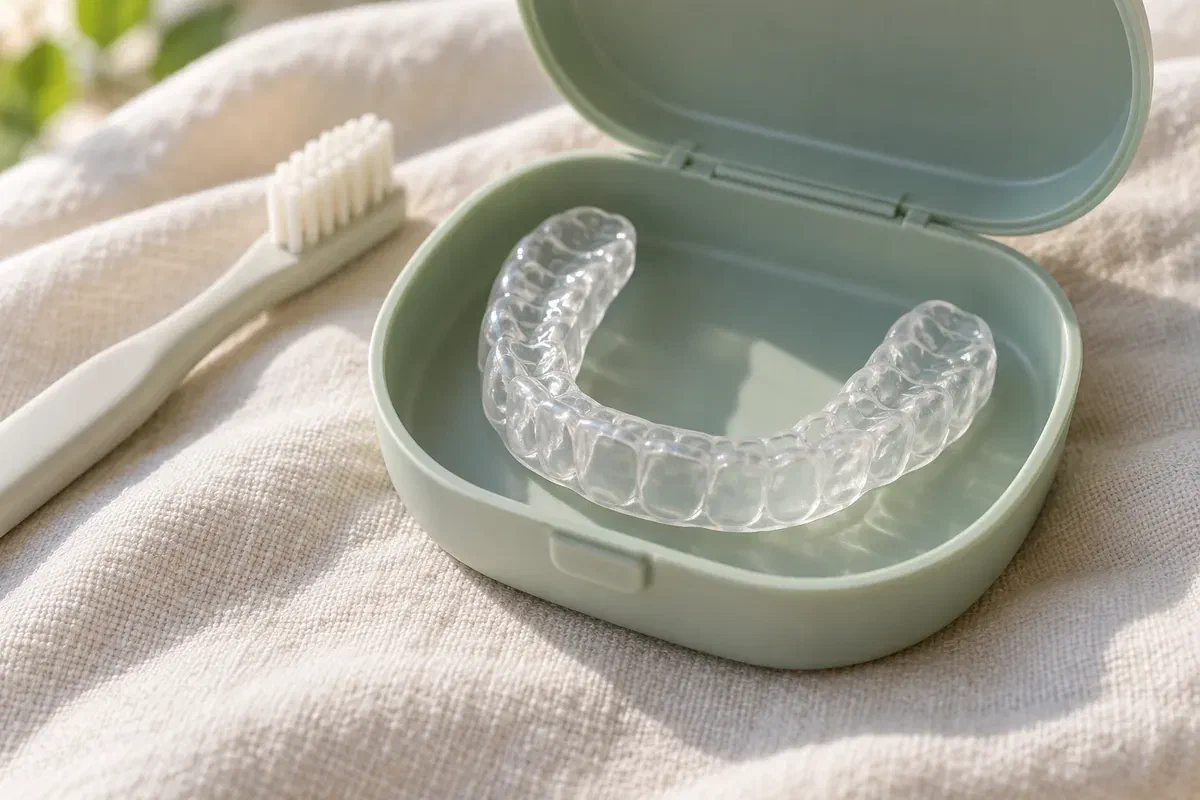
Illustrative translucent dental nightguard in an open storage case beside a toothbrush
Before you book

Which signs belong in the first conversation?

A guard needs a reason the examination can support. Gather what you have noticed beforehand, and keep an open mind that a chipped edge and a stiff jaw may point in different directions.

Wear, chips, or restorations that keep failing

List the teeth that look shorter, feel sensitive, or have needed repeated repairs. The dentist can judge whether the damage seems current or older and simply worth monitoring. If a tooth needs further testing or treatment, plan that work alongside any appliance rather than after it.

Clenching while awake, grinding while asleep

Note whether you notice your jaw tensing during the day and whether a partner hears grinding at night. These are separate details. An overnight guard does not address waking clenching, so ask what other advice applies.

An appliance that has started to feel off

If a current guard is loose, tight, sore, or changed after dental work, bring it to the first visit rather than forcing it in. Having it there means its fit can be checked without needing another trip just for that.

Sudden tooth pain, facial swelling, a jaw that locks, or difficulty eating should not wait for a planned visit. Seek prompt care, near home if that is quicker, and do not cover a new problem with an over-the-counter guard.

A focused plan

Know the target before the records are taken.

A well-organized plan gives the guard a specific role. Ask which teeth or restorations it is protecting, what the dentist will look for at review, and whether any repair should happen first. Sorting those questions out at the start means fewer surprises and fewer extra visits later on.

Because a custom appliance is fitted and followed up, practical barriers matter. Mention anything that might make nightly wear hard, such as gagging, sensitivity, or difficulty with small items. If a design will be hard to live with, it is better to learn that before it is made than after another drive.

Patient information: NIDCR — limitations and review of intraoral appliances for jaw pain

A design that fits your current mouth

Review what the guard will cover, which material is suggested, and how it should sit given your examination. If crowns or fillings are coming up, ask whether they should be completed first. A guard shaped around a tooth that is about to change may need to be redone.

Realistic about pain and sleep

Protecting tooth surfaces does not guarantee relief from jaw pain or headaches. A grinding guard is also different from an appliance prescribed as part of sleep-apnea care. If breathing during sleep worries you, mention it so the appropriate assessment can be discussed.

Reviews scheduled with travel in mind

Ask how often the guard should be checked and whether reviews can line up with your regular dental visits. Learn which changes mean calling sooner. Each review looks at the appliance, its fit, and how you are finding it.

The usual sequence

What each appointment is meant to achieve.

Your dental condition and the appliance under discussion determine how many visits are needed. Ask for an outline at the first appointment so you can plan travel and time off around it.

  1. Assessment that covers everything at once

    Bring your history, symptom notes, past appliances, and details of dental work done elsewhere. The dentist examines the relevant teeth and considers whether another problem needs care. Ask what supports a guard and whether a period of monitoring would be reasonable instead.

  2. Records and design in one step where possible

    If a guard is suitable, talk about which teeth it will cover, the material, likely fees, and how you will wear it. Scans or impressions are taken to make it. Mention any planned treatment with another provider so records reflect the teeth the guard will actually sit on.

  3. A thorough fitting

    The clinician checks the seating and has you practise putting the guard in and taking it out. Point out pressure, rough edges, or trouble seating it while you are still in the chair, since that is easier than calling after the drive home.

  4. Follow-up that suits your schedule

    Agree on when to return and what would justify a sooner call. Bring the appliance to regular dental visits. Reviews cover your experience and any change in symptoms, as well as the condition of the guard itself.

Care between visits

Simple habits that reduce the need for extra trips.

Materials differ, so follow the instructions given for your guard. If you are unsure about cleaners, storage, or wear, ask for a demonstration during the fitting so you do not have to return just for that.

Clean it the recommended way

Brush your teeth before wearing the guard and clean it as directed after removing it. Use only products confirmed as safe for its material, not whichever denture cleaner or household product is handy. Avoid hot water that could warp it, and keep the case clean too.

Protect it from damage

Keep the appliance in its case and away from heat, pets, and places it could be crushed. A tissue on the nightstand is a common way to lose one. Ask how to store it when travelling or when you are not using it for a while.

Act on pain or a changed fit

Stop wearing the guard if it hurts and call the clinician who made it. Do not trim, bend, heat, or glue it. A crack, sharp spot, lasting bite change, or trouble seating it should be reviewed rather than patched up at home.

Patient information: United Lincolnshire Hospitals — bite guard care instructions

Weighing the alternatives

Pick the route that matches the findings and your calendar.

Discuss what each approach is likely to achieve. The best choice reflects your teeth, symptoms, and whether you can realistically wear and maintain a guard, rather than a standard answer for everyone.

When observation is reasonable

Monitor and reassess at a later visit

If the wear looks stable, a planned recheck may be more sensible than an appliance right away, and it can often be paired with routine care. Ask what will be compared and which change would alter that advice.

When protection has a clear purpose

A professionally made guard with planned follow-up

When wear or at-risk dental work justifies it, the dentist explains the proposed appliance, the things it cannot fix, and how reviews will be timed around your travel. It covers tooth surfaces at night; fillings, cleanings, and any fresh symptom are handled on their own.

When a separate concern needs attention

Another assessment for the tooth, jaw, or sleep

One painful tooth, persistent jaw symptoms, or signs of sleep-disordered breathing may need further investigation, sometimes by another clinician closer to you. Ask who is the right person for each concern. Waiting for a guard is never a reason to put off a diagnosis, and it is no substitute for sleep treatment a physician has prescribed.

Planning questions

Questions to settle before the first appointment.

Write down your questions and bring any appliance you already own. The advice should fit your teeth and the guard being considered, and explain what to do if it becomes painful between visits.

(905) 876-4488
Can the assessment and records happen on the same day?
Sometimes, depending on what the examination finds and whether other treatment should come first. Ask when you book, and mention that you are travelling, so the team can tell you what to expect.
What should I bring to my first nightguard appointment?
Bring any current or old guard, a list of medications, notes on your symptoms, and details of dental work done elsewhere. Recent records from another dentist can also be helpful if available.
If my guard cracks between visits, should I keep using it?
No. Stop wearing a cracked or sharp guard and contact the clinic for advice. Avoid repairing it with glue, and keep the pieces in the case to bring to your review.
Who should I see if a tooth suddenly hurts while I am waiting for the guard?
A painful tooth needs assessment soon, and it may be more practical to see a dentist near home. Let our team know afterward so any treatment can be considered when the guard is designed or fitted.
Will wearing the guard cure my jaw pain?
That cannot be promised. The guard’s defined purpose is protecting teeth. Ask whether your jaw symptoms need separate assessment, and report any pain that starts or worsens while wearing it.
How do I keep the number of trips from Etobicoke down?
Ask for a plan outline at the first visit, bring everything relevant, and raise any fitting concerns before leaving the chair. Reviews can often be timed with your routine dental appointments.
Etobicoke nightguard planning

Come prepared, and leave with a clear plan.

To book an assessment, phone (905) 876-4488. Our Bronte Street practice can outline the likely visits, so bring any appliance, notes on planned dental work elsewhere, and your questions about protection, fit, and follow-up.

How well a guard suits you, its design, how long it lasts, and how symptoms respond all vary. Possible sleep apnea or other breathing disorders during sleep need their own diagnosis and prescribed treatment.

Visit Milton Dental Clinic
Unit 1, 342 Bronte St. S, Milton, ON L9T 5B7
Get directions Clinic hours
Monday–Thursday
11am–7pm
Friday–Sunday
By appointment only

Areas we serve

  • Milton
  • Oakville
  • Mississauga
  • Georgetown
  • Halton Hills
  • Acton
  • Campbellville
  • Brampton
  • Burlington
  • Puslinch
  • Rockwood
  • Erin
  • Caledon
  • Etobicoke
  • Old Milton
  • Bronte Meadows
  • Timberlea
  • Dorset Park
  • Dempsey
  • Clarke
  • Beaty
  • Coates
  • Harrison
  • Scott
  • Willmott
  • Ford
  • Bowes
  • Cobden
  • Walker
  • Mountain View
  • Milton Heights
  • Hawthorne Village
  • Valley View
  • Fallingbrook
  • Nassagaweya
  • Trafalgar
  • Esquesing
  • Nelson
  • Brookville
  • Moffat
  • Glen Williams
  • Norval
  • Limehouse
  • Stewarttown
  • Ashgrove
  • Hornby
  • Silver Creek
  • Speyside
  • Scotch Block
  • North Oakville
  • River Oaks
  • Glen Abbey
  • West Oak Trails
  • Palermo
  • Bronte Creek
  • College Park
  • Joshua Creek
  • Uptown Core
  • Preserve
  • Iroquois Ridge
  • Lisgar
  • Meadowvale
  • Meadowvale Village
  • Churchill Meadows
  • Erin Mills
  • Central Erin Mills
  • Streetsville
  • East Credit
  • Creditview
  • Heartland
  • Sheridan
  • Mount Pleasant
  • Credit Valley
  • Huttonville
  • Churchville
  • Springbrook
  • Northwest Brampton
  • Bram West
  • Fletcher's Meadow
  • Fletcher's Creek South
  • Alton Village
  • Orchard
  • Millcroft
  • Headon Forest
  • Tansley
  • Brant Hills
  • Tyandaga
  • Kilbride
  • Lowville
  • Aberfoyle
  • Morriston
  • Arkell
  • Hillsburgh
  • Freelton
  • Carlisle
  • Waterdown
  • Flamborough
  • Mountsberg

How can we help?

Milton Dental Clinic

Have a question about your smile? Choose the option that works best for you.

For urgent dental concerns, please call.
Messages are reviewed during clinic hours.