

Illustrative patient discussing bite contacts with a clinician beside a dental cast
Specialized Care

Occlusal Adjustment

If a tooth or new restoration seems to meet before the others, a bite assessment can help clarify why. Our Milton team can discuss whether a limited adjustment is appropriate, what surface would change, and whether another explanation needs investigation first.

A closer look at occlusal adjustment

Understand the contact before changing the surface.

Occlusion describes how the upper and lower teeth contact one another. An occlusal adjustment changes a selected contacting surface, sometimes on a restoration, when the examination identifies a specific reason. The term should not be taken to mean that every uncomfortable bite needs extensive reshaping or that tooth surfaces can be changed without consequences.

A familiar example is a new filling or crown that seems to touch first when you close. That sensation deserves a review, but discomfort on biting can have other explanations too. The dentist needs to examine the tooth and relevant contacts before deciding whether changing a surface would address the problem.

At Milton Dental Clinic, ask what the examination shows and exactly what an adjustment would involve. Clarify whether the proposed change affects restoration material or natural tooth structure. You should understand the purpose, limits, and alternatives before consenting to any irreversible change.

Request a review of your bite
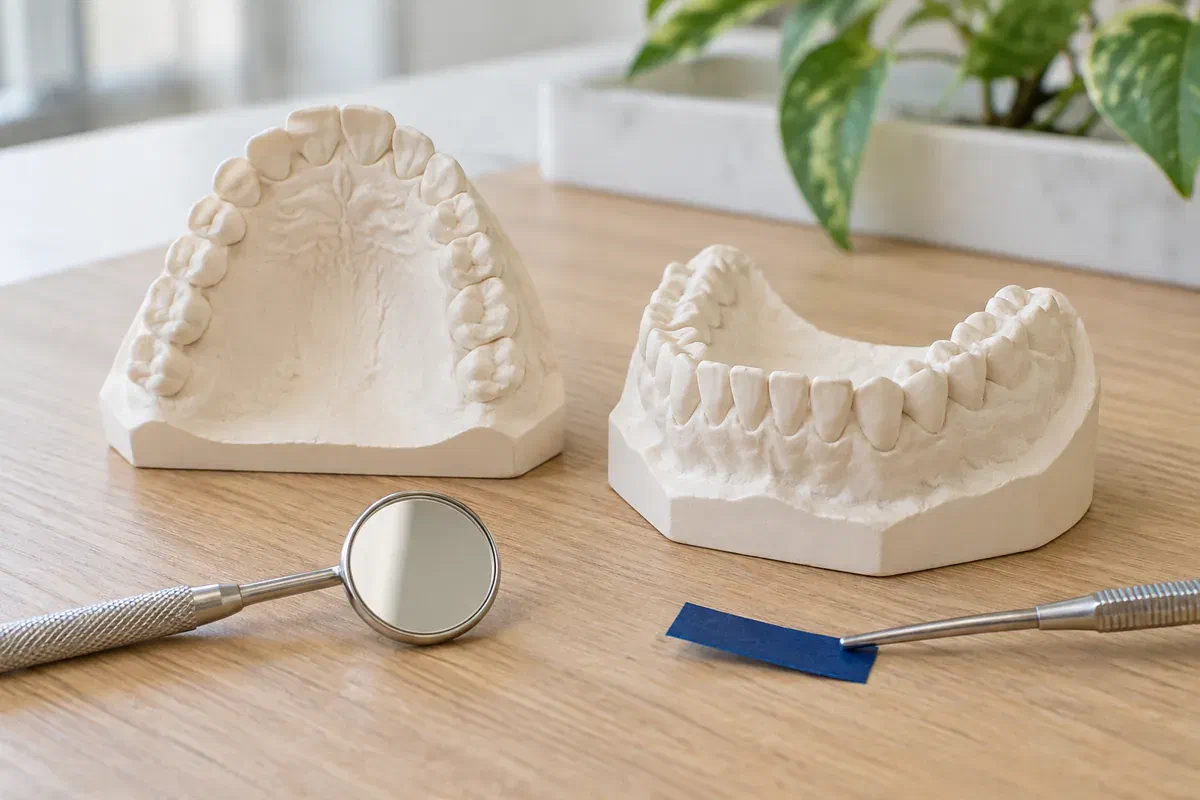
Illustrative dental casts beside a mirror and articulating-paper holder
When contacts feel different

Describe the change without trying to find the answer by biting harder.

Explain when the sensation began and whether it followed dental treatment. A clear account helps distinguish a localized contact concern from another tooth problem or a broader change in jaw comfort.

A new restoration seems to touch first

Tell the team which tooth was treated and when you first noticed the contact. Explain whether it happens during ordinary closing or only in a particular movement. Contact the treating dentist for review rather than hoping repeated heavy biting will wear the surface into place.

Pain when biting or releasing pressure

Describe the location and pattern of discomfort, including sensitivity or pain at other times. Do not assume that a painful bite always means a high filling. A crack, a problem inside the tooth, or another condition may need assessment before a contact is altered.

A broader or changing sense of an uneven bite

Mention jaw pain, locking, recent injury, or a change in an appliance as well as the bite sensation. Explain whether the concern is consistent or varies. The examination should consider these details rather than use a broad reshaping plan as the default response.

A new uneven bite after treatment should be reviewed. Increasing pain, swelling, fever, or difficulty opening also needs prompt advice and may require a different response from a simple restoration adjustment.

What the assessment should establish

Make the proposed change specific enough to understand and review.

A useful explanation identifies the surface, the finding, and the expected benefit. Ask the dentist to connect the recommendation to the complaint you described. If the contact finding does not adequately explain the symptoms, further investigation may be more appropriate than repeatedly removing material in search of a comfortable feeling.

It is also important to distinguish a limited correction to a restoration from changing many natural teeth. These decisions have different implications. Ask how much treatment is being proposed, why it is necessary, and what alternatives exist if the examination has not established a clear target.

A focused description of the contact concern

The dentist may use examination and contact-marking materials to understand how the teeth meet. Ask what the combined findings mean. A visible mark needs clinical interpretation; its presence alone is not a complete explanation of pain or a reason to reshape every marked surface.

Consent that identifies what will be altered

Clarify whether the procedure changes a filling, crown, or natural tooth. Discuss relevant risks, including whether further restorative work could become necessary. Natural tooth structure does not grow back after removal, so the reason and extent should be understood before treatment begins.

A plan for symptoms that do not settle

Ask when to report persistent discomfort and what reassessment would involve. Continued symptoms may mean the original explanation was incomplete or another issue remains. A review should revisit the findings rather than assume that more adjustment is always the next step.

Assess, explain, and recheck

A limited procedure still needs a clear diagnosis and informed agreement.

The dentist should explain the proposed approach in a way that lets you ask questions. If you are uncertain whether natural tooth structure would be changed, clarify that before agreeing to treatment.

  1. Review the timing and examine the affected tooth

    Describe the original treatment, the first change you noticed, and any associated pain or sensitivity. The clinician assesses relevant tooth and restoration findings. Additional tests may be appropriate when the symptoms raise a question that a contact check alone cannot answer.

  2. Evaluate the bite contacts in context

    The dentist observes how the teeth meet and may use marking materials during selected movements. Explain whether the examination reproduces the familiar sensation. The findings should be interpreted alongside your history, not treated as a stand-alone map that automatically dictates material removal.

  3. Discuss and perform only the agreed change

    If adjustment is appropriate, confirm the target surface and intended benefit. Ask about alternatives and relevant risks before the procedure. The clinician can explain how the surface will be finished and checked afterward, with the approach depending on the material and clinical circumstances.

  4. Recheck contact and agree on follow-up

    Tell the dentist how ordinary closing feels after the procedure without repeatedly biting as hard as possible. Ask what symptoms need monitoring and when to call. If another restoration or tooth problem remains, confirm the separate care needed rather than considering the entire concern resolved.

After a bite review or adjustment

Observe ordinary function and report a persistent change.

Advice depends on what was assessed or treated. Follow any instructions for the original filling, crown, or other procedure as well as those given during the bite review.

Avoid repeatedly stress-testing the tooth

Do not keep clenching, tapping, or biting hard objects to check whether the contact has changed. Describe your experience during normal meals and gentle closing instead. If you cannot bite comfortably, contact the team for advice rather than trying to force the tooth to adapt.

Keep the original treatment plan in view

A contact adjustment does not complete every restorative or root canal plan. Ask whether a temporary restoration still needs replacement or another appointment remains necessary. The more comfortable bite should not lead to an essential final restoration being postponed without advice.

Explain exactly what remains or has changed

If discomfort continues, report whether it is the same symptom, a new sensitivity, or a different contact sensation. Mention swelling or spontaneous pain promptly. This helps the clinician reassess the problem rather than assume that the original diagnosis and treatment target are unchanged.

Choosing the appropriate response

An uncomfortable bite does not always call for surface removal.

The examination may support a limited correction, further investigation, or care directed at another source. Ask which route fits the findings and what would change the recommendation.

When a specific finding supports adjustment

A limited correction to an identified restoration contact

The dentist may discuss altering and finishing a defined area of restoration material. Ask whether the restoration remains suitable afterward and what outcome is expected. This is a focused decision about the examined tooth, not a reason to routinely reshape the rest of the mouth.

When another dental explanation needs attention

Further tooth investigation or restorative care

A tooth may need additional assessment or a different restoration if adjustment would not address the problem appropriately. Ask what the tests are intended to clarify. Avoid treating a contact change as a replacement for investigating ongoing tooth pain or structural damage.

When the symptoms involve muscles or joints

Conservative management of a separate jaw concern

Jaw symptoms should be assessed on their own merits. Permanent bite changes are not an evidence-supported routine treatment for temporomandibular disorders and can worsen problems. Discuss reversible care or specialist advice instead of assuming that widespread grinding of teeth is the solution.

Patient information: NIDCR — evidence and cautions concerning occlusal treatments for TMD

Occlusal adjustment questions

Ask what would change before deciding to proceed.

These questions help distinguish a focused restoration review from broader irreversible treatment. The recommendation should relate to the findings in your own examination and the symptoms you have described.

(905) 876-4488
Does a high-feeling new filling always need an occlusal adjustment?
It needs a review before that decision is made. Explain when the sensation began and whether there is pain or sensitivity. The dentist can assess the restoration and tooth to determine whether a limited contact change or another response is appropriate.
Will an occlusal adjustment remove filling material or natural enamel?
That depends on the proposed procedure, so ask explicitly. The dentist should identify the surface and explain the reason, extent, risks, and alternatives. Natural tooth removal is irreversible, and consent should distinguish it from a limited change to a restoration.
Does the darkest articulating-paper mark automatically identify the cause of pain?
No. Contact markings need to be interpreted with the examination and symptom history. Ask how the findings support the recommendation and whether another tooth problem needs investigation. A mark alone should not stand in for a clinical explanation.
Should I keep biting hard to help a high crown wear down?
No. Arrange a review with the treating dentist and describe the sensation during ordinary closing or eating. Repeated heavy biting is not a controlled adjustment method. Do not use a file or another object to change the crown yourself.
Is reshaping my bite a routine treatment for jaw clicking or TMD pain?
No. Permanent changes to teeth or the bite should not be presented as routine treatment for those symptoms. Ask about an appropriate jaw assessment, conservative options, and a second opinion if extensive irreversible treatment is proposed for an unexplained jaw complaint.
What happens if biting still hurts after a contact adjustment?
Contact the dentist for reassessment and describe whether the symptom has changed. Further investigation may be needed rather than additional surface removal. Ask what other explanations are being considered and how the next step would help distinguish them.
Occlusal adjustment assessment in Milton

Explain which contact feels different and when you first noticed it.

Call our Bronte Street practice at (905) 876-4488 to discuss a bite assessment. Tell us about recent fillings, crowns, root canal treatment, or appliance changes so the appointment can focus on the relevant history and findings.

Assessment does not automatically lead to adjustment. The appropriateness, extent, material affected, and expected response depend on individual clinical findings and informed consent.

Visit Milton Dental Clinic
Unit 1, 342 Bronte St. S, Milton, ON L9T 5B7
Get directions Clinic hours
Monday–Thursday
11am–7pm
Friday–Sunday
By appointment only

How can we help?

Milton Dental Clinic

Have a question about your smile? Choose the option that works best for you.

For urgent dental concerns, please call.
Messages are reviewed during clinic hours.