

Illustrative patient discussing bite contacts with a clinician beside a dental cast
Specialized Care

Occlusal Adjustment in Erin

A new night guard, a retainer that suddenly feels tight, or a crown fitted alongside one: any of these can make your teeth meet differently. For households in Erin and Hillsburgh, a bite assessment sorts out whether the teeth, the appliance or something else needs attention before any surface is changed.

Erin: appliances and the bite

The guard, the crown, or the bite itself?

Mornings can be revealing. You take out a night guard or retainer, close your teeth together and something feels unfamiliar. Sometimes that passes within minutes. If it lingers, or arrived with new dental work, the contact deserves a look. The way your teeth touch is called occlusion, and an occlusal adjustment reshapes a single selected surface, frequently a restoration, when an examination finds a specific reason.

Appliances add a layer to the puzzle. A guard made before a crown was placed may no longer fit the same way, and a crown made while a retainer was worn may meet differently without it. Soreness when chewing can also come from a crack, the nerve or the jaw. So the dentist examines the teeth, the restoration and the appliance before suggesting that any tooth surface be changed.

Ask what was found and whether the fix belongs on a tooth, a restoration or the appliance. If a tooth surface is involved, ask whether it is restoration material or natural enamel, and what the alternatives are. An irreversible change should come only after you understand why it is proposed.

Check my bite and appliance
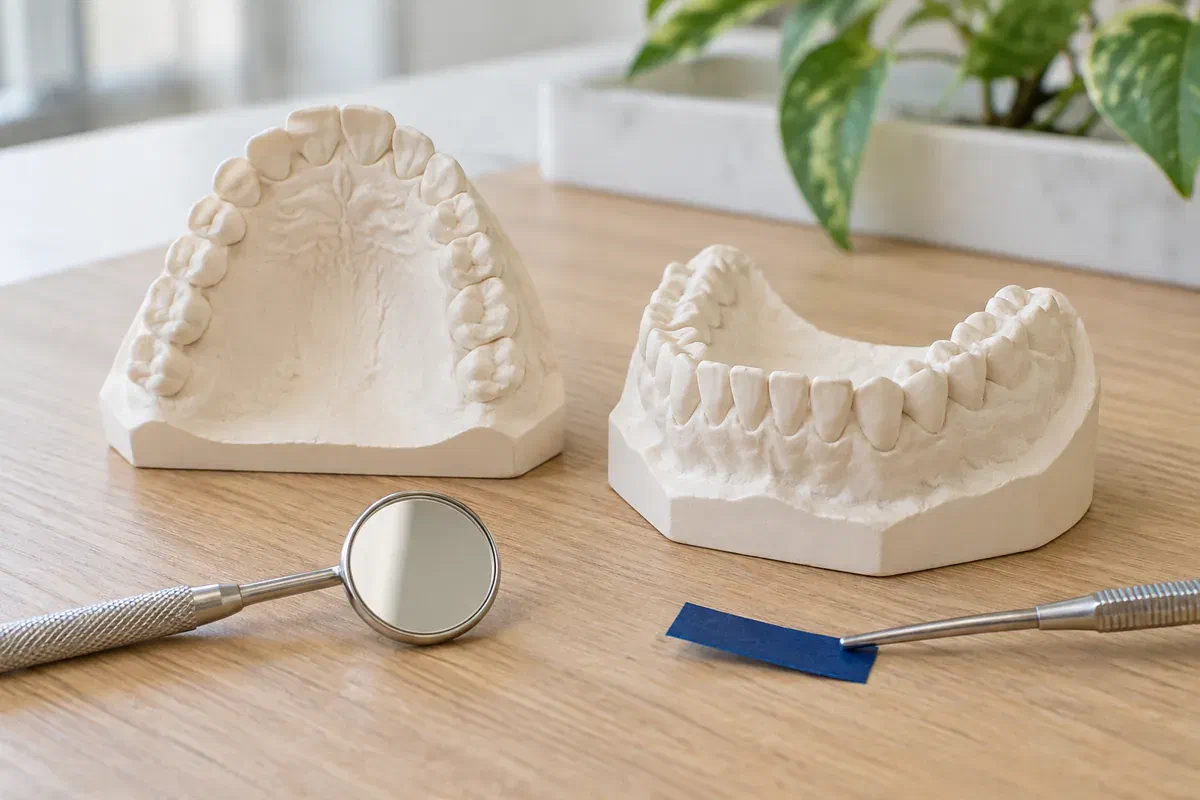
Illustrative dental casts beside a mirror and articulating-paper holder
Clues worth mentioning

Bring the appliance, and describe the timing.

Tell us what changed first: the dental work, the appliance or the feeling. That order helps the dentist separate a high contact from an appliance fit problem, a tooth issue or a broader jaw complaint.

A restoration that meets early, with or without the appliance

Say which tooth was treated and when, and whether the early contact is there all day or mainly after removing a guard or retainer. Ask the treating dentist to review it, rather than chewing firmly to wear it in.

A tooth that hurts on biting or release

Describe where and when it hurts, including any cold sensitivity or aching at rest. Discomfort is not proof of a high spot. A crack, nerve irritation or pressure from an ill-fitting appliance may need checking first.

A bite or jaw that feels different overall

Mention jaw aching on waking, clicking, locking or a recent injury, and whether you have a new, repaired or remade appliance. Is it worse in the morning or later in the day? These details guide the assessment.

Have a bite change after treatment or a new appliance reviewed. Escalating pain, swelling, fever or trouble opening calls for prompt advice and may need something quite different from adjusting a restoration.

Getting to the right answer

Sometimes it’s the appliance that needs the adjustment.

A good recommendation pins down where the problem is, what was seen and what should improve. That might mean a surface on a restoration, but it might mean refitting a guard or retainer instead. Ask how the plan relates to your symptoms. If neither the contacts nor the appliance explain them, further investigation is wiser than repeated small reductions.

Be clear about scale as well. Refining one crown is small and local. Reshaping a number of natural teeth so they fit an appliance, or the other way round, is a larger decision. Ask how much is proposed, why and what other options there are.

An assessment of teeth and appliance together

The dentist may check your bite with and without the appliance, sometimes using marking film. Ask what the findings mean together. A mark is a clue, not a diagnosis, and no reason on its own to reshape every marked surface.

Consent that says where the change goes

Confirm whether the change would be to the appliance, a filling or crown, or natural tooth. Ask about risks, including whether further restorative care or a new appliance might be needed. Enamel cannot grow back.

A follow-up if it doesn’t settle

Ask when to call about persistent discomfort and whether you should bring the appliance again. Lingering symptoms may point to another cause, and the reassessment should revisit the evidence rather than remove more.

At the appointment

Teeth first, appliance second, decision third, recheck last.

The dentist explains each stage so you can ask questions. If you are not sure whether a tooth or only the appliance would be changed, clear that up first.

  1. Gather the history

    Explain what dental work was done, when the appliance was made or changed, and when the feeling began. Mention pain or sensitivity, and whether it is worse on waking. After examining the tooth and its filling or crown, the dentist may suggest additional tests if your symptoms point beyond the bite, for example toward a crack or the nerve.

  2. Check the bite, with and without the appliance

    The dentist watches your teeth meet in closing and movement and may check how the appliance seats. Say when the familiar sensation shows up. Findings are interpreted alongside your history, not as an automatic plan.

  3. Make only the agreed change

    That may be a small refinement to a restoration, an adjustment to the appliance, or neither. Confirm where the change goes, what it should achieve and the alternatives and risks before it is done.

  4. Recheck and plan ahead

    Close gently, with and without the appliance, and describe how it feels. Agree on signs to watch for and when to call, and arrange any remaining treatment for the tooth or appliance.

In the days after

Notice mornings and mealtimes.

Advice depends on what was checked or changed. Instructions for the original dental work and the appliance continue to apply.

Wear the appliance as advised

Follow guidance on whether to keep wearing your guard or retainer as before, or pause until it is refitted. Avoid clenching or tapping to test the contact. If biting is uncomfortable, call for advice.

Keep treatment for the tooth on track

If a temporary still needs replacing or a root canal or crown is unfinished, keep those appointments. A better-feeling bite should not mean putting off essential restorative care.

Note what has changed

If discomfort continues, say whether it is the same as before, newly sensitive, or a contact in a different spot, and whether it differs with the appliance in or out. Report swelling or unprompted pain without delay.

Where the findings lead

Three routes, and only one touches the tooth.

The examination may support a limited correction to a restoration, closer investigation of the tooth, or care aimed elsewhere, including the appliance or jaw. Ask which fits and why.

When a high spot on the restoration is clear

Refining a confirmed restoration contact

Smoothing a defined area on the filling or crown is sometimes all that is needed. Find out whether the restoration remains sound and whether the appliance will need a check too. It is a decision about one tooth, not a reason to reshape others.

When the tooth itself may be the problem

Further tooth investigation or a new restoration

Some teeth need tests or different restorative work because adjusting would not address the cause. Ask what any test is designed to show. Ongoing pain or damage deserves investigation, not a quick contact change.

When the appliance or jaw is involved

Appliance review and conservative jaw care

A guard may simply need refitting or remaking, and jaw symptoms need their own assessment. Grinding down natural teeth has not been shown to help temporomandibular disorders as a matter of course, and it can leave things worse than before. Reversible options, sometimes including a well-fitted appliance, come first.

Patient information: NIDCR — evidence and cautions concerning occlusal treatments for TMD

Appliance and bite questions

When a guard, retainer or crown changes how you close

These cover the overlap between appliances and bite contacts. Changing one restoration and reshaping many teeth are very different choices, and the decision should come from your examination.

(905) 876-4488
My bite feels strange every morning after I take out my night guard. Is that a problem?
A brief odd feeling after removing a guard is common. If it lasts well into the day, is getting worse or came with new dental work, have the guard and your bite checked.
Does a new crown mean my night guard needs to be adjusted?
It may. A guard made before the crown might not fit the same way afterward. Bring it to your appointment so the dentist can check both.
Should my teeth be reshaped to fit my retainer?
Generally the appliance is assessed or remade before considering changes to natural teeth. Ask the dentist, or your orthodontist, what is causing the poor fit and what the options are.
Could an adjustment affect my own enamel and not just the crown?
It depends on the plan, so ask. The dentist should name the surface and explain why, how much, the risks and the alternatives. Enamel removal is permanent.
Will grinding my teeth into a new shape stop my clenching?
No. Permanently changing teeth is not routine treatment for clenching or TMD. Ask about a jaw assessment and reversible options such as an appropriate appliance, and consider a second opinion if extensive irreversible work is suggested.
Can several Erin family members bring their appliances to one visit?
You can ask about booking appointments close together when you call, which many rural households find easier than separate trips. Mention each person’s concern and appliance so enough time can be set aside for each check, and bring every guard or retainer in its case.
Coming in from Erin

Bring your guard or retainer along.

Phone the team at our Bronte Street practice on (905) 876-4488 to arrange a bite assessment. Tell us about recent crowns or fillings, root canal work and any appliance you wear, and remember to bring it with you.

An assessment does not automatically lead to an adjustment of your teeth. Whether any change is suitable, and where it goes, depends on the findings and your informed consent.

Visit Milton Dental Clinic
Unit 1, 342 Bronte St. S, Milton, ON L9T 5B7
Get directions Clinic hours
Monday–Thursday
11am–7pm
Friday–Sunday
By appointment only

Areas we serve

  • Milton
  • Oakville
  • Mississauga
  • Georgetown
  • Halton Hills
  • Acton
  • Campbellville
  • Brampton
  • Burlington
  • Puslinch
  • Rockwood
  • Erin
  • Caledon
  • Etobicoke
  • Old Milton
  • Bronte Meadows
  • Timberlea
  • Dorset Park
  • Dempsey
  • Clarke
  • Beaty
  • Coates
  • Harrison
  • Scott
  • Willmott
  • Ford
  • Bowes
  • Cobden
  • Walker
  • Mountain View
  • Milton Heights
  • Hawthorne Village
  • Valley View
  • Fallingbrook
  • Nassagaweya
  • Trafalgar
  • Esquesing
  • Nelson
  • Brookville
  • Moffat
  • Glen Williams
  • Norval
  • Limehouse
  • Stewarttown
  • Ashgrove
  • Hornby
  • Silver Creek
  • Speyside
  • Scotch Block
  • North Oakville
  • River Oaks
  • Glen Abbey
  • West Oak Trails
  • Palermo
  • Bronte Creek
  • College Park
  • Joshua Creek
  • Uptown Core
  • Preserve
  • Iroquois Ridge
  • Lisgar
  • Meadowvale
  • Meadowvale Village
  • Churchill Meadows
  • Erin Mills
  • Central Erin Mills
  • Streetsville
  • East Credit
  • Creditview
  • Heartland
  • Sheridan
  • Mount Pleasant
  • Credit Valley
  • Huttonville
  • Churchville
  • Springbrook
  • Northwest Brampton
  • Bram West
  • Fletcher's Meadow
  • Fletcher's Creek South
  • Alton Village
  • Orchard
  • Millcroft
  • Headon Forest
  • Tansley
  • Brant Hills
  • Tyandaga
  • Kilbride
  • Lowville
  • Aberfoyle
  • Morriston
  • Arkell
  • Hillsburgh
  • Freelton
  • Carlisle
  • Waterdown
  • Flamborough
  • Mountsberg

How can we help?

Milton Dental Clinic

Have a question about your smile? Choose the option that works best for you.

For urgent dental concerns, please call.
Messages are reviewed during clinic hours.