

Illustrative patient discussing bite contacts with a clinician beside a dental cast
Specialized Care

Occlusal Adjustment in Etobicoke

When the trip is a longer one, it helps to know what a bite appointment can settle in a single visit and what might need a recheck. If you are coming from Etobicoke, we assess the contact and the tooth, explain whether a limited adjustment is sensible, and help you plan what comes next.

Planning from Etobicoke

Make the trip count.

A good bite visit begins with understanding what is being checked. Occlusion is the term for how upper and lower teeth meet. An occlusal adjustment reshapes one chosen contacting surface, often on a filling or crown, when the examination points to a definite reason. It does not imply that any uncomfortable bite will be ground into shape, and no surface change comes without consequences.

Many people arrive suspecting a new restoration sits too high, and that is often worth examining. But biting pain can also signal a crack, inflammation inside the tooth or a jaw problem. The dentist examines the tooth and its contacts before deciding whether changing anything would help, which is exactly why good preparation makes one appointment more useful.

Use your time to ask what the examination showed and what an adjustment would physically involve. Will it change restoration material or natural tooth? Make sure the purpose, the limits and the other options are clear before you consent to an irreversible step.

Plan a bite assessment
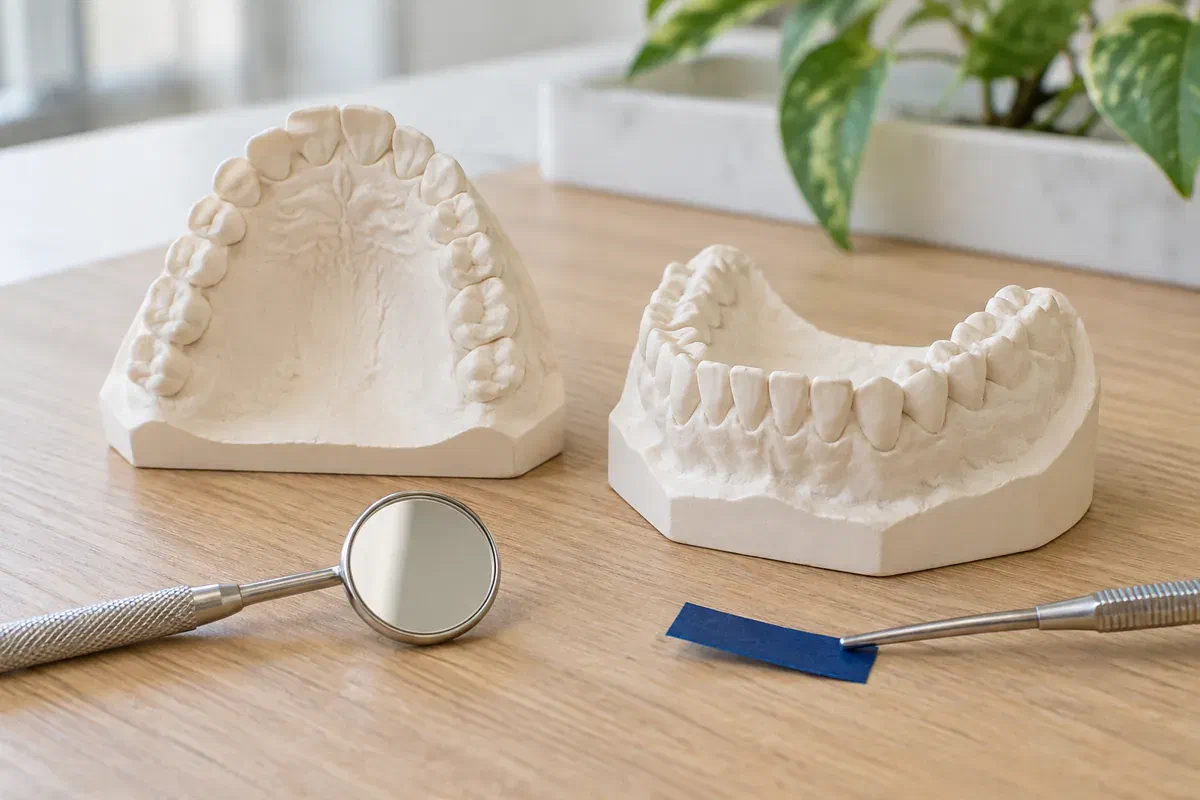
Illustrative dental casts beside a mirror and articulating-paper holder
Before you set out

Jot down the details instead of testing the tooth.

A written note of when the feeling began and what treatment came before it saves time at the appointment and helps the dentist separate a contact problem from another tooth issue or a broader jaw complaint.

A recent restoration that lands first

Write down the tooth, the treatment date and who did it. Describe whether the early contact happens on a straight close or during a particular movement. Ask the treating dentist for a review, since chewing hard to wear it down is not a controlled fix.

Pain on biting or on release

Record where it hurts and what else triggers it, such as cold or chewing on one side. A sore bite is not always a high spot. Cracks or a problem inside the tooth may need to be assessed before a contact is changed.

A wider or changing feeling of unevenness

Note jaw pain, locking, a recent injury and any appliance changes. Is the sensation constant, or worse at certain times of day? Those details guide a fuller assessment instead of a sweeping reshaping plan.

Have any uneven bite after treatment reviewed. If pain is escalating, or there is swelling, fever or difficulty opening, seek prompt advice, and consider care closer to home rather than waiting for a longer journey.

What one visit can clarify

Leave with a finding, a decision and a plan.

A worthwhile appointment ends with something specific: which surface, what was found and what change to expect. Ask how it relates to what you described. When contacts do not explain the symptoms well, the sensible move is more investigation, not removing material piece by piece hoping for relief.

Distinguish between refining one restoration and reshaping many natural teeth. The first is a limited local decision; the second is permanent and far-reaching. Ask about the scope, the reasoning and the alternatives if a clear target has not emerged.

An explained contact finding

The dentist combines an examination with marking paper or film to see how your teeth meet. Ask what the results mean together. A mark shows where teeth touch, not why they hurt, and it does not justify reshaping every marked area.

Consent about what will change

Confirm whether a filling, crown or natural tooth is involved, and ask about risks such as needing more restorative care later. Enamel does not grow back, so agree on the reason and amount first.

A realistic follow-up arrangement

Ask how long to wait before reporting lingering discomfort and whether a recheck could be combined with other dental visits. Continuing symptoms can mean another cause is involved, and reassessment should revisit the evidence.

How the appointment runs

From your notes to a final recheck

The dentist should explain each stage plainly. If you are uncertain whether natural tooth would be reshaped, raise it before agreeing to anything.

  1. Review your notes and examine the tooth

    Share what you wrote about the treatment, the timing and any pain or sensitivity. The tooth and restoration are examined, and further tests may be recommended if a contact check alone cannot answer the question.

  2. Check the bite in different positions

    The dentist observes your teeth meeting and may place marking film while you close and slide. Mention when the familiar feeling returns. The findings are interpreted with your history, not used as an automatic plan for removal.

  3. Carry out only what you agreed

    If adjustment fits, confirm the surface, the expected benefit, the alternatives and the risks while you are still in the chair. You will hear how the spot is smoothed, polished and rechecked, which varies with the material. Nothing beyond the agreed area should be touched.

  4. Recheck and plan ahead

    Describe how ordinary closing feels without biting hard over and over. Agree on what to watch for, when to call, and whether any separate tooth or restoration problem needs its own appointment.

Once you are back home

Watch, don’t test, and call before making another trip.

Advice depends on what was examined or treated. Keep following any instructions from the original treatment along with those from the bite review.

Let normal eating tell you

Avoid clenching, tapping or biting hard items to check the contact, which can keep a tooth irritated for longer. Notice how ordinary meals and gentle closing feel over the next few days. If chewing is uncomfortable, phone us for advice before deciding whether another visit is needed.

Keep the wider plan on track

A bite refinement does not finish a crown or root canal course. Confirm what appointments remain and try to group them sensibly. Feeling more comfortable should not mean skipping an essential final restoration without advice.

Describe exactly what you notice

If something persists, explain whether it is the same symptom, new sensitivity or a different contact. Report swelling or spontaneous pain promptly, and seek closer urgent care if symptoms are severe.

Where things may go from here

Three directions, depending on the evidence

The examination may support a limited correction, more investigation, or care aimed at another source. Ask which fits and what would change the recommendation.

When the finding is clear

Polishing a confirmed contact on the restoration

The dentist may refine a small, defined area on the filling or crown. Find out whether that restoration remains sound afterward and how the bite should feel. This is about one examined tooth and is no reason to reshape others routinely, however convenient it might seem to do more in one sitting.

When the tooth itself may be the problem

Further tests or a new restoration

Some situations call for more assessment or different restorative work because adjusting would not fix the issue. Ask what the tests are meant to clarify and whether they can be done at the same visit. Ongoing pain or a damaged tooth deserves proper investigation, not a quick contact change in its place.

When muscles or joints are involved

Conservative jaw care

Jaw symptoms need a separate assessment. Permanent bite changes are not an evidence-supported routine treatment for temporomandibular disorders and may make them worse. Ask about reversible care or specialist advice.

Patient information: NIDCR — evidence and cautions concerning occlusal treatments for TMD

Planning questions

What to know before you book

These answers help separate a focused restoration check from broader permanent treatment. Your own findings and symptoms should guide any recommendation.

(905) 876-4488
Can a bite assessment and any adjustment happen in one appointment?
Sometimes, if the examination identifies a clear contact and you agree to the change. Other cases need further tests or a recheck later. Ask when booking what the visit is likely to cover.
When should I go to a closer clinic instead of travelling from Etobicoke?
If you have facial swelling, fever, severe or rapidly worsening pain, or trouble opening, seek prompt care near you. A high contact without those signs can usually be planned for a scheduled review.
What should I bring to make the visit efficient?
Bring a note of when the feeling started, which tooth seems involved, what triggers it and details of recent treatment, including the clinic that did it if it was elsewhere. Bring any guard or retainer you wear, since the dentist may want to see how it fits with your bite.
Would an adjustment remove filling material or my own tooth?
Ask directly, because it depends on the plan. The dentist should name the surface and explain the reason, extent, risks and alternatives. Natural tooth removal is permanent.
Is bite reshaping used to treat TMD or jaw clicking?
Not routinely. Permanent changes to teeth are not standard care for those symptoms. Ask about a jaw assessment and conservative options, and a second opinion if extensive irreversible work is suggested.
If it still hurts after the adjustment, do I need to come back right away?
Call first and describe what has changed. The dentist can advise whether a recheck is needed soon, whether to wait a little, or whether another explanation should be investigated.
Booking from Etobicoke

Plan one focused visit, with follow-up only if needed.

A phone call to (905) 876-4488 is the easiest way to set up a bite assessment at our Bronte Street practice. Mention recent fillings, crowns, root canal work or appliance changes, and tell us how far you are travelling, so the appointment can be planned with enough time to examine, discuss and recheck without rushing.

An assessment does not automatically lead to adjustment. Suitability, extent, the material involved and the expected response depend on your findings and informed consent.

Visit Milton Dental Clinic
Unit 1, 342 Bronte St. S, Milton, ON L9T 5B7
Get directions Clinic hours
Monday–Thursday
11am–7pm
Friday–Sunday
By appointment only

Areas we serve

  • Milton
  • Oakville
  • Mississauga
  • Georgetown
  • Halton Hills
  • Acton
  • Campbellville
  • Brampton
  • Burlington
  • Puslinch
  • Rockwood
  • Erin
  • Caledon
  • Etobicoke
  • Old Milton
  • Bronte Meadows
  • Timberlea
  • Dorset Park
  • Dempsey
  • Clarke
  • Beaty
  • Coates
  • Harrison
  • Scott
  • Willmott
  • Ford
  • Bowes
  • Cobden
  • Walker
  • Mountain View
  • Milton Heights
  • Hawthorne Village
  • Valley View
  • Fallingbrook
  • Nassagaweya
  • Trafalgar
  • Esquesing
  • Nelson
  • Brookville
  • Moffat
  • Glen Williams
  • Norval
  • Limehouse
  • Stewarttown
  • Ashgrove
  • Hornby
  • Silver Creek
  • Speyside
  • Scotch Block
  • North Oakville
  • River Oaks
  • Glen Abbey
  • West Oak Trails
  • Palermo
  • Bronte Creek
  • College Park
  • Joshua Creek
  • Uptown Core
  • Preserve
  • Iroquois Ridge
  • Lisgar
  • Meadowvale
  • Meadowvale Village
  • Churchill Meadows
  • Erin Mills
  • Central Erin Mills
  • Streetsville
  • East Credit
  • Creditview
  • Heartland
  • Sheridan
  • Mount Pleasant
  • Credit Valley
  • Huttonville
  • Churchville
  • Springbrook
  • Northwest Brampton
  • Bram West
  • Fletcher's Meadow
  • Fletcher's Creek South
  • Alton Village
  • Orchard
  • Millcroft
  • Headon Forest
  • Tansley
  • Brant Hills
  • Tyandaga
  • Kilbride
  • Lowville
  • Aberfoyle
  • Morriston
  • Arkell
  • Hillsburgh
  • Freelton
  • Carlisle
  • Waterdown
  • Flamborough
  • Mountsberg

How can we help?

Milton Dental Clinic

Have a question about your smile? Choose the option that works best for you.

For urgent dental concerns, please call.
Messages are reviewed during clinic hours.