
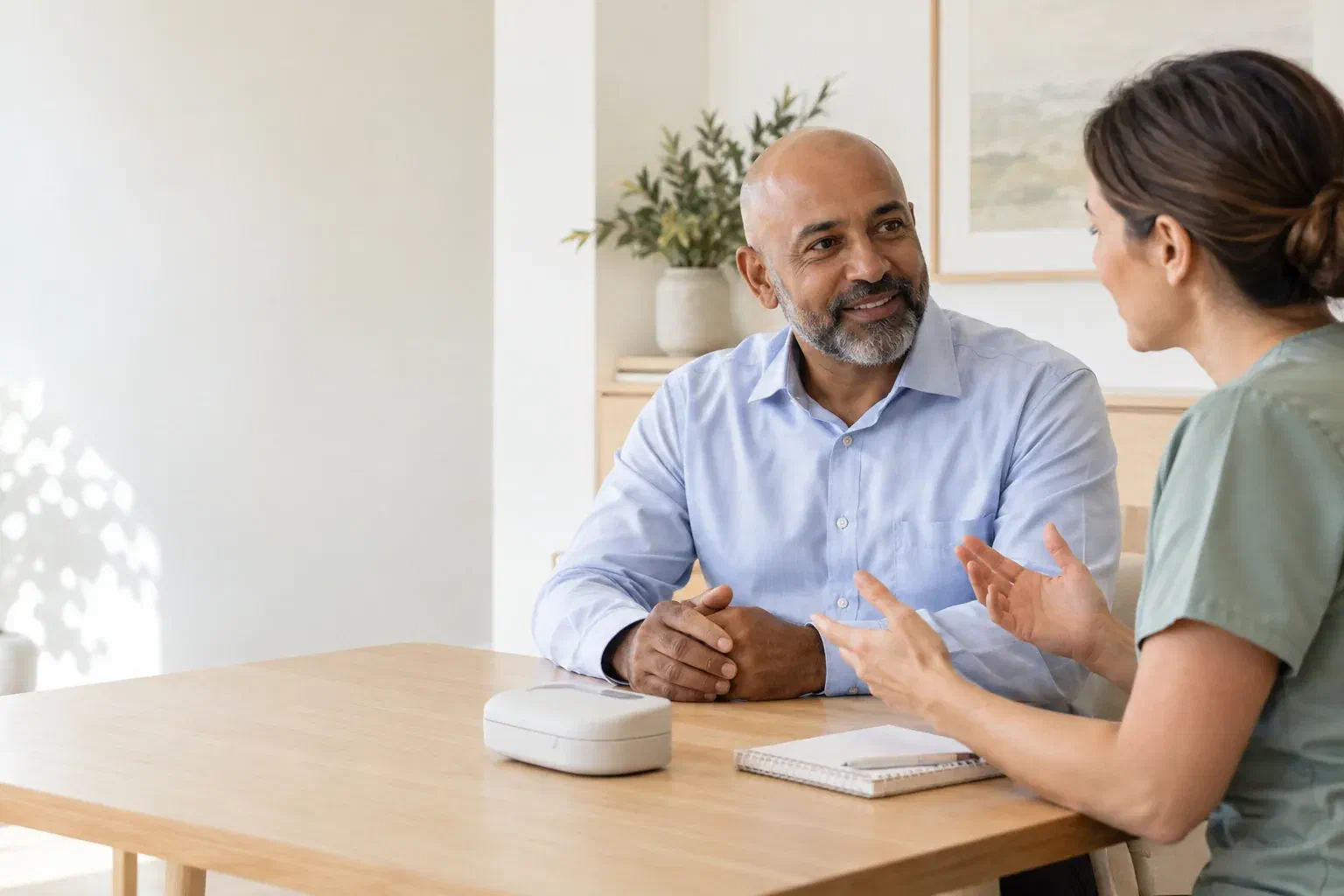
Illustrative patient discussing a sleep-related dental appliance assessment with a clinician
Specialized Care

Oral Appliance Therapy

Oral appliance therapy may be an option within an assessed sleep-care plan. Discuss dental suitability, the role of a prescribed device, and the follow-up needed to check comfort and effectiveness with our Milton team and your sleep-care provider.

A closer look at oral appliance therapy

Connect the dental device to the sleep condition it is intended to treat.

In sleep care, an oral appliance is a prescribed device worn in the mouth to help address an appropriate sleep-related breathing problem. Some designs hold the lower jaw forward to support an open airway during sleep. This is different from a general grinding guard, and suitability should be considered within a medical diagnosis and coordinated treatment plan.

The conversation often begins after a sleep assessment, particularly when a person wants to discuss an alternative to positive airway pressure treatment or is having difficulty using it. Your preferences matter, but they do not establish whether a device will be effective. The diagnosis, dental examination, and planned follow-up all contribute to that decision.

Contact Milton Dental Clinic to discuss the dental assessment and coordination required for your situation. Bring the details of your sleep-care provider and any available reports. Ask which parts of the pathway can be arranged through the clinic and whether a referral is needed before assuming an appliance can be supplied immediately.

Discuss a sleep-appliance assessment
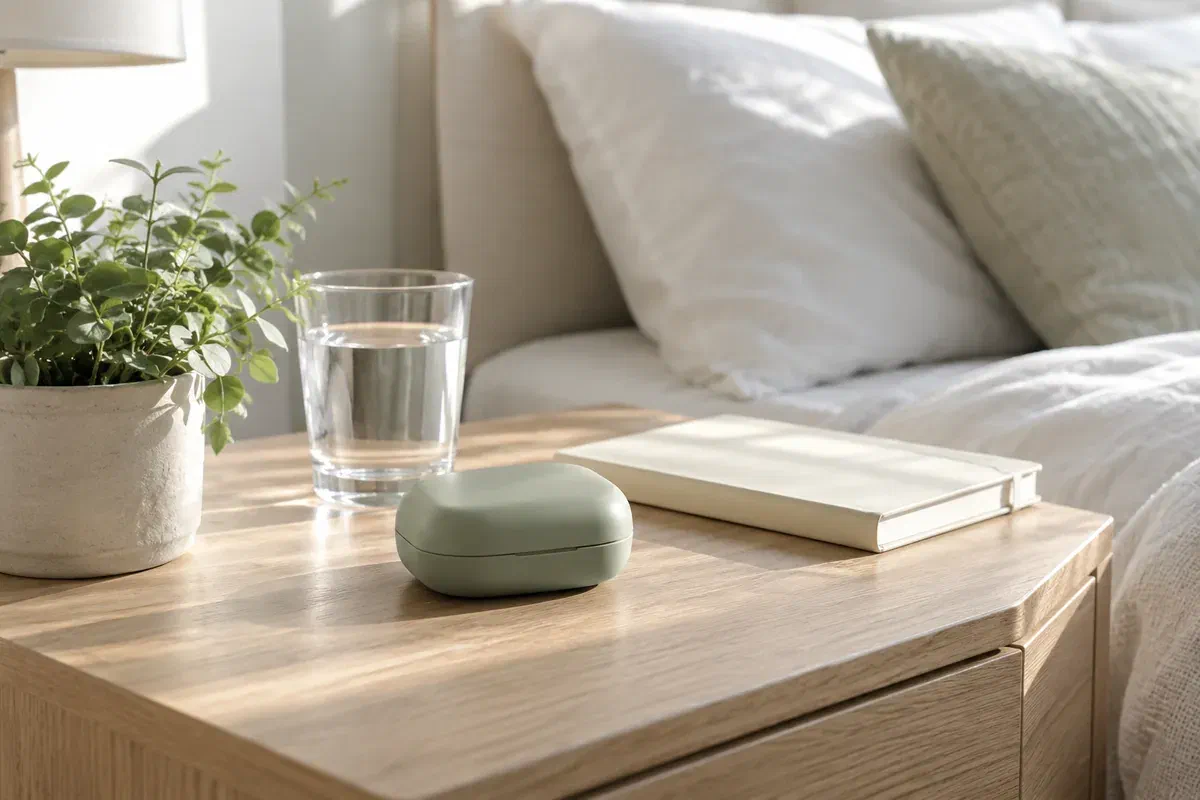
Illustrative closed dental appliance case beside water and a notebook on a bedside table
Information that shapes the plan

Bring the sleep history and the dental history into the same conversation.

An appliance decision should account for more than snoring alone. Explain any existing diagnosis, prescribed treatment, and dental difficulties so the team can identify what needs clarification before a device is considered.

A sleep diagnosis or a recommendation for further assessment

Bring the sleep report or referral when available and explain who is managing your care. If you have not been assessed, describe concerns such as witnessed breathing pauses or daytime sleepiness to a medical provider. A dental visit does not turn those symptoms into a confirmed sleep diagnosis.

Difficulty with the current treatment plan

Explain the practical problem you are having with prescribed therapy and what has already been tried. Your sleep-care provider may be able to address equipment or comfort issues. Do not stop effective prescribed treatment simply because you are exploring whether another option might be suitable.

Teeth, gum, or jaw concerns affecting an appliance

Mention loose teeth, active dental problems, planned restorations, dentures, or jaw discomfort. An existing appliance should be brought to the visit. These details help the dentist assess support, comfort, and whether dental care or another opinion is needed before proceeding.

Significant daytime sleepiness deserves medical advice and attention to safety. Do not drive when sleepy. Exploring a dental appliance should not delay assessment of breathing concerns or a review of prescribed sleep treatment.

What coordinated care provides

A device, a fitting plan, and a way to find out whether it works for you.

The appliance is only one part of the pathway. Ask who will assess dental suitability, who will manage the sleep condition, and how the two providers will share relevant information. Clear responsibilities help prevent a comfortable fit from being mistaken for confirmation that the underlying breathing disorder is adequately treated.

It is also useful to discuss what happens if the device is uncomfortable, cannot be used consistently, or does not provide sufficient benefit. Understanding the review process before starting makes it easier to report a problem early. An alternative plan should remain available rather than leaving you with an appliance and no next step.

Patient information: AASM and AADSM — oral appliance therapy guideline and follow-up recommendations

An individually considered appliance approach

Ask why the proposed design is appropriate for the diagnosis and dental findings. Qualified clinicians may use a custom, adjustable device where indicated. Confirm the actual appliance and provider arrangements instead of assuming that any product advertised for snoring is interchangeable with prescribed therapy.

Dental oversight during use

The dentist should discuss possible tooth, gum, jaw, or bite changes and how they will be monitored. Tell the team about discomfort or a change in how the teeth meet. Regular review helps identify concerns that may not be apparent when the device is first fitted.

Effectiveness assessed beyond a quieter night

Reduced snoring or feeling better can be useful observations, but they do not by themselves confirm adequate control of sleep apnea. Ask the sleep-care provider about follow-up testing and how its results will guide the plan. A comfortable device still needs an evidence-based review of its effect.

From assessment to monitored use

Establish the diagnosis, check dental suitability, and plan the review.

The sequence varies with your existing sleep assessment and dental condition. Ask what must happen before manufacture, which visits are included, and who will arrange any medical testing or referral.

  1. Review the sleep-care recommendation and your goals

    Discuss the diagnosis, current treatment, and reasons for considering an appliance. Provide available reports and contact details for the treating provider. If important information is missing, clarify how it will be obtained and what care should continue while the assessment is underway.

  2. Assess dental support and explain the proposed device

    The dental examination considers teeth, gums, restorations, and jaw-related factors relevant to use. Ask whether any treatment is needed first. Review the proposed appliance, limitations, potential side effects, fees, and follow-up arrangements before records are taken or manufacture is authorized.

  3. Fit the appliance and explain its use

    The prescribing clinician checks fit and demonstrates insertion, removal, cleaning, and any permitted adjustment process. Ask what should feel acceptable and what requires contact. Do not assume that advancing a device further or faster than instructed will make it more effective.

  4. Coordinate dental review and sleep reassessment

    Arrange the recommended visits and testing rather than waiting indefinitely for symptoms to return. Discuss comfort, actual use, dental changes, and the sleep provider's findings. The plan may require adjustment, another approach, or further assessment depending on the response.

Using an appliance within the plan

Keep the instructions, the dental reviews, and the sleep follow-up connected.

A device needs ongoing attention even after it becomes familiar. Keep the treating team's contact details and ask what to do if it breaks, becomes uncomfortable, or cannot be worn.

Follow the prescribed wear and adjustment instructions

Use the appliance as directed and change settings only within the instructions given by the treating clinician. Keep a record if requested. If the mechanism is unclear, ask for another demonstration instead of experimenting or using instructions intended for a different product.

Clean, store, and inspect the device appropriately

Follow material-specific guidance for cleaning products and storage. Bring the appliance to dental reviews and report damage, a loose component, or a changed fit. Planned fillings, crowns, or other dental treatment should be discussed because changes to tooth shape may affect how the device seats.

Report symptoms and keep medical follow-up

Tell the relevant provider about persistent sleepiness, renewed snoring, witnessed breathing pauses, or problems using the device. Also report tooth, gum, jaw, or bite concerns. Do not decide on your own that a quieter night means testing or prescribed medical treatment is no longer needed.

Patient information: NHLBI — oral device care and continuing sleep-apnea review

Choosing within a sleep-care plan

Compare the options with the clinician managing the diagnosis.

An appliance is not automatically the best choice for every person who snores or has sleep apnea. Discuss clinical suitability, expected effectiveness, practical use, and how the outcome will be checked.

When the existing approach remains appropriate

Continue or improve prescribed positive airway pressure care

Ask the sleep-care provider about difficulties with comfort, equipment, or consistent use. Adjustments to that plan may be possible. A dental consultation should support an informed discussion, not imply that prescribed positive airway pressure treatment should be abandoned while alternatives are explored.

When medical and dental findings support the option

A prescribed oral appliance with coordinated follow-up

An appliance may be considered for an appropriate patient within a supervised plan. Discuss the specific device, dental suitability, and objective review of effectiveness. The ability to fit a device does not guarantee that it will adequately treat the diagnosed condition.

When the diagnosis or response requires wider review

Further sleep assessment or another treatment pathway

Additional medical assessment or another treatment may be needed if the diagnosis is uncertain or the response is insufficient. Ask which provider will guide that decision. Do not substitute an unassessed over-the-counter snoring product for a recommended investigation or prescribed treatment.

Patient information: NHLBI — sleep-apnea treatment options and oral devices

Oral appliance therapy questions

Clarify the diagnosis, the device, and who will review the result.

Bring any sleep report, referral, and current appliance to the consultation. These questions can help you understand the responsibilities and follow-up involved before deciding to proceed.

(905) 876-4488
Is oral appliance therapy for sleep apnea the same as wearing a grinding guard?
No. The intended purpose and design differ. A general protective guard should not be assumed to treat a sleep-related breathing disorder. Ask which device is being proposed, why it fits the diagnosis, and how the sleep-care provider will assess its effect.
Can reduced snoring prove that my oral appliance is treating sleep apnea adequately?
No. It is useful information, but it does not replace the recommended assessment of effectiveness. Ask the sleep-care provider about follow-up testing and review. Do not cancel medical follow-up simply because nights sound quieter or the appliance feels comfortable.
Should I stop CPAP while waiting for an oral appliance assessment?
Do not stop prescribed treatment solely because you are exploring an alternative. Discuss difficulties and any transition plan with the clinician managing your sleep condition. The appropriate approach while waiting depends on that medical assessment and your current treatment needs.
Can oral appliance therapy change how my teeth meet?
Dental and bite changes are possible and should be discussed before treatment and monitored during use. Report a persistent change or discomfort to the treating dentist. Ask what reviews are planned and how a problem would be addressed.
May I advance a sleep appliance further if I am still snoring?
Only make adjustments according to the prescribing clinician’s instructions. More advancement is not automatically better or appropriate. Report ongoing symptoms and ask whether the device, its settings, or the broader treatment plan needs professional review.
What records should I bring when asking about oral appliance therapy?
Bring available sleep-study findings, referral details, the current treatment plan, and your sleep provider’s contact information. Also bring any appliance and details of planned dental work. The team can explain what additional information is needed before assessing suitability.
Oral appliance therapy assessment in Milton

Discuss the dental part of a coordinated sleep-care plan.

Call Milton Dental Clinic at (905) 876-4488 to discuss assessment and referral arrangements. Explain whether you already have a sleep diagnosis and treating provider so we can help clarify the appropriate next step and records to bring.

Appliance provision, suitability, referral, and effectiveness depend on individual medical and dental findings. Confirm the available pathway with the team; no particular device, sleep diagnosis, or treatment outcome is guaranteed.

Visit Milton Dental Clinic
Unit 1, 342 Bronte St. S, Milton, ON L9T 5B7
Get directions Clinic hours
Monday–Thursday
11am–7pm
Friday–Sunday
By appointment only

How can we help?

Milton Dental Clinic

Have a question about your smile? Choose the option that works best for you.

For urgent dental concerns, please call.
Messages are reviewed during clinic hours.