
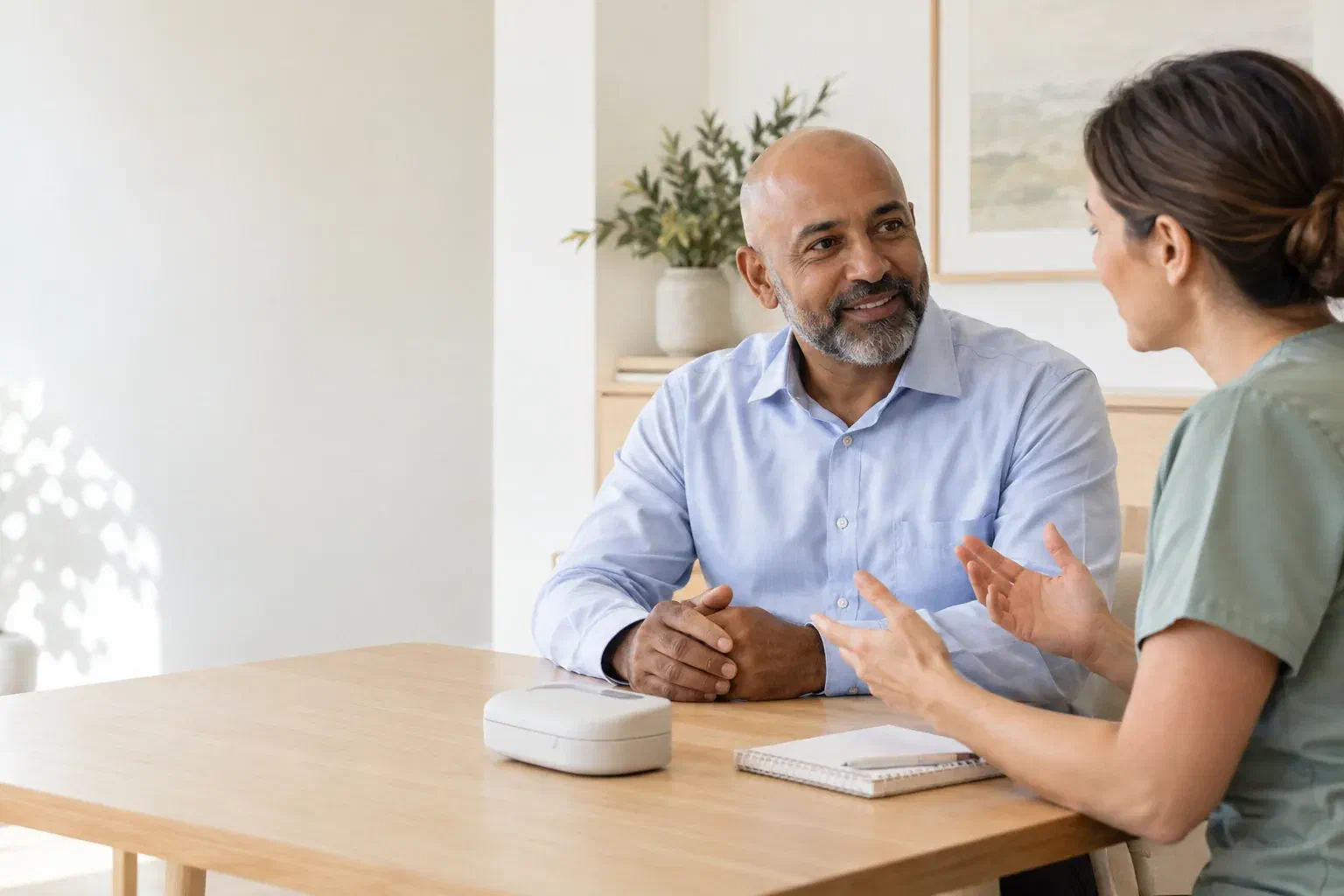
Illustrative patient discussing a sleep-related dental appliance assessment with a clinician
Specialized Care

Oral Appliance Therapy in Caledon

In at bedtime, out in the morning, rinsed, cased and checked: a sleep appliance becomes part of the daily routine. Our Milton team explains that routine, the dental reviews behind it and the medical follow-up your sleep-care provider will want, before you decide to go ahead.

Caledon · a nightly habit

What does living with a sleep appliance look like?

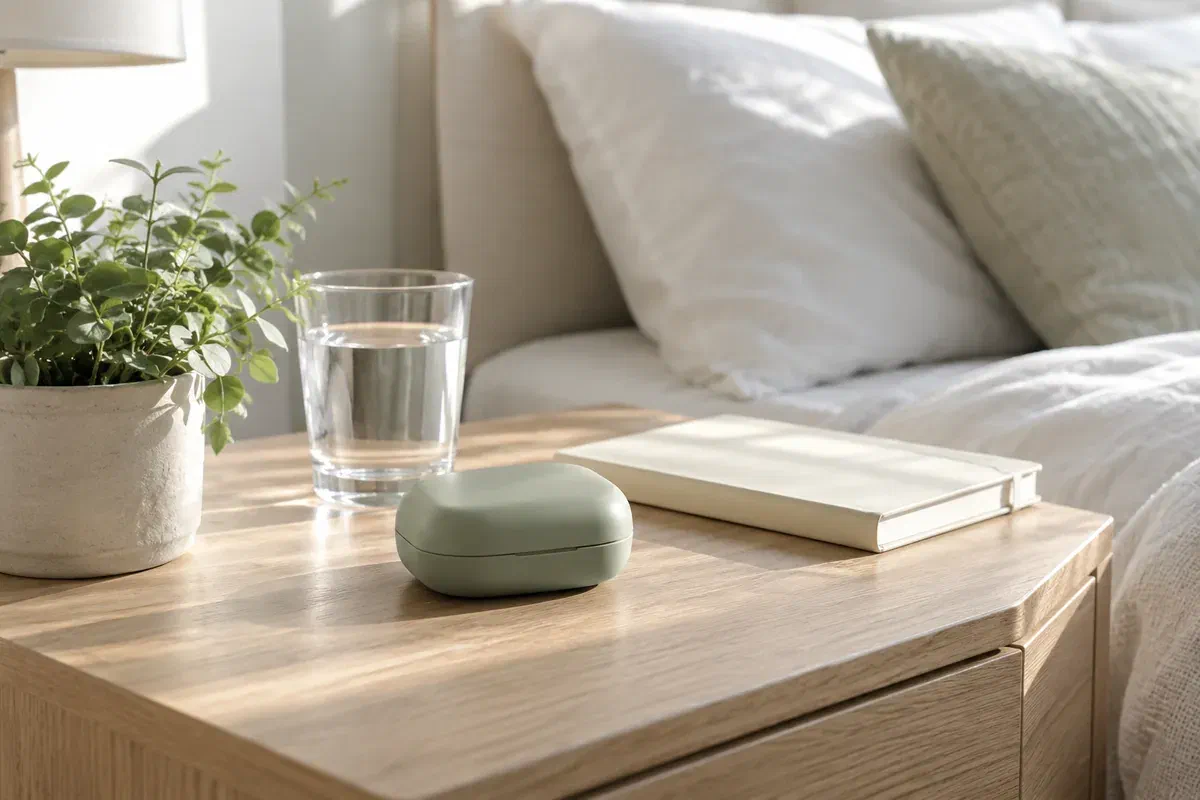
Picture the bedside table: a case, a glass of water, perhaps a notebook for tracking use. That's the everyday reality of oral appliance therapy. The device is prescribed to treat a breathing problem during sleep, and certain designs gently hold the lower jaw forward to support the airway. It needs wearing as directed, cleaning and regular checks.

Before the routine begins, there's a decision to make, and it isn't made on convenience. A physician first diagnoses the sleep condition; a dentist then examines whether your mouth can support a device; follow-up confirms the effect. An appliance also isn't a grinding guard, even if the two end up in similar cases.

Households in Bolton and Caledon's smaller villages often plan trips around several commitments, so a phone call first is sensible. Share your sleep-care provider's details and any reports. We'll explain the dental part of the pathway, whether a referral is needed and what the clinic can arrange, so you aren't expecting an appliance at the first visit.

Ask what daily use involves
Illustrative closed dental appliance case beside water and a notebook on a bedside table
Before a routine starts

Is this device right for you in the first place?

Snoring doesn't settle the question. Tell the team about your diagnosis, how prescribed treatment has gone and your dental health, so it's clear what is confirmed and what needs checking before an appliance is discussed.

A medical diagnosis, or a plan to get one

Bring your sleep report or referral and the name of your sleep-care clinician. If there's been no assessment, describe witnessed pauses or persistent daytime sleepiness to a physician. A dentist can't confirm a sleep diagnosis from those symptoms.

How you've managed with prescribed therapy

Explain what has been hard about current treatment, such as mask fit or nightly routine, and what has been changed. Some of these issues can be handled by the clinician who prescribed it. Keep using treatment that helps while alternatives are explored.

Can your teeth and jaw cope with nightly wear?

Mention loose teeth, gum problems, decay, planned dental work, dentures and jaw discomfort, and bring any appliance you already own. Nightly use puts demands on supporting teeth, so the dentist may suggest dental care or another opinion first.

If you're very sleepy during the day, seek medical advice and take safety seriously. Don't drive while drowsy. An appliance consultation should never delay assessment of your breathing or a review of your prescribed treatment.

What a supported routine offers

Habits at home, checks with the professionals

The nightly habit is yours; the oversight is shared. Your dentist checks suitability, fit and dental effects, and your sleep-care provider manages the diagnosis and confirms the result. Ask how they'll communicate. That way, a routine that feels easy and comfortable isn't mistaken for proof the breathing disorder is controlled.

Ask, before committing, what the backup plan is. If the appliance proves uncomfortable, if wearing it every night doesn't stick, or if follow-up shows too little benefit, there should be a clear next step. Knowing how reviews work makes it simpler to report trouble early rather than quietly giving up.

Patient information: AASM and AADSM — oral appliance therapy guideline and follow-up recommendations

An appliance chosen for good reasons

Ask why the recommended design suits your diagnosis and your teeth. A qualified clinician may suggest a custom, adjustable appliance where indicated. Confirm the specific device and supplier rather than assuming any snoring product can stand in for prescribed therapy.

Dental reviews woven into the routine

The dentist should explain possible changes to teeth, gums, jaw and bite and how they'll be monitored. Report soreness or a bite that feels different in the morning. Regular reviews catch changes that build slowly.

A result someone actually measures

Sleeping quietly and feeling more alert are encouraging, but they can't confirm adequate control of sleep apnea on their own. Ask the sleep-care provider about follow-up testing and how its results guide the plan. An easy routine still needs its effect verified.

Getting to the routine

Four visits' worth of groundwork

The steps depend on your existing sleep assessment and dental health. Ask what needs to happen before the device is made, which appointments are included and who organizes testing or referral.

  1. Talk about your sleep care

    The first visit covers your diagnosis, current treatment and why you're interested in an appliance. Bring reports and contact information for your sleep provider. If something is missing, we'll explain how to get it and which care continues for now.

  2. Examine and explain

    Teeth, gums, restorations and the jaw are assessed, and you'll hear whether treatment is needed first. Then review the proposed device, its limits, possible side effects, the fee and how reviews will be scheduled, before records are taken or it's ordered.

  3. Fitting day doubles as a lesson

    Once the fit is confirmed, the prescribing clinician walks you through putting it in, taking it out, rinsing it, casing it and any adjustment you're permitted to make. Find out which early sensations are typical and which deserve a phone call. Turning it further than instructed won't speed anything up.

  4. Check in regularly

    Keep recommended dental visits and sleep testing on the calendar rather than waiting for symptoms. Reviews look at comfort, nightly use, dental or bite changes and the sleep provider's findings. The plan may then be adjusted, changed or referred for more assessment.

Daily care

Rinse, store, inspect, repeat.

Even after it feels second nature, the appliance needs care. Keep both providers' numbers on hand, and ask ahead what to do if it cracks, starts hurting or can't be worn.

Wear it as prescribed

Use the device on the schedule you were given and adjust only within your clinician's instructions. Keep a use log if asked. If the mechanism is confusing, ask for another demonstration rather than experimenting or following a different product's guide.

Clean and store it the right way

Follow the cleaning and storage guidance for its material, and keep it in its case, out of reach of pets. Bring it to dental reviews and point out damage, loose parts or a changed fit. Mention planned fillings or crowns, since tooth changes can affect how it seats.

Keep reporting, keep testing

Tell the appropriate provider about ongoing sleepiness, renewed snoring, pauses someone notices or difficulty wearing the device. Tooth, gum, jaw and bite concerns are worth raising too. A good night isn't a reason to skip testing or medical care.

Patient information: NHLBI — oral device care and continuing sleep-apnea review

Which routine suits you?

Mask, mouthpiece or more assessment

An appliance isn't automatically the right answer for each person who snores or has sleep apnea. Compare suitability, likely effectiveness, how each option fits your daily life and how results will be confirmed.

When it remains the right treatment

Positive airway pressure, made easier to use

Comfort, equipment and routine problems are worth taking back to your sleep-care team, as changes might help. A dental consultation is there to inform you; it doesn't mean prescribed positive airway pressure therapy should be set aside while you look at alternatives.

When medical and dental findings agree

A prescribed appliance with planned reviews

Some people are good candidates, and for them a device worn under supervision is a reasonable choice. Ask which model is proposed, what the dental exam showed and what test will tell you it's working. Easy to wear and adequately treating the condition are two separate things.

When the diagnosis or result is unclear

Further evaluation or other treatment

More medical assessment or a different approach may be needed when the diagnosis is in question or the response is too limited. Ask which provider will steer that decision. An unassessed snoring aid isn't a replacement for testing or prescribed care.

Patient information: NHLBI — sleep-apnea treatment options and oral devices

Everyday questions from Caledon

The practical side of nightly wear

These are the questions that tend to surface once people picture the device on their own nightstand. Each answer notes who is responsible for what, so you can judge whether this routine is one you'd keep.

(905) 876-4488
How should I clean my sleep appliance each morning?
Use the method you were shown for your particular device and material. Some products and methods can damage certain materials, so ask the dentist what’s appropriate rather than using general advice.
Where's the best place to keep the appliance during the day?
In its case, away from heat and out of reach of pets or children. Ask the dentist about any storage advice specific to your appliance’s material.
What should I do if I forget to wear it one night?
Resume as prescribed the next night. If missed nights are becoming common, tell your sleep-care provider and dentist, since consistent use matters for treatment and the plan may need review.
Can I take my appliance on holiday?
Yes, as long as you can clean and store it properly while away. Pack the case and keep contact details for your dental and sleep-care teams in case of damage.
Does wearing an oral appliance mean I can skip the sleep clinic's follow-up?
No. Keep the follow-up your sleep-care provider recommends, which may include testing. Comfort and quieter nights don’t confirm the condition is adequately treated.
Is it alright to make small adjustments when the fit feels tight?
Only within instructions from the prescribing clinician. Report a fit that feels too tight, sore teeth or a changed bite to the dentist instead of altering the device yourself.
Plan your visit

Learn the routine before you commit to it.

Our team is on (905) 876-4488 for questions about assessment and referral for a sleep appliance. Mention any sleep diagnosis and the provider treating it; from there we can suggest a sensible next move and tell you what paperwork is worth bringing.

Suitability, provision, referral and effectiveness depend on individual medical and dental findings. Milton Dental Clinic can confirm the pathway available; no particular device, diagnosis or outcome is guaranteed.

Visit Milton Dental Clinic
Unit 1, 342 Bronte St. S, Milton, ON L9T 5B7
Get directions Clinic hours
Monday–Thursday
11am–7pm
Friday–Sunday
By appointment only

Areas we serve

  • Milton
  • Oakville
  • Mississauga
  • Georgetown
  • Halton Hills
  • Acton
  • Campbellville
  • Brampton
  • Burlington
  • Puslinch
  • Rockwood
  • Erin
  • Caledon
  • Etobicoke
  • Old Milton
  • Bronte Meadows
  • Timberlea
  • Dorset Park
  • Dempsey
  • Clarke
  • Beaty
  • Coates
  • Harrison
  • Scott
  • Willmott
  • Ford
  • Bowes
  • Cobden
  • Walker
  • Mountain View
  • Milton Heights
  • Hawthorne Village
  • Valley View
  • Fallingbrook
  • Nassagaweya
  • Trafalgar
  • Esquesing
  • Nelson
  • Brookville
  • Moffat
  • Glen Williams
  • Norval
  • Limehouse
  • Stewarttown
  • Ashgrove
  • Hornby
  • Silver Creek
  • Speyside
  • Scotch Block
  • North Oakville
  • River Oaks
  • Glen Abbey
  • West Oak Trails
  • Palermo
  • Bronte Creek
  • College Park
  • Joshua Creek
  • Uptown Core
  • Preserve
  • Iroquois Ridge
  • Lisgar
  • Meadowvale
  • Meadowvale Village
  • Churchill Meadows
  • Erin Mills
  • Central Erin Mills
  • Streetsville
  • East Credit
  • Creditview
  • Heartland
  • Sheridan
  • Mount Pleasant
  • Credit Valley
  • Huttonville
  • Churchville
  • Springbrook
  • Northwest Brampton
  • Bram West
  • Fletcher's Meadow
  • Fletcher's Creek South
  • Alton Village
  • Orchard
  • Millcroft
  • Headon Forest
  • Tansley
  • Brant Hills
  • Tyandaga
  • Kilbride
  • Lowville
  • Aberfoyle
  • Morriston
  • Arkell
  • Hillsburgh
  • Freelton
  • Carlisle
  • Waterdown
  • Flamborough
  • Mountsberg

How can we help?

Milton Dental Clinic

Have a question about your smile? Choose the option that works best for you.

For urgent dental concerns, please call.
Messages are reviewed during clinic hours.