
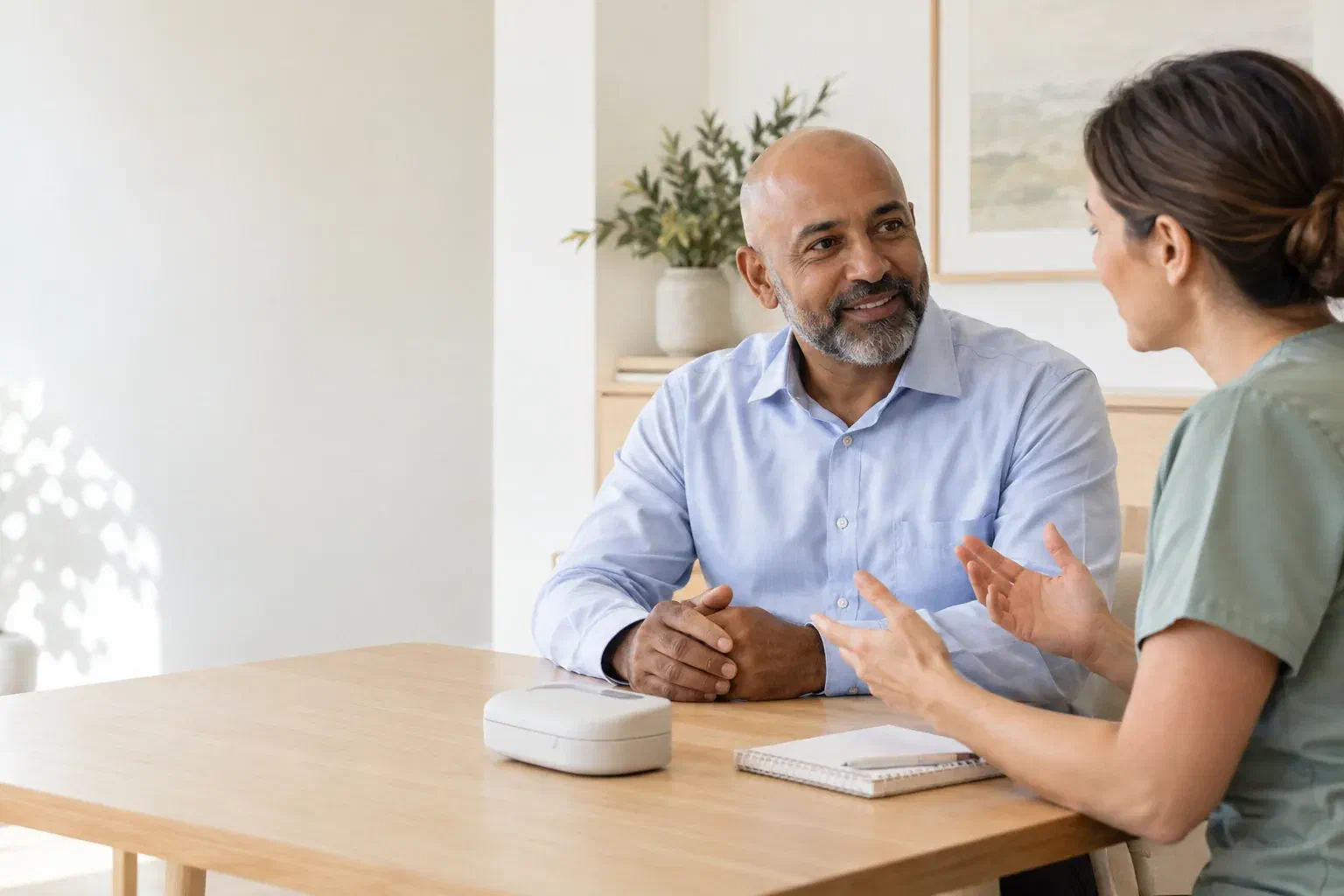
Illustrative patient discussing a sleep-related dental appliance assessment with a clinician
Specialized Care

Oral Appliance Therapy in Campbellville

A sleep appliance is a long-term arrangement: fittings, reviews, and checks with your sleep-care provider that carry on for as long as you wear it. For rural households, we help organise those visits sensibly so the dental side stays on schedule alongside everything else.

Campbellville · the long view

Not a single appointment. A routine you keep.

People sometimes picture oral appliance therapy as a mouthpiece you pick up once and wear forever. In reality, the device is prescribed for a diagnosed sleep-related breathing disorder, and its usefulness depends on reviews that continue well after fitting. Certain designs hold the lower jaw forward to support the airway, which is exactly why teeth and bite need watching over time.

That is also what separates it from a grinding guard, which protects tooth surfaces rather than treating breathing. Choosing an appliance at all rests on the medical diagnosis, a dental examination and a clear plan for checking results. Wanting a simpler option than a mask is worth saying out loud, but it doesn't decide effectiveness.

Campbellville sits within Milton's rural northwest, and many households there already plan town trips around several errands. A call to our Bronte Street practice can help you do the same with appliance visits. Bring your sleep-care provider's details and reports, and we'll explain what happens here, whether a referral is needed and why the device comes later.

Plan the appliance visits with us
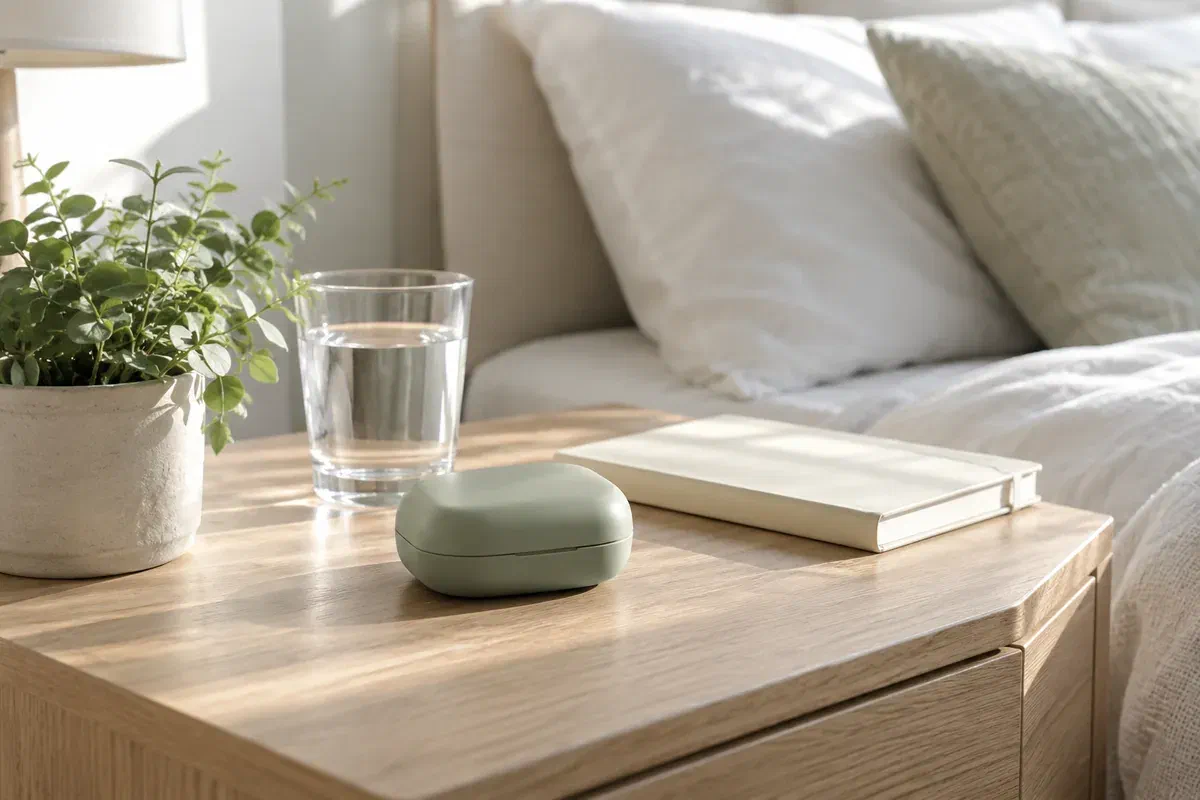
Illustrative closed dental appliance case beside water and a notebook on a bedside table
Starting on solid ground

Get the facts in one place before the first fitting.

A long-term plan works best when it begins with complete information. Explain your diagnosis, your experience with prescribed treatment and your dental health, so the team can see what is settled and what still needs checking.

Your diagnosis and who manages it

Have your sleep report or referral and the name of your sleep-care clinician with you. Without an assessment, symptoms such as pauses a family member has witnessed, or persistent sleepiness, should go to a physician first. A dental exam doesn't confirm a sleep diagnosis.

Your history with prescribed therapy

Describe what has made current treatment hard to keep up and what adjustments have been tried. The provider who oversees your sleep care might resolve some of these issues. Keep up with treatment that is helping while an appliance is discussed.

The dental foundation for years of wear

Mention loose teeth, gum problems, decay, planned restorations, dentures and any jaw discomfort, and bring an existing appliance if you have one. A device worn nightly for years needs solid support, so the dentist may suggest treating some issues before going ahead.

Significant daytime sleepiness needs medical advice and a careful approach to safety. Don't drive when you feel drowsy. Considering a dental appliance should never delay a breathing evaluation or a review of prescribed sleep treatment.

The case for staying coordinated

Years of use deserve years of checking.

Over a long stretch, small gaps in communication can add up. Ask early who reviews your teeth and the device, who keeps managing the diagnosis and how findings will be passed between them. With that settled, a device that has become comfortable and familiar won't quietly be assumed to be controlling the breathing problem.

Plan for change as well. Teeth shift, devices wear and health circumstances evolve. If the appliance becomes uncomfortable, is worn less often or stops helping as much, what's the route back to review? Knowing the answer ahead of time makes it easy to call early and keeps a next option within reach.

Patient information: AASM and AADSM — oral appliance therapy guideline and follow-up recommendations

A device chosen with the future in mind

Ask why a particular design suits your diagnosis and your mouth today, and how it could be adjusted later. Where indicated, a qualified clinician may recommend a custom, adjustable appliance. Confirm the device and provider rather than relying on an advertised snoring product.

Dental reviews across the years

Your dentist should explain possible gradual changes to teeth, gums, jaw or bite and how they'll be monitored. Report soreness or a sense that your teeth meet differently. Regular checks catch slow changes that are easy to miss day to day.

Periodic confirmation that it works

Feeling rested and snoring less are helpful observations, but on their own they don't confirm sleep apnea is adequately controlled. Your sleep-care provider can explain when follow-up testing is appropriate and how the results guide the plan. Long-term comfort still needs objective review.

From first visit to ongoing care

How does a sleep appliance become a lasting routine?

The steps depend on where your sleep assessment stands and on your dental health. Ask which steps come before manufacture, which visits can be grouped and who organizes medical testing or referral.

  1. Start with records and goals

    We discuss your diagnosis, what you've been prescribed and why an appliance appeals to you. Bring reports and your provider's contact details. If something important is missing, we'll explain how to get it and what treatment continues in the meantime.

  2. Assess support and agree on the plan

    The dentist examines teeth, gums, existing restorations and the jaw, and says whether any treatment should come first. Then you'll review the proposed device and its limits, potential side effects, fees and the long-term review plan before records or an order.

  3. Fit, practise and learn the routine

    The prescribing clinician checks fit and shows you how to insert, remove and clean the appliance and how any permitted adjustment works. Ask what to expect and when to call. Advancing the device further than directed won't make it more effective.

  4. Keep a review rhythm going

    Book recommended dental visits and sleep testing ahead, so they don't slip. Each review considers comfort, actual use, dental or bite changes and what the sleep provider has found. Over time the plan may be adjusted, the device replaced or a different approach explored.

Year-round care

What keeps an appliance working season after season?

Familiar devices still need attention. Keep both providers' contact details with the appliance case, and ask early what to do if it cracks, becomes painful or can't be worn for a few nights.

Keep to the prescribed settings

Wear the device as directed and adjust it only within your clinician's instructions. Keep a use record if requested. If you've forgotten how the mechanism works, ask for a refresher at your next review rather than experimenting.

Clean, store and inspect it

Follow material-specific cleaning and storage guidance. Bring the appliance to dental reviews and point out wear, cracks, loose parts or a change in fit. Mention planned fillings or crowns, since changes to tooth shape can alter how it seats.

Report changes as they happen

Tell the appropriate provider about ongoing sleepiness, snoring that returns, witnessed pauses or trouble wearing the device. Tooth, gum, jaw and bite concerns deserve mention too. Don't decide alone that a quieter household means testing or medical care can end.

Patient information: NHLBI — oral device care and continuing sleep-apnea review

Long-term choices

The right treatment today may change later.

No device is automatically the best option for everyone who snores or has sleep apnea. With your sleep-care clinician, weigh suitability, expected effect, how practical it is for your household and how results will be checked.

When it remains the better fit

Positive airway pressure, adjusted to suit

If there are comfort, equipment or routine-use difficulties, your sleep-care provider may be able to change the setup. Our dental input is there to help you decide well, not to suggest abandoning prescribed positive airway pressure treatment while alternatives are weighed.

When dental and medical findings agree

A prescribed appliance, monitored for the long term

For a suitable patient, an appliance can be worn as part of a supervised, ongoing plan. Ask about the exact device, your dental suitability and how its effect will be tested now and later. A device that fits well isn't guaranteed to treat the condition adequately.

When results or the diagnosis need review

Another look, or another treatment

When symptoms come back, results are unclear or the diagnosis is in doubt, more medical evaluation or a different therapy may be recommended. Ask which provider leads that decision. A store-bought snoring aid shouldn't replace testing or prescribed care.

Patient information: NHLBI — sleep-apnea treatment options and oral devices

Long-term questions from Campbellville

Keeping oral appliance therapy going

Bring your sleep report, referral and current appliance to reviews. These answers outline who handles which part and how follow-up continues over time, so you can decide whether this approach suits you.

(905) 876-4488
Will I eventually need a replacement appliance?
Devices can wear, and teeth or dental work can change over time. The dentist will check the appliance’s condition at reviews and let you know if repair, adjustment or replacement should be discussed.
Can appointments for two people in my household be booked together?
Ask when you call. Depending on the schedule and what each person needs, the team may be able to arrange visits close together. For rural households, that can make planning a trip to town simpler.
Does my sleep apnea need to be retested after I start the device?
Your sleep-care provider will advise on follow-up, which may include testing. Feeling better or snoring less doesn’t confirm adequate treatment on its own, so keep that follow-up even if things seem fine.
What happens if my teeth slowly move while I use an appliance?
Gradual tooth or bite changes are possible and are part of why dental reviews continue. Report changes you notice. The dentist can explain what they see and discuss whether the device or plan needs adjustment.
If I put on or lose weight, could the plan need to change?
Changes in health can affect sleep conditions, so mention them to your sleep-care provider. They can advise whether reassessment is needed. Let the dental team know about any change in how the device feels.
Is it okay to stop wearing my appliance on nights I sleep well?
Wear it as prescribed. Skipping nights based on how you feel can leave a diagnosed condition untreated. Discuss any wish to change use with the clinician managing your sleep condition.
Campbellville · a plan that fits your calendar

Book the first step, and map out the rest.

Call Milton Dental Clinic at (905) 876-4488 about assessment, referral or ongoing reviews. If a sleep diagnosis and treating provider are already in place, say so, and we'll help you pin down the next step and which records to bring.

Suitability, provision, referral and long-term effectiveness depend on individual medical and dental findings. Confirm what pathway is available with our team; no device, diagnosis or treatment outcome is guaranteed.

Visit Milton Dental Clinic
Unit 1, 342 Bronte St. S, Milton, ON L9T 5B7
Get directions Clinic hours
Monday–Thursday
11am–7pm
Friday–Sunday
By appointment only

Areas we serve

  • Milton
  • Oakville
  • Mississauga
  • Georgetown
  • Halton Hills
  • Acton
  • Campbellville
  • Brampton
  • Burlington
  • Puslinch
  • Rockwood
  • Erin
  • Caledon
  • Etobicoke
  • Old Milton
  • Bronte Meadows
  • Timberlea
  • Dorset Park
  • Dempsey
  • Clarke
  • Beaty
  • Coates
  • Harrison
  • Scott
  • Willmott
  • Ford
  • Bowes
  • Cobden
  • Walker
  • Mountain View
  • Milton Heights
  • Hawthorne Village
  • Valley View
  • Fallingbrook
  • Nassagaweya
  • Trafalgar
  • Esquesing
  • Nelson
  • Brookville
  • Moffat
  • Glen Williams
  • Norval
  • Limehouse
  • Stewarttown
  • Ashgrove
  • Hornby
  • Silver Creek
  • Speyside
  • Scotch Block
  • North Oakville
  • River Oaks
  • Glen Abbey
  • West Oak Trails
  • Palermo
  • Bronte Creek
  • College Park
  • Joshua Creek
  • Uptown Core
  • Preserve
  • Iroquois Ridge
  • Lisgar
  • Meadowvale
  • Meadowvale Village
  • Churchill Meadows
  • Erin Mills
  • Central Erin Mills
  • Streetsville
  • East Credit
  • Creditview
  • Heartland
  • Sheridan
  • Mount Pleasant
  • Credit Valley
  • Huttonville
  • Churchville
  • Springbrook
  • Northwest Brampton
  • Bram West
  • Fletcher's Meadow
  • Fletcher's Creek South
  • Alton Village
  • Orchard
  • Millcroft
  • Headon Forest
  • Tansley
  • Brant Hills
  • Tyandaga
  • Kilbride
  • Lowville
  • Aberfoyle
  • Morriston
  • Arkell
  • Hillsburgh
  • Freelton
  • Carlisle
  • Waterdown
  • Flamborough
  • Mountsberg

How can we help?

Milton Dental Clinic

Have a question about your smile? Choose the option that works best for you.

For urgent dental concerns, please call.
Messages are reviewed during clinic hours.