
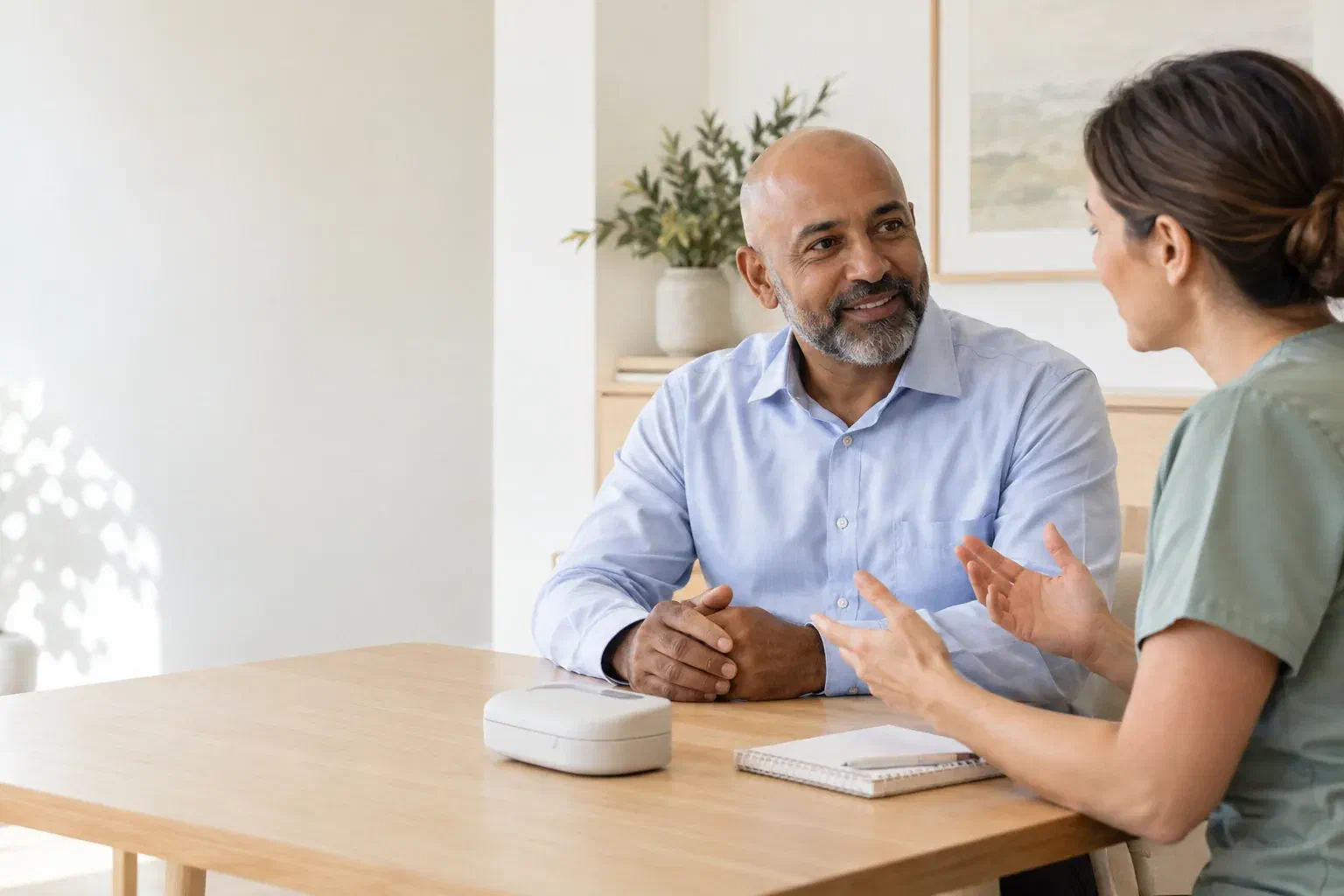
Illustrative patient discussing a sleep-related dental appliance assessment with a clinician
Specialized Care

Oral Appliance Therapy in Etobicoke

A sleep appliance involves several appointments, so the trip from the west end of Toronto is worth planning well. We help you organise the dental visits, gather the right records in advance, and know who to contact closer to home if a problem comes up between reviews.

Etobicoke · planning the visits

Make each trip count.

Coming from Etobicoke usually means a longer trip, and an oral appliance isn't a single-visit treatment. There's an assessment, a fitting and a series of reviews. Knowing that up front lets you group what can be grouped, send records ahead and avoid a trip that ends with missing information.

The device itself is prescribed for a diagnosed sleep-related breathing disorder and worn in the mouth overnight. Certain designs hold the lower jaw a little forward to help the airway stay open. It is not a grinding guard by another name, and choosing it depends on your diagnosis, a dental exam and a follow-up plan, not on preference alone.

Your sleep-care provider, who may well be nearer to home, stays in charge of the medical side. Call our clinic before booking so we can explain what happens here, whether a referral is needed, and which reports to bring. That way the first visit is productive, and nobody expects an appliance to leave with you that day.

Plan your first appliance visit
Illustrative closed dental appliance case beside water and a notebook on a bedside table
Send ahead, bring along

Gather these before the first appointment.

A device decision rests on your diagnosis, your experience with treatment so far and your dental health. Sharing them early lets the team spot gaps while there's still time to fill them, instead of on the day.

Your sleep report or referral

Have the report or referral letter ready and know who manages your sleep care. If you haven't been assessed, start with a medical provider about symptoms like breathing pauses others have witnessed or significant daytime sleepiness. A dentist can't diagnose what those signs mean.

Notes on current treatment

Write down what makes prescribed therapy difficult and what has been changed already. Your sleep-care clinician might resolve some problems without any new device. Keep using treatment that is working for you while the appliance question is being explored.

Your dental history and any existing appliance

Mention loose teeth, decay, gum concerns, planned crowns or fillings, dentures and jaw discomfort. Bring any mouthpiece you already wear. With this, the dentist can judge whether your teeth will hold a device comfortably, or whether care elsewhere should happen first.

Daytime drowsiness deserves medical attention and a careful approach to safety. Do not drive while sleepy, including to appointments. Looking into a dental appliance should never hold up assessment of breathing problems or a review of prescribed care.

Coordination across distance

Two offices, one shared plan

When the dental team and the sleep-care provider are in different places, clear roles matter even more. Ask who assesses dental suitability, who manages the diagnosis and how reports will be exchanged. That clarity keeps a device that merely feels comfortable from being taken as confirmation that the breathing disorder is under control.

Discuss the setbacks in advance as well. If the appliance is uncomfortable, isn't worn consistently or doesn't help enough, who do you contact first? Knowing the review path before starting means you can report problems early, by phone if that's appropriate, and an alternative is already part of the conversation.

Patient information: AASM and AADSM — oral appliance therapy guideline and follow-up recommendations

A device with a clear rationale

Ask why a given design suits your diagnosis and dental findings. Qualified clinicians may recommend a custom, adjustable appliance where it's indicated. Confirm exactly what's being made and by whom, rather than assuming any snoring product works like prescribed therapy.

Dental checks timed sensibly

The dentist should explain possible changes to teeth, gums, jaw or bite and how they'll be monitored. Ask how reviews can be scheduled around your travel. Report soreness or a different bite promptly, since early reviews catch what isn't obvious at fitting.

A tested result

Less snoring and better mornings are encouraging but don't confirm adequate control of sleep apnea on their own. Your sleep-care provider can describe the follow-up testing and how it will guide the plan. A device that feels fine still needs objective review.

Visits, in order

Where can steps be combined, and where can't they?

The sequence depends on your existing sleep assessment and dental condition. Ask which steps must happen before the device is made, which can share an appointment and who arranges medical testing or referral.

  1. Review records, ideally sent ahead

    We discuss your diagnosis, current treatment and reasons for considering an appliance. Sharing reports and your provider's details beforehand can make the visit more useful. If something is missing, we'll explain how to obtain it and what care continues in the meantime.

  2. Dental exam and treatment discussion

    Teeth, gums, restorations and the jaw are checked for factors that affect use. Ask whether dental work must come first, and whether it can be scheduled efficiently. Review the proposed device, limits, side effects, fees and follow-up before records or manufacture.

  3. Fitting and hands-on instruction

    The prescribing clinician confirms fit and demonstrates insertion, removal, cleaning and any permitted adjustment. Ask what is expected and what needs a call. Moving the device beyond its instructions is not a substitute for a review visit.

  4. Reviews with both providers

    Book the recommended dental reviews and sleep testing early, so they fit your calendar, rather than waiting for symptoms to return. Reviews cover comfort, actual use, dental changes and your sleep provider's findings, and the plan may be adjusted as a result.

Between appointments

Know who to call before something goes wrong.

Distance makes preparation more valuable. Keep both teams' contact information with the appliance case, and ask early how to handle a crack, new pain or a night when it can't be worn.

Stay within the prescribed settings

Wear the device as directed and adjust it only within the treating clinician's instructions. Keep a log if requested. If you're unsure how the mechanism works, ask for a demonstration at your next visit rather than experimenting with it alone.

Look after the appliance

Clean and store it according to its material, and bring it to every dental review. Report cracks, a loose component or a changed fit. Let us know about fillings or crowns planned with another dentist, since a change in tooth shape can affect how it seats.

Report symptoms to the right provider

Persistent sleepiness, returning snoring, witnessed pauses or difficulty wearing the device should go to the relevant clinician. Mention tooth, gum, jaw or bite concerns too. For severe symptoms or urgent concerns, seek care closer to home rather than waiting for a scheduled trip.

Patient information: NHLBI — oral device care and continuing sleep-apnea review

Comparing paths

Let the diagnosis lead the choice.

An appliance isn't automatically suitable for everyone with snoring or sleep apnea. Discuss clinical fit, expected effectiveness, practicality, including travel for reviews, and how outcomes will be checked.

When the existing treatment remains suitable

Keep positive airway pressure and adjust it

Comfort, equipment and consistent-use problems are worth taking back to your sleep-care clinician, as changes may help. A dental consultation should support an informed discussion, not suggest that prescribed positive airway pressure therapy be dropped while alternatives are considered.

When medical and dental findings both support it

A prescribed appliance with coordinated follow-up

An appliance can be considered for an appropriate patient within a supervised plan. Talk through the specific device, dental suitability and the objective check of its effect. A comfortable fit doesn't guarantee adequate treatment of the condition.

When a broader review is needed

Further assessment or a different treatment

If the diagnosis is uncertain or the response is limited, more medical assessment or another treatment may be required. Ask which provider will guide that step. An unassessed retail snoring device shouldn't replace recommended testing or prescribed care.

Patient information: NHLBI — sleep-apnea treatment options and oral devices

Planning from Etobicoke

Questions about visits, records and follow-up

Bring, or send ahead, your sleep report, any referral and your current appliance. These answers describe who handles which part and what follow-up is involved, so you can decide whether the pathway works for you.

(905) 876-4488
Can my records be sent before the first appointment?
Ask the team when you call. Having your sleep report, referral and provider details in advance can help the consultation focus on the right questions. The team will tell you what else may be needed.
Can the dental review and other dental work happen on the same day?
Sometimes, depending on what’s needed and the schedule. Ask when booking whether visits can be combined. Some steps, such as fitting after manufacture, have to happen in sequence.
Who should I call if my sleepiness gets worse between visits?
Contact the clinician managing your sleep condition or another medical provider near you. Worsening sleepiness is a medical concern. Don’t drive while drowsy, and don’t wait for a dental review to raise it.
Does my sleep doctor need to be involved if I go ahead?
Yes. The appliance treats a medical condition, so your sleep-care provider continues to manage the diagnosis and assess effectiveness. The dentist handles the device and dental monitoring, and both share relevant findings.
If my appliance feels loose, can I wait until my next scheduled trip?
Call first and describe the change. The team can advise whether it can wait or needs an earlier look. A changed fit may affect comfort and effect, so it’s worth reporting rather than assuming.
Can I make the device more effective by moving it forward between reviews?
Only if your prescribing clinician has given you instructions to do so. More advancement is not automatically better. Report ongoing symptoms so the device and plan can be reviewed professionally.
Call before you travel

A quick conversation can shape a well-organised first visit.

Phone Milton Dental Clinic on (905) 876-4488 about assessment and referral. Let us know if a sleep diagnosis and a treating provider are already in place, so we can help you plan the next step and the records to have ready.

Suitability, supply, referral and effectiveness are decided by individual medical and dental findings. Our team can confirm what pathway is available; no device, diagnosis or treatment outcome is guaranteed.

Visit Milton Dental Clinic
Unit 1, 342 Bronte St. S, Milton, ON L9T 5B7
Get directions Clinic hours
Monday–Thursday
11am–7pm
Friday–Sunday
By appointment only

Areas we serve

  • Milton
  • Oakville
  • Mississauga
  • Georgetown
  • Halton Hills
  • Acton
  • Campbellville
  • Brampton
  • Burlington
  • Puslinch
  • Rockwood
  • Erin
  • Caledon
  • Etobicoke
  • Old Milton
  • Bronte Meadows
  • Timberlea
  • Dorset Park
  • Dempsey
  • Clarke
  • Beaty
  • Coates
  • Harrison
  • Scott
  • Willmott
  • Ford
  • Bowes
  • Cobden
  • Walker
  • Mountain View
  • Milton Heights
  • Hawthorne Village
  • Valley View
  • Fallingbrook
  • Nassagaweya
  • Trafalgar
  • Esquesing
  • Nelson
  • Brookville
  • Moffat
  • Glen Williams
  • Norval
  • Limehouse
  • Stewarttown
  • Ashgrove
  • Hornby
  • Silver Creek
  • Speyside
  • Scotch Block
  • North Oakville
  • River Oaks
  • Glen Abbey
  • West Oak Trails
  • Palermo
  • Bronte Creek
  • College Park
  • Joshua Creek
  • Uptown Core
  • Preserve
  • Iroquois Ridge
  • Lisgar
  • Meadowvale
  • Meadowvale Village
  • Churchill Meadows
  • Erin Mills
  • Central Erin Mills
  • Streetsville
  • East Credit
  • Creditview
  • Heartland
  • Sheridan
  • Mount Pleasant
  • Credit Valley
  • Huttonville
  • Churchville
  • Springbrook
  • Northwest Brampton
  • Bram West
  • Fletcher's Meadow
  • Fletcher's Creek South
  • Alton Village
  • Orchard
  • Millcroft
  • Headon Forest
  • Tansley
  • Brant Hills
  • Tyandaga
  • Kilbride
  • Lowville
  • Aberfoyle
  • Morriston
  • Arkell
  • Hillsburgh
  • Freelton
  • Carlisle
  • Waterdown
  • Flamborough
  • Mountsberg

How can we help?

Milton Dental Clinic

Have a question about your smile? Choose the option that works best for you.

For urgent dental concerns, please call.
Messages are reviewed during clinic hours.