
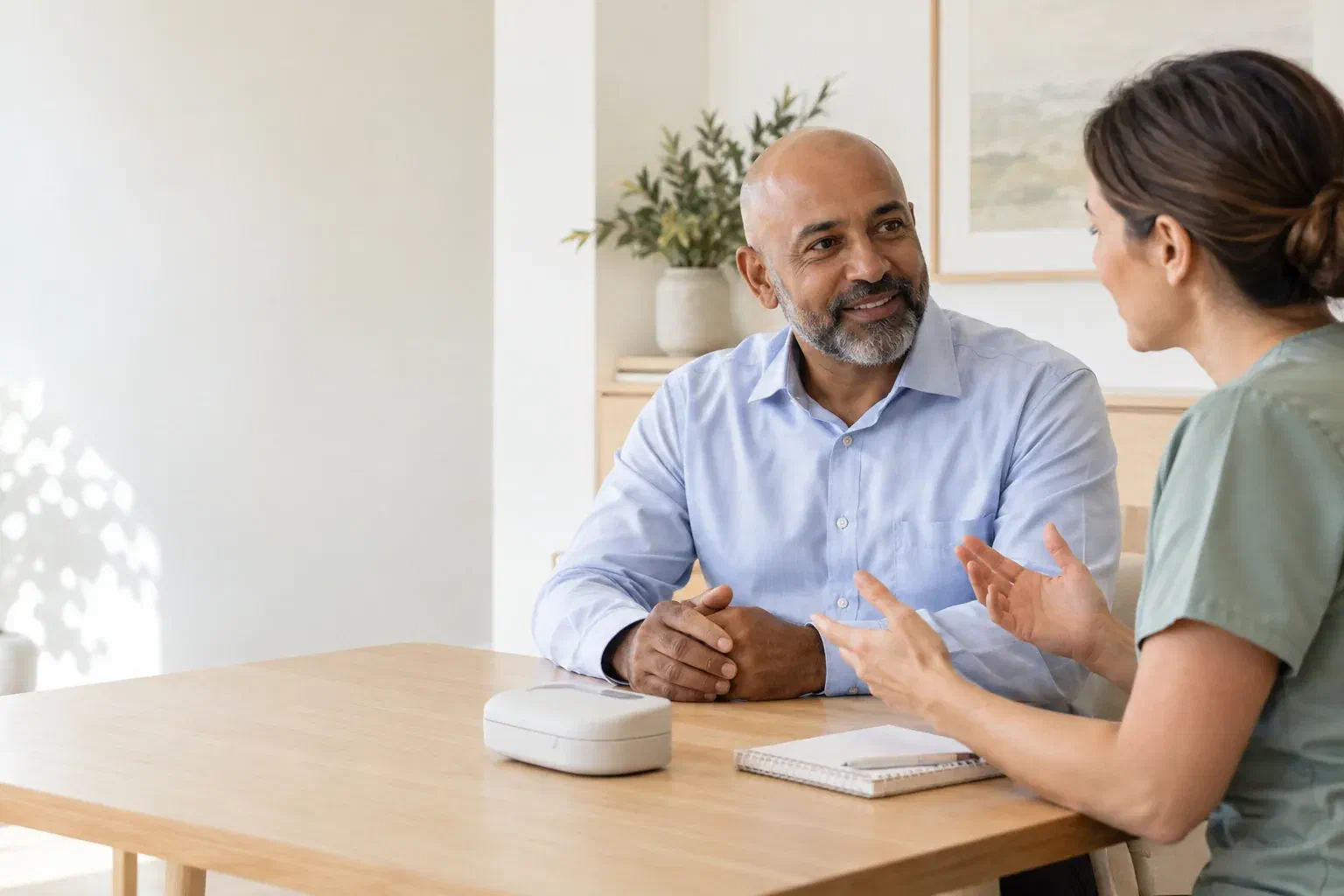
Illustrative patient discussing a sleep-related dental appliance assessment with a clinician
Specialized Care

Oral Appliance Therapy in Old Milton

The CPAP mask leaks, the straps press, and some nights it ends up on the floor. If an oral appliance has come up as a possible alternative, our nearby Bronte Street team can review the dental side with you while your sleep-care provider keeps guiding the medical plan.

Old Milton · when the mask isn't working

Is there another way to treat my sleep apnea?

Plenty of people with a sleep apnea diagnosis reach the same point: positive airway pressure was prescribed, but wearing it night after night has been difficult. Asking about alternatives is reasonable. The first conversation, though, belongs with the clinician managing your sleep condition, who may be able to fix a mask or pressure issue before anything else changes.

An oral appliance is one alternative that may be considered. It is a custom device prescribed for a sleep-related breathing problem, and certain designs keep the lower jaw slightly forward to help hold the airway open. It is not interchangeable with a grinding guard, and wanting to try it doesn't by itself make it the right or effective choice for you.

For anyone in Old Milton, the town's historic downtown, our Bronte Street practice is close by, which can make the several visits involved a little easier to schedule. Bring your sleep report, your provider's details and any mouthpiece you already have. We'll outline what the dental assessment covers and whether a referral or other step is needed first.

Ask whether an appliance could fit your plan
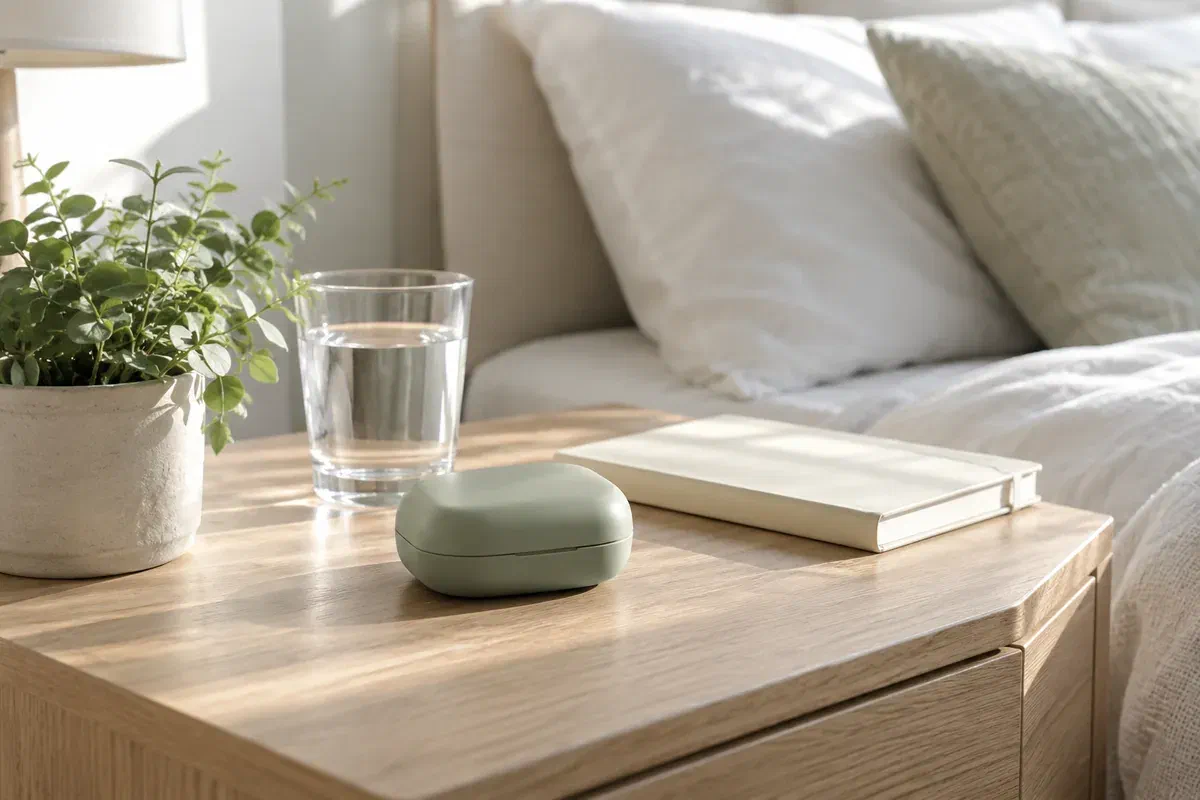
Illustrative closed dental appliance case beside water and a notebook on a bedside table
What to bring to the table

Your sleep record and your dental record, side by side

A device decision rests on more than a wish to stop using a mask. Describe your diagnosis, how prescribed treatment has gone and any dental problems, so the team can tell what is known and what still needs checking.

The diagnosis and who is following it

Bring your sleep-study results or referral and the name of the provider responsible for your care. If you were never formally assessed, raise symptoms such as breathing pauses others have noticed or persistent daytime fatigue with a physician. A dental visit can't confirm what those symptoms mean.

What has gone wrong with treatment so far

Be specific: a dry mouth, a leaking seal, claustrophobia, or pulling the mask off while asleep. Note what changes have already been tried. Some of these problems can be addressed by your sleep-care provider, so carry on with treatment that helps while another option is being looked at.

Dental factors that affect a device

Mention partial dentures, missing or loose teeth, gum concerns, planned crowns and any jaw clicking or soreness. Older restorations matter too. These details tell the dentist whether the teeth can anchor an appliance comfortably, or whether something should be treated or reviewed first.

Heavy daytime sleepiness should be discussed with a physician and taken seriously for safety. Never drive while drowsy. Considering a dental appliance is not a reason to delay a breathing assessment or a review of the treatment you were prescribed.

The value of a shared plan

Comfort matters. So does proof that it works.

Switching from a mask to a mouthpiece can feel like a relief, and that relief can hide an important question: is the breathing problem actually being treated? A coordinated plan answers it. Your dentist looks after fit and dental health, your sleep-care provider looks after the diagnosis, and the two share what each needs to know.

Ask early what the plan is if the appliance doesn't suit you. It may be uncomfortable, it may be hard to wear consistently, or testing may show it isn't doing enough. Knowing the review process in advance lets you raise problems sooner, and a fallback should exist so you aren't left without effective care.

Patient information: AASM and AADSM — oral appliance therapy guideline and follow-up recommendations

A design matched to you

Find out why a particular appliance is being recommended for your diagnosis and dental findings. Qualified clinicians may use a custom device that can be adjusted when that is indicated. Check exactly who provides it, and don't treat a retail snoring product as equivalent to prescribed therapy.

Watching the teeth and jaw over time

Possible changes to teeth, gums, jaw joints or the bite should be explained before you start, along with how they'll be monitored. Report soreness or a bite that feels off. Periodic reviews can reveal changes that weren't noticeable when the device was new.

Testing that confirms the effect

Sleeping more quietly, or waking up feeling better, is welcome news but not confirmation that apnea is adequately controlled. Your sleep-care provider can tell you about follow-up testing and how it will guide decisions. A device that feels fine still needs an objective check.

The usual sequence

Confirm, examine, fit, then recheck

No two starting points are identical. Some people arrive with a recent sleep study; others need records gathered first. Ask what has to happen before a device is made, which appointments are included and who arranges medical testing.

  1. Talk through your treatment history

    We go over your diagnosis, what you've been prescribed and why you're interested in an appliance. Share any reports and your provider's contact details. If gaps exist, we'll discuss how to fill them and which treatment you should continue while the assessment proceeds.

  2. Check the dental foundation

    The exam covers teeth, gums, crowns and fillings, and the jaw. You'll learn whether any dental work should come first. Then review the suggested appliance, its limitations, possible side effects, fees and follow-up before records are taken or the device is ordered.

  3. Fitting day

    The prescribing clinician confirms the fit and walks you through insertion, removal, cleaning and any adjustment you're allowed to make. Ask what sensations are expected and which ones mean you should call. Advancing the device beyond the instructions won't necessarily make it work better.

  4. Ongoing reviews with both teams

    Attend the dental visits and sleep testing that have been recommended rather than waiting for symptoms to signal a problem. Each review looks at comfort, how much you're wearing it, dental changes and the sleep provider's results. Adjustments or a different approach may follow.

After the first weeks

A familiar device still needs a plan behind it.

Even once wearing it feels normal, the appliance deserves regular attention. Keep contact details for both teams within reach and ask what to do if it breaks, hurts or can't be worn.

Stick to the wear and adjustment directions

Wear the appliance as prescribed and change its settings only within the limits your clinician set. Record your use if you were asked to. If the adjustment mechanism confuses you, ask for another demonstration rather than experimenting or relying on instructions meant for another device.

Keep it clean and check its condition

Follow the cleaning and storage advice for your appliance's material. Bring it to every dental review and point out cracks, a loose piece or a change in fit. Tell us about planned fillings or crowns, since a reshaped tooth can alter how the device seats.

Report changes and stay with medical follow-up

Let the appropriate provider know about lasting sleepiness, snoring that comes back, pauses a partner notices, or difficulty wearing the device. Tooth, gum, jaw or bite discomfort should be mentioned too. Don't decide on your own that quieter sleep means testing or medical care can stop.

Patient information: NHLBI — oral device care and continuing sleep-apnea review

Mask, mouthpiece, or something else

Which path fits your diagnosis?

An appliance is not the default answer for everyone who snores or has sleep apnea. Review suitability, expected effectiveness, day-to-day practicality and how results will be measured with the clinician who manages your condition.

When the current treatment can still work

Positive airway pressure, with the problems addressed

Raise comfort, equipment or nightly-use difficulties with your sleep-care provider, as the plan may be adjustable. A dental appointment can support an informed choice, but it shouldn't signal that prescribed positive airway pressure therapy be set aside while alternatives are explored.

When both assessments support it

A prescribed appliance with follow-up built in

For an appropriate patient, an appliance can sit within a supervised plan. Discuss the specific device, whether your teeth can support it and how its effect will be objectively reviewed. A device that fits well isn't guaranteed to treat the diagnosed condition adequately.

When the results call for a wider review

Further evaluation or another treatment

An uncertain diagnosis or an insufficient response may lead to more medical assessment or a different treatment. Ask which provider will lead that choice. An over-the-counter snoring device nobody has assessed shouldn't replace recommended testing or prescribed care.

Patient information: NHLBI — sleep-apnea treatment options and oral devices

If you're thinking of leaving the mask

What people ask before trying an appliance

Your sleep report, referral and current equipment or appliance are all worth having with you. These answers explain the responsibilities and follow-up involved, so you can decide whether to proceed.

(905) 876-4488
Is an oral appliance an option if I can't tolerate CPAP?
It may be, for some people, but that depends on your diagnosis and dental findings. Discuss the difficulties with your sleep-care provider first, since mask or pressure changes may help. If an appliance is recommended, a dentist can assess whether your teeth and jaw can support one.
Can I put my CPAP away once I've booked an appliance consultation?
No, not unless the clinician managing your sleep condition tells you to. Booking an assessment doesn’t change your current treatment needs. Ask that provider how to manage in the meantime and whether a transition plan makes sense.
I have a partial denture. Can I still use a sleep appliance?
Possibly. Dentures, missing teeth and existing restorations all affect how a device is supported, so the dentist needs to examine them. Bring the denture to the visit and ask whether any dental treatment or another opinion is needed first.
How will we know the appliance is actually treating my apnea?
Through the follow-up your sleep-care provider recommends, which may include testing. How you feel and how loudly you snore are useful clues, but they don’t confirm adequate control. Ask who will review the results and when.
Can I tighten or advance the device myself if snoring continues?
Only within the instructions the prescribing clinician gave you. Further advancement isn’t automatically better. Report the ongoing snoring and ask whether the device, its settings or the overall plan needs a professional review.
What should I do if my jaw aches in the morning?
Mention it to the treating dentist, especially if the ache continues or worsens. Some awareness can happen when starting, but persistent jaw discomfort or a changed bite should be assessed. Don’t adjust the device on your own to compensate.
Close to Old Milton

Bring your questions about the mask, the mouthpiece, and what comes next.

Phone Milton Dental Clinic at (905) 876-4488 to ask about assessment and any referral needed. Tell us whether you have a sleep diagnosis and who is treating it, and we'll help you work out the next step and which records to gather.

Suitability, provision, referral and effectiveness all depend on individual medical and dental findings. Confirm the pathway available to you with our team; no device, diagnosis or outcome is guaranteed.

Visit Milton Dental Clinic
Unit 1, 342 Bronte St. S, Milton, ON L9T 5B7
Get directions Clinic hours
Monday–Thursday
11am–7pm
Friday–Sunday
By appointment only

Areas we serve

  • Milton
  • Oakville
  • Mississauga
  • Georgetown
  • Halton Hills
  • Acton
  • Campbellville
  • Brampton
  • Burlington
  • Puslinch
  • Rockwood
  • Erin
  • Caledon
  • Etobicoke
  • Old Milton
  • Bronte Meadows
  • Timberlea
  • Dorset Park
  • Dempsey
  • Clarke
  • Beaty
  • Coates
  • Harrison
  • Scott
  • Willmott
  • Ford
  • Bowes
  • Cobden
  • Walker
  • Mountain View
  • Milton Heights
  • Hawthorne Village
  • Valley View
  • Fallingbrook
  • Nassagaweya
  • Trafalgar
  • Esquesing
  • Nelson
  • Brookville
  • Moffat
  • Glen Williams
  • Norval
  • Limehouse
  • Stewarttown
  • Ashgrove
  • Hornby
  • Silver Creek
  • Speyside
  • Scotch Block
  • North Oakville
  • River Oaks
  • Glen Abbey
  • West Oak Trails
  • Palermo
  • Bronte Creek
  • College Park
  • Joshua Creek
  • Uptown Core
  • Preserve
  • Iroquois Ridge
  • Lisgar
  • Meadowvale
  • Meadowvale Village
  • Churchill Meadows
  • Erin Mills
  • Central Erin Mills
  • Streetsville
  • East Credit
  • Creditview
  • Heartland
  • Sheridan
  • Mount Pleasant
  • Credit Valley
  • Huttonville
  • Churchville
  • Springbrook
  • Northwest Brampton
  • Bram West
  • Fletcher's Meadow
  • Fletcher's Creek South
  • Alton Village
  • Orchard
  • Millcroft
  • Headon Forest
  • Tansley
  • Brant Hills
  • Tyandaga
  • Kilbride
  • Lowville
  • Aberfoyle
  • Morriston
  • Arkell
  • Hillsburgh
  • Freelton
  • Carlisle
  • Waterdown
  • Flamborough
  • Mountsberg

How can we help?

Milton Dental Clinic

Have a question about your smile? Choose the option that works best for you.

For urgent dental concerns, please call.
Messages are reviewed during clinic hours.