

Illustrative patient discussing an oral lesion assessment with a clinician
Specialized Care

Oral Lesion Removal in Oakville

Told by a hygienist or doctor that a mouth spot should be checked? We can examine the area, explain what the earlier recommendation means, and talk through whether sampling, removal or a specialist referral fits. Coming from Oakville, bring any notes you were given.

After someone else noticed it

A recommendation to have it checked is a starting point, not a verdict.

It's unsettling to hear at a cleaning or a medical visit that a spot in your mouth should be looked at more closely. Often you hadn't noticed it at all. An oral lesion is any area of tissue that differs from its surroundings, such as a bump, patch, ulcer or change in texture, and the label alone does not tell anyone what it is.

Taking a lesion out may be reasonable in some cases, but the decision follows an examination and a plan. The dentist might take a sample before deciding on treatment, remove a small area completely for testing as an excisional biopsy, or recommend that a specialist assess it first because of its position or appearance.

When you come in from Oakville, bring whatever the other provider gave you, even a handwritten note, and tell us what you were told. We'll explain how the assessment and any referral would work, without assuming the visit ends with removal or a guaranteed answer.

Follow up on a flagged spot
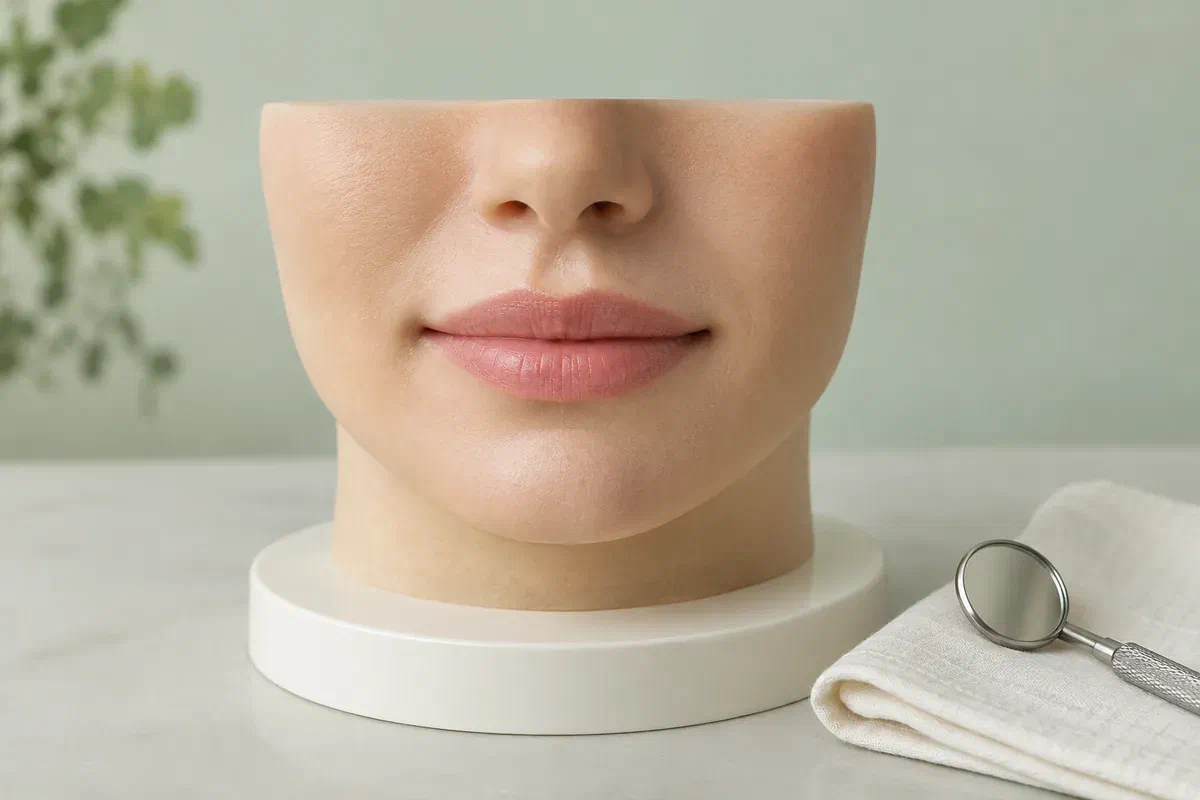
Illustrative closed-mouth teaching model on a display base beside a dental mirror
Bring the paper trail

What was seen before helps us understand what we see now.

Note when the area was first pointed out and whether it has changed since. Copies of referral letters, photos taken by the other office or lab reports save time and prevent details from being lost between providers.

An edge or appliance that may be rubbing

Point out if the spot lines up with a sharp tooth, an old filling, a retainer or a denture. The dentist can assess the possible irritant and the tissue together. Even when the cause seems obvious, the lesion still needs an examination to confirm what it is.

Changes since it was first mentioned

Tell us whether the area has grown, changed colour or texture, started to bleed, or begun to bother you when eating. A lesion that causes no pain can still matter. Try not to keep prodding or biting it while you wait to be seen.

Earlier testing or treatment

If a sample was taken or a similar area was removed before, let us know and share the result. A lump that comes back should be reassessed rather than assumed to match the original. Previous records help the dentist decide what is still unknown.

Follow the timing on any referral you've been given, and book an assessment for a mouth lesion that persists or changes. Do not attempt to cut, burn, drain or tie off the tissue yourself. If bleeding won't stop, or breathing or swallowing becomes difficult, get emergency medical care.

Understanding the recommendation

What exactly is the procedure supposed to achieve?

Taking out a lesion can serve different aims. Sometimes the point is to learn what the tissue is; sometimes it is to treat something already identified, or to end a cycle of trauma to the area. Ask which one applies to you. With that purpose in plain view you can compare it with the alternatives, and you won't mistake removing what you can see for finishing everything that needs doing.

The site of the lesion deserves its own questions. Ask what structures are near it, what healing usually looks like there, and whether eating or speech may be affected during recovery. If a specialist is suggested, ask why that setting suits your situation and who will coordinate the referral and the results.

Reasoning you can follow

You should be able to see how the dentist got from your history and the examination to the advice on the table. Ask what further tests might shift it. No search result can rule out a problem, and no picture online can choose a procedure for you.

Clarity about the laboratory step

Find out whether tissue is going for testing, who sends it, and who will read the report back to you. If another office already did a biopsy, ask how that finding fits the current plan. One named provider should own the job of reviewing results with you.

Checkpoints with a stated purpose

Each follow-up should have a job, such as looking at the wound, explaining findings or planning further care. Ask which it is before you go. A site that feels fine can still have an open question attached, so keep the conversation about the report on the calendar.

The path through care

Assess, agree, treat, then review together

You should understand the reasoning before you consent. Tell the dentist if the procedure, a possible diagnosis or the effect on your workweek concerns you, so those worries can be dealt with openly.

  1. Assess the area with full background

    We'll go over the lesion's timeline, what the other provider noted, and any reports you bring. Your medications, allergies, bleeding history and health conditions are reviewed too. This exam helps determine whether removal, sampling, watching or a specialist is the appropriate route.

  2. Settle the extent and the alternatives

    You'll hear how much tissue the dentist proposes to take and why. This is the time to ask about risks particular to that spot, how freezing will be handled, and whether a specialist would be the better choice. Get the stages and fees in writing; an assessment visit is not automatically a treatment visit.

  3. Perform the agreed procedure

    On the day, the clinician carries out exactly what was agreed and, where it makes sense, sends the tissue away for testing. Ask in advance whether you'll have stitches and what becomes of them. You should go home with written care steps and someone to call.

  4. Go over the outcome and next steps

    Attend the follow-up and ask for the result in plain terms. Find out whether the concern raised by the other provider is resolved or whether more assessment, treatment or monitoring is advised. If an irritant is still present, discuss correcting it.

Recovery and results

Two jobs after treatment: heal well and hear the findings.

Recovery varies with the size and location of the removed tissue and with your general health. Follow the written instructions from the clinician who treated you, and ask about anything that looks hard to do at home.

Stick to the food and cleaning guidance

Ask how to clean around the site and which foods or activities to avoid for a while. Take care not to bite numb tissue after the anaesthetic. Advice from a different dental procedure may not apply, so don't add a rinse that wasn't suggested.

Protect the site and any stitches

Avoid pulling your lip or cheek back again and again to check on it, and don't pick at the surface. Find out whether stitches will dissolve or need removal. If something seems unusual, tell the team and follow their advice instead of trimming it yourself.

Report warning signs and keep the review

Contact the treating provider about worsening pain, notable swelling, fever, or bleeding that continues despite the instructions. Keep the results appointment even if recovery feels routine. If nobody gets in touch when expected, call to confirm how the findings will be shared.

Comparing the next steps

The question being asked shapes the answer.

Ask why the recommended path suits this specific area. A good plan explains what is being investigated and what findings would change the dentist's advice.

When the examination supports watching

Monitoring with a set review

If the likely cause is a sharp edge or a rubbing appliance, fixing that and looking again may come first. Ask for the recheck date and the signs that mean you shouldn't wait for it. Watching is a plan with a finish line, never a polite way of shelving an investigation.

When lab testing or local treatment is needed

A sample or removal of a suitable lesion

The dentist may propose taking a small piece for testing, or taking out a small lesion entirely. Ask which you're agreeing to and what might follow once the report arrives. A tiny spot is not automatically a simple one, and one appointment may not close the matter.

When the location or findings need more expertise

Specialist review before treatment

For some areas, the most useful first move is a specialist's opinion, perhaps because of where the tissue sits or what the exam showed. Ask how soon you should be seen and whom to call if you hear nothing. Sorting out the order of care early protects the tissue that matters.

Common questions from Oakville

Following up on a spot someone else found

Every answer depends on the examination and on what is already known. Bring earlier reports and explain what concerns you most so the consultation can focus on your decisions.

(905) 876-4488
My hygienist mentioned a spot I can't even feel. Should I still book?
Yes. Many lesions cause no discomfort, which is one reason routine checks matter. Booking an assessment lets the dentist examine the area properly and decide whether it needs monitoring, sampling or a referral.
Do I need a referral to have a lesion assessed at your clinic?
No referral is needed for a dental assessment. If you have one from another provider, bring it and tell us its urgency so we can coordinate with whoever wrote it and avoid repeating steps unnecessarily.
What's the difference between a biopsy and removing the whole lesion?
A biopsy takes tissue to be examined under a microscope. Sometimes only part of the area is sampled, and sometimes a small lesion is removed completely, which also provides the sample. Ask which approach is planned and why.
Is it unusual for a dentist to send me to a specialist?
Not at all. A referral may reflect the location, the findings or the type of procedure needed. Ask what the specialist will assess and how quickly you should expect to be seen.
If the site heals well, do I still need to hear the results?
Yes. Healing tells you nothing about the lab diagnosis. Confirm who will contact you and when, and phone if that date passes without anyone explaining the findings.
Could a lesion I was told to watch be removed after all?
It could, if the dentist finds a reason at a review, such as growth or a change in appearance. Monitoring is a plan with checkpoints, and the plan can change based on what each review shows.
Oakville lesion assessments

Bring what you were told, and we'll help make sense of it.

To book an oral lesion assessment at our Bronte Street practice, call (905) 876-4488. Mention any referral, earlier biopsy or recent change in the area so the team can plan an appointment that suits the next step.

Not all lesions need removal. Diagnosis, the setting for treatment, referral, recovery and follow-up depend on the examination and any laboratory findings.

Visit Milton Dental Clinic
Unit 1, 342 Bronte St. S, Milton, ON L9T 5B7
Get directions Clinic hours
Monday–Thursday
11am–7pm
Friday–Sunday
By appointment only

Areas we serve

  • Milton
  • Oakville
  • Mississauga
  • Georgetown
  • Halton Hills
  • Acton
  • Campbellville
  • Brampton
  • Burlington
  • Puslinch
  • Rockwood
  • Erin
  • Caledon
  • Etobicoke
  • Old Milton
  • Bronte Meadows
  • Timberlea
  • Dorset Park
  • Dempsey
  • Clarke
  • Beaty
  • Coates
  • Harrison
  • Scott
  • Willmott
  • Ford
  • Bowes
  • Cobden
  • Walker
  • Mountain View
  • Milton Heights
  • Hawthorne Village
  • Valley View
  • Fallingbrook
  • Nassagaweya
  • Trafalgar
  • Esquesing
  • Nelson
  • Brookville
  • Moffat
  • Glen Williams
  • Norval
  • Limehouse
  • Stewarttown
  • Ashgrove
  • Hornby
  • Silver Creek
  • Speyside
  • Scotch Block
  • North Oakville
  • River Oaks
  • Glen Abbey
  • West Oak Trails
  • Palermo
  • Bronte Creek
  • College Park
  • Joshua Creek
  • Uptown Core
  • Preserve
  • Iroquois Ridge
  • Lisgar
  • Meadowvale
  • Meadowvale Village
  • Churchill Meadows
  • Erin Mills
  • Central Erin Mills
  • Streetsville
  • East Credit
  • Creditview
  • Heartland
  • Sheridan
  • Mount Pleasant
  • Credit Valley
  • Huttonville
  • Churchville
  • Springbrook
  • Northwest Brampton
  • Bram West
  • Fletcher's Meadow
  • Fletcher's Creek South
  • Alton Village
  • Orchard
  • Millcroft
  • Headon Forest
  • Tansley
  • Brant Hills
  • Tyandaga
  • Kilbride
  • Lowville
  • Aberfoyle
  • Morriston
  • Arkell
  • Hillsburgh
  • Freelton
  • Carlisle
  • Waterdown
  • Flamborough
  • Mountsberg

How can we help?

Milton Dental Clinic

Have a question about your smile? Choose the option that works best for you.

For urgent dental concerns, please call.
Messages are reviewed during clinic hours.