

Illustrative patient discussing an oral lesion assessment with a clinician
Specialized Care

Oral Lesion Removal in Puslinch

When a lump in your mouth is annoying, the urge to deal with it yourself is understandable. Please don't. Tissue inside the mouth needs to be examined before anyone removes it. From Puslinch, we can assess the area and explain sampling, removal or referral safely.

Put down the nail clippers

Home fixes can hurt the tissue and hide the answer.

It starts small: a tag of tissue you can feel with your tongue, or a bump that catches when you chew. Before long, you're wondering whether a clean pair of scissors or a skin-tag kit would sort it out. An oral lesion, which simply means tissue that looks or feels different from its surroundings, deserves better than that.

Removing a lesion can be a reasonable choice, but the dentist needs to examine it first and plan the safest approach. Part of it may be sampled for testing. A small lesion might be removed completely and sent to the lab, an excisional biopsy. In some cases a specialist needs to see the area before anything is done.

From Puslinch, the drive in can feel like one more thing on a long list, which is often when home remedies start to look tempting. Tell us what's bothering you about the spot. We'll examine it, explain the options and any referral, and not suggest that the visit guarantees same-day removal or a particular result.

Have it examined, not snipped
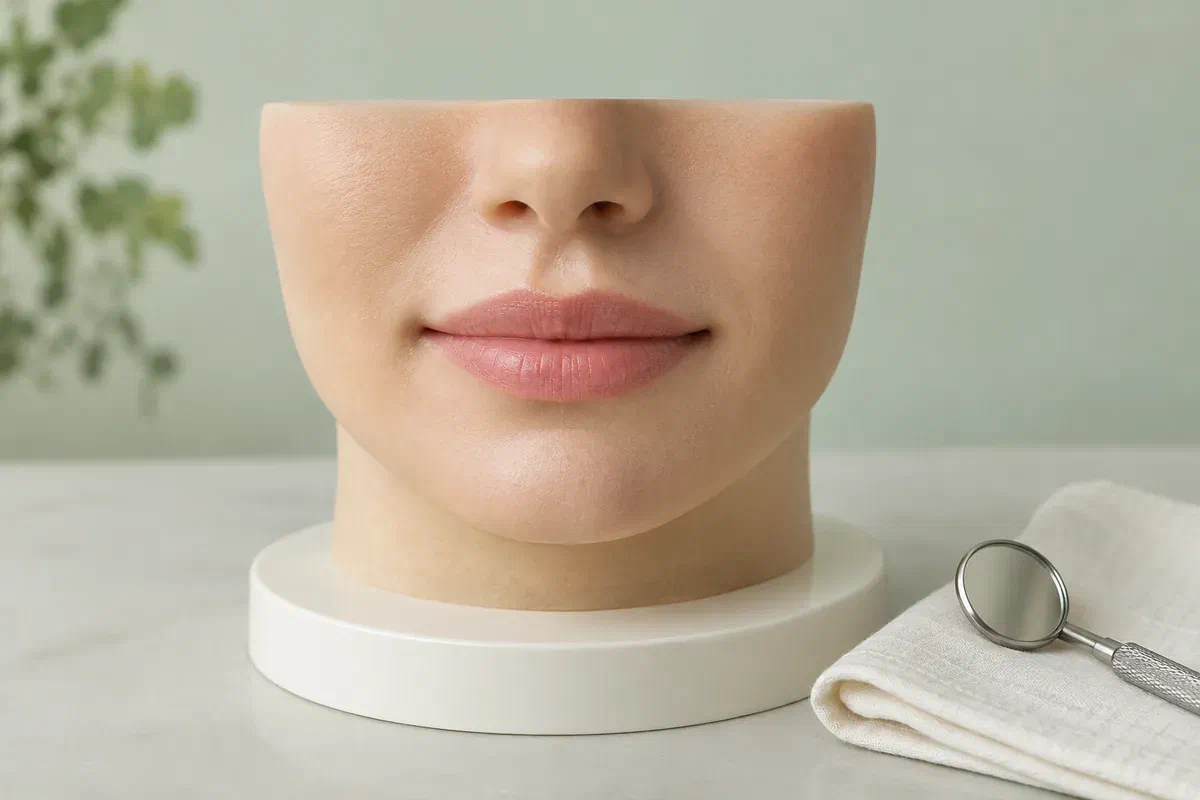
Illustrative closed-mouth teaching model on a display base beside a dental mirror
Tell us honestly

Including anything you've already tried

Note roughly when the area appeared and whether it has grown, shrunk, healed or come back. If you've tried a home remedy, a product or anything else on it, say so; it helps us understand what we're seeing. Bring notes or referrals from other providers.

Things that rub or catch it

Point out whether a tooth, filling, crown, denture or habit seems to irritate the area. We'll look at both. A rough edge that lines up with the spot is a good clue, yet smoothing it away won't identify the tissue, and the exam still has to happen.

Changes, including after home attempts

Describe any change in size, colour, texture or feeling, plus bleeding or difficulty eating. If anything you tried at home made it sore, raw or different, tell us. Painless areas can still need attention, so stop treating it yourself in the meantime.

Earlier professional treatment

If a dentist or doctor has sampled or removed this area or a similar one before, let us know who did it and share the lab report if you kept it. A recurring lump is assessed again rather than assumed to be the same. Records show the dentist what's already been learned.

Any spot that hangs around or keeps changing should be examined, and a referral you already hold should be followed at its stated urgency. Do not cut, burn, freeze, drain or tie off tissue at home, or use skin products on it. Heavy bleeding you can't control, or difficulty breathing or swallowing, requires emergency medical care.

What proper care gives you

A safe procedure, and an actual answer

The biggest difference between home removal and professional care isn't just safety; it's information. A dentist can ask what the procedure is for. Is it to establish a diagnosis, to treat something already identified, to stop repeated irritation, or all three? Knowing the purpose helps you weigh the advice, and it makes clear that getting rid of the visible part is not the same as finishing care.

The location of the lesion matters too. Ask what's close to it, how that area heals, and whether eating or speaking might feel different for a few days. If a specialist is recommended, ask why that setting is a better fit and who will look after the referral and the results.

Advice from an examination, not a guess

The dentist considers your history and the findings before recommending removal. Ask whether more investigation could change the plan. A home inspection with a flashlight, or an online picture, can't tell you whether a spot is harmless.

Tissue that can actually be tested

When a lesion is removed professionally, it can be sent to a laboratory. Ask whether that's planned and how you'll learn the result. Tissue removed or damaged at home usually can't provide that information, which is one more reason to leave it alone.

Follow-up for healing and diagnosis

A review might check the wound, explain the lab report or plan further care. Ask what each appointment is for. Comfortable healing doesn't answer what the tissue was, and a report may need discussing after the site has settled.

What we do instead

A careful, step-by-step alternative to the bathroom mirror

Before you consent, you should understand the plan. If you're nervous about the procedure, the possible findings or the effect on work and meals, tell the dentist so it can be talked through properly.

  1. Examine the area and hear the background

    We'll review the lesion's history, anything you tried at home, and any reports or referrals. We'll also ask about your medicines, allergies, bleeding tendencies and medical conditions. That examination tells us whether removal, a sample, monitoring or a specialist is the right path.

  2. Plan the extent and the alternatives

    You'll hear how much tissue would come out, the reasoning, and the risks that come with that particular site. Numbing is covered, as is the question of whether a specialist is better placed. Get the stages and costs in writing; an assessment doesn't automatically include treatment.

  3. Remove the tissue safely, if agreed

    When the procedure goes ahead, the clinician numbs the area, removes the agreed tissue and sends it for testing if indicated. Ask whether stitches are used and how they'll be cared for. You'll leave with written instructions and a contact number.

  4. Review healing and the result

    At the follow-up, the dentist checks the site and explains any findings plainly. Ask whether that settles the original worry or whether anything else, such as another test, further treatment or a watching period, is recommended. If something was rubbing the area, plan how to fix it.

Healing well

The same rule applies after treatment: let it be.

Recovery depends on the size and location of what was removed and your general health. Follow the written instructions from the clinician, and ask about anything you're unsure you can manage at home.

Eat and clean as instructed

Ask which foods to avoid and how to brush near the site for now. Be careful not to bite numb tissue after the freezing. Don't apply tips from another procedure or start a home rinse, salve or remedy that wasn't recommended.

No trimming, picking or pulling

Resist the mirror checks that mean tugging your lip or cheek aside, and leave the healing surface and any stitches alone. Ask whether stitches dissolve or need removing. If a stitch end or tag of tissue bothers you, call and describe it rather than cutting it.

Report problems and keep the results visit

Call if soreness is building, swelling is significant, you run a temperature, or bleeding doesn't settle with the steps provided. Go to the results appointment even when recovery has been uneventful, and phone if no one has been in touch when expected.

Safer routes forward

Three professional options, each with a purpose

Ask why the recommended route fits this particular lesion. The plan should explain what's being investigated and what would lead the dentist to change it.

When the exam supports monitoring

Review after fixing an irritant

If a sharp edge or habit seems to be the cause, addressing it and rechecking the area may come first. Ask when that recheck is and what changes mean calling sooner. Monitoring should have a reason and an end point, not drift on.

When lab testing or local treatment is indicated

Sample or remove a suitable lesion

The dentist may propose sampling part of the lesion or removing a small one entirely. Ask which and whether more treatment could follow the report. Even a tiny tag of tissue can't be diagnosed by size, and one procedure may not finish care.

When the site or findings call for more expertise

Specialist assessment first

A referral may come before any treatment when the area needs wider evaluation or a different setting. Find out how quickly you should be seen and who to chase if nothing arrives. A specialist can help decide the right sequence before the tissue is changed.

Puslinch questions about home removal

Why the do-it-yourself route isn't worth it

What applies to you rests on the examination and on what's already known. Bring any reports, and be open about anything you've tried, so the visit can focus on the right decisions.

(905) 876-4488
Is it safe to tie a thread around a tag of tissue in my mouth?
No. Tying off tissue at home can cause pain, bleeding and infection, and it destroys the chance to test what the tissue was. Book an examination so it can be assessed and, if appropriate, removed properly.
Can a skin-tag remover or wart treatment be used inside the mouth?
No. Those products are designed for skin, not the delicate lining of the mouth, and can injure it. They also make it harder for a dentist to assess the area afterward.
I already tried to remove it myself. Will you still see me?
Yes. Tell us exactly what you did and when, and don’t try again. The dentist will examine the area and help it heal, and decide whether the remaining tissue needs further care.
Why can't I just pull off a flap of tissue that's hanging loose?
Even a loose-looking flap can bleed more than expected or be attached more deeply than it seems. Leave it alone, avoid chewing on it, and call to have it looked at.
Will the dentist always send the tissue for testing?
Often, when tissue is removed, but it depends on the findings and the procedure. Ask before treatment whether testing is planned and who will explain the result to you.
Can a sore from a sharp tooth heal once the tooth is smoothed?
It may, and the dentist may suggest a review after smoothing the edge. If the area doesn’t settle by the review date, or it grows or changes, further assessment will be needed.
Booking from Puslinch

Let us take care of it the safe way.

Call (905) 876-4488 to arrange an assessment at our Bronte Street practice. If you have a referral, a past biopsy result or you've noticed a recent change, mention it when you book so we can plan the right visit.

Not every lesion should come out. What it is, where it's treated, whether a referral is needed, and how recovery and follow-up go are all shaped by the exam and any lab report.

Visit Milton Dental Clinic
Unit 1, 342 Bronte St. S, Milton, ON L9T 5B7
Get directions Clinic hours
Monday–Thursday
11am–7pm
Friday–Sunday
By appointment only

Areas we serve

  • Milton
  • Oakville
  • Mississauga
  • Georgetown
  • Halton Hills
  • Acton
  • Campbellville
  • Brampton
  • Burlington
  • Puslinch
  • Rockwood
  • Erin
  • Caledon
  • Etobicoke
  • Old Milton
  • Bronte Meadows
  • Timberlea
  • Dorset Park
  • Dempsey
  • Clarke
  • Beaty
  • Coates
  • Harrison
  • Scott
  • Willmott
  • Ford
  • Bowes
  • Cobden
  • Walker
  • Mountain View
  • Milton Heights
  • Hawthorne Village
  • Valley View
  • Fallingbrook
  • Nassagaweya
  • Trafalgar
  • Esquesing
  • Nelson
  • Brookville
  • Moffat
  • Glen Williams
  • Norval
  • Limehouse
  • Stewarttown
  • Ashgrove
  • Hornby
  • Silver Creek
  • Speyside
  • Scotch Block
  • North Oakville
  • River Oaks
  • Glen Abbey
  • West Oak Trails
  • Palermo
  • Bronte Creek
  • College Park
  • Joshua Creek
  • Uptown Core
  • Preserve
  • Iroquois Ridge
  • Lisgar
  • Meadowvale
  • Meadowvale Village
  • Churchill Meadows
  • Erin Mills
  • Central Erin Mills
  • Streetsville
  • East Credit
  • Creditview
  • Heartland
  • Sheridan
  • Mount Pleasant
  • Credit Valley
  • Huttonville
  • Churchville
  • Springbrook
  • Northwest Brampton
  • Bram West
  • Fletcher's Meadow
  • Fletcher's Creek South
  • Alton Village
  • Orchard
  • Millcroft
  • Headon Forest
  • Tansley
  • Brant Hills
  • Tyandaga
  • Kilbride
  • Lowville
  • Aberfoyle
  • Morriston
  • Arkell
  • Hillsburgh
  • Freelton
  • Carlisle
  • Waterdown
  • Flamborough
  • Mountsberg

How can we help?

Milton Dental Clinic

Have a question about your smile? Choose the option that works best for you.

For urgent dental concerns, please call.
Messages are reviewed during clinic hours.