

Illustrative patient discussing ongoing gum care with a dental hygienist
Specialized Care

Periodontal Maintenance in Brampton

When one person in the household needs closer gum follow-up than everyone else, schedules get complicated. For Brampton households, our team can review gum health after treatment, clean where needed, and help plan visits that fit around family life.

Brampton households and gum follow-up

Your recall looks different from the rest of the family’s

The kids go every six months, your partner goes when reminded, and you have been told to come back sooner. That can feel odd until the reason is clear. Periodontal maintenance is the follow-on care for someone treated for periodontitis. It blends a check of the gums, professional cleaning, and home coaching, with the aim of keeping things steady and spotting change before it grows.

What happens at your visit is guided by your history, not the household’s. Previously treated teeth, any shift in bleeding or pocket depth, and how well you can clean those areas between school runs and dinner all shape it. That makes it a genuine review rather than a cleaning that turns up on the calendar.

For anyone travelling from Brampton, bring letters or notes from earlier gum treatment, especially if a specialist was involved. We can talk through what needs watching and how your visits might line up with other family appointments. If juggling the schedule has been hard, tell us so the plan is realistic.

Plan your maintenance visits
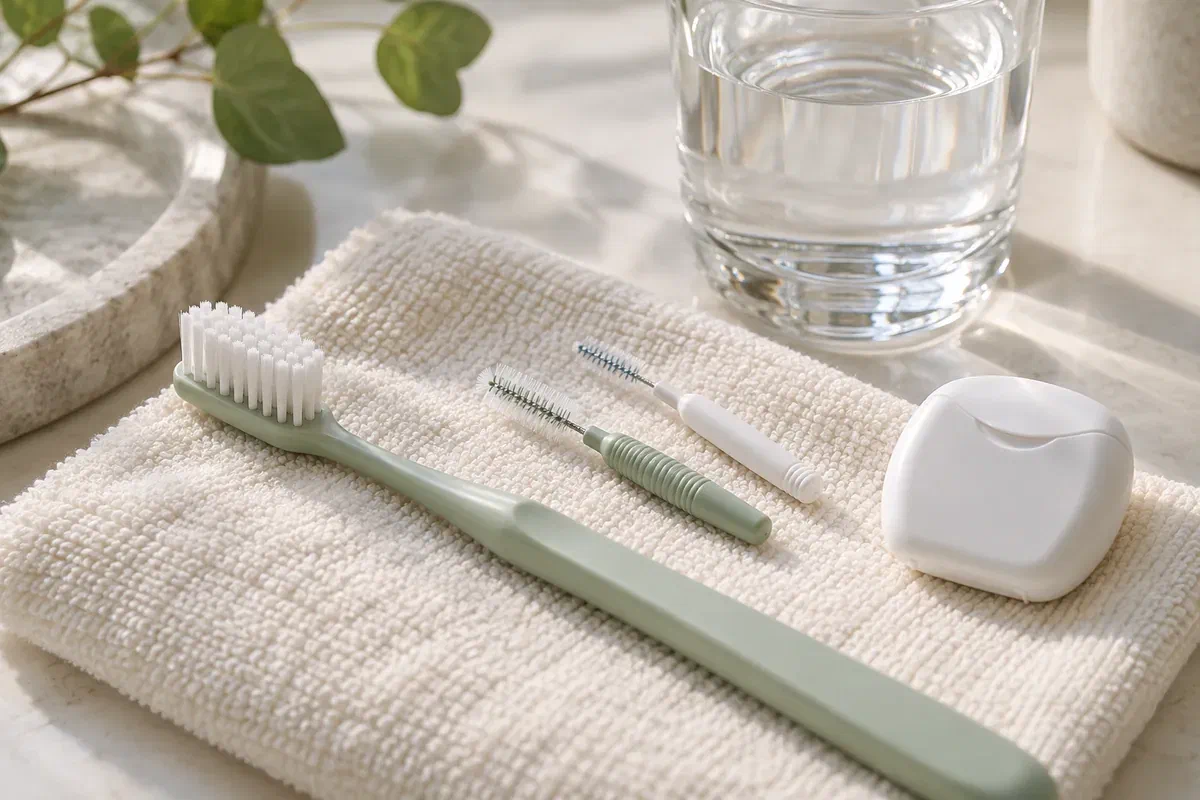
Illustrative toothbrush, interdental brushes, and floss container arranged for daily gum care
Updates that matter

Tell us what home life has been like for your gums.

Pain doesn’t have to be the trigger. Mention anything that has made cleaning harder, symptoms you’ve noticed, and changes in health or medicines since you were last seen.

Bleeding, tenderness, or new food traps

Point out where you see blood on the brush, where gums feel sore, and where food has started to catch. Let us know if the spaces you were shown are still easy to clean. We check the comfortable teeth as well, because how gums feel is only part of the picture.

Changes in health or family routine

New conditions, prescriptions, or tobacco use are worth mentioning, and so are life changes like a new baby or caring for a parent. Those can squeeze the minutes you have for cleaning. We use the information to adjust the plan, never to make you feel you have failed.

A missed visit or a specialist in the mix

Say when your gums were last fully assessed and whether a periodontist is still involved. Bring any recent advice. After a longer gap, a reassessment may need to come first, so the right choice between maintenance and more active care can be made.

Call promptly if you notice new swelling, pus, a tooth that has loosened, or significant pain. These should not wait for your next routine visit, since a maintenance cleaning is not meant to deal with an urgent problem.

What you get from each review

A clear read on your own gums

Each appointment compares your current condition with earlier records and explains any change. Ask which teeth are stable and which need attention. Having that distinction spelled out helps you spend your limited minutes at the sink where they will do the most good.

We also make sure the home plan is doable. Show us the brush, floss, or interdental tools you actually use, and where things go wrong. A demonstration focused on one awkward area can beat a long product list, particularly if a busy household has eaten into your routine.

Patient information: SDCEP — supportive periodontal care and individualized review

Checking the teeth that were treated

Inflammation, bleeding, pocket readings, and related signs are reviewed against your treatment history. Ask how the numbers compare. Earlier loss of support still matters, even when the gums look healthier than before.

Professional cleaning where it’s needed

The exam guides which deposits and areas receive attention. You can always ask the purpose of each part of the cleaning. Cleaning is not identical at every visit or every tooth, because it follows what is found.

Timing that fits you, not the family default

Ask why your next appointment is set when it is and what could change it. Your disease history, current findings, risks, and practical needs all weigh in. A family member’s recall or a plan allowance does not set the right interval for you.

During your appointment

Four steps from check-in to next booking

If you have tender teeth or feel anxious, mention it first. We can explain as we work and pause whenever you like, so you can follow what is assessed and how that shapes treatment.

  1. Go over health and treatment history

    We review changes since your last visit and any specialist advice. Tell us about new symptoms and how your routine has been holding up. If earlier records are elsewhere, we agree on who will request them and what they should clarify.

  2. Examine the gums carefully

    The clinician assesses the tissues and records the readings and observations that apply. Ask which areas have stayed stable and which need more attention. X-rays are used if clinically indicated, not added to every appointment by default.

  3. Clean and show you how

    Cleaning is matched to what the exam found, with your comfort in mind. Ask for a demonstration with an interdental brush in your trickiest spot. If there are signs of active disease, further treatment is discussed as its own step.

  4. Book ahead and clarify roles

    Before you head home, we confirm the purpose of the next visit and flag any referral or extra treatment that is needed. Ask who is monitoring which teeth. Clear roles help avoid missed reviews and appointments that seem to overlap.

In the weeks that follow

A routine that holds up on the busiest days

Home care and professional reviews work as a pair. Keep the daily plan specific and simple, using tools that fit the spaces in your own mouth rather than what everyone else in the house uses.

Repeat the technique you learned

Use the brushing and between-teeth method you were shown, and ask which sizes suit each gap. Don’t force an interdental brush into a space where it won’t go. If a tool is awkward, bring it next time for another look.

Keep an eye out, without poking

Report new bleeding, swelling, soreness, or food getting caught. Avoid prodding your gums at home to check them. A short note of what changed and when helps us decide whether an earlier appointment makes sense.

Call before letting a visit slip

If family demands, work, money, or transport make attending hard, phone us and we can find another time. Try not to drop the schedule because you feel behind. A current assessment is always a good place to pick up again.

Patient information: NIDCR — continuing care and daily cleaning for gum disease

Possible outcomes of the exam

Where your care goes from here

Maintenance shifts with your findings rather than staying fixed. Ask what this visit means for the next one and whether any tooth needs a different level of care.

When the gums are holding steady

Continue with your own maintenance plan

We may suggest continuing supportive visits at a suitable interval with a home routine to match. Find out which teeth the team is keeping a close eye on and what would count as a change. This is ongoing management, and it cannot promise problems won’t return.

When the exam shows a treatment need

Extra treatment for specific areas

Some sites may need further cleaning or a separate active treatment plan. Ask how this differs from maintenance and how healing will be checked. A recommendation like this should be explained by the findings, not by time passing.

When findings persist or are complex

A periodontist’s involvement

A specialist may help with assessment, treatment, or continued review. Ask which visits stay with our team and which go to the periodontist. Agree on how records will be shared, so you always know which appointment comes next.

Patient information: American Academy of Periodontology — ongoing maintenance after nonsurgical treatment

Brampton questions

Household questions about gum maintenance

Bring your treatment notes and questions about timing or home care. Every visit should help you understand your findings and make the next step manageable.

(905) 876-4488
Can my appointment be booked alongside my children’s check-ups?
Often, yes. Let us know which family members you would like to book together and the days that work. Your visit may take a different length of time, so mention it when scheduling.
Should my partner be checked for gum disease too?
Anyone can ask for an assessment of their own gums at a regular check-up. Each person’s needs are judged from their own examination, so your partner’s visit schedule may differ from yours.
Why can’t I just go every six months like everyone else at home?
Your interval reflects your history of periodontitis, current findings, and risks. Ask why your schedule was chosen and when it will be reconsidered, rather than matching what the rest of the household does.
Is it okay to share an electric toothbrush handle in the family?
Handles can be shared if each person uses their own brush head, kept clean and replaced regularly. Ask which brush head and between-teeth tools suit your gums.
I stopped coming after my last baby. Is it too late to restart?
No. Call and explain the gap. A current assessment will show what is needed now, and you don’t need to arrive with a perfect routine.
Does maintenance replace my regular dental check-up?
That depends on how your care is organized. Ask what each appointment covers, such as cavity checks or exams, so nothing falls between visits.
From Brampton to our Milton office

Make room for your gums in the family calendar.

Call (905) 876-4488 to reach our Bronte Street practice and book a periodontal review, or to talk about continuing care after treatment elsewhere. Have any past recommendations handy so we can help set out a sensible maintenance and follow-up plan.

How often you come in, what cleaning is needed, any further treatment, and specialist involvement depend on current findings. Maintenance supports ongoing management and cannot guarantee gum disease won’t recur.

Visit Milton Dental Clinic
Unit 1, 342 Bronte St. S, Milton, ON L9T 5B7
Get directions Clinic hours
Monday–Thursday
11am–7pm
Friday–Sunday
By appointment only

Areas we serve

  • Milton
  • Oakville
  • Mississauga
  • Georgetown
  • Halton Hills
  • Acton
  • Campbellville
  • Brampton
  • Burlington
  • Puslinch
  • Rockwood
  • Erin
  • Caledon
  • Etobicoke
  • Old Milton
  • Bronte Meadows
  • Timberlea
  • Dorset Park
  • Dempsey
  • Clarke
  • Beaty
  • Coates
  • Harrison
  • Scott
  • Willmott
  • Ford
  • Bowes
  • Cobden
  • Walker
  • Mountain View
  • Milton Heights
  • Hawthorne Village
  • Valley View
  • Fallingbrook
  • Nassagaweya
  • Trafalgar
  • Esquesing
  • Nelson
  • Brookville
  • Moffat
  • Glen Williams
  • Norval
  • Limehouse
  • Stewarttown
  • Ashgrove
  • Hornby
  • Silver Creek
  • Speyside
  • Scotch Block
  • North Oakville
  • River Oaks
  • Glen Abbey
  • West Oak Trails
  • Palermo
  • Bronte Creek
  • College Park
  • Joshua Creek
  • Uptown Core
  • Preserve
  • Iroquois Ridge
  • Lisgar
  • Meadowvale
  • Meadowvale Village
  • Churchill Meadows
  • Erin Mills
  • Central Erin Mills
  • Streetsville
  • East Credit
  • Creditview
  • Heartland
  • Sheridan
  • Mount Pleasant
  • Credit Valley
  • Huttonville
  • Churchville
  • Springbrook
  • Northwest Brampton
  • Bram West
  • Fletcher's Meadow
  • Fletcher's Creek South
  • Alton Village
  • Orchard
  • Millcroft
  • Headon Forest
  • Tansley
  • Brant Hills
  • Tyandaga
  • Kilbride
  • Lowville
  • Aberfoyle
  • Morriston
  • Arkell
  • Hillsburgh
  • Freelton
  • Carlisle
  • Waterdown
  • Flamborough
  • Mountsberg

How can we help?

Milton Dental Clinic

Have a question about your smile? Choose the option that works best for you.

For urgent dental concerns, please call.
Messages are reviewed during clinic hours.