

Illustrative patient discussing ongoing gum care with a dental hygienist
Specialized Care

Periodontal Maintenance in Georgetown

A drawer full of floss picks and tiny brushes is no help if none of them fit. For Georgetown adults after gum treatment, our team reviews how the gums are doing, cleans what the exam calls for, and helps you settle on tools that actually work.

The bathroom-counter side of gum care

Floss, picks, little brushes: which ones are yours?

After periodontal treatment, most people go home with a sample bag and good intentions. A few weeks later the brushes feel too big, the floss shreds, and the routine shrinks. Periodontal maintenance is the continuing care that follows treatment for periodontitis, and it covers both sides: a professional check and cleaning, plus coaching that turns your home routine into something you can genuinely keep.

Your visit is built around your own mouth. The teeth treated earlier, what the exam shows about bleeding and pocket depth, and which spaces you can and cannot reach every day all guide it. In other words, it is a review with a purpose rather than a polish that comes round on schedule.

When you come in from Georgetown, bring your current tools along with any notes from earlier gum treatment or a specialist. We can look at what needs monitoring and how often to see you. If something has made visits or the routine hard to keep, tell us, and we can plan around it.

Get help with your gum routine
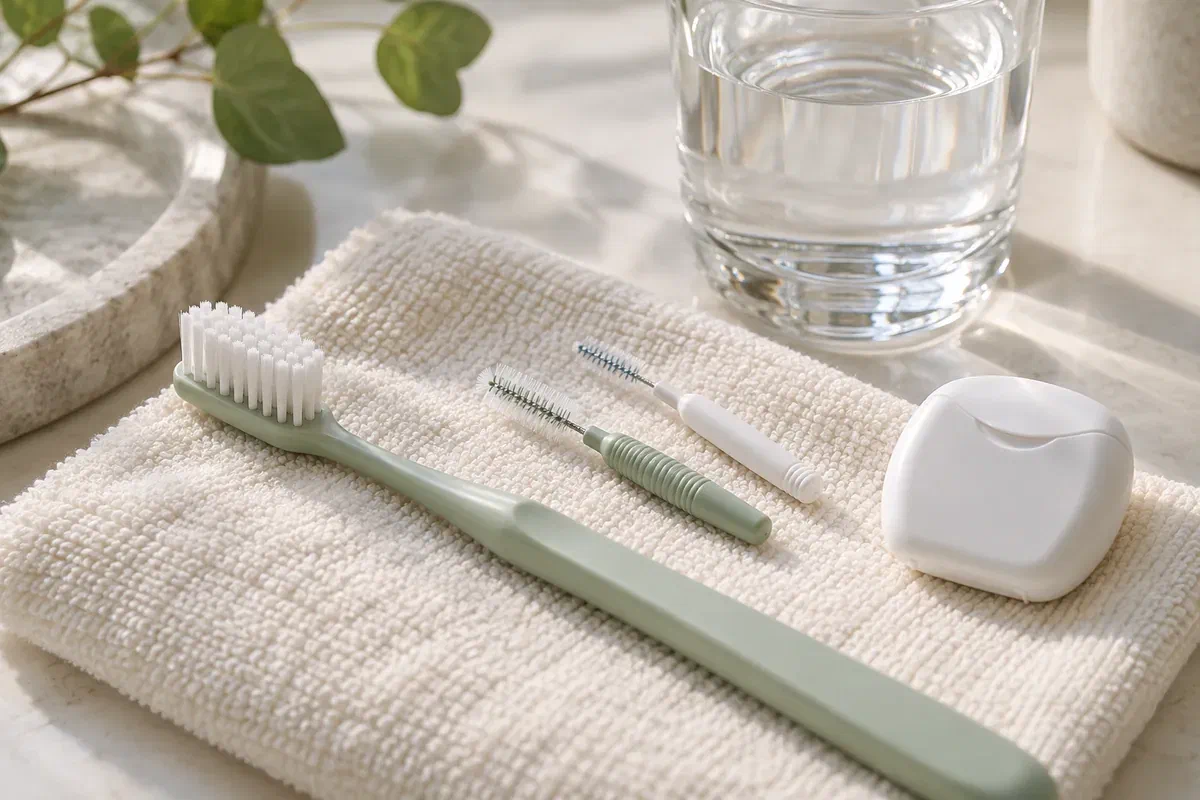
Illustrative toothbrush, interdental brushes, and floss container arranged for daily gum care
Clues from your daily routine

Where does cleaning get stuck?

Speak up long before anything hurts. Tell us which spaces are frustrating to clean, any symptoms you have noticed, and changes in your health or medicines since the previous appointment.

Bleeding, tenderness, or a brush that won’t go in

Show us where bleeding or soreness appears, where food packs in, and which gaps defeat your interdental brush. These details help us aim the review. We still examine places that feel fine, because comfort alone does not confirm that a site is stable.

Health, medication, and hand changes

A new diagnosis, a different prescription, tobacco use, or arthritis that makes small handles slippery can all be relevant. So can a hectic season that has squeezed your routine. We use this to adapt the plan, perhaps with a different tool, rather than letting care fall away.

Time since your last proper check

Tell us when your gums were last measured and whether a periodontist is still involved. Bring their latest advice. If a long while has passed, we may need a reassessment before deciding whether maintenance or further active care is the right step.

New swelling, pus, a tooth that has started to loosen, or significant pain should not wait until your next routine visit. Call us promptly, since a maintenance appointment is not set up to assess urgent changes.

Why coaching is part of the visit

Professional care and a routine that fits

Comparing today’s findings with earlier ones shows which areas are steady and which are slipping. When we can link a changing site to a gap that is hard to clean, the advice becomes specific. That beats a general reminder to floss, which you have probably heard many times already.

We also want your tools to match your mouth. Bring the brushes, picks, or water flosser you actually use, and we can check size, angle, and technique. Practising on one tricky space can make more difference than adding another product, especially if your eyesight or grip has changed.

Patient information: SDCEP — supportive periodontal care and individualized review

A review of the treated sites

Inflammation, bleeding, pocket readings, and related findings are assessed against your treatment history. Ask how things compare with your last visit. Earlier loss of support is still relevant even when the gums look calmer and feel better.

Cleaning where the exam points

Professional care targets the deposits and areas identified during the examination. You are welcome to ask what is being cleaned and why. The work follows the findings, so it may vary from one visit to the next.

A schedule that makes sense for you

Ask why the next review is set for a particular time and what might change it. History, current findings, risk factors, and practical matters all contribute. Someone else’s schedule, or what a benefits plan allows, doesn’t decide your clinical interval.

Your appointment, from start to finish

History first, hands-on practice last

Mention sensitive teeth or nerves as you sit down. We can explain each stage and stop when you need a pause, so you can follow what is being checked and how the findings shape your care.

  1. Talk through changes and past advice

    We cover health updates and anything a specialist suggested since your last visit. Tell us about new symptoms and how the routine has gone in practice. If another office holds useful records, we decide together who will ask for them.

  2. Assess the gums and compare

    The clinician looks closely at the gum tissue, taking pocket readings and noting anything else relevant to your history. Ask which areas look stable and which need more attention. Imaging is used only when there is a clinical reason, rather than at every visit.

  3. Clean, then try the tools together

    Cleaning is matched to the identified needs, with your comfort in mind. Then we can try an interdental brush or other tool in the spot you find hardest, so you leave knowing the right size and angle. Active disease, if found, is discussed as a separate step.

  4. Plan the next visit and responsibilities

    Before you go, we confirm what your next appointment will focus on and whether further treatment or a referral is needed. Ask who is watching particular sites. Clear roles help prevent missed reviews and appointments that seem to double up.

At the sink, day by day

Two or three tools, used well

Your daily routine and our periodic reviews support each other. Keep the home plan short and specific, with tools sized for the gaps in your own mouth rather than whatever came in a multipack.

Size matters more than brand

Use the brushes and technique you practised, and ask which size suits each gap, since one size rarely fits all. A brush should slide in without force; if you have to push, it’s too big. Bring any tool you are unsure about next time.

Watch for changes, gently

Report new bleeding, swelling, soreness, or food trapping. Avoid poking at the gums to test them. Jot down the date a change began and where it is; that lets us judge whether an earlier visit would be wise.

Call if the routine or schedule stalls

If health, finances, work, or getting a ride makes attending difficult, phone us and we can talk it through. Don’t let an appointment slide indefinitely because you feel behind. A current assessment is a good starting point for a routine and schedule you can manage.

Patient information: NIDCR — continuing care and daily cleaning for gum disease

Following the examination

The next step depends on what we find.

Maintenance adjusts as your gums do. Ask what today’s findings mean for your next visit and whether any site needs a different level of care.

When the gums look stable

Keep going with your maintenance plan

You may continue supportive care at an interval that suits you, with a home routine you can sustain. Ask which areas need extra attention and how progress will be judged. Ongoing care helps manage periodontitis but cannot promise it won’t return.

When a site needs active care

Extra treatment for particular areas

Some areas may need further cleaning or a separate treatment plan. Ask how that differs from a maintenance visit and how the response will be checked. If more treatment is suggested, you should hear which readings prompted it.

When findings are complex or persistent

Working with a gum specialist

A periodontist can be involved for an opinion, treatment, or regular review. Settle which visits stay with us and which go to the specialist, and how notes will be shared, so the overall plan stays straightforward.

Patient information: American Academy of Periodontology — ongoing maintenance after nonsurgical treatment

Georgetown tool and routine questions

Questions about the home side of maintenance

Bring your tools, your treatment notes, and anything you are unsure of. Each visit should make your findings clearer and your routine easier.

(905) 876-4488
How do I know which interdental brush size to buy?
The right size depends on each space, and many people need more than one. The hygienist can check the fit at your visit and show you which sizes to use where.
Are floss picks as good as regular floss?
It depends on your teeth and the spaces between them. Some people manage picks more easily, which can make the routine more consistent. Bring them in so the clinician can check your technique.
Should an interdental brush make my gums bleed?
Some bleeding may appear at first or in areas that are inflamed. If it continues, or a brush feels painful, mention it at your visit and ask whether the size or technique needs changing.
Can an electric toothbrush replace cleaning between my teeth?
A toothbrush, manual or electric, doesn’t fully clean between teeth. Ask which between-teeth method suits your gaps so the two work together.
My treatment ended a while ago. Is a maintenance visit more than a cleaning?
Yes. It includes a review of the treated areas, cleaning aimed at current needs, and support with your routine. Ask what will be assessed and how the results shape your care.
What if the routine I was given just doesn’t fit my day?
Say so. A simpler plan you can keep is often more helpful than a perfect one you can’t. The clinician can help prioritize the areas that matter most.
Georgetown gum maintenance

Bring your toolkit. We’ll help you sort it out.

To book a maintenance visit, phone (905) 876-4488 and our Bronte Street team will find a time, even if your earlier periodontal treatment took place at another office. Bring any recommendations you were given so we can help clarify the right maintenance and follow-up plan.

Visit timing, the cleaning required, any further treatment, and whether a specialist takes part are all guided by the examination. Maintenance supports ongoing management and cannot guarantee gum disease won’t return.

Visit Milton Dental Clinic
Unit 1, 342 Bronte St. S, Milton, ON L9T 5B7
Get directions Clinic hours
Monday–Thursday
11am–7pm
Friday–Sunday
By appointment only

Areas we serve

  • Milton
  • Oakville
  • Mississauga
  • Georgetown
  • Halton Hills
  • Acton
  • Campbellville
  • Brampton
  • Burlington
  • Puslinch
  • Rockwood
  • Erin
  • Caledon
  • Etobicoke
  • Old Milton
  • Bronte Meadows
  • Timberlea
  • Dorset Park
  • Dempsey
  • Clarke
  • Beaty
  • Coates
  • Harrison
  • Scott
  • Willmott
  • Ford
  • Bowes
  • Cobden
  • Walker
  • Mountain View
  • Milton Heights
  • Hawthorne Village
  • Valley View
  • Fallingbrook
  • Nassagaweya
  • Trafalgar
  • Esquesing
  • Nelson
  • Brookville
  • Moffat
  • Glen Williams
  • Norval
  • Limehouse
  • Stewarttown
  • Ashgrove
  • Hornby
  • Silver Creek
  • Speyside
  • Scotch Block
  • North Oakville
  • River Oaks
  • Glen Abbey
  • West Oak Trails
  • Palermo
  • Bronte Creek
  • College Park
  • Joshua Creek
  • Uptown Core
  • Preserve
  • Iroquois Ridge
  • Lisgar
  • Meadowvale
  • Meadowvale Village
  • Churchill Meadows
  • Erin Mills
  • Central Erin Mills
  • Streetsville
  • East Credit
  • Creditview
  • Heartland
  • Sheridan
  • Mount Pleasant
  • Credit Valley
  • Huttonville
  • Churchville
  • Springbrook
  • Northwest Brampton
  • Bram West
  • Fletcher's Meadow
  • Fletcher's Creek South
  • Alton Village
  • Orchard
  • Millcroft
  • Headon Forest
  • Tansley
  • Brant Hills
  • Tyandaga
  • Kilbride
  • Lowville
  • Aberfoyle
  • Morriston
  • Arkell
  • Hillsburgh
  • Freelton
  • Carlisle
  • Waterdown
  • Flamborough
  • Mountsberg

How can we help?

Milton Dental Clinic

Have a question about your smile? Choose the option that works best for you.

For urgent dental concerns, please call.
Messages are reviewed during clinic hours.