

Illustrative patient discussing ongoing gum care with a dental hygienist
Specialized Care

Periodontal Maintenance in Rockwood

Being told one area needs more attention can feel like a step backward. For people travelling from Rockwood, our team explains what a change at a maintenance visit means, reviews the gums, cleans where needed, and adjusts the plan with you.

From Rockwood, when something changes

One deeper pocket is information, not a verdict.

It is a common moment: the hygienist pauses at a back tooth, repeats a number, and mentions it is a little deeper than before. That is exactly the kind of change periodontal maintenance exists to catch. This continuing care after periodontitis treatment combines a gum review, professional cleaning, and coaching for home, so that stable areas stay that way and shifting ones are dealt with early.

How each visit unfolds depends on your history and today’s findings. Treated teeth, bleeding or pocket changes, and how well you can reach each area at home guide the work. It is an active review, not a polish that turns up on a fixed rotation regardless of what is found.

When you book from Rockwood, bring earlier treatment notes, especially from a periodontist or another office. We can talk through what has changed, what needs watching, and how often to see you. If travel or other commitments have made appointments hard, let us know so the plan is realistic.

Talk through a change in your gums
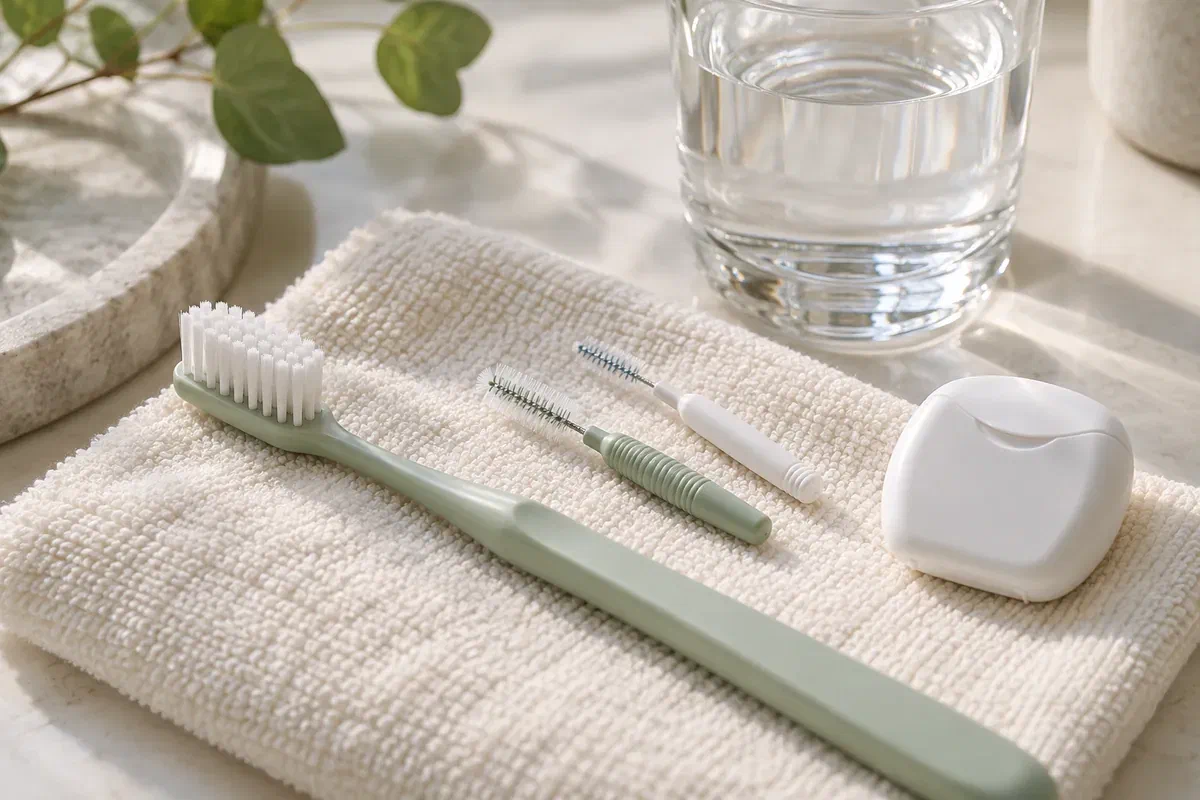
Illustrative toothbrush, interdental brushes, and floss container arranged for daily gum care
Things that help explain a change

Clues often sit in the weeks between visits.

Don’t wait for pain to mention something. Tell us what has made cleaning harder, symptoms you noticed, and any changes in health or medication, since these can help explain what the exam shows.

Recent bleeding, tenderness, or food packing

Describe where bleeding or soreness has appeared and where food now gets stuck, and whether you can still reach the spaces you were taught to clean. Those details help us make sense of a changed reading. We examine comfortable areas too, since feeling fine doesn’t rule out change.

Health, habits, and day-to-day pressures

New conditions, different medicines, tobacco use, or a stressful stretch that disrupted your routine may all be relevant. A sore hand or caregiving duties can limit what you manage. Sharing these helps us respond sensibly instead of guessing.

Missed reviews or care elsewhere

Tell us how long it has been since your gums were charted and whether a specialist is involved. Bring their latest notes. After a long break, a full reassessment may come first, so the choice between maintenance and more active treatment is based on current information.

Call promptly about new swelling, pus, a tooth that has started to loosen, or significant pain. These shouldn’t wait for a scheduled maintenance visit, which is not designed to assess urgent changes.

Why catching change early helps

Small shifts are easier to address.

Maintenance compares each visit with the last, so a site that has started to change can be identified and discussed before it progresses further. Ask which areas are holding and which have moved. Knowing the specific teeth involved gives you and the team something practical to act on.

Often a change lines up with a spot that is hard to clean. Show us the tools you use and where it gets awkward. Practising that one area, perhaps with a different size or angle, may help more than a long list of new products, particularly if your hands, eyesight, or routine have changed.

Patient information: SDCEP — supportive periodontal care and individualized review

Close review of the treated sites

Inflammation, bleeding, pocket depths, and related signs are compared with your treatment record. Ask how today’s readings line up. Lost support stays relevant even when most of the mouth looks calm.

Cleaning focused where change appears

Professional care is directed at deposits and at the sites the exam highlights. Ask the clinician to walk you through what they are concentrating on. The amount of work may vary, because it follows what is found.

An interval that responds to the findings

Ask whether a change means your next review should come sooner and what would allow the interval to lengthen again. History, risk factors, findings, and practical needs all count. A set calendar or coverage limit shouldn’t decide it.

How a visit handles change

Notice it, explain it, act on it

Let us know about sensitivity or nerves before we begin. We can explain what we are seeing as we go and pause when you like, so a changed reading never comes as an unexplained surprise.

  1. Hear what has happened since last time

    We ask about health updates, medicines, and any specialist advice. Describe symptoms, even small ones, and the routine you have actually kept. If another office holds records that would help with comparison, we agree how to get them.

  2. Examine and compare readings

    The clinician assesses the tissues and takes measurements relevant to your history. If a site has changed, ask what the difference is and what may explain it. X-rays may be suggested when a change gives a clinical reason to look further.

  3. Clean and target the problem spot

    Cleaning is matched to the needs found, with your comfort in mind. We can then work through the hard-to-reach area together with an interdental tool. If the change points to active disease, further treatment is discussed as its own step.

  4. Agree on what happens next

    Before you leave, we explain whether the next appointment should come sooner, what it will focus on, and whether a referral or added treatment is needed. Ask who is following the changed site. Clear roles keep the response on track.

After a change is found

Steady effort on one spot often pays off.

Home care and professional review support each other, especially when a particular area needs extra attention. Keep your daily plan specific, with tools that fit the spaces in your mouth.

Give the changed area some extra care

Use the technique we practised, paying particular attention to the site that was flagged. Ask whether that gap needs a different brush size. Never push a tool in hard; if it doesn’t slide in, it isn’t the right fit.

Note what you see, gently

Report more bleeding, swelling, soreness, or food catching around the area. Avoid prodding it to check. Telling us what you noticed, and when, lets the team judge whether to bring your visit forward.

Stay with the plan, even if it’s frustrating

If work, money, health, or the drive makes attending hard, call us to talk about it. Please don’t step away because a change felt discouraging. A current assessment is the most useful way forward.

Patient information: NIDCR — continuing care and daily cleaning for gum disease

Responding to a change

Watch it, treat it, or refer it

Maintenance is designed to respond when the findings move. Ask what the change means for your next visit, and whether that tooth can stay on the usual plan or calls for something more.

When the change is small and the rest is stable

Keep watching on your maintenance plan

Sometimes the best response is closer monitoring, extra attention at home, and possibly a shorter interval. Ask how the site will be rechecked. Continuing care manages periodontitis over time but can’t guarantee it won’t progress.

When the exam shows active disease

Active treatment for the affected site

If a pocket has deepened or keeps bleeding, the team might suggest more thorough cleaning at that tooth or a dedicated round of treatment. Ask how this differs from your regular visits and when the response will be measured. You should hear which findings led to the recommendation.

When change persists or is complex

Referral or shared care with a periodontist

A specialist may be asked to assess, treat, or share ongoing review. Agree on which appointments happen where and how reports will be exchanged, so you are clear on the plan.

Patient information: American Academy of Periodontology — ongoing maintenance after nonsurgical treatment

Rockwood questions about changes

What happens when a reading goes up?

Bring your previous notes and any concerns about what was found. Each visit should help you understand the change and what can be done next.

(905) 876-4488
My hygienist said a pocket got deeper. Should I be worried?
A single change is a reason to look closer, not to panic. Ask what the reading was before and now, and what the clinician suggests. Many changes can be addressed with targeted care.
Can a deeper pocket get better again?
In some cases, inflammation settles with improved cleaning or treatment and readings improve. The clinician can explain what is realistic for that site based on your history.
Why would my maintenance interval get shorter?
If an area shows change, closer monitoring can help catch further shifts early and show whether extra care is working. The interval can be reviewed again once the site has been reassessed, and it may lengthen if things settle.
Did I do something wrong at home?
Not necessarily. Changes can have several contributing factors. Ask what may be involved and whether any part of your routine could be adjusted, without assuming blame.
Will I need to see a specialist for one changed area?
Not always. It depends on the finding, your history, and how the site responds to closer care. The clinician can explain when a periodontist’s input would be helpful, and if a referral is suggested, how the two offices would share the follow-up.
Do extra treatments mean regular maintenance isn’t working?
No. Spotting and responding to change is one of the main reasons for continuing review. The plan is adjusted, and maintenance carries on afterward.
Rockwood gum maintenance

A change found early is a change you can work on.

To book a periodontal review or continue care that began elsewhere, call our Bronte Street practice on (905) 876-4488. Bring earlier notes and recommendations so we can help explain any changes and set out a sensible follow-up plan.

Timing, the cleaning required, any added treatment, and referral decisions depend on what each examination shows. Maintenance supports ongoing management of gum disease and cannot guarantee it won’t progress or return.

Visit Milton Dental Clinic
Unit 1, 342 Bronte St. S, Milton, ON L9T 5B7
Get directions Clinic hours
Monday–Thursday
11am–7pm
Friday–Sunday
By appointment only

Areas we serve

  • Milton
  • Oakville
  • Mississauga
  • Georgetown
  • Halton Hills
  • Acton
  • Campbellville
  • Brampton
  • Burlington
  • Puslinch
  • Rockwood
  • Erin
  • Caledon
  • Etobicoke
  • Old Milton
  • Bronte Meadows
  • Timberlea
  • Dorset Park
  • Dempsey
  • Clarke
  • Beaty
  • Coates
  • Harrison
  • Scott
  • Willmott
  • Ford
  • Bowes
  • Cobden
  • Walker
  • Mountain View
  • Milton Heights
  • Hawthorne Village
  • Valley View
  • Fallingbrook
  • Nassagaweya
  • Trafalgar
  • Esquesing
  • Nelson
  • Brookville
  • Moffat
  • Glen Williams
  • Norval
  • Limehouse
  • Stewarttown
  • Ashgrove
  • Hornby
  • Silver Creek
  • Speyside
  • Scotch Block
  • North Oakville
  • River Oaks
  • Glen Abbey
  • West Oak Trails
  • Palermo
  • Bronte Creek
  • College Park
  • Joshua Creek
  • Uptown Core
  • Preserve
  • Iroquois Ridge
  • Lisgar
  • Meadowvale
  • Meadowvale Village
  • Churchill Meadows
  • Erin Mills
  • Central Erin Mills
  • Streetsville
  • East Credit
  • Creditview
  • Heartland
  • Sheridan
  • Mount Pleasant
  • Credit Valley
  • Huttonville
  • Churchville
  • Springbrook
  • Northwest Brampton
  • Bram West
  • Fletcher's Meadow
  • Fletcher's Creek South
  • Alton Village
  • Orchard
  • Millcroft
  • Headon Forest
  • Tansley
  • Brant Hills
  • Tyandaga
  • Kilbride
  • Lowville
  • Aberfoyle
  • Morriston
  • Arkell
  • Hillsburgh
  • Freelton
  • Carlisle
  • Waterdown
  • Flamborough
  • Mountsberg

How can we help?

Milton Dental Clinic

Have a question about your smile? Choose the option that works best for you.

For urgent dental concerns, please call.
Messages are reviewed during clinic hours.