

Illustrative patient discussing periodontal findings with a clinician and a supported tooth model
Specialized Care

Periodontal Pocket Treatment

Periodontal pocket measurements help the dental team understand the tissues supporting your teeth. At our Milton clinic, discuss what the findings mean, whether cleaning below the gumline is indicated, and how the response should be reviewed before further decisions.

A closer look at periodontal pockets

Use the measurements to understand the tissue, not just the number.

During a periodontal examination, the clinician measures the space between the gum margin and the point reached by a gentle probe alongside the tooth. Deeper readings can be relevant to gum disease, but the number needs to be interpreted with other findings. Bleeding, tissue position, attachment loss, and supporting bone help explain what is happening at that site.

Periodontal pocket treatment addresses the condition identified by the examination rather than attempting to make every measurement identical. Cleaning below the gumline may be recommended to manage deposits and inflammation where indicated. The response then needs review before deciding whether continuing support, further treatment, or specialist input is appropriate.

At Milton Dental Clinic, ask the team to explain the affected areas and the purpose of each recommended step. You should understand why a site needs attention, what you can do between visits, and how the results will be assessed. A clear plan makes the chart more useful than a list of unexplained numbers.

Discuss your periodontal findings
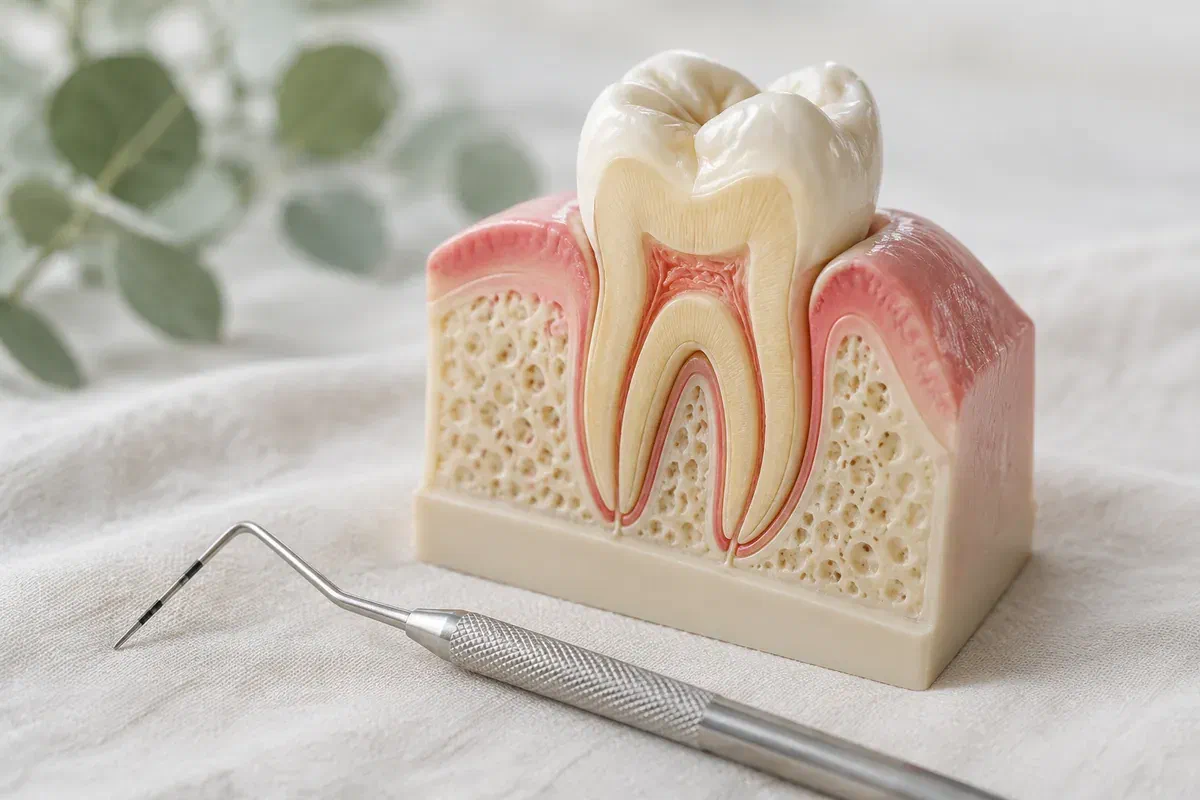
Illustrative tooth-and-gum teaching model beside a periodontal examination probe
What the examination considers

Pocket depth is one finding within a wider picture of support and inflammation.

Tell the team about symptoms, earlier gum care, and relevant health changes. The assessment also looks at areas that feel normal, because discomfort alone does not establish whether periodontal tissues are stable.

Measurements alongside bleeding and tissue changes

Ask which sites bleed during assessment and how gum position affects the readings. A deeper measurement does not provide the entire diagnosis by itself. The clinician can explain how the different observations fit together and whether a full periodontal assessment or further records are needed.

Deposits and areas that are difficult to clean

Describe food trapping and spaces you cannot reach with your usual tools. The examination can identify deposits or local features that complicate cleaning. Ask which areas require professional care and which changes to the home routine would make a practical difference.

Earlier treatment and the current level of support

Bring information about previous periodontal care or specialist advice. Comparison with earlier measurements and appropriate images can help explain changes over time. A tooth with reduced support needs an assessment of its individual outlook rather than an assumption based on pocket depth alone.

New swelling, pus, fever, or significant pain needs prompt advice. Do not insert a tool into the gum to measure or clean a pocket yourself, and do not wait for a routine gum appointment if an acute problem develops.

What a treatment plan should explain

Know which areas need care and how the response will guide the next decision.

The goal is to manage periodontal disease and support maintainable oral health, not simply improve a chart without explanation. Ask what improvement is realistic for the affected sites and which limitations remain. Existing loss of support, access for cleaning, and other clinical factors can influence the outlook and the need for further care.

Treatment should also be understandable as a sequence. Initial advice and cleaning, more targeted work below the gumline, and reassessment may have different purposes. Ask where you are in that sequence and what needs to happen before the dentist can determine whether the active phase is complete.

Patient information: SDCEP — stepwise treatment of periodontitis

Cleaning selected for the diagnosed need

The team may recommend professional removal of deposits above and below the gumline at indicated sites. Ask why the proposed areas need treatment and how comfort will be managed. The appointment length and number of visits should reflect the findings rather than a universal package.

Home-care instruction that fits the spaces

Ask for a demonstration using tools suited to your mouth, especially where the gum shape or spaces have changed. Tell the clinician if a brush or technique is difficult to use. The plan should help you clean accessible surfaces effectively without attempting to perform professional instrumentation yourself.

A reassessment with clear questions to answer

The review can consider bleeding, measurements, cleaning access, and other findings after treatment. Ask which sites have responded and which remain concerning. A residual reading should be interpreted in context before deciding whether further nonsurgical care, surgery, or specialist assessment is appropriate.

From periodontal chart to follow-up

Assess the tissues, provide indicated care, and check the response.

Tell the team about sensitivity or anxiety before treatment. Ask for explanations and pauses where needed so you can understand what is being done and how it relates to the treatment plan.

  1. Establish the diagnosis and explain the relevant sites

    The clinician reviews your history and periodontal findings, with images or additional assessment when indicated. Ask how the diagnosis relates to the measurements and supporting tissues. Clarify whether the proposed visit is assessment, initial treatment, targeted cleaning, or a review of previous care.

  2. Plan cleaning and practical daily support

    Discuss the sites to be treated, the likely number of visits, and whether local anaesthetic is appropriate for comfort. Review the daily cleaning routine and any relevant risk factors. Ask what preparation is needed and which expected effects should be discussed before consent.

  3. Provide the professional treatment indicated

    The clinician uses suitable instruments to address deposits in the planned areas. Explain any discomfort so the approach can be adjusted. Treatment should follow the assessment and available access rather than be described as a guaranteed way to eliminate every pocket in one appointment.

  4. Reassess and choose the next phase

    Return at the recommended time to review tissue response and remaining concerns. Ask which findings support maintenance and which justify further care. If referral is recommended, clarify its purpose and how ongoing cleaning and reviews will be coordinated while another opinion is arranged.

After pocket treatment

Support healing with the instructions that match your care.

The advice depends on the extent of cleaning, whether anaesthetic was used, and any additional procedure. Ask the treating clinician what to expect and how to manage a concern without stopping the home-care plan unnecessarily.

Use the agreed brushing and interdental routine

Continue the cleaning approach demonstrated for you, following any short-term instructions for treated areas. If a tool causes difficulty, ask for guidance on size or technique. Do not substitute aggressive probing, forceful scraping, or an unadvised chemical rinse for the routine discussed.

Discuss sensitivity and changes in gum appearance

Some tenderness or sensitivity can follow treatment. As inflammation settles, the gum shape and spaces between teeth may look different. Ask which changes are expected in your case and report symptoms that persist or worsen rather than assuming every change is either damage or proof of success.

Keep reassessment even when the mouth feels better

Improved comfort does not establish how every site has responded. The planned review allows the clinician to compare findings and decide what remains to be done. If you cannot attend, contact the team to rearrange rather than leaving active treatment without a response assessment.

Patient information: NHS — dental abscess symptoms and urgent care

Choosing the next periodontal step

Persistent findings deserve reassessment, not an automatic procedure.

The appropriate response depends on the diagnosis, treatment already provided, and the site's remaining condition. Ask how the recommendation relates to those findings and what benefit is realistically expected.

When cleaning and inflammation control are indicated

Nonsurgical periodontal care and review

Professional care below the gumline can be discussed as part of active periodontal treatment. Ask what is planned for the affected sites and how the response will be assessed. Antibiotics, lasers, or other additions are not automatic requirements simply because a pocket is measured.

When residual disease or complexity needs more attention

Further treatment or specialist assessment

A periodontist may assess whether additional nonsurgical care, a surgical approach, or another plan is appropriate. Ask which site-specific factors influence that decision. A referral does not guarantee surgery, and pocket depth alone should not be presented as a complete explanation of the proposed procedure.

When active treatment has reached an appropriate review point

Supportive periodontal maintenance

Continuing maintenance helps monitor previously affected tissues and provide cleaning support where needed. Ask what interval fits your current condition and which findings will be followed. Moving into maintenance does not mean that the history of periodontal disease is no longer relevant.

Patient information: American Academy of Periodontology — nonsurgical treatment and its limitations

Periodontal pocket treatment questions

Understand what the measurements mean for your own teeth.

Ask the team to point out the areas discussed and explain the plan in plain language. The chart is most useful when you understand how it connects to treatment, daily care, and review.

(905) 876-4488
Does one deep periodontal pocket reading establish the entire diagnosis?
No. The clinician considers measurements alongside bleeding, gum position, attachment, supporting bone, and history. Ask how the findings fit together and whether further assessment is needed. One number should not replace an explanation of the condition or the treatment recommendation.
Can I measure or scrape a periodontal pocket with a tool at home?
No. Do not insert sharp or improvised tools below the gumline. Ask the dental team to demonstrate appropriate daily cleaning for the accessible spaces. Professional assessment and instrumentation have a different role from the home-care routine you are asked to maintain.
Will treatment make every periodontal pocket exactly the same depth?
That cannot be promised and is not the only measure of response. Ask which findings will be reviewed and what is realistic for the affected teeth. Bleeding, support, access for cleaning, and the wider periodontal condition also influence the next decision.
Why might spaces between teeth look larger after periodontal pocket treatment?
As swollen tissues settle, the gum contour and visible spaces can change. Ask what is expected for your condition and how to clean the area comfortably. Report concerning symptoms rather than deciding from appearance alone whether the treatment has succeeded or caused a problem.
Does a remaining periodontal pocket automatically mean I need surgery?
No. The site needs reassessment in the context of inflammation, support, previous care, and other findings. Further nonsurgical treatment, maintenance, or specialist advice may be discussed. Ask why the proposed option is appropriate and what alternatives are reasonable.
Why return for pocket measurements if my gums already feel better?
Comfort is useful information, but it does not show how every treated site has responded. Reassessment helps determine whether active care is complete or further attention is needed. Keep the planned review so the next phase is based on current findings.
Periodontal pocket treatment in Milton

Turn the periodontal chart into a care plan you can understand.

Contact our Bronte Street practice at (905) 876-4488 to arrange a gum assessment or review of recommended pocket treatment. Bring earlier periodontal records or specialist advice when available so the discussion can reflect your treatment history.

Treatment extent, response, review timing, and specialist involvement depend on individual findings. No single pocket measurement guarantees a diagnosis, a particular procedure, or a treatment outcome.

Visit Milton Dental Clinic
Unit 1, 342 Bronte St. S, Milton, ON L9T 5B7
Get directions Clinic hours
Monday–Thursday
11am–7pm
Friday–Sunday
By appointment only

How can we help?

Milton Dental Clinic

Have a question about your smile? Choose the option that works best for you.

For urgent dental concerns, please call.
Messages are reviewed during clinic hours.