

Illustrative patient discussing periodontal findings with a clinician and a supported tooth model
Specialized Care

Periodontal Pocket Treatment in Burlington

Pink in the sink after flossing is often what starts the conversation. If you are making the trip from Burlington, our team can measure the gum pockets, explain what bleeding and depth suggest together, and outline any cleaning below the gumline and the review that follows.

Bleeding gums and pocket depth

A little blood on the floss is worth a proper look

Most people shrug off gums that bleed now and then. Yet bleeding is one of the signs a clinician pays close attention to, especially next to the measurements taken during a periodontal exam. With a slim, blunt probe, they gauge the space between your gum edge and each tooth. Deeper spaces can relate to gum disease. They still need interpreting.

That interpretation draws on several things at once: which sites bleed, whether the gum has shifted, how much attachment is gone and what supporting bone looks like on suitable images. Pocket treatment then addresses the underlying condition. Where it is indicated, cleaning under the gumline reduces deposits and inflammation, and a follow-up visit decides whether maintenance, more treatment or specialist input comes next.

Driving in from Burlington for gum care, you want each visit to count. Ask the team to point out exactly which teeth are involved, what every step aims to do and what your part is between appointments. When the reasoning is clear, the chart stops being a mystery and starts guiding real decisions.

Get your bleeding gums checked
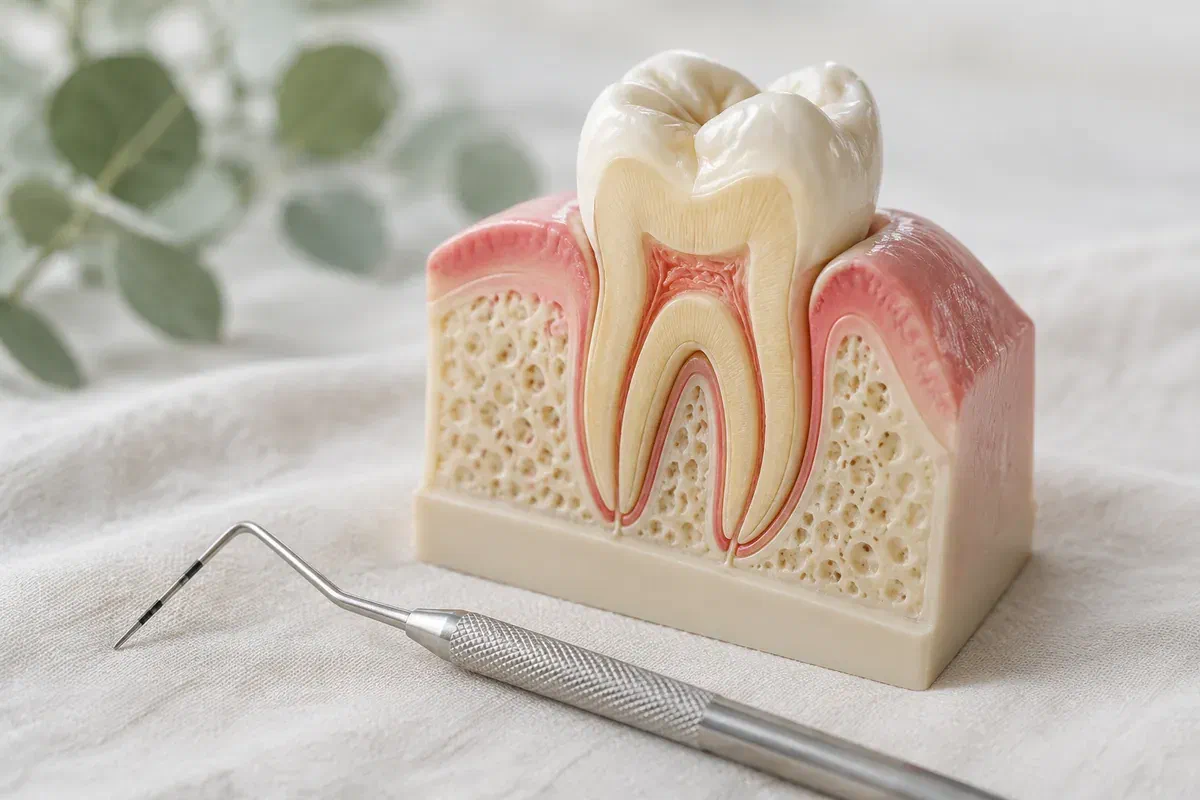
Illustrative tooth-and-gum teaching model beside a periodontal examination probe
Reading the signs together

Bleeding, depth and support: one picture, not three

Mention when the bleeding happens, any earlier gum treatment and recent health changes. Areas with no symptoms are examined just as carefully, since feeling nothing does not mean the tissue is stable.

Which sites bleed, and where the gum sits

Bleeding on gentle probing is recorded site by site. Swollen or receded gum also changes how a depth figure should be read. Your clinician can show how these observations fit together and say whether a full periodontal charting or extra records would be useful.

Spots where buildup keeps returning

Where floss frays or food gets wedged, deposits often collect. Some tooth shapes and older fillings make this worse. Tell the team about those spots; they can explain which need professional cleaning and which home-care tweaks are likely to help.

Past treatment and present support

Previous charts, images or a periodontist’s report make it possible to compare. A tooth with reduced support should have its own outlook assessed. Depth by itself is not a fair basis for that judgement.

Seek prompt advice for new swelling, pus, fever or severe pain. Never push a tool into the gum to measure or clean a pocket, and if a sudden problem appears, do not sit on it until a routine gum visit.

What good treatment looks like

Calmer gums, a routine you can manage, and a clear next step

The purpose is to control periodontal disease and help keep teeth you can look after. Lower numbers without explanation are not the goal. Ask what is realistic for each affected site and which limits are likely to remain. Support already lost, awkward access and other health factors all play a part in the outlook.

Treatment usually happens in phases. Initial advice and cleaning, then more targeted work beneath the gum, then reassessment. Each one does something different. Ask which phase you are in, and what still has to happen before the dentist can say whether active care is over.

Patient information: SDCEP — stepwise treatment of periodontitis

Professional cleaning where it is needed

Deposits above and below the gum may be removed at sites the findings point to. Why those sites? How will comfort be managed? Both are fair questions. The number of visits and their length should depend on your chart, not on a standard package.

Home tools that actually fit

An interdental brush that suits one gap may not suit the next. Ask for a demonstration in your own mouth and mention anything that feels awkward. The aim is reliable cleaning of reachable surfaces, never a home version of the professional work.

A follow-up with specific checks

Bleeding, depth, cleaning access and related signs are reviewed after treatment. Ask which areas have responded and which still raise concern. Any remaining reading is judged in context before further nonsurgical care, surgery or a specialist’s opinion is suggested.

How a course of treatment runs

Measure. Plan. Clean. Review.

If your teeth are sensitive or dental visits make you anxious, say so early. Pauses and explanations are always available, so each part of the visit makes sense in light of the plan.

  1. Pin down the diagnosis

    Your clinician reviews your history and periodontal findings, adding images or other assessment when indicated. Ask how the diagnosis fits the measurements and supporting tissue. Make sure you know whether this visit is assessment, initial care, targeted cleaning or a review.

  2. Set the plan and your daily part in it

    Which areas, how many visits and whether freezing would help are all discussed. Your cleaning routine and any risk factors such as smoking or diabetes are reviewed. Ask what to do beforehand and which after-effects should be explained before you consent.

  3. Deliver the planned cleaning

    The clinician uses appropriate instruments on the agreed sites. Tell them about any discomfort so the approach can change. Treatment follows the assessment and what can be reached; it is not a guaranteed way to remove every pocket in one sitting.

  4. Re-measure and choose what follows

    At the recommended time, the tissue response is reviewed. Ask which results support maintenance and which point to more care. If you are referred, clarify the reason and how cleanings and reviews will be handled while you wait.

Care at home after treatment

Small, steady habits help the tissue settle

Your advice depends on how much was treated, whether freezing was used and whether another procedure was done. Ask the treating clinician what to expect and how to raise a concern while keeping up your home routine.

Brush and clean between teeth as shown

Keep to the methods demonstrated, following any short-term instructions for treated areas. If a tool is difficult, ask for a different size or technique. Forceful scraping, picking at the gum or a rinse nobody suggested should not replace the agreed routine.

Some bleeding may ease, some changes may appear

Treated sites can be tender or sensitive at first. As swelling goes down, the gum may look different and gaps between teeth can seem larger. Ask what is expected for you, and report anything lingering or worsening rather than guessing what it means.

Keep the reassessment

Less bleeding is encouraging, but it does not confirm how every site has responded. The review gives the clinician fresh findings to compare. If the date stops working, phone to move it so active care does not end without that check.

Patient information: NHS — dental abscess symptoms and urgent care

When bleeding or depth persists

The next step is a decision, not a default

Your diagnosis, the treatment already given and each site’s current condition all shape what comes next. Ask how a recommendation links to those findings and what benefit is realistic.

When inflammation control is still the main need

More nonsurgical cleaning and review

Further cleaning below the gum can be part of active care. Ask which sites are included and how their response will be judged. Antibiotics, lasers and similar options are not automatic just because a pocket appears on the chart.

When disease remains or the picture is complex

A referral or further treatment

A periodontist can weigh more nonsurgical care, a surgical approach or a different plan. Ask which features of the site drive that decision. Being referred is not a promise of surgery, and depth alone never fully explains a procedure.

When active treatment has reached a review point

Regular supportive maintenance

Maintenance visits watch over areas that were affected and provide cleaning support where useful. Ask what interval suits your condition and what will be monitored. Your gum history still counts once maintenance begins.

Patient information: American Academy of Periodontology — nonsurgical treatment and its limitations

Burlington gum questions

About bleeding, pockets and what happens next

Ask the team to point to the sites they are concerned about and explain the plan simply. The chart is most helpful when it connects to treatment, your routine and the review.

(905) 876-4488
Should I stop flossing if my gums bleed every time?
Usually not without advice. Bleeding can be a sign of inflammation that cleaning helps address. Mention it at your visit, and ask the team to check your technique and suggest the right tool for each space.
Can an electric toothbrush help with gum pockets?
A brush is useful for surfaces it can reach, and some people find a powered brush easier to use well. It does not clean deep below the gumline. Ask which brush and interdental tools suit your mouth.
Is bleeding during the gum measurement a bad sign?
It is a finding rather than a verdict. Bleeding on probing is recorded alongside depth and gum position to help assess inflammation. Ask which sites bled and what the overall pattern suggests.
Can I check my own pockets with a dental pick from the pharmacy?
Please do not. Sharp or improvised tools should never be pushed beneath the gum. Measuring and cleaning below the gumline are professional tasks, and your home routine has a different role that the team can demonstrate.
Will the treatment bring every pocket down to the same depth?
That cannot be promised, and depth is not the only sign of response. Bleeding, support, cleaning access and the wider condition all matter. Ask which findings will be reviewed and what is realistic for your teeth.
Could bad breath be connected to my gum pockets?
Persistent bad breath can have several causes, and gum inflammation is one possibility. Mention it during your assessment so the clinician can consider it with your other findings and suggest suitable steps.
Booking from Burlington

Find out what your bleeding gums are telling you

Reach our Bronte Street practice on (905) 876-4488 to arrange a gum assessment or a review of pocket treatment you have been advised to have. Bring any earlier periodontal charts or specialist notes so your history is part of the conversation.

The extent of care, tissue response, review timing and specialist involvement depend on your own findings. No single measurement guarantees a diagnosis, a specific procedure or a particular result.

Visit Milton Dental Clinic
Unit 1, 342 Bronte St. S, Milton, ON L9T 5B7
Get directions Clinic hours
Monday–Thursday
11am–7pm
Friday–Sunday
By appointment only

Areas we serve

  • Milton
  • Oakville
  • Mississauga
  • Georgetown
  • Halton Hills
  • Acton
  • Campbellville
  • Brampton
  • Burlington
  • Puslinch
  • Rockwood
  • Erin
  • Caledon
  • Etobicoke
  • Old Milton
  • Bronte Meadows
  • Timberlea
  • Dorset Park
  • Dempsey
  • Clarke
  • Beaty
  • Coates
  • Harrison
  • Scott
  • Willmott
  • Ford
  • Bowes
  • Cobden
  • Walker
  • Mountain View
  • Milton Heights
  • Hawthorne Village
  • Valley View
  • Fallingbrook
  • Nassagaweya
  • Trafalgar
  • Esquesing
  • Nelson
  • Brookville
  • Moffat
  • Glen Williams
  • Norval
  • Limehouse
  • Stewarttown
  • Ashgrove
  • Hornby
  • Silver Creek
  • Speyside
  • Scotch Block
  • North Oakville
  • River Oaks
  • Glen Abbey
  • West Oak Trails
  • Palermo
  • Bronte Creek
  • College Park
  • Joshua Creek
  • Uptown Core
  • Preserve
  • Iroquois Ridge
  • Lisgar
  • Meadowvale
  • Meadowvale Village
  • Churchill Meadows
  • Erin Mills
  • Central Erin Mills
  • Streetsville
  • East Credit
  • Creditview
  • Heartland
  • Sheridan
  • Mount Pleasant
  • Credit Valley
  • Huttonville
  • Churchville
  • Springbrook
  • Northwest Brampton
  • Bram West
  • Fletcher's Meadow
  • Fletcher's Creek South
  • Alton Village
  • Orchard
  • Millcroft
  • Headon Forest
  • Tansley
  • Brant Hills
  • Tyandaga
  • Kilbride
  • Lowville
  • Aberfoyle
  • Morriston
  • Arkell
  • Hillsburgh
  • Freelton
  • Carlisle
  • Waterdown
  • Flamborough
  • Mountsberg

How can we help?

Milton Dental Clinic

Have a question about your smile? Choose the option that works best for you.

For urgent dental concerns, please call.
Messages are reviewed during clinic hours.