

Illustrative patient discussing periodontal findings with a clinician and a supported tooth model
Specialized Care

Periodontal Pocket Treatment in Erin

Food that wedges in the same gap after every meal is often the first clue that a gum pocket needs attention. For households in Erin and Hillsburgh, our team can measure and explain the pockets, clean below the gumline where indicated and help you find a home routine that actually reaches.

That one stubborn gap

When the same spot traps food after every meal

You finish dinner, reach for floss, and there it is again: the same gap packed with food, maybe a little sore or bleeding. Spots like that are worth mentioning, because they can sit next to a periodontal pocket. During an exam, a fine probe with a rounded end is set gently against each tooth to see how far the space beneath the gum reaches.

The measurement is weighed with whether the site bleeds, where the gum sits, how much attachment is gone and what supporting bone shows on suitable images. Treatment then deals with the condition behind it. Professional cleaning below the gumline may be advised to remove deposits and reduce inflammation, and a later review guides the choice between maintenance, more care and a specialist.

Rural routines around Erin often mean fitting dental visits in with work, school and long errand days, so the routine you keep at home carries real weight. Ask which teeth are involved, what each appointment will do and which brush or interdental cleaner fits each space. Getting the tools right can change how those gaps behave.

Get help with a problem gap
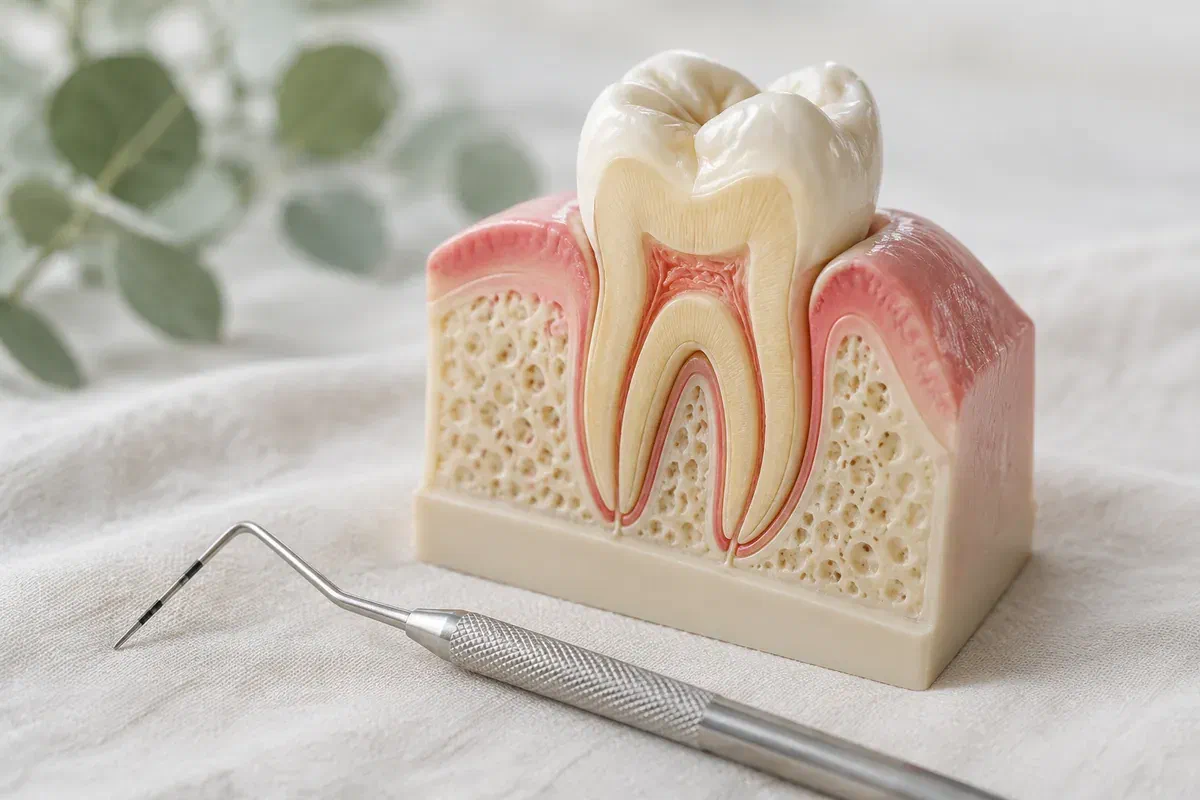
Illustrative tooth-and-gum teaching model beside a periodontal examination probe
Why some places stay inflamed

Trapped food, hidden buildup and the shape of the space

Point out where food packs, mention past gum treatment and note any change in health or medications. Comfortable sites are checked too; a gap that does not hurt can still have unstable support.

Signs of irritation at the site

Bleeding on light probing, gum that looks swollen or gum that has pulled back each shift what a reading tells the clinician. They can explain how the signs fit together, and whether a fuller set of periodontal measurements or images would add to the picture.

Deposits and contours that catch food

Hardened buildup, a slightly open contact between teeth or the edge of an older filling can all trap food. Tell the team exactly which gaps are troublesome. You will learn what needs professional cleaning and whether a different tool at home would reach better.

Support compared with previous visits

Old charts and images, or a specialist’s letter, help the team see whether things are changing. A tooth that has already lost support needs an individual assessment of its prospects, which depth on its own cannot provide.

If a gap becomes swollen, releases pus or comes with fever or strong pain, call for advice promptly. Do not dig at it with picks or other tools, and do not wait for a routine appointment if something acute develops.

Making cleaning work again

Professional care below the gum, matched by the right tools above it

Periodontal treatment sets out to control disease and help keep teeth that can be maintained. A tidier chart without that is not the target. Ask what improvement is realistic at each affected site and which limits remain. Support already lost, how easily a space can be cleaned and your general health all affect the outlook.

The work tends to unfold in phases: advice and initial cleaning, focused care under the gum where needed, then a reassessment. Each has its own purpose, and your home routine runs alongside all three. Ask which phase you are in and what the dentist must see before judging that active care is complete.

Patient information: SDCEP — stepwise treatment of periodontitis

Cleaning at the sites that need it

Deposits at and beneath the gumline may be professionally removed where your findings point. Ask why those teeth were picked and how comfort will be managed. The number and length of visits should match your chart rather than a set package.

A tool for every kind of gap

Tight contacts, wider spaces and areas around bridges or crowns may each need something different, from floss to interdental brushes of several sizes. Ask for a demonstration in your own mouth, and say if a tool feels awkward. Reach what you can; leave below-gum work to the clinician.

A review that checks the trouble spots

At reassessment, bleeding, depths, cleaning access and food trapping are looked at again. Ask which sites improved and which still concern the clinician. Remaining readings are interpreted in context before further nonsurgical care, surgery or a specialist is proposed.

How it usually goes

Find it, plan it, clean it, check it

Mention sensitive teeth or dental nerves before the work starts. Pauses and explanations are always on offer, so you can follow how each step connects to the agreed plan.

  1. Identify the problem sites

    The clinician goes over your history and gum measurements, adding images or other assessment where helpful. Ask how the diagnosis links to the readings and the supporting tissue. Confirm whether this visit is assessment, initial care, targeted cleaning or a look at earlier work.

  2. Plan visits and choose home tools

    Agree on the areas to be treated, the expected number of sessions and whether freezing is a good idea. Your routine and risk factors are discussed, and this is a good moment to try interdental cleaners. Ask about preparation and likely after-effects before consenting.

  3. Clean the agreed areas

    Suitable instruments remove deposits from the planned sites. Speak up if anything is uncomfortable so the clinician can change approach. The work follows your findings and what can be reached, and is not a guaranteed way to clear every pocket in one session.

  4. Recheck and decide on the next phase

    Return at the advised interval for the tissues to be reviewed. Ask whether the findings support maintenance or call for more treatment. If a referral is raised, ask its purpose and how your cleanings and checks will continue while it is arranged.

Once you are home

Keep the gaps clean while the gums settle

What you are advised depends on how much was cleaned, whether freezing was used and any other procedure. Ask what to expect and how to report a concern without giving up the home routine you were shown.

Use the tools you were fitted with

Continue the brushing and interdental cleaning demonstrated, plus any temporary instructions for treated sites. If a brush now feels too loose or too tight in a gap, ask about a different size. Avoid picking with sharp objects, hard scraping or rinses no one recommended.

Gaps may look different for a while

Some tenderness or sensitivity can follow treatment. As swelling settles, the gum may sit lower and gaps may look larger, which can change how food catches. Ask what is expected, and report symptoms that linger or worsen instead of guessing what they mean.

Keep the reassessment

Less food trapping and less bleeding are encouraging, but they do not show how every site responded. The review gives the clinician current findings to compare. If the date clashes with other plans, phone to move it rather than skipping it.

Patient information: NHS — dental abscess symptoms and urgent care

Stubborn sites after review

A persistent site is reassessed before anything else

Next steps depend on your diagnosis, the care already completed and how each site looks now. Ask how a recommendation relates to those findings and what it is realistically expected to change.

When cleaning and inflammation control remain the right approach

More nonsurgical care

Further cleaning beneath the gum can continue active treatment at stubborn sites. Ask which teeth are involved and how their response will be measured. Antibiotics, lasers or other extras are not automatically needed because a pocket is still there.

When problems persist or the anatomy is complex

Specialist assessment

A periodontist can consider more nonsurgical care, a surgical approach or a different plan. Ask what about the site shapes that advice. A referral does not guarantee surgery, and pocket depth alone does not explain any procedure.

When active treatment has reached a suitable review point

Supportive maintenance

Regular maintenance monitors previously affected areas and gives cleaning support where needed. Ask what interval suits you and which sites will be followed most closely. A history of gum disease still matters during maintenance.

Patient information: American Academy of Periodontology — nonsurgical treatment and its limitations

Questions from Erin and Hillsburgh

About food traps, tools and gum pockets

Ask the clinician to show you the gaps they are concerned about and to explain the plan simply. The chart is most useful when you can link it to treatment, your tools at home and the review.

(905) 876-4488
Why does food keep getting stuck in the same place?
It may be the shape of the teeth, a small space between them, an older filling or gum changes nearby. Mention the spot at your visit so the clinician can check it and suggest a suitable cleaning tool.
Are interdental brushes better than floss for gum pockets?
It depends on the size of the spaces. Interdental brushes suit many wider gaps, while floss may suit tight contacts. Ask the team to match tools to each area rather than using one for everything.
Can a crown or bridge make a gum pocket harder to keep clean?
Margins and shapes around dental work can trap deposits. Ask whether any restoration is contributing and which tools reach around it, such as threaders or specific brushes.
Is it all right to use a toothpick on a gap that keeps trapping food?
Avoid forcing anything below the gum. Ask the team which interdental cleaners are safe for that gap and how to use them without irritating the tissue.
Does a remaining pocket at review mean I am headed for surgery?
Not automatically. The site is reassessed alongside inflammation, support and care already given. More nonsurgical treatment, maintenance or a specialist view may be discussed. Ask why an option is suggested and what alternatives exist.
Why do some gaps seem wider after the cleaning?
As swollen gum settles, its outline can change and spaces may look larger. Ask what to expect and whether a different interdental brush size is now needed. Report symptoms that concern you rather than judging by appearance alone.
Booking from Erin

Bring the gap that bothers you, and we will start there

Phone (905) 876-4488 to arrange an assessment of your gum pockets at our Bronte Street practice, or to discuss treatment that has been recommended. Bring earlier periodontal charts or specialist advice if you have them, so we can build on your history.

Treatment extent, how the tissues respond, review timing and specialist involvement are guided by your findings. No single pocket reading can guarantee a diagnosis, a specific procedure or a result.

Visit Milton Dental Clinic
Unit 1, 342 Bronte St. S, Milton, ON L9T 5B7
Get directions Clinic hours
Monday–Thursday
11am–7pm
Friday–Sunday
By appointment only

Areas we serve

  • Milton
  • Oakville
  • Mississauga
  • Georgetown
  • Halton Hills
  • Acton
  • Campbellville
  • Brampton
  • Burlington
  • Puslinch
  • Rockwood
  • Erin
  • Caledon
  • Etobicoke
  • Old Milton
  • Bronte Meadows
  • Timberlea
  • Dorset Park
  • Dempsey
  • Clarke
  • Beaty
  • Coates
  • Harrison
  • Scott
  • Willmott
  • Ford
  • Bowes
  • Cobden
  • Walker
  • Mountain View
  • Milton Heights
  • Hawthorne Village
  • Valley View
  • Fallingbrook
  • Nassagaweya
  • Trafalgar
  • Esquesing
  • Nelson
  • Brookville
  • Moffat
  • Glen Williams
  • Norval
  • Limehouse
  • Stewarttown
  • Ashgrove
  • Hornby
  • Silver Creek
  • Speyside
  • Scotch Block
  • North Oakville
  • River Oaks
  • Glen Abbey
  • West Oak Trails
  • Palermo
  • Bronte Creek
  • College Park
  • Joshua Creek
  • Uptown Core
  • Preserve
  • Iroquois Ridge
  • Lisgar
  • Meadowvale
  • Meadowvale Village
  • Churchill Meadows
  • Erin Mills
  • Central Erin Mills
  • Streetsville
  • East Credit
  • Creditview
  • Heartland
  • Sheridan
  • Mount Pleasant
  • Credit Valley
  • Huttonville
  • Churchville
  • Springbrook
  • Northwest Brampton
  • Bram West
  • Fletcher's Meadow
  • Fletcher's Creek South
  • Alton Village
  • Orchard
  • Millcroft
  • Headon Forest
  • Tansley
  • Brant Hills
  • Tyandaga
  • Kilbride
  • Lowville
  • Aberfoyle
  • Morriston
  • Arkell
  • Hillsburgh
  • Freelton
  • Carlisle
  • Waterdown
  • Flamborough
  • Mountsberg

How can we help?

Milton Dental Clinic

Have a question about your smile? Choose the option that works best for you.

For urgent dental concerns, please call.
Messages are reviewed during clinic hours.