

Illustrative patient discussing periodontal findings with a clinician and a supported tooth model
Specialized Care

Periodontal Pocket Treatment in Etobicoke

Gum pocket treatment involves an assessment, cleaning visits and a later review, so a longer trip calls for a tidy plan. From Etobicoke, our team can explain your periodontal findings, group the indicated care into well-organised appointments and help you know when a problem needs closer urgent attention.

Making each trip count

Gum treatment, organised for a longer journey

When the dental office is not around the corner, a gum treatment plan with loose ends can feel like a lot of driving. It is worth understanding the basics first. A periodontal exam records how far a light, rounded probe travels into the gap between gum edge and tooth at several points. Greater depth may relate to gum disease. It is never read in isolation.

The clinician also notes bleeding, where the gum sits, lost attachment and bone support seen on appropriate images. Those findings together describe the condition, and treatment responds to it. Professional cleaning below the gumline may be advised to reduce deposits and inflammation. Afterwards, a reassessment decides between maintenance, more care or a referral to a gum specialist.

Coming from Etobicoke, you can ask us to group the indicated work into as few sensible visits as your comfort and findings allow. Ask which teeth are involved, what each appointment will cover and what you can do at home to make the review worthwhile. A well-ordered plan respects both your gums and your time.

Plan an efficient gum assessment
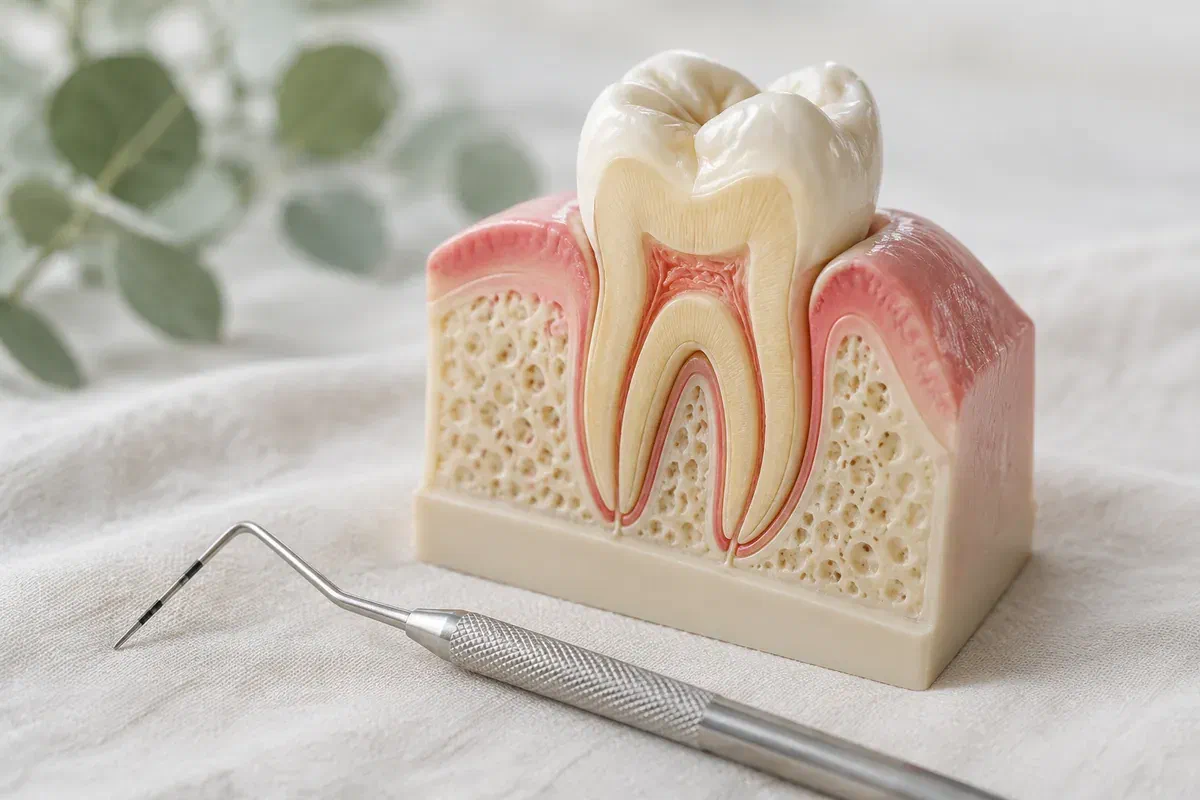
Illustrative tooth-and-gum teaching model beside a periodontal examination probe
Information that shapes the schedule

Depth, bleeding and support decide how much work there is

Before the first visit, gather notes on symptoms, past gum care and health or medication changes. Teeth without symptoms are examined as well, because comfort gives no assurance that the surrounding tissue is stable.

Active inflammation at particular sites

Bleeding when gently measured, puffy gum or recession all colour what a reading means. Your clinician can explain how they combine and whether a complete periodontal charting or added records would be useful, ideally at the same visit to save another trip.

Buildup in hard-to-clean corners

Food that keeps catching in one spot often signals deposits or a shape that resists cleaning. Mention those areas early. The team can sort what needs professional attention from what better home technique might handle on its own.

Records from earlier care

Sending past charts, images or a periodontist’s letter ahead of time lets the team compare without waiting for a second appointment. A tooth that has lost support needs its outlook judged individually, not inferred from pocket depth.

For new swelling, pus, fever or severe pain, phone first; if the trip is long and symptoms are worsening, local urgent or emergency care may be the safer choice. Never probe or scrape a pocket with a tool at home, and do not hold an acute problem for a routine visit.

The value of a clear plan

Fewer wasted trips, clearer results

Periodontal treatment works toward controlling disease and keeping teeth that can be maintained. A better-looking chart is a by-product, not the purpose. Ask what change is realistic at each affected site and which limitations will remain. Prior bone loss, awkward access and general health can all influence that outlook and the chance of needing further care.

Seeing the phases in advance helps you book them sensibly. Initial advice and cleaning, targeted work beneath the gum and a reassessment each play a separate role. Ask where you sit in that sequence, and what has to be confirmed before the dentist can judge that the active phase is complete.

Patient information: SDCEP — stepwise treatment of periodontitis

Cleaning grouped around your findings

Where indicated, deposits are removed above and below the gum at the sites involved. Ask whether areas can reasonably be combined, and how comfort will be managed if a session is longer. Visit count and length should follow the chart rather than a fixed formula.

A home routine to carry you between trips

Because visits may be spaced out, the routine you follow at home carries more weight. Ask for a hands-on demonstration with the right interdental tools and raise anything awkward. Keep to the surfaces you can reach; professional instrument work stays in the chair.

A reassessment planned from the start

Booking the review date early helps it happen. Bleeding, depth, access for cleaning and other findings are then compared. Ask which sites responded and which still concern the clinician before further nonsurgical care, surgery or a specialist’s opinion is weighed.

Four stages, planned ahead

Book them together, understand each one

Flag sensitivity or anxiety in advance. You can ask for pauses and explanations at any time, which matters more when a longer appointment is planned to reduce the number of trips.

  1. Diagnose and explain

    Your history and periodontal findings are reviewed, with images or added assessment if indicated. Ask how the diagnosis ties to the readings and supporting tissue, and whether today is assessment, initial care, targeted cleaning or a check on previous work.

  2. Arrange visits and home care together

    Agree on the areas to be treated, a realistic number of sessions and whether freezing would help. Daily cleaning and risk factors are discussed too. Use this conversation to line up dates, preparation steps and the after-effects you should expect before giving consent.

  3. Carry out the indicated cleaning

    Instruments suited to the task are used on the planned sites. Mention discomfort so the clinician can change approach. Treatment follows what was found and what can safely be reached, and it is not a promise of clearing every pocket in a single long visit.

  4. Review, then set the next step

    Return at the advised interval for the tissues to be re-examined. Ask what supports moving into maintenance and what calls for more care. If a referral is recommended, ask whether a specialist nearer home makes sense, and how cleanings will continue in the meantime.

Back home after treatment

What to watch for when you are a longer trip away

Advice varies with how much cleaning was done, whether freezing was used and any added procedure. Before leaving, ask what is normal over the next few days and who to call if something seems off.

Keep the routine you practised

Brush and clean between teeth exactly as demonstrated, observing any short-term instructions for treated sites. If a tool gives you trouble, a phone call can often sort out size or technique. Do not substitute picking, hard scraping or a rinse you were not advised to use.

Expect some change, and report what persists

Treated teeth may be tender or sensitive for a short while. Once swelling settles, the gum may sit lower and gaps may appear wider. Ask what fits your case. Call about symptoms that linger or intensify instead of judging alone whether they mean harm or progress.

Do not skip the reassessment

Comfort is not proof that every site has healed. The review gives fresh findings to compare against. If the date stops working, ring to move it, perhaps pairing it with another visit, rather than letting active care end without a response check.

Patient information: NHS — dental abscess symptoms and urgent care

If pockets remain after review

Another look comes before any new procedure

The next step reflects your diagnosis, the treatment already completed and how each site appears now. Ask how a proposal links to those findings and what benefit is realistic.

When cleaning and inflammation control remain the answer

Further nonsurgical treatment

More cleaning beneath the gum can extend active care. Ask which sites would be treated and how you will know whether they improved. Antibiotics, lasers or similar extras are not automatically added simply because a pocket was found.

When disease persists or the case is complex

Specialist assessment

A periodontist can judge whether additional nonsurgical care, surgery or another route suits a site. Ask what site-specific factors matter. A referral is not a commitment to surgery, and depth alone does not justify a proposed procedure.

When active treatment has reached its review point

Periodontal maintenance

Maintenance monitors previously affected areas and adds cleaning where needed. Ask what interval suits your present condition and whether those visits can be planned well ahead. Past periodontal disease remains part of your history during this phase.

Patient information: American Academy of Periodontology — nonsurgical treatment and its limitations

Etobicoke planning questions

Practical answers before you make the trip

Ask the team to show you the relevant sites on your chart and explain the plan in plain language. The readings are most useful once you see how they guide treatment, home care and review.

(905) 876-4488
Can several areas be cleaned in one longer appointment to save travel?
Sometimes, depending on your findings, comfort and freezing needs. Ask whether combining areas is reasonable for you, and what a longer session would involve, before the schedule is set.
Should I send my previous gum charts before the first visit?
If you can, yes. Earlier charts, images or specialist letters help the team compare findings and may reduce the need for repeat records. Ask how best to share them.
What should I do if a gum swells up between visits and I am far away?
Call the clinic for advice. If swelling is spreading, you have a fever, or breathing or swallowing is affected, seek emergency medical care near you straight away rather than travelling.
Does freezing affect whether I can drive home afterwards?
Local dental anaesthetic does not usually affect driving, but ask the team about your planned treatment, any other medications and how you are likely to feel after a longer appointment.
Can one deep measurement settle what is wrong with my gums?
No. Depth is considered alongside bleeding, gum position, attachment, bone and history. Ask how everything fits together and whether further assessment is needed before treatment is planned.
Is the reassessment really needed if the bleeding has stopped?
Yes. Less bleeding is encouraging but does not show how each site has responded. The reassessment decides whether active care is complete or further attention is needed.
Periodontal visits from Etobicoke

One phone call to plan the whole course

Ring (905) 876-4488 and our Bronte Street practice can arrange a gum assessment or a review of recommended pocket treatment, with dates planned together where possible. Please bring or send earlier periodontal records or specialist advice so nothing needs repeating.

The amount of treatment, tissue response, review timing and specialist involvement depend on your findings. A single pocket reading does not guarantee a diagnosis, a particular procedure or an outcome.

Visit Milton Dental Clinic
Unit 1, 342 Bronte St. S, Milton, ON L9T 5B7
Get directions Clinic hours
Monday–Thursday
11am–7pm
Friday–Sunday
By appointment only

Areas we serve

  • Milton
  • Oakville
  • Mississauga
  • Georgetown
  • Halton Hills
  • Acton
  • Campbellville
  • Brampton
  • Burlington
  • Puslinch
  • Rockwood
  • Erin
  • Caledon
  • Etobicoke
  • Old Milton
  • Bronte Meadows
  • Timberlea
  • Dorset Park
  • Dempsey
  • Clarke
  • Beaty
  • Coates
  • Harrison
  • Scott
  • Willmott
  • Ford
  • Bowes
  • Cobden
  • Walker
  • Mountain View
  • Milton Heights
  • Hawthorne Village
  • Valley View
  • Fallingbrook
  • Nassagaweya
  • Trafalgar
  • Esquesing
  • Nelson
  • Brookville
  • Moffat
  • Glen Williams
  • Norval
  • Limehouse
  • Stewarttown
  • Ashgrove
  • Hornby
  • Silver Creek
  • Speyside
  • Scotch Block
  • North Oakville
  • River Oaks
  • Glen Abbey
  • West Oak Trails
  • Palermo
  • Bronte Creek
  • College Park
  • Joshua Creek
  • Uptown Core
  • Preserve
  • Iroquois Ridge
  • Lisgar
  • Meadowvale
  • Meadowvale Village
  • Churchill Meadows
  • Erin Mills
  • Central Erin Mills
  • Streetsville
  • East Credit
  • Creditview
  • Heartland
  • Sheridan
  • Mount Pleasant
  • Credit Valley
  • Huttonville
  • Churchville
  • Springbrook
  • Northwest Brampton
  • Bram West
  • Fletcher's Meadow
  • Fletcher's Creek South
  • Alton Village
  • Orchard
  • Millcroft
  • Headon Forest
  • Tansley
  • Brant Hills
  • Tyandaga
  • Kilbride
  • Lowville
  • Aberfoyle
  • Morriston
  • Arkell
  • Hillsburgh
  • Freelton
  • Carlisle
  • Waterdown
  • Flamborough
  • Mountsberg

How can we help?

Milton Dental Clinic

Have a question about your smile? Choose the option that works best for you.

For urgent dental concerns, please call.
Messages are reviewed during clinic hours.