

Illustrative patient discussing periodontal findings with a clinician and a supported tooth model
Specialized Care

Periodontal Pocket Treatment in Halton Hills

Gum pocket treatment can change how your gums look and feel as inflammation settles. For households across Halton Hills, our team explains what the readings show, what cleaning below the gumline involves, which changes to expect afterwards and how the response will be reviewed.

Knowing what to expect

Healthier gums don’t always look the way people imagine

A common surprise after gum treatment is that the teeth look slightly longer or the gaps between them seem wider. Understanding why begins with the measurements. A periodontal probe, thin and blunt, is placed gently into the space under the gum margin, and its depth is noted at each tooth. Deep readings may signal gum disease, but context decides.

Context means bleeding, gum position, how much attachment has gone and what supporting bone looks like on suitable images. Treatment addresses the condition all of this describes. Cleaning below the gumline may be advised to clear deposits and calm swelling; as that swelling eases, the gum often tightens and sits differently. A follow-up then guides maintenance, further work or a specialist opinion.

From Georgetown, Acton, Glen Williams or a smaller hamlet in Halton Hills, it is worth asking before treatment what changes you might see and feel. Find out which teeth are involved, what every step is for and how to look after the area at home. Expected changes are far less worrying when you have heard about them in advance.

Ask what changes to expect
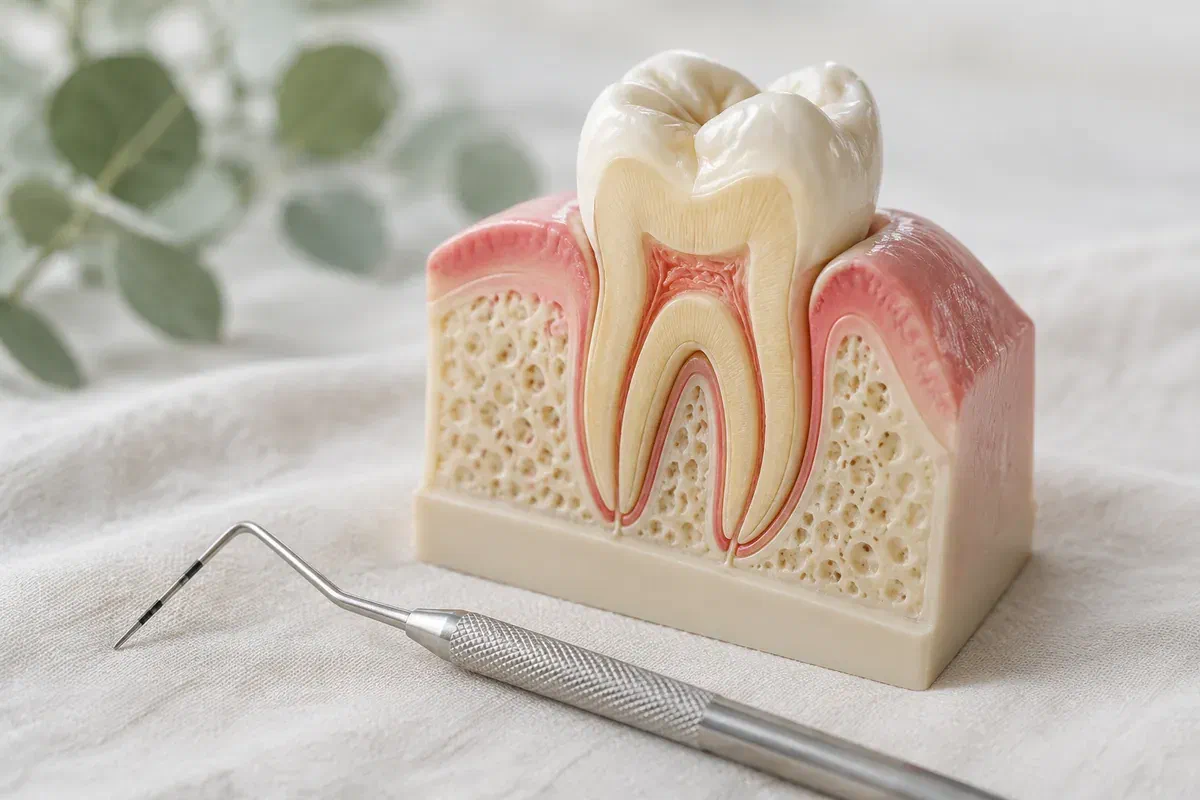
Illustrative tooth-and-gum teaching model beside a periodontal examination probe
Before treatment begins

Swollen gum can hide what is underneath

Describe any soreness, earlier gum treatment and changes in your general health or medicines. Comfortable teeth are examined too: a mouth that feels fine is not necessarily one whose supporting tissues are stable.

Puffiness, bleeding and gum level

Inflamed gum can swell upward and make a pocket look deeper, while recession can do the opposite. Bleeding on gentle probing adds another layer. Your clinician can explain how these combine and whether a full periodontal charting or more records are warranted.

Deposits and awkward surfaces

Hardened buildup, crowded teeth or the margin of an old filling can all keep a site inflamed. Mention where food packs in or floss tears. You will then know which areas need professional cleaning and which home adjustments are likely to help.

How much support has already been lost

Earlier charts, images or a specialist’s notes show whether support has changed over time. A tooth that has lost some of it needs an individual view of its prospects. Depth alone is a poor guide to how that tooth will do.

Fresh swelling, pus, a fever or pain that is becoming intense needs prompt advice. Keep picks and other tools out of the pocket, and if something acute develops, call rather than holding on for a routine gum appointment.

Realistic goals

Calmer tissue matters more than a perfect-looking gumline

The aim of periodontal care is to control disease and help keep teeth that can be maintained, not to restore gums to how they looked years ago. Ask which improvements are realistic for each site and which limits are likely to stay. Lost bone, cleaning access and health factors can shape both appearance and outlook.

Every phase has its own purpose. Early advice and initial cleaning, targeted work under the gum and a reassessment do different jobs, and appearance can shift between them. Ask which phase you are in, and what the dentist still needs to see before deciding that active treatment is complete.

Patient information: SDCEP — stepwise treatment of periodontitis

Cleaning planned for the sites involved

Removal of deposits at and beneath the gumline may be recommended where your findings support it. Ask why those teeth were selected and how comfort will be looked after. Session number and length should follow your chart rather than a fixed arrangement.

Cleaning tools for new spaces

If gaps open as the gum settles, the brush or floss that suited you before may no longer fit. Ask for a demonstration with appropriately sized interdental cleaners and raise anything awkward. Aim to clean what you can reach, leaving work below the gum to the clinician.

A review that looks past appearance

At reassessment, bleeding, depths, cleaning access and related signs are compared with earlier findings. Ask which sites responded and which still concern the clinician. A leftover reading is interpreted in context before more nonsurgical treatment, surgery or a periodontist is mentioned.

What happens, in order

Assess, prepare, clean and recheck

If you have sensitive teeth or feel uneasy at the dentist, mention it early. Explanations and breaks can be part of every visit, so you can see how each step connects to the plan.

  1. Find out what the findings mean

    History and periodontal findings are reviewed, with images or extra assessment where they would help. Ask how the diagnosis fits the readings and the supporting tissue, and check whether the visit is for assessment, initial care, targeted cleaning or a review.

  2. Talk through visits, comfort and likely changes

    Discuss which areas will be treated, how many sessions are likely and whether freezing would help. Daily cleaning and risk factors are reviewed. Before consenting, ask what preparation is useful and which after-effects, including changes in appearance, are expected.

  3. Receive the planned cleaning

    The clinician uses suitable instruments to remove deposits from agreed sites. Say if anything is uncomfortable so the approach can change. The work follows your findings and what is accessible, and it should not be described as a sure way to clear every pocket in one appointment.

  4. Return for the response to be checked

    At the recommended interval, the tissues are reviewed. Ask which results suggest maintenance and which suggest more care. If a referral is advised, clarify why, and how your regular cleaning and checks will be handled until you are seen.

In the weeks that follow

When the gums look different, here’s what helps

Your instructions depend on how much was treated, whether freezing was used and any other procedure. Ask what is normal for you and how to report a worry while keeping your cleaning routine going.

Keep cleaning, gently and consistently

Follow the brushing and interdental routine shown at your visit, along with any temporary instructions for treated sites. If a cleaner is now too large or too small, ask for a better fit. Avoid hard scraping, poking or a rinse that was not recommended.

Longer-looking teeth and wider gaps

Tenderness or sensitivity may follow treatment for a while. As inflammation settles, the gumline can sit lower and spaces may look bigger. Ask whether this is expected in your case, and call about symptoms that persist or worsen rather than deciding on your own what they mean.

Attend the review, however things look

Neither comfort nor appearance shows how each site has truly responded. The reassessment gives the clinician current findings to compare. If you cannot make it, phone to rearrange so active care does not end without an assessment of the result.

Patient information: NHS — dental abscess symptoms and urgent care

Choosing a direction after review

If a site stays deep, the next choice is made carefully

What follows depends on your diagnosis, the care already received and the current state of each site. Ask how a recommendation links to those findings and what it can realistically do.

When cleaning and inflammation control are still appropriate

Nonsurgical care, continued

More cleaning under the gum can be part of ongoing active treatment. Ask which teeth would be included and what will show whether they improved. Antibiotics, lasers and other additions are not built in simply because a pocket was recorded.

When disease persists or the case is complex

Specialist review or further treatment

A periodontist may consider further nonsurgical work, surgery or a different plan. Ask which features of the site shape that view, including how it looks. A referral does not guarantee surgery, and depth alone never fully explains a procedure.

When active care has reached a suitable review point

Maintenance for the long term

Maintenance visits keep watch over formerly affected areas and add cleaning support. Ask which interval fits your condition and what will be monitored at each visit. A history of gum disease remains relevant throughout this phase.

Patient information: American Academy of Periodontology — nonsurgical treatment and its limitations

Halton Hills questions after treatment

Looks, feel and what comes next

Ask the team to mark the areas they are watching and explain the plan simply. The chart helps most when you understand how it relates to treatment, your daily routine and the review.

(905) 876-4488
Why do my teeth look longer after gum treatment?
As swollen gum shrinks back toward its healthier position, more of the tooth can show. How much depends on your situation. Ask what is expected and report any change that comes with pain or other symptoms.
Will the gaps between my teeth close up again?
Not necessarily. Some changes in gum contour can remain once inflammation has settled. Ask the team what to expect for your teeth and which interdental cleaners suit the new spaces.
Can teeth feel more sensitive to cold once the gums settle?
Some sensitivity can follow treatment, especially where root surfaces become more exposed. Ask the team about suitable toothpaste or other measures, and report sensitivity that persists or worsens.
Should I worry if a treated area still bleeds a little?
Mention it rather than worrying alone. Some bleeding may ease gradually, but its pattern is useful information. The reassessment will look at which sites still bleed and what that suggests.
Does a leftover deep pocket mean an operation is unavoidable?
No. The site is reassessed alongside inflammation, support and earlier care. More nonsurgical treatment, maintenance or a periodontist’s opinion may be suggested. Ask why an option is proposed and which alternatives exist.
Would poking around the gum at home help me check the result?
No. Pushing tools under the gum risks injury and tells you little. Leave measurement to the clinician, and ask for a demonstration of the daily cleaning that suits your mouth.
Gum care for Halton Hills

Hear what to expect before treatment starts

Call (905) 876-4488 to set up a gum assessment at our Bronte Street practice, or to talk over pocket treatment that has been recommended to you. Bring previous periodontal charts or specialist advice where you have them, so we can account for earlier care.

The scope of treatment, how tissues respond, review timing and any specialist role depend on your own findings. One pocket reading cannot guarantee a diagnosis, a specific procedure or an outcome.

Visit Milton Dental Clinic
Unit 1, 342 Bronte St. S, Milton, ON L9T 5B7
Get directions Clinic hours
Monday–Thursday
11am–7pm
Friday–Sunday
By appointment only

Areas we serve

  • Milton
  • Oakville
  • Mississauga
  • Georgetown
  • Halton Hills
  • Acton
  • Campbellville
  • Brampton
  • Burlington
  • Puslinch
  • Rockwood
  • Erin
  • Caledon
  • Etobicoke
  • Old Milton
  • Bronte Meadows
  • Timberlea
  • Dorset Park
  • Dempsey
  • Clarke
  • Beaty
  • Coates
  • Harrison
  • Scott
  • Willmott
  • Ford
  • Bowes
  • Cobden
  • Walker
  • Mountain View
  • Milton Heights
  • Hawthorne Village
  • Valley View
  • Fallingbrook
  • Nassagaweya
  • Trafalgar
  • Esquesing
  • Nelson
  • Brookville
  • Moffat
  • Glen Williams
  • Norval
  • Limehouse
  • Stewarttown
  • Ashgrove
  • Hornby
  • Silver Creek
  • Speyside
  • Scotch Block
  • North Oakville
  • River Oaks
  • Glen Abbey
  • West Oak Trails
  • Palermo
  • Bronte Creek
  • College Park
  • Joshua Creek
  • Uptown Core
  • Preserve
  • Iroquois Ridge
  • Lisgar
  • Meadowvale
  • Meadowvale Village
  • Churchill Meadows
  • Erin Mills
  • Central Erin Mills
  • Streetsville
  • East Credit
  • Creditview
  • Heartland
  • Sheridan
  • Mount Pleasant
  • Credit Valley
  • Huttonville
  • Churchville
  • Springbrook
  • Northwest Brampton
  • Bram West
  • Fletcher's Meadow
  • Fletcher's Creek South
  • Alton Village
  • Orchard
  • Millcroft
  • Headon Forest
  • Tansley
  • Brant Hills
  • Tyandaga
  • Kilbride
  • Lowville
  • Aberfoyle
  • Morriston
  • Arkell
  • Hillsburgh
  • Freelton
  • Carlisle
  • Waterdown
  • Flamborough
  • Mountsberg

How can we help?

Milton Dental Clinic

Have a question about your smile? Choose the option that works best for you.

For urgent dental concerns, please call.
Messages are reviewed during clinic hours.