

Illustrative patient reviewing gum-treatment priorities with a clinician
Specialized Care

Periodontitis Treatment in Campbellville

Periodontitis is managed over years, not weeks. We explain your diagnosis, treat the areas that need care now, and help a rural household plan the reviews and maintenance visits that follow, so the long-term schedule feels manageable rather than endless.

Campbellville · thinking in seasons

Treatment ends. Looking after your gums does not.

Out in the Nassagaweya countryside, planning ahead is second nature. You think about the season, the week’s errands and who needs the truck. Periodontitis suits that mindset, because it is a long-term condition. It means some of the bone and attachment holding your teeth has been lost, which is why it calls for more ongoing attention than gingivitis, an inflammation limited to the gums.

Before deciding anything, understand the starting point. The dentist can walk you through your own measurements and X-rays and show which teeth have reduced support, which are sound, and what remains uncertain. Ask questions until the explanation makes sense to you. A clear baseline is also what later reviews will be compared against.

The plan typically moves from professional treatment and a home routine you can sustain to a reassessment, and then, for many people, to regular maintenance. Grouping visits with other household appointments can reduce trips. The aim is control and stability over time; treatment cannot promise that lost support will regrow or that ongoing care will become unnecessary.

Plan your periodontal care
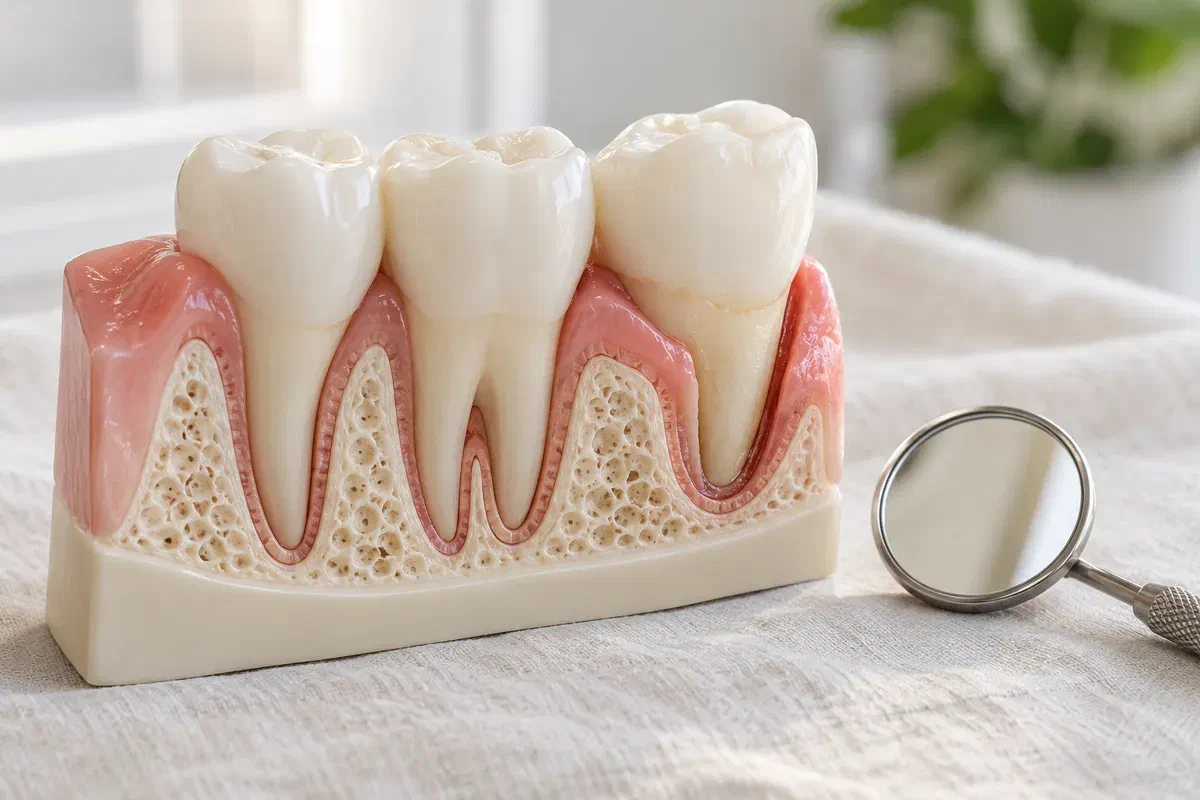
Illustrative connected tooth, gum, and supporting-bone teaching model
Setting the baseline

What goes into the first assessment?

Gum disease can be well established before it hurts. Share what you have noticed and book even if your teeth feel fine, since waiting for pain can mean waiting too long.

Changes at home

Bleeding gums, roots that look more exposed, gaps where food lodges, or a bite that has shifted are all useful to describe. They help guide the examination. The diagnosis itself relies on assessing the supporting tissues, since appearance alone can mislead.

Any previous gum treatment

Records of earlier periodontal care or a specialist’s notes help establish the timeline. Mention what was done and whether you went back for a check afterward. That history helps distinguish untreated disease from a site that changed while you were on a maintenance schedule.

Health, habits and practicalities

Tell the team about medical conditions, medicines, tobacco and anything that makes cleaning harder, from arthritis to a busy season of outdoor work. This is planning information, not a matter of fault. Routines should bend to fit your life, and be revised when your life changes.

A new swelling, discharge, fever, strong pain or a tooth that starts moving is a reason to call promptly. Report it now instead of waiting until your planned review.

A plan for the long haul

Priorities now, a rhythm for later

Your teeth will not all share the same outlook. Ask which ones have lost the most support, which look reliable, and what will influence each over the coming years. A stage or grade may be used to describe your condition; ask what it implies about severity, the complexity of care and how quickly the disease has been moving.

Next, understand the sequence. What will the initial treatment phase try to change? When will the response be checked? What results might call for a periodontist? This explains each appointment’s purpose and prevents any single reading from being mistaken for the final verdict.

Active treatment where it is needed

The team can describe which sites need professional care and how many visits it might take. Ask about comfort, appointment length and whether local anaesthetic will be used. The extent of treatment should come from your findings rather than a fixed routine.

Home care that survives a busy season

Ask for brushes and interdental aids that suit your teeth and a demonstration in the awkward places. Choose a routine short enough to keep up on long days. Bring any tool that did not work; adjusting it is part of treatment.

A maintenance rhythm you can plan around

Ask what findings would mean you are stable enough for maintenance and how often those visits might be. Each review should be explained with current results. Maintenance is how a history of periodontitis is looked after, not a sign that something went wrong.

From first visit to maintenance

The stages, laid out end to end

Expect more than one appointment, and perhaps a specialist. Ask who coordinates care and how records will move between offices if a periodontist is involved.

  1. Assess and set the baseline

    History, periodontal measurements and suitable X-rays are reviewed together. Ask where support has been lost and whether more information is needed. The explanation should show what is clear, what is uncertain and what needs prompt attention.

  2. Treat the active disease and build the routine

    Professional care beneath the gums where indicated is paired with daily cleaning and attention to risk factors. Ask how the work will be divided and how comfort will be managed. Mention anything about your schedule that could get in the way.

  3. Reassess against the baseline

    After healing, the team rechecks the sites and explains which responded. Ask what remaining inflammation or difficult access means for what happens next. Additional treatment should have a purpose rather than repeating the first phase out of habit.

  4. Settle into maintenance or take the next step

    Depending on the response and complexity, you may move into maintenance, receive further treatment or see a specialist. Agree on the interval and responsibilities. If a tooth has a poor outlook, ask why and what the alternatives are before any removal.

Between visits, at home

Steady habits keep the gains you made.

Aftercare depends on what was done and how your tissues settle. Follow the advice for your own sites, and phone if cleaning becomes painful or you are unsure what to do.

Keep using the technique you practised

Stay with the tools and method agreed at the visit, and do not jam anything into a space too tight for it. If an area remains awkward, raise it at review or call. One sensible tweak tends to help more than a handful of products bought without advice.

Report symptoms and health updates

Persistent sensitivity, new swelling or a tooth that seems unsteady should be mentioned. Keep the team informed about medical changes and medicines, but do not change prescribed care without your physician. Coordination may be needed when your health changes.

Book the reassessment, then the maintenance

Less bleeding is encouraging but does not mean active treatment is finished. The review determines the next stage. Consider booking maintenance visits alongside other household appointments, and call to rearrange rather than letting a date lapse.

After reassessment

Three possible paths from here

Ask what each recommendation offers, where it is limited and what the alternatives are. Periodontitis does not automatically mean surgery, antibiotics or extraction.

When cleaning and home care remain the priority

Nonsurgical care and another review

Treatment targets deposits and inflammation, followed by a check of the response. Ask what the care involves and what result would lead to another phase. Antibiotics and branded technologies are not standard for every plan.

When remaining disease or complexity needs more

Specialist input or targeted procedures

A periodontist may discuss further nonsurgical or surgical options. Ask what is realistic and what each would change. Lost support cannot be regained everywhere, and benefits and risks should be explained for your situation. If a specialist is involved, ask how their appointments and the clinic’s will be coordinated so you are not making unnecessary trips.

When long-term care becomes the focus

Supportive maintenance or a single-tooth plan

Settled sites can continue on maintenance while one tooth gets its own prognosis discussion. Ask how keeping it compares with removal and later replacement. Each tooth can follow a different path, and the plan should allow for that.

Patient information: American Academy of Periodontology — nonsurgical care and further treatment

Long-term care questions

What happens after the active phase?

The questions below tend to come up once active treatment winds down and the calendar stretches out. Your own answers will depend on what the examination shows and how your gums respond, so treat these as starting points for a conversation with the team.

(905) 876-4488
How is periodontal maintenance different from a regular cleaning?
Maintenance focuses on previously affected sites and checks them against earlier findings. It is planned around your periodontal history. Ask what each maintenance visit includes and how it compares with the routine cleaning you had before.
How often will I need maintenance visits?
The interval depends on your findings and response, and it may change over time. Ask how the team decides and what would lead them to lengthen or shorten it. Knowing the likely spacing early makes it easier to fit visits around harvest, school terms or whatever shapes your year in Campbellville.
Will I need maintenance for the rest of my life?
Many people with a history of periodontitis benefit from ongoing maintenance, though the interval can vary. Ask what your current findings suggest and how the plan might change as things stay stable.
What if a site gets worse during maintenance?
Reviews are designed to catch changes. If a site worsens, the team will explain options, which might include further treatment or specialist input. Ask what signs to watch for between visits, such as bleeding returning in one spot or a tooth that starts to feel different, and call rather than waiting if you notice them.
Can I skip maintenance once my gums feel healthy?
Feeling healthy is welcome, but comfort alone does not confirm stability. Skipping reviews makes it harder to notice change early. If the schedule is difficult, talk to the team about adjusting it rather than stopping.
Can several people from a Campbellville household book back to back?
Ask when booking. Grouping appointments can save trips, though treatment visits may need more time than routine care. The clinic is open Monday to Thursday until 7pm, and Friday to Sunday by appointment only.
Planning from Campbellville

Map out the year, then take the first step.

Phone us on (905) 876-4488 to book a periodontal assessment or review a diagnosis you already have. Bring any earlier gum-treatment records so we can set a clear baseline and connect your history with the right next step.

Treatment extent, prognosis, referral and maintenance intervals vary. Planning requires examination and review, and no procedure can guarantee the return of lost support or that maintenance will one day be unnecessary.

Visit Milton Dental Clinic
Unit 1, 342 Bronte St. S, Milton, ON L9T 5B7
Get directions Clinic hours
Monday–Thursday
11am–7pm
Friday–Sunday
By appointment only

Areas we serve

  • Milton
  • Oakville
  • Mississauga
  • Georgetown
  • Halton Hills
  • Acton
  • Campbellville
  • Brampton
  • Burlington
  • Puslinch
  • Rockwood
  • Erin
  • Caledon
  • Etobicoke
  • Old Milton
  • Bronte Meadows
  • Timberlea
  • Dorset Park
  • Dempsey
  • Clarke
  • Beaty
  • Coates
  • Harrison
  • Scott
  • Willmott
  • Ford
  • Bowes
  • Cobden
  • Walker
  • Mountain View
  • Milton Heights
  • Hawthorne Village
  • Valley View
  • Fallingbrook
  • Nassagaweya
  • Trafalgar
  • Esquesing
  • Nelson
  • Brookville
  • Moffat
  • Glen Williams
  • Norval
  • Limehouse
  • Stewarttown
  • Ashgrove
  • Hornby
  • Silver Creek
  • Speyside
  • Scotch Block
  • North Oakville
  • River Oaks
  • Glen Abbey
  • West Oak Trails
  • Palermo
  • Bronte Creek
  • College Park
  • Joshua Creek
  • Uptown Core
  • Preserve
  • Iroquois Ridge
  • Lisgar
  • Meadowvale
  • Meadowvale Village
  • Churchill Meadows
  • Erin Mills
  • Central Erin Mills
  • Streetsville
  • East Credit
  • Creditview
  • Heartland
  • Sheridan
  • Mount Pleasant
  • Credit Valley
  • Huttonville
  • Churchville
  • Springbrook
  • Northwest Brampton
  • Bram West
  • Fletcher's Meadow
  • Fletcher's Creek South
  • Alton Village
  • Orchard
  • Millcroft
  • Headon Forest
  • Tansley
  • Brant Hills
  • Tyandaga
  • Kilbride
  • Lowville
  • Aberfoyle
  • Morriston
  • Arkell
  • Hillsburgh
  • Freelton
  • Carlisle
  • Waterdown
  • Flamborough
  • Mountsberg

How can we help?

Milton Dental Clinic

Have a question about your smile? Choose the option that works best for you.

For urgent dental concerns, please call.
Messages are reviewed during clinic hours.